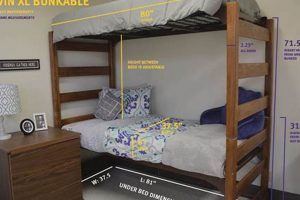
A non-standard mattress dimension, sometimes referred to as a ‘three-quarter’ size, is smaller than a standard full (double) mattress but larger than a twin mattress. It typically measures approximately 48 inches wide and 75 inches long. This particular size mattress was more prevalent in earlier eras and continues to be found in antique beds or specific accommodation settings.
The historical relevance of this mattress dimension lies in its space-saving design, offering a comfortable sleeping surface for a single individual without occupying the footprint of a full-sized bed. This was beneficial in smaller homes or shared living quarters. While less common today, its utility remains apparent in scenarios where space is a primary constraint or when restoring antique bedroom furniture.
The subsequent sections will delve into the considerations for selecting sheets, bedding, and bed frames compatible with this mattress dimension. Furthermore, the availability of new mattresses and the potential alternatives for individuals seeking this specific sleeping solution will be discussed in greater detail.
Considerations for a Three-Quarter Mattress
Navigating the uncommon dimensions of a three-quarter mattress requires careful attention to detail. These tips are designed to assist in making informed decisions when dealing with this specific mattress size.
Tip 1: Measure the Bed Frame. Prior to purchasing a new mattress or bedding, accurate measurement of the existing bed frame is essential. Discrepancies between the stated and actual dimensions of antique frames are not uncommon.
Tip 2: Source Bedding from Specialty Retailers. Due to the non-standard size, finding appropriately sized sheets and bedding at mainstream retailers may be challenging. Specialty linen stores or online vendors offering custom sizing are often necessary.
Tip 3: Evaluate Mattress Alternatives. Before committing to a three-quarter size, consider the availability and cost of custom mattresses. Exploring alternative sizes, such as a twin XL or a full-size mattress with a smaller bed frame, might provide a wider range of bedding options.
Tip 4: Consider Mattress Thickness. The thickness of the mattress impacts the overall height of the bed. When replacing an existing mattress, ensure the new mattress thickness maintains a comfortable height relative to the bed frame and surrounding furniture.
Tip 5: Inspect the Box Spring or Foundation. If a box spring or foundation is required, confirm its dimensions match the three-quarter size. Damaged or improperly sized foundations can compromise mattress support and longevity.
Tip 6: Check for Custom Sheet Options. Several online retailers provide option in sheet for custom size if you can’t find in local market. Before check out, verify the return policy in case you have a wrong size.
Adhering to these recommendations facilitates a smoother and more satisfactory experience when furnishing a bed utilizing a three-quarter size. Careful planning will eliminate potential difficulties associated with its unusual dimensions.
The following section will address common questions and concerns related to purchasing and maintaining a three-quarter mattress.
1. Dimensions

The dimensions of a mattress are fundamental to its suitability for intended use. In the context of a three-quarter size mattress, understanding precise measurements is paramount, given its non-standard nature and the challenges associated with finding compatible bedding and frames.
- Width Specification
The width of this mattress typically measures around 48 inches. This narrower width is a key characteristic distinguishing it from a standard full-size mattress, which is approximately 54 inches wide. The implication of this difference is that standard full-size bedding will be excessively large, resulting in an ill-fitting and potentially uncomfortable sleep surface.
- Length Specification
The length commonly extends to 75 inches, identical to a standard twin or full-size mattress. While the length is less problematic than the width in terms of finding compatible bedding, any discrepancy in length between the mattress and the bed frame will cause the mattress to either overhang or leave a gap, compromising structural integrity and comfort.
- Thickness Variation
Mattress thickness can vary considerably, ranging from relatively thin (e.g., 6 inches) to quite thick (e.g., 14 inches or more). Thickness affects the overall height of the bed and, consequently, the ease of getting in and out of bed. Furthermore, thicker mattresses require deeper-pocketed sheets, adding another layer of complexity to sourcing appropriate bedding.
- Impact on Room Space
The compact dimensions are advantageous in smaller rooms where space is at a premium. Compared to a full-size mattress, the reduced width allows for more free space within the room, improving maneuverability and creating a less cluttered environment. However, this comes at the cost of a reduced sleeping surface, which may not be suitable for individuals who prefer more space or for couples.
In summary, careful consideration of the width, length, and thickness dimensions of a three-quarter size mattress is vital for ensuring a proper fit within the bed frame and for selecting appropriate bedding. The space-saving aspect is beneficial in certain situations, but the reduced sleeping surface may not be suitable for all individuals. These dimensional attributes, therefore, must be weighed against individual needs and spatial constraints.
2. Availability

The availability of a mattress in this less common dimension is a significant factor affecting purchasing decisions. Unlike standard sizes such as twin, full, queen, or king, the three-quarter size is not widely stocked by major retailers. This limited distribution stems from decreased consumer demand and manufacturing economies of scale that favor standard dimensions. Consequently, prospective buyers often encounter difficulties in locating this specific size in brick-and-mortar stores and may need to rely on specialized retailers or custom mattress manufacturers.
The scarcity of this dimension also impacts pricing and lead times. Custom-made mattresses typically command a higher price point compared to mass-produced standard sizes, reflecting the increased labor and material costs associated with small-batch manufacturing. Furthermore, custom orders may require extended lead times, as manufacturers need to allocate resources and adjust production processes to accommodate the unique specifications. The reduced availability can also influence shipping costs, as specialized handling or freight services may be necessary to transport non-standard sized mattresses. For example, individuals seeking a replacement mattress for an antique bed frame may find that only a few online vendors offer the correct dimensions, thus limiting price negotiation and potentially increasing overall acquisition costs.
In summary, the constrained availability of a mattress in these dimensions presents both challenges and considerations for consumers. Buyers should anticipate a more involved search process, higher prices, and potentially longer delivery times. However, awareness of these factors allows for proactive planning and informed decision-making, ultimately enabling successful acquisition of a mattress that meets specific needs and spatial constraints. A proactive and well-informed approach is therefore essential to navigate the market effectively.
3. Bedding Options

The selection of appropriate bedding presents a unique challenge when utilizing a mattress of this dimension. Standard bedding sizes are designed for twin, full, queen, and king mattresses, leaving the consumer with limited off-the-shelf choices for this in-between size.
- Sheet Sets
Fitted sheets designed for a full-size mattress will generally be too large, resulting in excess fabric and a poorly fitted sleeping surface. Conversely, twin-size sheets will be too small to adequately cover the mattress. Solutions include seeking out specialty retailers that offer three-quarter size sheet sets, opting for custom-made sheets, or modifying larger sheets to fit the mattress. The choice depends on budget, availability, and sewing skill.
- Comforters and Duvets
Comforters and duvets pose a similar challenge. A full-size comforter may be excessively large and overwhelm the bed, while a twin-size comforter might not provide sufficient coverage. A practical solution involves using a twin-size comforter as a decorative accent or layering piece, while a full-size comforter can be folded or tucked to achieve a more proportional look. Alternatively, custom-sized comforters or quilts can be commissioned for a perfect fit.
- Blankets
Blankets offer more flexibility than fitted sheets or comforters. Twin-size blankets may provide adequate coverage for a single sleeper, while full-size blankets can be folded to adjust the size and prevent excessive draping. The choice depends on personal preference and desired aesthetic.
- Pillowcases
Standard pillowcases are generally suitable for use with a mattress of this type. However, the number of pillows used and their arrangement can influence the overall look and feel of the bed. Consider using a combination of standard and decorative pillows to create a visually appealing and comfortable sleep environment.
In conclusion, addressing bedding needs for a mattress of these dimensions necessitates a proactive approach and a willingness to explore non-standard solutions. The options range from sourcing specialty items to employing creative adaptations of standard bedding sizes. Prioritization of fit, comfort, and aesthetic considerations will guide the selection process.
4. Frame Compatibility

The success of integrating a three-quarter size mattress into a sleep environment hinges critically on the compatibility of the bed frame. A bed frame designed for standard mattress dimensions will not adequately support a three-quarter size mattress, leading to potential instability, uneven weight distribution, and accelerated mattress wear. This incompatibility stems from dimensional discrepancies: a standard full-size frame will be excessively large, leaving gaps and preventing proper edge support, while a twin-size frame will be too small to accommodate the mattress. The cause-and-effect relationship is direct: an ill-fitting frame compromises the structural integrity of both the mattress and the bed as a whole. For example, placing a three-quarter mattress on a full-size frame may result in the mattress sagging prematurely in unsupported areas, negating its intended lifespan and comfort.
The practical significance of frame compatibility extends to safety and sleep quality. An unstable mattress can shift during the night, potentially causing discomfort or even injury to the sleeper. Proper frame support ensures even weight distribution, which is essential for maintaining spinal alignment and preventing pressure points. Furthermore, the visual aesthetic of the bed is compromised when the mattress does not properly fit the frame. Restoring antique beds often necessitates either sourcing original frames designed for this mattress size or modifying existing frames to provide adequate support. Custom metal or woodworking may be required to achieve a secure and aesthetically pleasing fit.
In conclusion, frame compatibility is an indispensable component in maximizing the lifespan, comfort, and safety of a three-quarter size mattress. Ignoring this factor can lead to premature mattress degradation, compromised sleep quality, and potential safety hazards. Diligent measurement, careful frame selection, and, when necessary, custom modifications are essential steps to ensure a harmonious and functional integration of the mattress and bed frame. The emphasis on compatibility aligns with a broader theme of optimizing sleep health through thoughtful choices and proactive solutions.
5. Support structure

The term “support structure,” when directly related to a three-quarter size mattress, denotes the foundation upon which the mattress rests. This structure can take various forms, including a box spring, platform bed, or a series of slats. The selection of an appropriate support structure is paramount because its design directly affects the mattress’s lifespan, the sleeper’s comfort, and the overall stability of the bed. For instance, an inadequate or damaged support structure can cause the mattress to sag prematurely, leading to uneven weight distribution and ultimately resulting in an uncomfortable and potentially unhealthy sleeping surface.
A common example of the practical significance involves antique bed frames designed specifically for three-quarter mattresses. Often, these frames feature unique support systems that may not be compatible with modern box springs. In such cases, custom-built slat systems or modified platforms may be necessary to ensure proper support and prevent damage to the mattress. Furthermore, the spacing between slats is crucial; excessive spacing can allow the mattress to sink between the slats, negating the intended support and potentially voiding mattress warranties. Understanding these nuanced interactions is vital for those seeking to maintain the integrity of both their mattress and antique bed frames.
In conclusion, the support structure is not merely an accessory, but an integral component of the three-quarter size mattress system. A mismatch or inadequate support structure can compromise the mattress’s integrity and the sleeper’s comfort. Therefore, careful consideration of the support structure is essential to maximize the lifespan and effectiveness of the mattress. These factors must align to provide a harmonious and supportive sleep environment.
6. Cost comparison
The cost comparison for a three-quarter size mattress reveals nuanced factors distinct from standard mattress sizes. Due to its lower production volume, acquisition costs are frequently higher than comparable mattresses. This is a direct consequence of reduced economies of scale in manufacturing and distribution. Furthermore, because this size is often associated with custom orders or specialty retailers, the pricing structure inherently includes premiums absent in mass-produced alternatives. For example, a memory foam mattress in this dimension may cost 20-30% more than a similarly constructed full-size mattress due to the custom manufacturing process.
A comprehensive cost comparison must also consider the associated bedding. As noted previously, finding properly fitting sheets and blankets often requires custom orders or alterations, which further increase the overall expenditure. A standard sheet set may necessitate professional tailoring, adding to the total cost of ownership. Conversely, exploring alternative mattress sizessuch as a twin XL with a modified bed framemight yield a lower total cost due to the greater availability of standard-sized bedding. Therefore, the initial mattress price is only one component of the financial equation.
In conclusion, a thorough cost comparison necessitates evaluating not only the mattress price itself but also the costs associated with bedding, frame modifications, and potential custom manufacturing. While the initial price may seem manageable, these ancillary expenses can significantly impact the overall financial burden. A pragmatic approach involves weighing the benefits of this specific mattress dimension against the potential cost savings offered by alternative solutions. This comparison enables informed decision-making based on a holistic understanding of the financial implications.
7. Alternative solutions

When confronting the challenge of procuring a three-quarter size mattress, alternative solutions warrant careful consideration. The scarcity of this mattress dimension in mainstream retail settings necessitates exploring options beyond direct replacement. A primary alternative involves assessing the viability of a full-size mattress within the intended space. While slightly larger, a full-size mattress offers significantly greater availability and a wider range of bedding options. The difference in width, approximately six inches, may be negligible depending on the room’s dimensions. In scenarios where space is a constraint, downsizing to a twin XL mattress presents another viable solution. This dimension shares the same length as the three-quarter size, mitigating concerns about legroom, and offers the benefit of readily available bedding. The efficacy of these alternatives hinges on a precise evaluation of spatial constraints and individual sleeping preferences.
Another significant alternative solution centers on custom-made mattresses and bedding. While incurring a higher initial cost, bespoke solutions guarantee a precise fit for antique or non-standard bed frames. Customization extends beyond dimensions to encompass material preferences, firmness levels, and specific support requirements. For instance, an individual with back pain may benefit from a custom-designed mattress incorporating targeted lumbar support. The decision to pursue custom options should be weighed against the long-term benefits of optimal comfort and durability. A further option involves modifying an existing bed frame to accommodate a more readily available mattress size. This approach requires carpentry skills or professional assistance but can provide a cost-effective means of adapting an heirloom piece to modern bedding standards.
In summary, the selection of alternative solutions to a three-quarter size mattress purchase necessitates a comprehensive assessment of spatial limitations, budgetary constraints, and individual comfort preferences. Exploring readily available sizes, considering custom fabrication, and modifying existing infrastructure each present unique advantages and drawbacks. Ultimately, the most effective solution aligns with the specific needs of the user while balancing practicality and financial considerations. A judicious approach will ensure a satisfactory outcome despite the challenges posed by the uncommon mattress dimension.
Frequently Asked Questions
This section addresses common inquiries and misconceptions surrounding the three-quarter size mattress, providing clarity and informative answers to aid in decision-making.
Question 1: What are the exact dimensions of a three-quarter size mattress?
The typical dimensions are 48 inches in width and 75 inches in length. Slight variations may occur depending on the manufacturer, necessitating precise measurement prior to purchasing bedding or bed frames.
Question 2: Why is this mattress size less common than other standard sizes?
Reduced consumer demand and economies of scale favor the production of standard sizes like twin, full, queen, and king. Consequently, manufacturing and retail focus is directed toward these more popular dimensions.
Question 3: Where can a three-quarter size mattress be purchased?
Due to limited availability, it is often necessary to seek out specialty mattress retailers, online vendors, or custom mattress manufacturers. Mainstream retailers rarely stock this particular size.
Question 4: Are standard bedding sizes compatible?
Standard twin or full-size bedding will generally not fit properly. Custom-sized bedding or alterations to standard bedding may be required to ensure a proper fit and comfortable sleep surface.
Question 5: Is a specialized bed frame required?
A bed frame specifically designed for a three-quarter size mattress is essential for adequate support and stability. Using a frame intended for a different size can compromise mattress integrity and sleeper safety.
Question 6: Is a three-quarter size mattress suitable for couples?
Due to its limited width, a three-quarter size mattress is generally not recommended for couples. The reduced sleeping surface may result in discomfort and restricted movement during sleep.
In summary, understanding the specific dimensions, limited availability, and bedding requirements is crucial when considering a three-quarter size mattress. Careful planning and research are essential for a satisfactory purchase.
The concluding section will summarize the key considerations discussed throughout this article and provide final recommendations for prospective buyers.
Conclusion
The preceding exploration of the 3 4 size mattress has elucidated its defining characteristics, limited availability, and the unique challenges associated with its integration into a sleep environment. The atypical dimensions necessitate careful consideration of bedding options, frame compatibility, and support structure. Cost analyses reveal that procurement and maintenance expenses may exceed those of standard mattress sizes. Alternative solutions, such as exploring full-size or twin XL mattresses, warrant evaluation based on individual needs and spatial constraints.
Given the complexities outlined, prospective buyers should engage in thorough research, meticulous measurement, and a pragmatic assessment of alternatives before committing to a 3 4 size mattress. While this dimension may serve specific needs, a comprehensive understanding of its limitations is paramount to ensuring a satisfactory and economically sound decision. The long-term implications of this choice should be carefully weighed against the readily available alternatives in the marketplace.
![RV Comfort: Custom Size Mattress for RVs [Guide] | Organic & Natural Mattress Buyer’s Guide: Non-Toxic Sleep Solutions](https://mattressworldpa.com/wp-content/uploads/2025/07/th-2359-300x200.jpg "RV Comfort: Custom Size Mattress for RVs [Guide] Organic & Natural Mattress Buyer’s Guide: Non-Toxic Sleep Solutions")
![Best Simmons Queen Size Mattress [Guide & Reviews] | Organic & Natural Mattress Buyer’s Guide: Non-Toxic Sleep Solutions](https://mattressworldpa.com/wp-content/uploads/2025/07/th-2356-300x200.jpg "Best Simmons Queen Size Mattress [Guide & Reviews] Organic & Natural Mattress Buyer’s Guide: Non-Toxic Sleep Solutions")
![Best Mattress Firm Queen Size Mattress [Deals!] | Organic & Natural Mattress Buyer’s Guide: Non-Toxic Sleep Solutions](https://mattressworldpa.com/wp-content/uploads/2025/07/th-2355-300x200.jpg "Best Mattress Firm Queen Size Mattress [Deals!] Organic & Natural Mattress Buyer’s Guide: Non-Toxic Sleep Solutions")