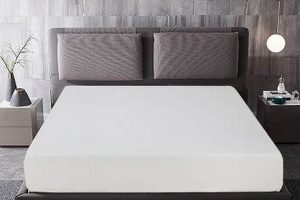
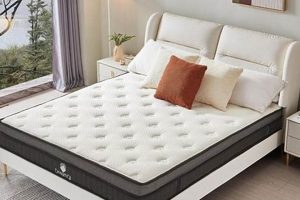
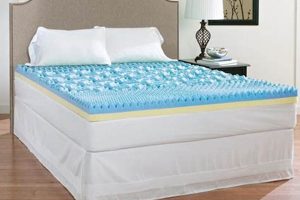
A mattress measuring six inches in thickness represents a foundational bedding option, often constructed with foam, innersprings, or a combination thereof. Its compact profile makes it suitable for various applications, including bunk beds, guest rooms, and situations where space is a premium. As an example, consider a six-inch memory foam mattress used to enhance comfort on a platform bed frame.
The importance of a six-inch mattress lies in its accessibility and affordability. It offers a practical and economical solution for individuals seeking basic support and comfort. Historically, thinner mattresses like these have been a common choice in settings where budget constraints are a primary factor. The benefits include ease of transport, lighter weight compared to thicker alternatives, and compatibility with a wide range of bed frames.
The subsequent sections will delve into specific construction types, ideal user profiles, considerations for purchasing, and potential drawbacks associated with this mattress size. Furthermore, this analysis will compare it to other mattress thicknesses, providing a holistic understanding of its place within the broader mattress market.
Essential Considerations
The following points offer vital guidance when evaluating a thinner sleep surface. Prioritize individual requirements and assess the suitability of this mattress type before committing to a purchase.
Tip 1: Assess Intended Use: Determine the primary purpose. This mattress may be appropriate for occasional use in guest rooms or for children. Daily use by adults, particularly those with specific support needs, might necessitate a thicker alternative.
Tip 2: Examine Construction Materials: Evaluate the composition. All-foam models may offer adequate pressure relief, while innerspring versions can provide enhanced support and airflow. Consider CertiPUR-US certification to ensure minimal off-gassing and harmful chemicals.
Tip 3: Consider Sleeper Weight and Position: Account for body weight. Heavier individuals may experience inadequate support and excessive sinkage. Side sleepers may require a thicker comfort layer for proper spinal alignment.
Tip 4: Evaluate Edge Support: Assess the stability of the mattress edges. Limited edge support is a common characteristic, potentially causing a roll-off sensation. Consider the implications for couples or individuals who utilize the full sleep surface.
Tip 5: Investigate Foundation Compatibility: Confirm compatibility with the bed frame. This mattress is typically suitable for platform beds, bunk beds, and adjustable bases. Ensure the foundation provides adequate support to prevent sagging.
Tip 6: Review Warranty and Return Policies: Scrutinize the warranty and return policies. A longer warranty indicates greater confidence in product durability. A trial period allows for in-home assessment of comfort and suitability.
Careful consideration of these aspects will facilitate an informed purchasing decision. Understanding the limitations and benefits ensures the selected mattress aligns with specific sleep needs and preferences.
The subsequent conclusion will synthesize these points and provide a final perspective on the overall value proposition of this specific mattress profile.
1. Affordability
The correlation between a six-inch mattress and affordability is direct and significant. The reduced material volume in its construction inherently lowers manufacturing costs, translating to a lower retail price. This represents a key differentiating factor in the bedding market, positioning the product as an accessible option for budget-conscious consumers. For example, individuals furnishing student housing, setting up guest rooms, or equipping bunk beds in shared children’s rooms often prioritize affordability, making this type of mattress a practical choice. The diminished use of materials impacts cost, contributing directly to its market placement. Understanding this cost-effectiveness is crucial for consumers operating within financial constraints.
The practical significance of this affordability extends beyond initial purchase price. The lower cost often allows for more frequent replacement, potentially mitigating concerns about long-term wear and tear. Furthermore, institutions such as summer camps, hostels, or temporary housing facilities can benefit from the economic efficiency of mass purchasing six-inch mattresses. While quality and comfort considerations remain important, the financial advantage often outweighs potential compromises for these applications. Moreover, in times of economic hardship, this type of mattress provides a viable solution for individuals seeking a basic sleeping arrangement without incurring significant debt.
In summary, the affordability of a six-inch mattress stems from its streamlined construction and reduced material requirements. This feature renders it a crucial component of its market appeal, particularly for price-sensitive consumers and organizations with bulk purchasing needs. While it is essential to consider the trade-offs between affordability and comfort/support, the financial benefits often make it a compelling solution. This aspect highlights a critical intersection of consumer needs and product design within the competitive bedding landscape.
2. Compact Profile
The “compact profile” of a six-inch mattress is a defining characteristic, directly influencing its suitability for specific applications and environments. This dimensional attribute dictates its physical footprint and accessibility, presenting advantages and limitations relative to thicker mattress alternatives.
- Space Optimization
The reduced thickness directly translates to space savings. This is particularly relevant in environments with limited square footage, such as apartments, dormitories, or recreational vehicles. A thinner mattress allows for more efficient use of available space and improved maneuverability within the room. Bunk beds exemplify this benefit, as a thicker mattress would compromise headroom on the upper bunk and potentially exceed safety guidelines.
- Weight Reduction
A six-inch mattress typically weighs less than its thicker counterparts. This decreased weight simplifies transportation, installation, and repositioning. It is a practical advantage for individuals who frequently move or rearrange their living spaces. Furthermore, the lighter weight reduces the strain on bed frames, potentially prolonging their lifespan, particularly in lightweight or less robust frame constructions.
- Bed Frame Compatibility
The reduced height enhances compatibility with various bed frame styles, including platform beds and adjustable bases. A six-inch mattress minimizes the overall height of the bed, maintaining a more aesthetically pleasing and ergonomically accessible profile. This is a relevant consideration for individuals with mobility limitations, where ease of entry and exit from the bed is paramount.
- Storage Solutions
When considering foldaway beds or trundle beds, a thinner mattress becomes nearly essential. The design of these systems requires a low-profile mattress to allow for seamless folding and storage. A thicker mattress would prevent the bed from closing or rolling away correctly. The six-inch profile enables these space-saving furniture solutions to function as intended.
In summary, the compact profile of a six-inch mattress provides tangible benefits related to space management, portability, and bed frame integration. These advantages should be carefully weighed against potential drawbacks in terms of support and comfort when making a purchasing decision. The inherent link between this profile and the mattress’s application dictates its overall suitability for a specific user’s needs.
3. Limited Support
The characteristic of “limited support” is an inherent consideration when evaluating a six-inch mattress. Its reduced thickness restricts the amount of material available to provide adequate spinal alignment and pressure relief. Understanding the implications of this limitation is crucial for making an informed purchasing decision.
- Reduced Spinal Alignment
The diminished material depth can result in inadequate support for the natural curvature of the spine, particularly for individuals with higher body weights or those who sleep on their sides. This can lead to discomfort, pain, and potentially exacerbate existing spinal issues. For example, a side sleeper may experience increased pressure on the hips and shoulders due to the mattress’s inability to adequately conform to the body’s contours. Inadequate support can cause misalignment and muscle strain.
- Compromised Pressure Relief
A thinner mattress often lacks the substantial comfort layers necessary to effectively distribute body weight and alleviate pressure points. This can lead to localized discomfort, particularly in areas such as the hips, shoulders, and knees. Individuals who are prone to pressure sores or who experience chronic pain may find that a six-inch mattress does not provide sufficient cushioning.
- Insufficient Motion Isolation
The thinner profile typically offers less effective motion isolation compared to thicker mattresses. This can be a concern for couples sharing a bed, as movements on one side of the mattress can be readily felt on the other side, disrupting sleep. The lack of substantial material dampening vibrations can amplify motion transfer, leading to restless nights.
- Reduced Longevity
The diminished material volume often correlates with reduced durability. A six-inch mattress may be more prone to sagging and compression over time, particularly with regular use. This can further compromise support and comfort, necessitating more frequent replacement. The lifespan may be considerably shorter compared to thicker, more robust mattress options.
These facets of limited support highlight the importance of considering individual needs and preferences when selecting a mattress. While a six-inch mattress may be suitable for occasional use or for individuals with minimal support requirements, it may not be the optimal choice for those seeking long-term comfort and spinal health. Comparative analysis with thicker mattress options is essential to assess the trade-offs between affordability, space-saving benefits, and the imperative need for adequate support.
4. Guest Use

The application of a six-inch mattress for “Guest Use” is a prevalent practice, driven by practical and economic considerations. Its suitability within this context warrants specific examination, focusing on the balance between providing adequate comfort and managing resources efficiently.
- Infrequent Occupancy
The sporadic nature of guest visits often justifies the selection of a less expensive and less robust mattress. The low usage frequency mitigates concerns about long-term wear and tear, making a six-inch option a financially sensible solution. The limited number of nights per year spent on the mattress diminishes the importance of premium features typically found in higher-end models.
- Space Optimization in Guest Rooms
Guest rooms are frequently smaller than primary bedrooms, necessitating efficient use of available space. A six-inch mattress, with its compact profile, facilitates this requirement. It allows for greater freedom of movement within the room and accommodates additional furniture without creating a cramped environment. This is especially relevant in situations where the guest room serves a dual purpose, such as a home office or studio.
- Variety of Guest Preferences
Accommodating diverse sleep preferences among guests can be challenging. A six-inch mattress, while not offering the customized support of more advanced models, provides a neutral sleeping surface that caters to a broad range of individuals. It aims to offer an acceptable level of comfort without attempting to precisely match the unique needs of each guest, a practical approach in a variable environment.
- Ease of Maintenance and Storage
The lighter weight and smaller dimensions of a six-inch mattress facilitate easier handling and storage. This is particularly advantageous for homeowners who may need to occasionally move or store the mattress to accommodate different room configurations or seasonal needs. The simplified cleaning and maintenance requirements further contribute to its practicality in a guest room setting.
Considering these elements, the correlation between “Guest Use” and the selection of a six-inch mattress is firmly rooted in pragmatism. While not designed to provide optimal support for extended periods, it offers an accessible, space-efficient, and manageable solution for accommodating infrequent visitors. The decision hinges on prioritizing cost-effectiveness and convenience without compromising a reasonable standard of comfort.
5. Bunk Beds

The correlation between bunk beds and mattresses of six-inch thickness is a practical necessity dictated by safety and space considerations. The design of bunk beds, particularly the upper bunk, mandates the use of a thinner mattress to comply with safety standards regarding guardrail height and headroom. Using a thicker mattress on the upper bunk would significantly reduce the effective height of the guardrail, increasing the risk of falls. Furthermore, it would diminish the available headroom for the occupant, leading to discomfort and potential injury. For instance, regulations for bunk bed construction in many jurisdictions specify maximum mattress thicknesses to ensure these safety parameters are met. The selection of a six-inch mattress is, therefore, often a mandatory component of safe bunk bed usage. Without this consideration, the inherent design benefits of bunk beds – space-saving and accommodation of multiple occupants within a confined area – would be compromised by safety hazards.
The specific characteristics of a six-inch mattress contribute to its suitability for bunk beds. Its reduced weight, compared to thicker mattresses, eases the task of making the bed, particularly on the upper bunk. Its generally lower cost is also advantageous in scenarios where multiple bunk beds are being furnished, such as in summer camps, hostels, or children’s rooms with multiple occupants. While the comfort and support levels may be less than those offered by thicker mattresses, the primary objective in bunk bed applications is often functionality and safety over premium comfort. Real-world examples include college dormitories, where bunk beds with six-inch mattresses are common due to the limited space available and the transient nature of student occupancy. The use of six-inch mattresses in bunk beds effectively balances spatial efficiency with a basic level of comfort and adherence to safety guidelines.
In conclusion, the relationship between bunk beds and six-inch mattresses is one of practical interdependence. Safety regulations, spatial limitations, and economic considerations all contribute to the prevalence of this mattress type in bunk bed applications. While the inherent limitations in support and comfort must be acknowledged, the overall functionality and safety profile of a six-inch mattress make it a suitable and often necessary choice for bunk bed usage. This understanding is critical for manufacturers, retailers, and consumers alike, ensuring that bunk beds are equipped with mattresses that meet established safety standards and optimize the space-saving design of these furniture configurations.
6. Lightweight

The characteristic of being “Lightweight” is inextricably linked to a six-inch mattress due to its diminished material volume. This lightness impacts various aspects of its functionality and suitability, warranting a detailed examination.
- Ease of Transportation
The reduced weight significantly simplifies the task of transporting the mattress. This is particularly relevant during initial purchase, relocation, or when moving the mattress between rooms. The lighter weight allows for easier handling by a single individual, reducing the need for assistance and minimizing the risk of injury. For example, individuals living in apartment buildings without elevators can more easily maneuver a six-inch mattress up stairwells compared to heavier alternatives.
- Simplified Installation and Setup
Positioning and installing the mattress on a bed frame is notably easier due to its lighter weight. This reduces the physical strain involved and allows for quicker setup. Individuals with limited mobility or strength can manage the installation process more readily. In situations where the mattress needs to be frequently moved, such as for cleaning or storage, the reduced weight offers a distinct advantage.
- Reduced Frame Stress
A lighter mattress exerts less stress on the bed frame, potentially prolonging its lifespan. This is particularly relevant for frames constructed from lightweight materials or those with less robust support structures. The reduced weight minimizes the risk of sagging or structural damage to the frame over time. This can be a significant consideration for individuals using platform beds or adjustable bases with weight limitations.
- Enhanced Maneuverability for Bed Making
Making the bed is simplified due to the lighter weight of the mattress. Lifting corners and tucking in sheets requires less effort, making the task less physically demanding. This is especially beneficial for individuals with back problems or limited upper body strength. The reduced weight also allows for easier rotation of the mattress, a practice recommended for even wear and tear.
The various facets of “Lightweight” underscore its practical benefits in relation to a six-inch mattress. From simplified transportation and installation to reduced frame stress and enhanced maneuverability, the lighter weight contributes to increased ease of use and overall convenience. These advantages, however, must be balanced against potential compromises in support and comfort when evaluating the suitability of this mattress type.
Frequently Asked Questions
This section addresses common inquiries regarding mattresses with a six-inch profile, providing factual information to aid in informed purchasing decisions.
Question 1: What is the recommended user profile for a six-inch mattress?
A six-inch mattress is generally recommended for occasional use, such as in guest rooms, or for children. Individuals with higher body weights or those seeking substantial support may find it inadequate for regular use.
Question 2: What types of bed frames are compatible with a six-inch mattress?
This type of mattress is generally compatible with platform beds, bunk beds, and adjustable bases. Ensure the bed frame provides adequate support to prevent sagging.
Question 3: Is a six-inch mattress suitable for individuals with back pain?
Due to the limited support provided, a six-inch mattress may not be optimal for individuals with pre-existing back conditions. Thicker mattresses offering enhanced spinal alignment are typically recommended in such cases.
Question 4: What is the typical lifespan of a six-inch mattress?
The lifespan varies depending on usage and construction, but is generally shorter compared to thicker mattresses. Regular use may result in sagging and compression over time, potentially necessitating earlier replacement.
Question 5: What are the primary advantages of a six-inch mattress?
The primary advantages include affordability, a compact profile, and light weight. These features make it suitable for budget-conscious consumers and space-constrained environments.
Question 6: What are the potential drawbacks of a six-inch mattress?
Potential drawbacks include limited support, reduced pressure relief, and potentially shorter lifespan compared to thicker alternatives.
In summary, a six-inch mattress offers a budget-friendly and space-saving solution for specific applications. However, individuals should carefully consider their individual needs and prioritize adequate support and comfort when making a purchasing decision.
The subsequent section will provide a comparative analysis of six-inch mattresses with other mattress profiles, further elucidating their relative strengths and weaknesses.
Concluding Remarks on Six-Inch Mattresses
This exploration has illuminated the multifaceted nature of the six-inch mattress, encompassing its defining characteristics, applications, and limitations. Affordability, compact dimensions, and lightweight design emerged as key advantages, rendering it a viable option for guest rooms, bunk beds, and situations prioritizing space efficiency. Conversely, the inherent constraints in support, pressure relief, and durability must be carefully weighed. The analysis underscored the importance of aligning the mattress’s suitability with the intended user profile, emphasizing that it may not be optimal for everyday use or individuals with specific support requirements.
The final assessment reveals a product serving a distinct niche within the broader bedding market. While not designed to compete with premium mattresses offering superior comfort and orthopedic benefits, the six-inch mattress provides a pragmatic solution for budget-conscious consumers and environments where space is at a premium. Responsible purchasing necessitates a thorough evaluation of individual needs, recognizing the trade-offs between cost savings and potential compromises in sleep quality. Further innovation in materials and construction techniques may enhance the inherent limitations, potentially expanding its applicability in the future.
![Best Full Size 12 Inch Memory Foam Mattress [Deals] | Organic & Natural Mattress Buyer’s Guide: Non-Toxic Sleep Solutions](https://mattressworldpa.com/wp-content/uploads/2025/07/th-3807-300x200.jpg "Best Full Size 12 Inch Memory Foam Mattress [Deals] Organic & Natural Mattress Buyer’s Guide: Non-Toxic Sleep Solutions")