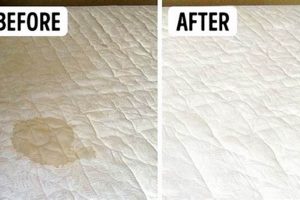
Addressing unwanted marks on a mattress caused by bodily fluids requires a strategic cleaning approach. The issue, characterized by discoloration and potential odor, necessitates prompt attention to prevent long-term damage and maintain hygiene. Effective removal strategies are crucial to restore the mattress to its original condition.
Prompt and thorough removal of such stains benefits the lifespan and sanitation of the mattress. This action mitigates potential health concerns associated with lingering bacteria and unpleasant smells. Historically, various methods have been employed, ranging from sunlight exposure to rudimentary cleaning solutions. Modern approaches leverage specialized products and techniques for enhanced efficacy.
The following sections will detail specific methods for addressing this common household issue, encompassing both immediate action and the treatment of older, more set-in marks. These methods include using household solutions, enzyme cleaners, and preventative measures. Careful attention to these procedures ensures optimal results and preservation of the mattress’s integrity.
Mattress Stain Management Strategies
The following outlines actionable steps for effective removal and prevention of mattress stains caused by bodily fluids. Implementing these tips promptly maximizes the chance of complete stain removal and minimizes lasting damage.
Tip 1: Immediate Action is Critical: The faster the fluid is absorbed, the easier the stain is to remove. Blot the affected area with clean cloths or paper towels immediately.
Tip 2: Utilize Cold Water Only: Hot water can set the stain permanently. Employ cold water for all initial rinsing and cleaning steps.
Tip 3: Baking Soda Application: Generously apply baking soda to the affected area. This helps absorb moisture and neutralize odors. Allow it to sit for several hours, or ideally overnight.
Tip 4: Vacuum Thoroughly: After the baking soda has absorbed the moisture, vacuum the area completely to remove the residue.
Tip 5: Enzyme Cleaner Application: Enzyme cleaners are specifically formulated to break down the organic compounds found in bodily fluids. Follow the product instructions carefully.
Tip 6: Allow for Air Drying: After cleaning, allow the mattress to air dry completely. A fan can be used to expedite the drying process and prevent mold growth.
Tip 7: Protective Mattress Cover: Invest in a waterproof mattress protector to prevent future incidents from damaging the mattress directly. This acts as a barrier against liquid penetration.
Adhering to these guidelines enhances the potential for successful stain removal and preservation of the mattress. Diligence in addressing the issue is key to maintaining a clean and hygienic sleeping environment.
The concluding section will address additional preventative measures and professional cleaning options.
1. Immediate Absorption

The principle of immediate absorption is fundamental to effectively address instances of urine staining a mattress. The rapid removal of liquid minimizes its opportunity to permeate deeper into the mattress fibers and padding. Deeper penetration complicates stain removal, often necessitating more aggressive cleaning methods and potentially resulting in permanent discoloration or residual odor. Consider a scenario where a small quantity of fluid is promptly blotted with absorbent cloths. The stain is often superficial and responds well to subsequent cleaning. Conversely, if left unattended, the same amount of fluid can saturate the mattress, leading to a more pronounced and persistent stain.
The success of immediate absorption hinges on accessibility to absorbent materials. Clean towels, paper towels, or even dedicated absorbent pads should be readily available in households, particularly where incidents are more likely to occur. The blotting action, rather than rubbing, is crucial to prevent spreading the stain and forcing the liquid further into the material. Failing to act swiftly and appropriately can lead to the need for professional cleaning services or, in severe cases, mattress replacement. Practical applications extend beyond residential settings, encompassing healthcare facilities, hotels, and childcare centers, where hygiene is paramount.
In summation, the linkage between immediate absorption and successful urine stain management on mattresses is irrefutable. The timeliness and effectiveness of this initial step significantly impact the long-term outcome, determining the ease of stain removal and the preservation of mattress hygiene. While subsequent cleaning protocols are important, the window of opportunity presented by immediate absorption remains the most critical factor in mitigating the lasting effects of such incidents.
2. Enzymatic Cleaners

Enzymatic cleaners represent a crucial element in addressing urine stains on mattresses. Their unique biological action differentiates them from traditional detergents, rendering them particularly effective in breaking down the complex organic compounds present in urine. This action directly correlates to the success of stain and odor removal.
- Mechanism of Action
Enzymatic cleaners employ enzymes to catalyze the decomposition of urine’s components. Specifically, enzymes such as protease, amylase, and lipase target proteins, starches, and fats, respectively. By breaking down these large molecules into smaller, water-soluble units, enzymatic cleaners facilitate their removal from the mattress fibers. Unlike surface-level cleaning agents, enzymes penetrate deeply to address the source of the stain and associated odor.
- Odor Neutralization
Urine’s characteristic odor stems from the breakdown of urea into ammonia. While conventional cleaners may mask the smell temporarily, enzymatic cleaners target the urea itself, preventing further decomposition and thus neutralizing the odor at its source. This is especially important for mattresses, where odors can become deeply embedded within the material.
- Safety Considerations
While effective, the selection and application of enzymatic cleaners must consider material compatibility. Certain enzymes may be detrimental to specific mattress fabrics or components. It is recommended to test the cleaner on an inconspicuous area before widespread application. Furthermore, proper ventilation during and after application is important to prevent irritation from the cleaner’s volatile organic compounds.
- Long-Term Stain Management
Enzymatic cleaners not only address existing stains but also contribute to long-term stain management. By thoroughly removing the urine’s organic components, they reduce the likelihood of future bacterial growth and associated odor resurgence. Consistent use, especially following incidents, promotes a cleaner and more hygienic mattress environment.
The multifaceted action of enzymatic cleaners, encompassing stain decomposition, odor neutralization, safety protocols, and long-term management, underscores their significance in effective mattress urine stain remediation. Their targeted approach ensures a more thorough and lasting solution compared to conventional cleaning methods, ultimately extending the lifespan and hygiene of the mattress.
3. Odor Neutralization

Odor neutralization is an indispensable component of effective urine stain removal from mattresses. The presence of lingering odors, even after visible stain removal, can render the mattress unusable and signal incomplete cleaning. The core issue stems from the complex chemical composition of urine, which includes volatile organic compounds (VOCs) that are responsible for its characteristic smell. If stain removal efforts only address the visual component, these VOCs may remain trapped within the mattress fibers, perpetuating the undesirable odor.
The relationship is thus a cause-and-effect dynamic: inadequate odor neutralization negates the perceived success of stain removal. Consider a scenario where a homeowner meticulously cleans a urine-stained mattress using a standard detergent. Despite the stain’s disappearance, a persistent ammonia-like scent lingers. This odor arises from residual urea decomposition, a process that continues even after surface cleaning. This example highlights the necessity of using specialized products designed to neutralize, not merely mask, the odor. Enzymatic cleaners, which break down the urea and other odor-causing compounds, are particularly effective in these situations. Moreover, proper ventilation during and after cleaning aids in the dissipation of any remaining VOCs, further contributing to complete odor neutralization.
In conclusion, the success of effectively addressing urine stains is fundamentally intertwined with thorough odor neutralization. Standard cleaning practices may prove inadequate, leaving behind persistent and unpleasant smells. Strategies incorporating enzyme-based solutions and promoting proper air circulation are critical for achieving complete odor elimination and restoring the mattress to a sanitary and usable condition. Ignoring this aspect of the cleaning process renders the entire endeavor incomplete and potentially ineffective in the long term.
4. Material Compatibility

Material compatibility is a critical consideration when addressing urine stains on mattresses. Mattress construction incorporates diverse materials, each exhibiting unique sensitivities to cleaning agents. Incorrect product selection can result in irreversible damage, discoloration, or structural degradation, thereby exacerbating the initial problem.
- Foam Sensitivity
Many mattresses utilize foam components, including memory foam and polyurethane foam, which are highly susceptible to damage from harsh chemicals. Strong solvents or excessive moisture can degrade the foam’s integrity, causing it to crumble or lose its supportive properties. When addressing urine stains, it is essential to use cleaning agents specifically formulated for foam and to avoid oversaturation.
- Fabric Reaction
Mattress ticking, or the outer fabric covering, can be composed of various materials, including cotton, polyester, and blends. Certain fabrics may react adversely to specific cleaning solutions, leading to discoloration, shrinkage, or weakening of the fibers. Performing a spot test on an inconspicuous area before applying any cleaning agent to the entire mattress is crucial to assess compatibility.
- Spring System Corrosion
Innerspring mattresses contain metal coils that can be susceptible to corrosion from acidic or highly alkaline cleaning solutions. Urine itself is acidic, and the use of incompatible cleaning agents can accelerate the corrosion process, weakening the spring system and compromising the mattress’s support. Selecting pH-neutral cleaning agents and ensuring thorough drying are essential to prevent this issue.
- Adhesive Integrity
Mattress construction often relies on adhesives to bond different layers of material together. Harsh chemicals can dissolve or weaken these adhesives, leading to delamination or separation of the mattress components. When cleaning urine stains, it is important to use gentle cleaning agents and to avoid prolonged exposure to moisture, which can compromise adhesive integrity.
Understanding the material composition of a mattress and selecting compatible cleaning agents is paramount to effectively removing urine stains without causing further damage. Ignoring this factor can lead to costly repairs or premature mattress replacement. Therefore, consulting manufacturer guidelines and conducting spot tests are vital steps in ensuring the long-term integrity of the mattress.
5. Drying Techniques
Proper drying techniques are integral to effective urine stain remediation on mattresses. Inadequate or improper drying can nullify even the most thorough cleaning efforts, leading to potential issues such as mold growth, persistent odors, and material degradation. Therefore, a comprehensive understanding of appropriate drying methods is crucial for maintaining mattress hygiene and longevity after stain removal.
- Air Circulation Maximization
Optimal air circulation is paramount to facilitating evaporation and preventing moisture accumulation. This involves positioning the mattress in a well-ventilated area, ideally near an open window or using fans to promote airflow. In confined spaces, dehumidifiers can further aid in moisture removal, reducing the risk of microbial growth and associated odors. Lack of sufficient air circulation prolongs the drying process, increasing the susceptibility to mold and mildew formation within the mattress core.
- Avoidance of Direct Heat
While expediting the drying process may seem desirable, the application of direct heat, such as from a hairdryer or direct sunlight exposure, can be detrimental. Direct heat can cause irreversible damage to mattress materials, including foam degradation, fabric shrinkage, and adhesive weakening. Furthermore, rapid drying can trap moisture deeper within the mattress, creating a favorable environment for microbial growth. Instead, indirect methods, like a gentle fan breeze, are recommended to facilitate slow and even drying.
- Material-Specific Considerations
Different mattress materials exhibit varying drying characteristics. For example, memory foam tends to retain moisture more readily than innerspring mattresses. Similarly, certain fabrics may be more prone to water stains if not dried evenly. Therefore, drying techniques should be tailored to the specific materials present in the mattress. This may involve using absorbent towels to wick away excess moisture from foam components or ensuring uniform air exposure across the entire mattress surface to prevent watermarks on the fabric.
- Monitoring Moisture Levels
Subjective assessments of dryness may prove inaccurate. Employing moisture meters or sensors can provide objective data regarding the moisture content within the mattress. These devices allow for precise monitoring of the drying process, ensuring that the mattress is thoroughly dry before resuming normal use. Persistently high moisture levels necessitate extended drying times or further intervention, such as professional cleaning, to prevent long-term damage.
In summary, appropriate drying techniques are inextricably linked to the success of urine stain removal on mattresses. Effective drying strategies, encompassing air circulation maximization, heat avoidance, material-specific considerations, and moisture level monitoring, are essential for preventing secondary issues such as mold growth and material degradation. Adhering to these principles ensures the restoration of a hygienic and usable mattress, maximizing its lifespan and minimizing potential health risks.
6. Stain Age
The elapsed time since the occurrence of a urine stain, termed “stain age,” exerts a significant influence on the efficacy of various removal methodologies. Fresh stains, addressed promptly, respond favorably to relatively simple cleaning procedures. In contrast, aged stains, allowed to dwell within mattress fibers, undergo chemical alterations that complicate their extraction. The urine’s components, over time, bind more tenaciously to the mattress material, rendering them less susceptible to common cleaning agents. This time-dependent degradation fundamentally alters the stain’s characteristics and necessitates a more rigorous, targeted approach.
This relationship can be illustrated through comparative examples. A newly formed urine stain, blotted immediately and treated with a diluted enzymatic cleaner, may disappear entirely with minimal effort. Conversely, a urine stain that has persisted for weeks or months will likely require multiple applications of a potent enzymatic solution, extended dwell times, and potentially professional cleaning intervention to achieve a comparable outcome. Furthermore, older stains often exhibit residual discoloration or odor, even after aggressive cleaning protocols. The breakdown of urea into ammonia, a process accelerated by time, contributes to the entrenchment of odors within the mattress’s porous structure. The practical consequence of this understanding lies in the emphasis on immediate action. The longer a urine stain remains untreated, the more challenging and resource-intensive its removal becomes, potentially resulting in irreversible damage or requiring mattress replacement.
In conclusion, the age of a urine stain on a mattress serves as a critical determinant of the required cleaning intensity and the likelihood of complete stain removal. While prompt intervention with appropriate cleaning agents can yield satisfactory results, neglecting stains allows them to become increasingly resistant to treatment. This highlights the importance of vigilance and swift action in maintaining mattress hygiene and minimizing the long-term impact of urine-related incidents.
7. Preventative Measures
Proactive strategies designed to minimize or eliminate the occurrence of urine stains on mattresses form a crucial aspect of mattress maintenance. The implementation of preventative measures directly reduces the need for stain removal procedures, thereby preserving mattress hygiene and extending its lifespan.
- Waterproof Mattress Protectors
A primary defense against urine stains involves the use of waterproof mattress protectors. These barriers shield the mattress from liquid penetration, preventing urine from reaching the absorbent core. High-quality protectors are typically constructed from breathable materials that allow air circulation, mitigating the risk of moisture accumulation and subsequent mold growth. In healthcare settings, mattress protectors are essential for infection control and maintaining a sanitary environment. In residential settings, they offer peace of mind and safeguard against accidental spills or incontinence issues.
- Absorbent Bed Pads
For individuals at higher risk of bedwetting or incontinence, absorbent bed pads provide an additional layer of protection. These pads, typically placed on top of the mattress protector, quickly absorb fluids, preventing them from spreading across the mattress surface. Washable and disposable options are available, catering to varying needs and preferences. In pediatric care, bed pads are commonly used to manage nighttime accidents, while in geriatric care, they address incontinence concerns. These pads offer targeted protection, minimizing the area affected by urine and simplifying cleanup.
- Prompt Linen Changes
In the event of a urine-related incident, immediate removal and replacement of soiled linens are crucial. Prolonged contact between urine and the mattress surface increases the likelihood of staining and odor penetration. Quick action minimizes the opportunity for the urine to seep into the mattress fibers, simplifying subsequent cleaning efforts. This practice is especially important in settings where bed linens are changed less frequently, such as hotels or rental properties.
- Limiting Fluid Intake Before Bed
For individuals prone to nighttime incontinence, adjusting fluid intake before bedtime can reduce the likelihood of bedwetting. This behavioral modification strategy, while not a foolproof solution, can minimize the volume of urine produced during sleep. Encouraging children to use the restroom before bed and limiting their consumption of sugary drinks can be effective in reducing nighttime accidents. In adults, managing fluid intake may be necessary for individuals with certain medical conditions or those taking diuretic medications.
The proactive implementation of these preventative measures significantly reduces the incidence of urine stains on mattresses, thereby lessening the need for extensive cleaning procedures. By employing a multi-faceted approach encompassing physical barriers, absorbent materials, prompt linen changes, and behavioral modifications, individuals can effectively safeguard their mattresses and maintain a hygienic sleeping environment.
Frequently Asked Questions
This section addresses common inquiries regarding the removal of urine stains from mattresses, providing concise and authoritative answers to frequently encountered concerns.
Question 1: What is the most effective initial response to a urine stain on a mattress?
The immediate blotting of the affected area with absorbent materials, such as clean towels or paper towels, constitutes the most effective initial response. This action minimizes fluid penetration into the mattress fibers.
Question 2: Are enzymatic cleaners superior to standard detergents for removing urine stains?
Enzymatic cleaners are generally superior due to their ability to break down the organic compounds found in urine, eliminating both the stain and associated odors. Standard detergents may only address surface-level discoloration.
Question 3: How does the age of a urine stain affect the removal process?
Older urine stains are more challenging to remove due to the prolonged bonding of urine components with the mattress fibers. They may require multiple treatments and extended dwell times for cleaning agents.
Question 4: Can direct sunlight be used to dry a mattress after urine stain removal?
Direct sunlight exposure is generally discouraged as it can degrade mattress materials and potentially set the stain. Air drying in a well-ventilated area is preferable.
Question 5: What preventative measures can be taken to protect a mattress from urine stains?
The use of waterproof mattress protectors and absorbent bed pads constitutes effective preventative measures. Limiting fluid intake before bedtime may also reduce the risk of nighttime accidents.
Question 6: Is professional cleaning necessary for persistent urine stains?
Professional cleaning services are recommended for persistent or deep-seated urine stains that do not respond to standard cleaning methods. Professionals possess specialized equipment and cleaning agents for effective stain removal.
In summary, successful urine stain removal from mattresses relies on prompt action, the use of appropriate cleaning agents, and consideration of stain age and mattress material. Preventative measures significantly reduce the likelihood of future occurrences.
The subsequent section will address specific product recommendations for effective urine stain removal.
How to Get Stains Off Mattress Urine
The preceding discourse has explored the multifaceted problem of how to get stains off mattress urine, outlining effective methodologies for both stain removal and preventative strategies. Immediate action, the judicious application of enzymatic cleaners, adherence to material compatibility guidelines, and the implementation of appropriate drying techniques emerged as critical elements in successful remediation. The age of the stain and the importance of odor neutralization were further emphasized as key determinants of treatment efficacy. Ultimately, the thorough application of these principles offers the best prospect for restoring a mattress to a sanitary and usable state.
Addressing instances of mattress contamination demands vigilance and informed action. Continued adherence to preventative measures, coupled with a swift response to any occurrences, ensures long-term mattress hygiene and minimizes potential health risks. The diligent application of the strategies outlined herein is essential for preserving the integrity and longevity of this crucial household item.