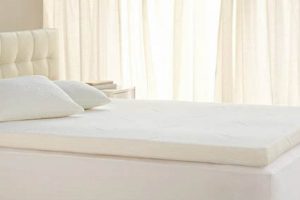
A sleep surface addition, generally constructed from polyurethane or memory materials, with a thickness of three inches, is designed to be placed atop a standard mattress. This layer modifies the feel of the underlying mattress, potentially adding softness or support. Its purpose is to enhance sleep comfort and potentially prolong the lifespan of the mattress itself.
The utilization of such a layer offers a cost-effective method for improving sleep quality without the expense of replacing an entire mattress. Individuals seeking pressure relief, spinal alignment adjustment, or temperature regulation may find this type of topper beneficial. Historically, variations of mattress toppers have been employed to augment comfort levels and address specific sleep-related needs.
This discussion will delve into various aspects of these three-inch sleep surface enhancements, including material composition, density considerations, advantages, disadvantages, and selection criteria to assist in making an informed purchasing decision.
Guidance on Utilizing a Three-Inch Foam Mattress Addition
The effective integration of a three-inch foam layer onto a mattress involves several key considerations to maximize its potential benefits and longevity.
Tip 1: Evaluate Mattress Condition: Prior to acquisition, assess the existing mattress. A topper is designed to augment comfort; it is not a substitute for a significantly worn or damaged sleep surface.
Tip 2: Consider Material Density: Higher density foam generally offers greater support and durability. Research density specifications to align with desired firmness and longevity expectations.
Tip 3: Measure Mattress Dimensions: Accurate measurements are crucial to ensure a proper fit. An ill-fitting topper can shift during sleep, diminishing its intended benefits.
Tip 4: Employ a Mattress Protector: Utilizing a mattress protector atop the three-inch foam layer safeguards it from spills, stains, and allergens, extending its lifespan and maintaining hygiene.
Tip 5: Rotate Periodically: Regular rotation, typically every three to six months, promotes even wear and prevents localized compression of the foam material.
Tip 6: Adhere to Cleaning Instructions: Refer to the manufacturer’s guidelines for appropriate cleaning methods. Improper cleaning can damage the foam and compromise its structural integrity.
Tip 7: Allow for Adequate Ventilation: Upon initial unboxing, allow the three-inch foam mattress enhancement to ventilate fully to dissipate any residual manufacturing odors.
Adhering to these guidelines can optimize the performance and lifespan of a three-inch foam addition, resulting in improved sleep quality and extended mattress utility.
The subsequent sections will explore specific types of three-inch foam mattress enhancements and their respective applications.
1. Density
Density, when discussing three-inch foam mattress additions, constitutes a critical determinant of performance, longevity, and overall user satisfaction. It dictates the material’s support capabilities, its resistance to compression over time, and its impact on temperature regulation. Higher density foams generally exhibit greater durability and provide more substantial support.
- Support and Spinal Alignment
Density directly influences the level of support a three-inch foam addition provides. Higher density materials offer greater resistance to compression, thereby maintaining spinal alignment and reducing pressure points. Insufficient density may result in sagging and inadequate support, potentially exacerbating back pain or discomfort.
- Durability and Lifespan
The density of the foam correlates positively with its lifespan. Higher density foams are more resistant to wear and tear, maintaining their structural integrity over prolonged periods. Lower density options may degrade more rapidly, resulting in a shorter lifespan and a decreased level of support over time.
- Temperature Regulation
Density also plays a role in temperature regulation. Denser foams can sometimes retain more heat compared to less dense options. Open-cell foam structures, often found in lower density materials, tend to promote better airflow and heat dissipation, contributing to a cooler sleep environment.
- Motion Isolation
Higher density foams typically provide better motion isolation capabilities. This is particularly relevant for individuals sharing a bed, as it minimizes the transfer of movement across the sleep surface, reducing disturbances caused by a partner’s movements.
In conclusion, density is a primary factor to consider when evaluating a three-inch foam mattress addition. It directly impacts support, durability, temperature regulation, and motion isolation, influencing overall sleep quality and the product’s long-term value. Careful assessment of density specifications is therefore essential in selecting a topper that aligns with individual needs and preferences.
2. Material

The constituent material of a three-inch foam mattress addition fundamentally dictates its performance characteristics, including comfort, support, durability, and thermal properties. The selection of material, be it memory foam, latex, or polyurethane, directly influences the user experience. For instance, memory foam’s viscoelastic nature allows it to conform to the body’s contours, distributing weight and alleviating pressure points. Conversely, latex offers a more responsive surface, providing resilient support and facilitating ease of movement. Polyurethane foams, often utilized in budget-friendly options, present a range of densities and firmness levels but typically exhibit shorter lifespans compared to memory foam or latex.
The material’s composition also impacts the topper’s ability to regulate temperature. Traditional memory foam can retain heat, potentially leading to discomfort for warm sleepers. To mitigate this, manufacturers often incorporate cooling technologies such as gel infusions or open-cell structures to enhance airflow. Latex, particularly Dunlop latex, generally exhibits better breathability compared to memory foam. The practical significance of understanding material properties lies in aligning the topper’s characteristics with individual sleep preferences and needs. An individual seeking pressure relief may prioritize memory foam, while someone requiring enhanced support and breathability might opt for latex.
In conclusion, the material selection represents a pivotal decision in choosing a three-inch foam mattress addition. It dictates the topper’s core functionalities, influencing comfort, support, durability, and temperature regulation. Awareness of these material properties empowers informed decision-making, enabling consumers to select a topper that optimally enhances their sleep environment. Challenges may arise in discerning subtle differences between material grades and manufacturing processes, underscoring the importance of thorough research and consideration of reputable brands. The material, therefore, serves as a cornerstone in the broader theme of optimizing sleep quality through targeted mattress enhancements.
3. Firmness

Firmness, when associated with a three-inch foam mattress addition, denotes the degree of resistance the material offers to compression. This characteristic directly influences the support provided, impacting spinal alignment and pressure distribution. A firmer topper offers greater resistance, preventing excessive sinking and maintaining a more consistent sleep surface. Conversely, a softer topper yields more readily, contouring to the body’s shape and potentially alleviating pressure points. The appropriate firmness level is subjective, dependent on individual body weight, sleeping position, and personal preferences. For instance, individuals with higher body mass typically benefit from a firmer topper to ensure adequate support, while side sleepers may prefer a softer option to accommodate shoulder and hip curvature.
The practical significance of understanding firmness lies in its direct correlation with sleep quality. Inadequate firmness can lead to spinal misalignment, resulting in back pain and discomfort. Excessive firmness, conversely, may create pressure points, disrupting sleep patterns. Real-life examples underscore the importance of this consideration. An individual experiencing lower back pain on a too-soft mattress may find relief by adding a firmer three-inch foam topper, effectively increasing the overall support. Conversely, someone with sensitive pressure points may benefit from a softer topper that conforms to their body, minimizing discomfort. The firmness level should align with individual needs to optimize sleep comfort and promote proper spinal alignment.
The challenge lies in accurately assessing firmness levels, as subjective descriptions can vary between manufacturers. Independent reviews and trials, where available, can offer valuable insights. Ultimately, the optimal firmness level for a three-inch foam mattress addition is a personalized choice, requiring careful consideration of individual factors to maximize the benefits of this sleep surface enhancement. Firmness represents a pivotal component in the broader objective of achieving restorative sleep through targeted mattress modifications.
4. Thickness
The designated dimension of a three-inch foam addition for a mattress is a primary factor influencing its overall impact on comfort, support, and pressure relief. Thickness directly correlates with the degree to which the topper alters the feel of the underlying mattress and its ability to address specific sleep-related concerns.
- Impact on Support
A three-inch thickness provides a substantial layer of foam, capable of significantly enhancing support, particularly for individuals experiencing sagging in their existing mattress. The thickness allows for greater compression resistance, contributing to improved spinal alignment and reduced back pain. The practical effect is a more consistent and supportive sleep surface.
- Influence on Pressure Relief
The dimensional attribute of three inches offers sufficient material depth to effectively contour to the body, distributing weight and alleviating pressure points. This is especially beneficial for side sleepers, where the additional thickness accommodates shoulder and hip compression, minimizing discomfort. A thinner layer might offer inadequate pressure relief, negating the intended benefits.
- Effect on Temperature Regulation
Thickness can indirectly impact temperature regulation. A thicker foam layer can potentially retain more heat, particularly with dense materials. However, the use of open-cell foams or gel infusions within the three-inch structure can mitigate this effect, promoting airflow and dissipating heat. Therefore, while thickness is a factor, material composition plays a more direct role in thermal properties.
- Modification of Mattress Feel
The specified dimension dramatically modifies the overall feel of the underlying mattress. A three-inch foam addition can transform a firm mattress into a softer surface or provide a layer of support to a sagging mattress. The thickness represents a balance between altering the existing feel and providing a tangible improvement in comfort and support. The selection depends on the specific needs of the user and the existing characteristics of the mattress.
In summation, the three-inch dimension of a foam mattress addition serves as a crucial determinant of its impact on support, pressure relief, temperature regulation, and the overall feel of the sleep surface. The thickness allows for a meaningful alteration of the mattress characteristics, enabling users to address specific comfort and support needs without replacing the entire mattress. The suitability of this thickness, however, is contingent upon individual preferences and the condition of the underlying mattress.
5. Lifespan
The lifespan of a three-inch foam mattress addition is intrinsically linked to material composition, density, usage patterns, and maintenance practices. The duration for which the topper effectively provides its intended support and comfort hinges on these factors. A higher density foam, such as memory foam or latex, generally exhibits a longer lifespan than lower density polyurethane foam. The compression and decompression cycles experienced nightly contribute to wear and tear, ultimately impacting the topper’s structural integrity and ability to maintain its original form. Insufficient support can result in diminished comfort and potential exacerbation of sleep-related issues. For example, a high-density memory foam topper, properly maintained, might last five to seven years, while a low-density polyurethane option may only provide adequate support for one to three years.
Proper maintenance significantly extends the serviceability of this sleeping surface enhancement. Regular rotation prevents localized compression, distributing wear evenly across the surface. The use of a mattress protector safeguards against spills, stains, and allergen accumulation, preserving the material’s integrity. Adherence to manufacturer-recommended cleaning procedures minimizes degradation caused by improper care. Understanding the relationship between lifespan and these influencing factors enables informed purchase decisions and proactive maintenance practices. Consumers can prioritize materials and densities known for longevity, ensuring a more sustainable investment. Real-world applications demonstrate that investing in a higher quality topper, coupled with diligent maintenance, offers superior long-term value compared to frequent replacement of cheaper alternatives.
In summary, the lifespan of a three-inch foam mattress addition is a critical consideration, influencing overall value and long-term sleep comfort. Material quality, density, usage, and maintenance collectively determine its durability and effectiveness. Recognizing this interconnectedness empowers consumers to make informed choices, maximizing the lifespan and optimizing the performance of their sleep surface enhancement. Challenges arise in accurately predicting lifespan due to variations in individual usage patterns, highlighting the importance of prioritizing quality materials and adhering to recommended maintenance practices. The lifespan, therefore, is a vital component in the broader consideration of achieving sustained sleep quality and value through targeted mattress modifications.
6. Support
Adequate support is a primary function of a three-inch foam addition, influencing spinal alignment, pressure distribution, and overall sleep comfort. The level of support provided directly impacts the user’s experience and can either mitigate or exacerbate existing musculoskeletal issues.
- Spinal Alignment
A three-inch foam addition should maintain the natural curvature of the spine, regardless of sleeping position. Insufficient support can lead to spinal misalignment, resulting in back pain and discomfort. For instance, a side sleeper requires adequate support to prevent the spine from curving excessively downward, while a back sleeper needs support to maintain the natural arch in the lower back. The foam’s ability to resist compression and distribute weight evenly is crucial for proper spinal alignment.
- Pressure Distribution
Effective support entails distributing body weight across the surface, minimizing pressure points at areas such as the shoulders, hips, and knees. A supportive topper prevents excessive sinking in these areas, reducing discomfort and promoting circulation. Individuals experiencing joint pain or arthritis may find a supportive three-inch foam layer particularly beneficial.
- Edge Support
While the primary focus is on central support, edge support is a relevant consideration, especially for individuals who sleep near the edge of the bed or rely on the edge for support when sitting. Adequate edge support prevents the feeling of rolling off the bed and provides a more stable sleep surface. A well-constructed three-inch foam topper should maintain its structural integrity along the edges.
- Influence of Density and Firmness
The level of support provided is intrinsically linked to the density and firmness of the foam material. Higher density foams offer greater resistance to compression, providing more substantial support. Similarly, a firmer topper will provide more support than a softer one. The optimal balance between density and firmness is dependent on individual body weight, sleeping position, and personal preference.
The facets detailed demonstrate that support, in the context of a three-inch foam addition, encompasses spinal alignment, pressure distribution, edge stability, and the influence of material properties. A topper that effectively addresses these elements contributes to improved sleep quality, reduced pain, and enhanced overall comfort. The suitability of a specific three-inch foam addition is contingent upon its ability to provide adequate support tailored to the individual’s unique needs. This can be compared to selecting proper footwear; inadequate support can lead to discomfort and potential musculoskeletal issues, while appropriate support promotes stability and well-being.
7. Pressure Relief
Pressure relief, in the context of a three-inch foam mattress addition, pertains to the reduction of concentrated forces exerted on specific areas of the body during sleep. This attribute is a crucial determinant of comfort, particularly for individuals experiencing joint pain, arthritis, or prolonged immobility. The ability of the topper to redistribute weight and minimize pressure points directly impacts sleep quality and overall well-being.
- Conformability of Material
The material’s ability to conform to the body’s contours is paramount for effective pressure relief. Memory foam, for instance, exhibits a viscoelastic nature that allows it to mold to the body’s shape, distributing weight more evenly. A three-inch layer of memory foam provides a substantial surface area for this conforming action, reducing pressure on prominent areas such as the hips and shoulders. In contrast, a less conformable material like traditional innerspring may create localized pressure points, leading to discomfort and disrupted sleep.
- Density and Responsiveness
Density and responsiveness play a significant role in pressure relief capabilities. A higher density foam, while providing greater support, may not offer optimal pressure relief if it lacks responsiveness. Responsiveness refers to the material’s ability to quickly adapt to changes in pressure as the sleeper moves. A three-inch topper with a balance of density and responsiveness can provide both support and pressure relief, accommodating different sleeping positions and body weights. Latex foam, known for its responsiveness, is often utilized for pressure relief applications.
- Zoned Construction
Some three-inch foam additions feature a zoned construction, wherein different areas of the topper exhibit varying levels of firmness to target specific pressure points. For example, a softer zone may be incorporated in the shoulder area to accommodate side sleepers, while a firmer zone may support the lumbar region. This targeted approach optimizes pressure relief by addressing the unique needs of different body regions. Zoned construction represents an advanced strategy for enhancing the pressure-relieving properties of a three-inch foam layer.
- Thickness and Distribution
The three-inch thickness itself contributes significantly to pressure relief. This dimension provides sufficient material depth to effectively cushion pressure points. The thickness allows for a more gradual transition between the body and the underlying mattress, distributing weight over a larger surface area. A thinner topper may lack the capacity to provide adequate pressure relief, particularly for individuals with higher body weight or existing pressure-related discomfort.
The combined effects of conformability, density, responsiveness, zoned construction, and sufficient thickness collectively determine the pressure-relieving capabilities of a three-inch foam mattress addition. Evaluating these attributes enables consumers to select a topper that effectively addresses their specific pressure-related needs, promoting improved sleep quality and reduced discomfort. Understanding the practical aspects of these elements in terms of pressure relief is paramount for selecting the right three-inch foam mattress addition.
Frequently Asked Questions
The following questions address common inquiries and misconceptions surrounding the use of a three-inch foam mattress addition. The responses aim to provide clarity and inform decision-making.
Question 1: Will a three-inch foam mattress addition salvage a severely damaged mattress?
A three-inch foam mattress addition is designed to enhance comfort and provide a degree of support. It is not a substitute for a structurally compromised mattress. A severely damaged mattress requires replacement.
Question 2: How does density impact the performance of a three-inch foam mattress addition?
Density directly correlates with support, durability, and longevity. Higher density foams offer greater resistance to compression and maintain their form over prolonged use.
Question 3: What is the recommended cleaning procedure for a three-inch foam mattress addition?
Cleaning procedures vary based on material composition. Refer to the manufacturer’s instructions for specific guidelines. Generally, spot cleaning with a mild detergent and water is recommended. Avoid harsh chemicals and direct sunlight exposure.
Question 4: Can a three-inch foam mattress addition alleviate chronic back pain?
A three-inch foam mattress addition can contribute to improved spinal alignment and pressure distribution, potentially alleviating back pain. However, it is not a substitute for medical treatment. Consult a healthcare professional for persistent pain.
Question 5: Does a three-inch foam mattress addition trap heat?
Some materials, such as traditional memory foam, can retain heat. Open-cell foams and gel infusions mitigate this effect by promoting airflow. Material composition influences thermal properties.
Question 6: How frequently should a three-inch foam mattress addition be replaced?
Replacement frequency depends on material quality, usage patterns, and maintenance. High-quality materials, properly maintained, may last five to seven years. Regular assessment of support and comfort levels dictates the need for replacement.
Key takeaways include the importance of material quality, density, proper maintenance, and the understanding that a three-inch foam mattress addition is an enhancement, not a solution for underlying mattress defects.
The subsequent section will explore alternative sleep surface modifications and their respective applications.
Conclusion
This exploration has elucidated critical facets of the 3 foam mattress topper. It underscores the importance of material composition, density, firmness, and thickness in achieving optimal sleep comfort and support. Lifespan, maintenance, and individual needs should inform purchasing decisions. The topper’s purpose is to enhance an existing mattress, not to compensate for severe structural deficiencies.
Careful consideration of these parameters will facilitate the selection of a 3 foam mattress topper that aligns with individual requirements. This will maximize the potential for improved sleep quality and extended mattress utility. It represents a pragmatic approach to optimizing the sleep environment. A well-informed decision contributes to long-term value and enhanced well-being.
![Best Foam Mattress for SUV Camping [Guide] | Organic & Natural Mattress Buyer’s Guide: Non-Toxic Sleep Solutions](https://mattressworldpa.com/wp-content/uploads/2025/07/th-325-300x200.jpg "Best Foam Mattress for SUV Camping [Guide] Organic & Natural Mattress Buyer’s Guide: Non-Toxic Sleep Solutions")
![Foam DIY: How to Cut a Mattress [Easy Guide] | Organic & Natural Mattress Buyer’s Guide: Non-Toxic Sleep Solutions](https://mattressworldpa.com/wp-content/uploads/2025/07/th-323-300x200.jpg "Foam DIY: How to Cut a Mattress [Easy Guide] Organic & Natural Mattress Buyer’s Guide: Non-Toxic Sleep Solutions")
![Best Mattress Twin Foam [Sleep Better Now] | Organic & Natural Mattress Buyer’s Guide: Non-Toxic Sleep Solutions](https://mattressworldpa.com/wp-content/uploads/2025/07/th-321-300x200.jpg "Best Mattress Twin Foam [Sleep Better Now] Organic & Natural Mattress Buyer’s Guide: Non-Toxic Sleep Solutions")