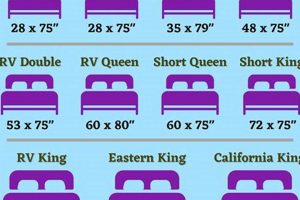
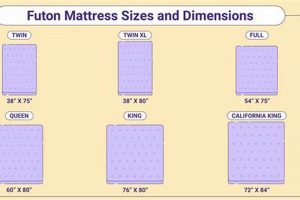
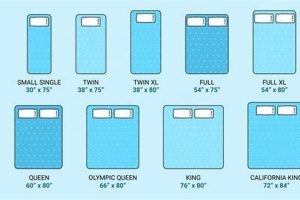
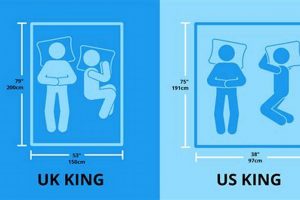
The standard measurements for a mattress designed to accommodate two adults in the United Kingdom are generally 135 centimeters in width and 190 centimeters in length. This sizing provides ample personal space for comfortable sleep and is a widely adopted standard within the domestic bedding market. These dimensions influence the overall comfort and suitability for different bedroom sizes.
Correctly understanding the specific measurements of a mattress is important for several reasons. It ensures compatibility with bed frames, which are also manufactured to standard dimensions. Furthermore, knowing the mattress size allows for the appropriate selection of bedding, such as sheets, duvet covers, and mattress protectors, ensuring a snug and aesthetically pleasing fit. This dimension has evolved over time to balance space efficiency in UK homes with providing adequate sleeping space.
The following sections will delve into the factors influencing mattress choice, including room size considerations, the variety of mattress types available, and the crucial aspects of selecting the right bed linens to complement this common bed size.
Considerations for Selecting a Mattress
This section provides practical guidance on choosing a mattress, focusing on aspects beyond the standard UK dimensions, to ensure optimal comfort and suitability for individual needs and bedroom spaces.
Tip 1: Assess Room Dimensions: Prior to purchase, accurately measure the intended bedroom space. Ensure sufficient clearance around the bed frame to allow for comfortable movement and furniture placement. Avoid overcrowding the room.
Tip 2: Evaluate Sleeping Preferences: Consider sleeping style. Side sleepers may benefit from mattresses with enhanced pressure relief, while back or stomach sleepers may prefer firmer support. Match mattress firmness to individual comfort requirements.
Tip 3: Research Mattress Types: Explore the range of available mattress technologies, including memory foam, pocket sprung, and hybrid options. Each offers unique advantages in terms of support, temperature regulation, and motion isolation. Understand the characteristics of each type.
Tip 4: Consider Partner Preferences: If sharing the bed, factor in the sleeping preferences of both individuals. Look for mattresses that offer motion isolation to minimize disturbance from partner movement. Consider a split firmness option if preferences differ significantly.
Tip 5: Check Mattress Depth: Ensure the selected mattress depth is compatible with the existing bed frame. An excessively thick mattress may obscure the headboard, while an overly thin mattress may not provide adequate support. Verify compatibility prior to purchase.
Tip 6: Review Warranty Information: Carefully review the manufacturer’s warranty policy, paying attention to the terms and conditions regarding defects, sagging, and other potential issues. A comprehensive warranty provides peace of mind and protects the investment.
Tip 7: Consider Trial Periods: Whenever possible, take advantage of trial periods offered by retailers. This allows for a period of in-home testing to assess comfort and suitability before committing to the purchase. Review the return policy prior to initiating a trial.
Tip 8: Factor in Long-Term Costs: Consider the lifespan of the mattress and the potential need for replacement in the future. Invest in a quality mattress that provides adequate support and durability to minimize long-term costs associated with frequent replacements.
Selecting the correct mattress based on specific needs and available space will promote better sleep quality and overall well-being. Careful consideration of these factors will ensure a satisfactory and long-lasting investment.
The concluding section will offer a summary of the key considerations and emphasize the importance of informed decision-making when purchasing bedding for the standard size.
1. Width

The dimension of 135 cm representing width, is a fundamental component defining the area of a UK standard double-size mattress. This horizontal measurement directly impacts its capacity to comfortably accommodate two adults and influences its suitability for various bedroom sizes.
- Spatial Efficiency
The 135 cm width represents a balance between providing adequate sleeping space for two individuals and optimizing space utilization in typical UK homes. This dimension is a compromise to ensure that bedrooms aren’t overly dominated by the bed while still offering sufficient room for couples or co-sleepers. For example, smaller bedrooms benefit from this width because it allows for easier furniture placement and movement around the room. Conversely, larger bedrooms may accommodate larger mattress sizes for increased personal space.
- Bedding Compatibility
Bedding manufacturers design sheets, duvets, and mattress protectors to conform precisely to standard mattress dimensions. The 135 cm width ensures that linens fit correctly, preventing slippage, bunching, and discomfort during sleep. Purchasing bedding specifically labelled for double beds guarantees compatibility with this width. Incorrectly sized bedding can lead to increased wear and tear, requiring more frequent replacement.
- Frame and Base Integration
Bed frames and bases are constructed with interior dimensions designed to support mattresses of standard sizes. A 135 cm width is crucial for ensuring a secure and stable fit within the bed frame. Gaps between the mattress and frame edges can cause instability and reduce the lifespan of both the mattress and the frame. Proper integration maximizes support and reduces the risk of structural damage. Additionally, the dimensions need to be precise to ensure the mattress is not stressed or bent over time.
- Comfort and Personal Space
The 135 cm width dictates the amount of personal space available to each sleeper. While it is adequate for two adults, individual preferences may vary. Individuals who prefer more space or who are restless sleepers might consider a larger mattress size, such as a king or super king. Understanding the impact of width on personal comfort is crucial for optimizing sleep quality and minimizing disturbances caused by partner movement.
In summary, the 135 cm width is a critical parameter influencing the overall functionality and comfort of this common mattress size. Its impact spans spatial efficiency, bedding compatibility, frame integration, and the degree of personal space afforded to sleepers. A precise understanding of this dimension facilitates informed purchasing decisions and ensures a harmonious integration within the bedroom environment.
2. Length

The 190 cm dimension representing length is an integral component defining a standard double-size mattress within the UK market. This vertical measurement contributes significantly to the overall sleeping surface area and influences its suitability for various body types and sleeping postures.
- Accommodation of Height
The 190 cm length caters to the average height of adults in the United Kingdom. However, individuals exceeding this height may experience discomfort due to insufficient legroom, leading to disrupted sleep. Mattress manufacturers also create extended sizes, often referred to as “long double,” to cater to taller individuals. This consideration is paramount for ensuring optimal comfort and preventing sleep disturbances.
- Compatibility with Bed Frames
Similar to the width, the 190 cm length must align precisely with the internal dimensions of compatible bed frames. Discrepancies in length can result in the mattress either protruding from or falling short of the frame, creating an unstable and potentially hazardous sleeping surface. Prior to purchasing a frame, verify its compatibility with the standard length to ensure a secure and supportive fit. For example, buying an antique bed frame may require slight adjustments to accommodate modern mattress dimensions.
- Influence on Sleeping Posture
The length plays a crucial role in enabling proper spinal alignment and comfortable sleeping posture. If the mattress is too short, individuals may unconsciously contort their bodies to fit, leading to muscle strain and back pain. A sufficient length allows sleepers to fully extend their limbs without restriction, promoting relaxation and restful sleep. Side sleepers require the full length to accommodate their body’s natural curvature, while back sleepers need it to maintain a straight spine.
- Bedding Fitment Implications
Standard bedding sets designed for UK double mattresses are manufactured to complement the 190 cm length. Fitted sheets, duvet covers, and mattress protectors must correspond to this measurement to ensure a snug and aesthetically pleasing fit. Overly short bedding will be difficult to secure, while excessively long bedding may bunch up and cause discomfort. Proper bedding selection ensures a functional and visually appealing sleeping environment.
In conclusion, the 190 cm length dimension is a defining characteristic of a UK standard double-size mattress, significantly impacting comfort, bed frame compatibility, sleeping posture, and bedding selection. Careful attention to this measurement ensures optimal sleep quality and a harmonious integration of the mattress within the bedroom environment. Considerations such as individual height and frame compatibility must be factored into the purchasing decision to achieve the desired level of comfort and support.
3. Standard Bedding Fit

The term “Standard Bedding Fit” denotes the standardized dimensions of sheets, duvet covers, mattress protectors, and other bedding items designed to correspond precisely with “double size mattress dimensions uk”. These dimensions, typically 135 cm in width and 190 cm in length, are crucial for ensuring proper fit and functionality. Deviations from these standard mattress dimensions can result in ill-fitting bedding, leading to discomfort, reduced lifespan of the bedding, and aesthetic inconsistencies within the bedroom. A cause-and-effect relationship exists: standard mattress dimensions directly influence the dimensions of the bedding created to fit it, and vice versa.
The importance of “Standard Bedding Fit” as a component of “double size mattress dimensions uk” lies in its practical significance. Consider the example of purchasing a fitted sheet designed for a double mattress. If the mattress deviates from the standard dimensionsfor example, if it is slightly wider or longerthe fitted sheet may not stretch adequately to cover the mattress corners, resulting in slippage and nightly adjustments. Conversely, an oversized sheet may bunch up, creating an uneven and uncomfortable sleeping surface. The correct bedding fit is fundamental to both comfort and the functional longevity of the mattress and bedding items. This understanding is practically significant when purchasing bedding online, where physical fitting is impossible, making reliance on stated dimensions critical.
In summary, “Standard Bedding Fit” is inextricably linked to “double size mattress dimensions uk”, dictating the appropriateness and performance of related bedding products. Ensuring that bedding is designed for these standard dimensions contributes significantly to sleep quality, the lifespan of bedding items, and the overall aesthetic appeal of the bedroom. Challenges arise when mattress dimensions deviate from the standard, often requiring custom-made or adapted bedding solutions. This underscores the broader theme of standardization in the bedding industry and its positive impact on consumer experience.
4. Bedroom Space Planning

Effective bedroom space planning necessitates careful consideration of furniture dimensions, particularly the dimensions of the bed. The “double size mattress dimensions uk” dictates the minimum floor area required to accommodate the bed and associated clearances for movement and other furniture items.
- Determining Room Layout
The 135 cm x 190 cm footprint of a standard double-size mattress serves as a foundational element in determining the overall layout of a bedroom. Placement of the bed impacts the positioning of other furniture, such as wardrobes, bedside tables, and dressers. Accurate measurements ensure adequate space for circulation and prevent overcrowding. For instance, a small bedroom may necessitate pushing the bed against a wall, while a larger room allows for more flexible placement.
- Calculating Circulation Space
Adequate circulation space surrounding the bed is essential for comfortable movement and accessibility. Minimum clearances of approximately 60 cm to 75 cm are recommended on at least two sides of the bed. This allowance facilitates ease of access and prevents obstructions. In cramped spaces, strategic furniture placement and the use of wall-mounted shelves can optimize circulation.
- Accounting for Additional Furniture
Bedside tables, dressers, and wardrobes require additional floor space beyond the mattress footprint. When planning, factor in the depth and width of these items, as well as any required clearances for opening doors and drawers. A balanced furniture arrangement ensures both functionality and aesthetic appeal. For example, built-in wardrobes can conserve space compared to freestanding units.
- Considering Door and Window Placement
The position of doors and windows influences bed placement. Avoid positioning the bed directly in front of a door or window, as this can disrupt sleep due to drafts or noise. Maintaining clear pathways to doors and windows is crucial for safety and accessibility. Furthermore, the orientation of the bed relative to natural light sources can impact sleep quality.
These factors underscore the critical role of “double size mattress dimensions uk” in bedroom space planning. Understanding these dimensions allows for the creation of functional, comfortable, and aesthetically pleasing bedroom environments. Deviations from these standard dimensions can lead to challenges in furniture placement and circulation, ultimately affecting the overall usability of the space. Strategic planning ensures that the bed, as a central element of the bedroom, is integrated harmoniously with other furnishings and architectural features.
5. Frame Compatibility
Frame compatibility, when discussed in relation to double size mattresses in the UK, represents the necessary alignment between bed frame internal measurements and the standard dimensions for said mattress types, nominally 135 cm in width and 190 cm in length. This alignment is not merely aesthetic; structural integrity and user safety depend on it. An incompatible frame will fail to provide adequate support, potentially leading to premature mattress degradation, discomfort, and, in extreme cases, structural failure of the frame itself. The “double size mattress dimensions uk” are, therefore, a foundational specification governing bed frame design and manufacturing. A cause-and-effect relationship exists: the established mattress dimensions dictate the required internal dimensions of compatible bed frames. Frame compatibility is, consequentially, an essential component; without it, the functionality and longevity of both the mattress and the bed frame are compromised. Consider, for example, the purchase of an antique bed frame. These frames, often pre-dating modern sizing standards, may require modification to properly accommodate mattresses manufactured to contemporary dimensions. The practical significance of this understanding is clear: it informs purchasing decisions and highlights the need for accurate measurements prior to acquisition of either the mattress or the frame.
The repercussions of neglecting frame compatibility extend beyond mere inconvenience. A poorly supported mattress can develop uneven wear patterns, leading to sagging or indentations. This, in turn, can negatively impact spinal alignment and contribute to musculoskeletal discomfort. Moreover, an ill-fitting mattress is more susceptible to damage, such as tears in the fabric or compression of internal components. Frame manufacturers adhere to dimensional standards to ensure that their products provide the intended level of support and stability. Consumers should verify these dimensions prior to purchase to avoid compatibility issues. This verification process is particularly critical when purchasing online, where physical inspection is not possible. Dimension charts and product specifications should be carefully reviewed to confirm alignment with the required mattress size.
In summary, “Frame Compatibility” is inextricably linked to “double size mattress dimensions uk,” constituting a fundamental requirement for optimal performance and longevity of both the mattress and the bed frame. Neglecting this relationship can result in structural issues, discomfort, and premature wear. Understanding the dimensional specifications and adhering to compatibility guidelines ensures a safe, supportive, and aesthetically pleasing sleep environment. The challenges arise when dealing with non-standard frames or mattresses, emphasizing the importance of accurate measurements and, potentially, custom solutions. The underlying theme is one of standardization within the bedding industry, aimed at providing consumers with predictable and reliable product performance.
6. Comfort For Two

The metric of “Comfort For Two,” within the domain of UK bedding, represents the subjective experience of two individuals sharing a mattress conforming to the standard “double size mattress dimensions uk”. This measure is not merely about fitting two people; it encompasses factors influencing sleep quality, disturbance minimization, and the overall satisfaction of both occupants. The established dimensions of 135 cm by 190 cm directly impact the feasibility of achieving comfortable co-sleeping.
- Motion Isolation Characteristics
The primary determinant of comfort for two resides in the mattress’s ability to isolate motion. A mattress with poor motion isolation transmits movement from one sleeper to the other, potentially disrupting sleep. Technologies such as pocket springs or memory foam are designed to minimize this transfer. For example, a couple where one partner frequently shifts position during sleep benefits from a mattress that prevents these movements from affecting the other partner. The established dimensions, while fixed, influence the efficacy of these technologies; smaller mattresses may exhibit reduced motion isolation compared to larger sizes, due to the proximity of the sleepers.
- Personal Space Allocation
The allocated area for each sleeper, determined by the overall mattress dimensions, directly impacts the sensation of personal space. A standard double provides approximately 67.5 cm of width per person. This may be sufficient for some, while others may find it restrictive. Individuals accustomed to larger sleeping surfaces, or those who naturally sprawl during sleep, might perceive the standard dimensions as inadequate. In such cases, upgrading to a larger mattress size becomes a more suitable solution to provide adequate personal sleeping space.
- Temperature Regulation Efficiency
Sharing a sleeping surface increases the potential for temperature-related discomfort. Body heat from two individuals can accumulate, leading to overheating. The material composition of the mattress influences its capacity to dissipate heat. Mattresses constructed with breathable fabrics or cooling gel-infused foams can mitigate this effect. While “double size mattress dimensions uk” do not directly influence mattress material, they highlight the necessity of selecting a thermally efficient mattress to enhance “Comfort For Two.”
- Edge Support Integrity
Edge support refers to the firmness and stability of the mattress perimeter. Strong edge support maximizes the usable sleeping surface and prevents the sensation of rolling off the bed. This is particularly important when two individuals are sharing the mattress, as edge support ensures that both sleepers can utilize the full width without discomfort. Inferior edge support can compromise the overall sense of security and comfort. Double mattresses with reinforced edge support contribute significantly to improved “Comfort For Two”.
These elements, encompassing motion isolation, personal space allocation, temperature regulation, and edge support, contribute directly to “Comfort For Two” within the context of established UK double size mattress dimensions. While the dimensions themselves set physical boundaries, the internal characteristics of the mattress determine the degree to which these limitations affect the shared sleeping experience. Consideration of these factors is crucial for ensuring restful and undisturbed sleep for both occupants.
Frequently Asked Questions
The following section addresses common inquiries regarding mattress sizing, specifically focusing on the dimensions and considerations relevant to the double size mattress market within the United Kingdom. These questions are designed to clarify common misconceptions and provide factual information to assist in making informed purchasing decisions.
Question 1: What precisely are the standard dimensions of a double-size mattress in the UK?
The standard dimensions are 135 centimeters in width and 190 centimeters in length. These measurements are widely adopted by mattress manufacturers operating within the United Kingdom.
Question 2: How does the UK double-size mattress compare to double sizes in other countries?
Mattress sizes vary across different regions. The UK double is similar to some international standards, however, differences exist. Always verify specific measurements to ensure compatibility with bedding and bed frames.
Question 3: Can a double-size mattress comfortably accommodate two adults?
While the standard size is designed to accommodate two adults, individual comfort preferences vary. Couples who prefer more personal space or are restless sleepers may find a larger mattress size more suitable.
Question 4: How critical is frame compatibility when selecting a double-size mattress?
Frame compatibility is paramount. An improperly sized bed frame will not provide adequate support, potentially leading to premature mattress wear and compromising sleep quality. Dimensions must align for optimal performance.
Question 5: What factors should be considered when selecting bedding for a UK double-size mattress?
Bedding should be specifically designed for UK double mattress dimensions to ensure a proper fit. Incorrectly sized bedding can lead to discomfort and reduce the lifespan of both the mattress and the bedding itself.
Question 6: Do all mattress manufacturers adhere strictly to the standard double-size dimensions in the UK?
While most manufacturers adhere closely to the standard, slight variations may exist. It is advisable to confirm the precise dimensions of the mattress prior to purchase, particularly when buying online or from less established brands.
The aforementioned inquiries provide an overview of essential considerations pertaining to the double-size mattress category in the UK market. Thorough assessment of these factors enables consumers to make well-informed decisions that align with their individual needs and preferences.
The succeeding section offers a summary of the main points discussed and underscores the importance of meticulous planning when buying a mattress.
Concluding Remarks
The exploration of the established measurements has underscored the importance of these specifications in shaping the user experience. Factors such as room space planning, frame compatibility, and bedding fit are inextricably linked to the standard dimensions, impacting comfort, functionality, and longevity of bedding products. A comprehensive understanding of these specifications is essential for making informed purchasing decisions.
The “double size mattress dimensions uk” remain a critical point for consumer decision-making and industry standardization. Accurate measurements and compliance with established guidelines are crucial to ensure the performance and usability of bedding products, promoting a satisfying and restful sleep environment. Continuous commitment to standardization and awareness of individual needs will further improve the user experience within the bedding market.