The choice between a full and a twin XL mattress is a common consideration when selecting bedding, particularly for single sleepers or smaller bedrooms. One offers a wider sleeping surface, while the other provides extra length. Understanding the dimensional differences is key to making an informed purchase.
The decision carries implications for comfort, space optimization, and budget. Historically, mattress sizes evolved to accommodate changing lifestyles and housing standards. Selecting the right size contributes to better sleep quality and a more functional living environment.
This comparison delves into specific measurements, suitability for different body types, room size requirements, and typical use cases to guide consumers toward the optimal selection for their individual needs.
Choosing Between Full and Twin XL
Selecting the appropriate mattress size is crucial for sleep comfort and space utilization. The following tips provide guidance when evaluating a full versus a twin XL mattress.
Tip 1: Assess Individual Sleep Needs: Consider the sleeper’s height and sleeping style. Taller individuals may benefit from the extra length of a twin XL, while those who prefer more width may find a full mattress more comfortable.
Tip 2: Measure Room Dimensions: Before making a purchase, accurately measure the bedroom space. A full mattress requires more floor area than a twin XL. Ensure sufficient space remains for movement and other furniture.
Tip 3: Evaluate Frame and Bedding Availability: Confirm the availability of appropriately sized bed frames, sheets, and other bedding accessories for the chosen mattress size. Full size bedding is generally more widely available than Twin XL.
Tip 4: Consider Budgetary Constraints: Full mattresses often have a slightly higher price point than twin XL mattresses due to the increased material used. Factor this into the overall purchasing decision.
Tip 5: Anticipate Future Needs: If the mattress is intended for a growing child or teenager, consider whether their needs will evolve over time. A full mattress may offer more long-term flexibility.
Tip 6: Evaluate Intended Use: Determine if the mattress is primarily for individual use or if it may occasionally need to accommodate two sleepers. A full mattress is better suited for occasional couples.
Tip 7: Consider Space Efficiency for Smaller Rooms: In dorms or compact bedrooms, a twin XL can maximize floor space while still providing adequate length for taller individuals.
Careful consideration of these factors facilitates a well-informed decision when selecting between a full and a twin XL mattress, leading to improved sleep and a more functional living space.
The subsequent sections will delve into detailed comparisons of each mattress size to further clarify the optimal choice for specific circumstances.
1. Dimensions (Width & Length)

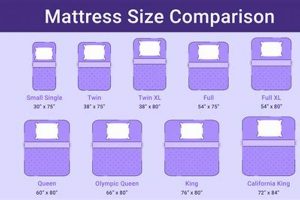
The primary difference between a full mattress and a twin XL lies in their dimensions. A full mattress, typically measuring 54 inches in width and 75 inches in length, offers a wider sleeping surface. This added width can be beneficial for sleepers who tend to move around during the night or for couples who occasionally share the bed. The twin XL, on the other hand, maintains a width of 38 inches but extends its length to 80 inches. This additional length addresses the needs of taller individuals who might find a standard twin or full mattress too short. The dimensional discrepancy directly impacts comfort and suitability based on body type and sleeping habits.
The specific measurements influence the practical application in various settings. For instance, in a small apartment or dorm room, the narrower width of a twin XL can conserve valuable floor space. However, if the occupant is above average height, the extra length is essential for comfortable sleep. Conversely, the wider full mattress might be preferable for a single sleeper who desires more room to stretch out, or for situations where the bed could occasionally accommodate two people. Choosing the right dimensions is not merely about fitting the bed into a room, but about optimizing the sleeping experience.
In summary, the dimensions of width and length are defining characteristics when distinguishing between a full and a twin XL mattress. Understanding these measurements allows consumers to make informed decisions based on their individual needs and spatial constraints. The challenge lies in accurately assessing personal requirements and balancing them against available room dimensions and intended usage scenarios. This dimensional understanding is paramount to ensure restful sleep and a functional living space.
2. Space Requirements

The space a mattress occupies is a critical consideration when choosing between a full and a twin XL mattress. Room size and layout directly influence which option is more practical and comfortable. Efficient space utilization maximizes living area and prevents a room from feeling cramped or overcrowded.
- Room Dimensions and Footprint
The overall size of the bedroom dictates the suitability of each mattress type. A full mattress requires a larger footprint than a twin XL, potentially limiting space for other furniture or free movement. Smaller rooms, such as dorms or studio apartments, often benefit from the space-saving profile of a twin XL. Conversely, a larger room may comfortably accommodate a full mattress without compromising functionality.
- Furniture Arrangement and Traffic Flow
The arrangement of furniture and the intended traffic flow within the room must be considered. A full mattress might impede walkways or restrict access to closets and dressers in a smaller space. A twin XL, due to its narrower width, allows for more flexible furniture placement and easier navigation. Careful planning of the room layout, taking mattress dimensions into account, is essential for creating a functional and comfortable environment.
- Clearance and Accessibility
Adequate clearance around the bed is necessary for comfortable use and accessibility. Space is needed for making the bed, getting in and out, and allowing for bedside tables or other essential items. A full mattress reduces this clearance, especially in smaller rooms, potentially leading to inconvenience. The slimmer profile of a twin XL provides more space around the bed, enhancing accessibility and overall comfort.
- Storage Considerations
The space under the bed is often utilized for storage, and the choice of mattress size can impact available storage options. A larger full mattress may reduce the vertical space available under the bed, particularly if a box spring is used. The slightly higher frame often used with a twin XL can sometimes provide more accessible under-bed storage, depending on the bed frame design. Thinking about under-bed storage helps to decide between full and twin XL.
In conclusion, the space requirements associated with mattresses are fundamental to the decision-making process. The trade-offs between mattress size and room functionality are significant, influencing not only the comfort level but also the overall usability of the living space. Careful evaluation of room dimensions, furniture placement, and storage needs ensures a well-informed selection between a full and a twin XL mattress.
3. Sleeper Height

Sleeper height is a critical determinant when choosing between a full and a twin XL mattress. The primary consideration is ensuring the mattress length adequately supports the entire body, preventing discomfort and promoting restful sleep. Insufficient length causes the feet to hang off the end, leading to disrupted sleep patterns and potential physical strain. Taller individuals, typically those exceeding six feet, often find the standard length of a full mattress (75 inches) inadequate. In such cases, the twin XL, with its extended length of 80 inches, provides a more suitable sleeping surface, offering full body support and minimizing sleep disturbances. For example, a college student over 6’2″ residing in a dorm room would likely benefit more from the additional length of a twin XL, despite the narrower width, as comfort and proper spinal alignment take precedence.
Conversely, individuals of average height or shorter might find the width of a full mattress more appealing. The additional width allows for greater freedom of movement during sleep and can accommodate varying sleep positions. A sleeper who frequently changes positions or prefers to sprawl out would likely find the full mattress more comfortable, provided their height does not necessitate the extra length of a twin XL. Furthermore, for children transitioning from smaller beds, a full mattress offers ample space as they grow, delaying the need for future mattress upgrades. The choice, therefore, hinges on a careful assessment of the sleeper’s height relative to their preferred sleeping style and comfort requirements. Disregarding height can result in a compromised sleep experience, regardless of other factors such as mattress type or firmness.
In summary, sleeper height directly influences the optimal mattress size selection. The twin XL caters specifically to taller individuals needing extra legroom, while the full provides more width for those prioritizing freedom of movement. Failure to account for height can lead to discomfort, disrupted sleep, and long-term postural issues. A proper assessment of height, in conjunction with sleeping preferences and spatial constraints, ensures an informed decision that maximizes sleep quality and overall well-being. This analysis necessitates considering future growth, particularly in the case of younger sleepers, to avoid premature replacement of the mattress.
4. Bed Frame Availability

The availability of appropriately sized bed frames is a pragmatic consideration when comparing full and twin XL mattresses. The selection of a mattress is often contingent on the ease of finding a suitable and compatible bed frame. Discrepancies in availability and variety can influence the ultimate purchasing decision.
- Standardization and Market Prevalence
Full-size bed frames are widely available across various retailers due to their long-standing presence as a common mattress size. This standardization ensures a broad selection of styles, materials, and price points. In contrast, twin XL bed frames, while increasing in popularity, may have a more limited selection, potentially restricting aesthetic and functional choices. For instance, finding a platform bed frame for a full mattress is generally easier than locating one for a twin XL in certain markets.
- Specialty Retailers and Online Marketplaces
Specialty mattress stores and online marketplaces often provide a more comprehensive range of bed frame options for both full and twin XL mattresses. These retailers cater to diverse needs and preferences, offering frames with specific features such as built-in storage, adjustable bases, or unique design elements. While specialty retailers may offer more twin XL options compared to traditional stores, the overall prevalence of full-size bed frames remains higher.
- DIY and Custom Solutions
Individuals seeking unique or highly customized bed frames may consider DIY projects or custom-built solutions. This approach offers greater flexibility in design and material selection, allowing for the creation of a bed frame that perfectly complements the chosen mattress size and room decor. While DIY and custom options are available for both full and twin XL mattresses, the readily available plans and resources for standard full-size frames may simplify the construction process.
- Consideration of headboards, footboards, and rails
The availability of compatible headboards, footboards, and side rails also plays a role. Because full-size beds are more common, finding these parts individually or in sets is generally easier than it is for twin XL beds. This factor could impact the overall aesthetics and style of the bed frame.
In conclusion, while both full and twin XL mattresses have bed frame options available, the broader market presence of full-size frames offers greater accessibility and variety. Consumers should assess the availability of suitable frames in their local market and online before making a final decision, considering the implications for cost, style, and functionality. The choice of mattress and frame should be a cohesive decision, optimizing both comfort and practicality.
5. Price Point

The price point associated with full and twin XL mattresses represents a significant factor in the consumer decision-making process. Generally, full mattresses command a higher price than twin XL counterparts. This price difference stems primarily from the increased material required in the manufacturing process, as the full mattress offers greater surface area. For example, a mid-range full mattress from a reputable brand may cost 20-30% more than the equivalent twin XL model. Therefore, budgetary constraints often directly influence whether a consumer opts for the wider comfort of a full or the space-saving economy of a twin XL.
Price also affects the features and quality levels accessible within each size category. A limited budget may restrict the consumer to a basic innerspring full mattress, whereas a slightly larger budget could afford a higher-quality memory foam or hybrid twin XL. Promotional periods and discounts can temporarily alter the price dynamics, creating opportunities for consumers to acquire a desired mattress size at a more favorable rate. However, the underlying relationship between size and price remains consistent: increased material typically translates to a higher initial cost. Additionally, the price of related accessories, such as bed frames and bedding, should be considered, as full-size items may also carry a premium compared to twin XL options.
In summary, the price point is a critical element in the full mattress vs. twin XL equation. It not only reflects the physical dimensions of the mattress but also impacts the accessible range of comfort technologies and quality levels. The economic implications extend beyond the mattress itself, influencing the selection of accompanying accessories. Understanding these price dynamics empowers consumers to make financially sound decisions that align with both their comfort preferences and budgetary limitations, which is crucial for a satisfactory purchase.
6. Sleeping Style

Sleeping style, referring to preferred sleep positions and movement patterns during sleep, significantly influences the choice between a full and a twin XL mattress. Individuals who sleep primarily on their back or stomach and tend to remain relatively still may find the dimensions of a twin XL sufficient. Conversely, side sleepers or those who frequently toss and turn often benefit from the increased width offered by a full mattress. This additional space accommodates movement and prevents the sensation of rolling off the edge of the bed. For example, someone who habitually sleeps in the fetal position might find the narrower twin XL constricting, while the wider full mattress provides ample room to curl up comfortably.
The impact of sleeping style extends beyond mere comfort to influence sleep quality. Restrictive sleeping conditions, caused by an inadequately sized mattress, can lead to disrupted sleep cycles and increased restlessness. Individuals who feel confined often awaken more frequently, resulting in fragmented sleep and reduced daytime alertness. In contrast, a mattress that comfortably accommodates the preferred sleeping style promotes a more stable and restorative sleep experience. Consider a scenario where a restless sleeper on a twin XL repeatedly bumps against the edges of the bed, triggering frequent awakenings. Switching to a full mattress, in this case, could mitigate these disturbances and improve overall sleep quality.
In summary, understanding the relationship between sleeping style and mattress size is paramount for optimizing sleep comfort and quality. The dimensions of a full mattress cater to sleepers who require more width for movement, while the twin XL can suffice for those with a more stationary sleep style. Recognizing and addressing individual sleeping preferences is essential for selecting a mattress that promotes restful sleep and enhances overall well-being. Ignoring this aspect can lead to long-term sleep disturbances and a reduced quality of life.
7. Room Size

The correlation between room size and the choice between a full mattress and a twin XL mattress is direct and consequential. Limited square footage necessitates careful consideration of furniture dimensions to maximize usability and prevent overcrowding. A full mattress, with its wider footprint, reduces available floor space, potentially hindering movement and limiting the placement of other essential furnishings. In compact rooms, such as dormitories or small apartments, a twin XL mattress often proves more suitable, preserving valuable space and facilitating a more functional layout. For instance, in a 10×10 foot room, a full mattress leaves considerably less open area compared to a twin XL, impacting the overall comfort and practicality of the living space.
Conversely, larger rooms offer greater flexibility in mattress selection. Ample space accommodates a full mattress without compromising the room’s functionality or aesthetic appeal. In such scenarios, the added width of a full mattress may be preferable, providing enhanced comfort and accommodating potential future needs, such as occasional shared sleeping arrangements. However, even in larger rooms, the arrangement of furniture and the flow of traffic must be considered. A poorly positioned full mattress can still disrupt the room’s usability, regardless of the overall square footage. Measuring the room and planning the layout prior to purchasing a mattress is crucial for ensuring optimal space utilization and a comfortable living environment.
In conclusion, room size is a primary determinant in the choice between a full and a twin XL mattress. Smaller rooms benefit from the space-saving design of a twin XL, while larger rooms offer greater latitude in selecting a full mattress. Understanding the interplay between mattress dimensions and room size is essential for maximizing comfort, functionality, and aesthetic appeal. Neglecting this consideration can result in an overcrowded, uncomfortable, and impractical living space, regardless of the quality or features of the chosen mattress.
Frequently Asked Questions
This section addresses common queries regarding the distinctions between a full mattress and a twin XL mattress. Clarification of these points assists in making an informed purchasing decision.
Question 1: Is a full mattress simply a wider version of a twin XL?
No. While both are designed for single sleepers, a full mattress is wider and shorter, measuring 54 inches by 75 inches. A twin XL is narrower but longer, measuring 38 inches by 80 inches. The key difference lies in the dimensional emphasis, catering to different body types and spatial requirements.
Question 2: Are full and twin XL mattresses equally suitable for all ages?
Not necessarily. A twin XL is often preferred for taller teenagers and college students due to its extended length. A full mattress may be more appropriate for younger children transitioning from a crib or toddler bed, offering greater width for comfort and growth.
Question 3: Does the type of bed frame impact the choice between a full and twin XL mattress?
Yes. Bed frame availability varies between the two sizes. Full-size bed frames are generally more common, offering a broader selection of styles. Twin XL frames, while increasingly available, may have fewer options in certain markets, which could influence aesthetic and functional choices.
Question 4: Does mattress firmness vary based on size between full and twin XL?
Mattress firmness is independent of size. Both full and twin XL mattresses are available in a range of firmness levels, from extra plush to extra firm. The choice of firmness should be dictated by personal preference and sleep needs, not the mattress size.
Question 5: Are bedding costs comparable between full and twin XL mattresses?
Generally, no. Full-size bedding, including sheets, comforters, and mattress protectors, tends to be more expensive than twin XL bedding due to the increased material required. Budgetary considerations should include the cost of bedding accessories.
Question 6: Can a full mattress accommodate two adults comfortably?
While a full mattress can technically accommodate two adults, it is generally not recommended for regular use. The sleeping surface is only 27 inches wide per person, which is less than the space afforded by a twin bed. Couples are advised to consider a queen or king-size mattress for adequate comfort and personal space.
In essence, the selection between a full and a twin XL mattress necessitates a careful assessment of individual needs, spatial constraints, and budgetary considerations. Understanding the nuanced differences between the two sizes promotes a well-informed decision that optimizes sleep comfort and overall satisfaction.
The next section will provide a concluding summary of the key points discussed, offering a final perspective on how to choose between a full and a twin XL mattress.
Full Mattress vs Twin XL
The preceding analysis of full and twin XL mattresses underscores that the optimal selection depends on a careful evaluation of individual needs, spatial limitations, and budgetary constraints. Distinctions in dimensions, room size, sleeper height, bed frame availability, price point, and sleeping style all contribute to the ultimate decision. A full mattress offers increased width, accommodating restless sleepers and occasional guests, while a twin XL provides extra length, suiting taller individuals and smaller spaces. The choice necessitates balancing comfort, functionality, and economic factors for a satisfactory outcome.
Given the significant impact of sleep quality on overall well-being, the decision regarding mattress size warrants thoughtful consideration. Individuals should meticulously assess their personal requirements and preferences before committing to a purchase. The long-term benefits of a well-suited mattress far outweigh the initial investment, underscoring the importance of a well-informed choice. Future advancements in sleep technology and mattress design may offer additional options, but the fundamental principles of dimensional compatibility and individual comfort will remain paramount.
![Best Firm Mattress Twin XL [For Support & Comfort] | Organic & Natural Mattress Buyer’s Guide: Non-Toxic Sleep Solutions](https://mattressworldpa.com/wp-content/uploads/2025/07/th-916-300x200.jpg "Best Firm Mattress Twin XL [For Support & Comfort] Organic & Natural Mattress Buyer’s Guide: Non-Toxic Sleep Solutions")