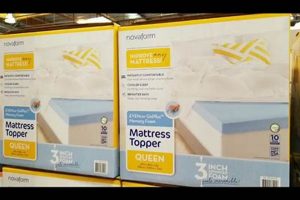
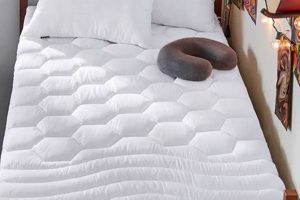
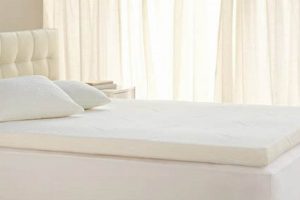
A bedding accessory designed to enhance thermal regulation and comfort for a twin extra-long mattress. These products often incorporate materials and technologies to dissipate heat, promoting a cooler sleep environment. For example, a topper might utilize gel-infused memory foam or breathable fabrics to improve airflow and reduce heat retention.
Maintaining an optimal sleep temperature is crucial for restful sleep. Elevated body temperatures can disrupt sleep cycles, leading to discomfort and reduced sleep quality. These specialized toppers offer a potential solution, mitigating heat buildup and fostering a more comfortable sleep surface. Historically, innovations in textiles and materials science have driven the development of increasingly effective temperature-regulating bedding products.
The following sections will delve into the various materials, construction techniques, and performance characteristics that contribute to the overall effectiveness of a temperature-regulating twin XL mattress overlay. Understanding these aspects will enable informed purchasing decisions based on individual needs and preferences.
Enhancing Thermal Regulation
Optimizing the performance of a temperature-regulating twin XL mattress overlay requires careful consideration of several factors. The following guidelines provide practical insights to ensure maximum effectiveness and longevity.
Tip 1: Prioritize Breathable Materials: Opt for toppers constructed from materials like open-cell memory foam, latex, or natural fibers such as cotton or bamboo. These materials promote airflow and reduce heat retention compared to traditional closed-cell foam.
Tip 2: Consider Gel Infusions: Gel-infused memory foam can effectively dissipate heat by drawing it away from the body. However, the quantity and distribution of gel should be carefully assessed, as some formulations offer limited long-term cooling benefits.
Tip 3: Evaluate Cover Fabric: The topper’s cover plays a significant role in breathability. Choose covers made from breathable fabrics like Tencel, Coolmax, or moisture-wicking polyester blends to facilitate airflow and evaporation.
Tip 4: Ensure Proper Mattress Ventilation: The effectiveness of a thermal overlay can be diminished if the underlying mattress traps heat. Consider using a slatted bed frame or ensuring adequate ventilation beneath the mattress.
Tip 5: Maintain Cleanliness: Regularly clean the topper according to the manufacturer’s instructions. Dust and debris can impede airflow and reduce the topper’s cooling performance.
Tip 6: Assess Room Temperature: While a thermal mattress overlay can mitigate heat buildup, it cannot compensate for excessively warm ambient temperatures. Ensure the bedroom is adequately cooled, especially during warmer months.
Tip 7: Consider Layering Bedding: Avoid using thick, non-breathable sheets or blankets, as these can counteract the cooling effects of the topper. Opt for lightweight, breathable bedding materials to maximize thermal regulation.
By adhering to these guidelines, individuals can maximize the benefits and extend the lifespan of a twin XL mattress topper designed for thermal regulation, resulting in a more comfortable and restful sleep experience.
The subsequent section will explore common misconceptions and address frequently asked questions regarding temperature-regulating bedding accessories.
1. Material Breathability

Material breathability constitutes a fundamental characteristic governing the thermal performance of twin XL mattress toppers. It dictates the extent to which air can circulate through the topper’s structure, thereby influencing heat retention and dissipation capabilities. Effective material breathability directly contributes to a cooler sleep surface.
- Air Permeability and Convection
Air permeability refers to the material’s capacity to allow air to pass through it. Higher air permeability facilitates convection, the process by which warm air near the body is displaced by cooler air. In a mattress topper, materials like open-cell foam or natural fibers exhibit higher air permeability compared to closed-cell synthetic materials. Consequently, these materials promote better heat dissipation and a reduced risk of overheating during sleep.
- Moisture Vapor Transmission
Beyond airflow, material breathability also encompasses moisture vapor transmission the ability of a material to allow water vapor (sweat) to pass through it. Efficient moisture vapor transmission prevents the buildup of humidity near the body, which can contribute to a sticky and uncomfortable sleep environment. Materials with superior moisture-wicking properties, such as bamboo or specialized synthetic blends, enhance evaporative cooling and maintain a drier surface.
- Fiber Structure and Composition
The structural arrangement and composition of fibers within a material directly influence its breathability. Natural fibers like cotton and linen possess inherent breathability due to their porous structure. Similarly, open-cell foam features interconnected air pockets that facilitate airflow. In contrast, tightly woven or non-porous materials impede airflow and contribute to heat retention. Therefore, the selection of fiber type and structural arrangement is crucial for optimizing the thermal performance of a mattress topper.
- Impact of Construction Techniques
Even with inherently breathable materials, construction techniques can either enhance or hinder breathability. For example, quilted patterns with excessive stitching can compress the underlying fill and restrict airflow. Similarly, the use of non-breathable adhesives or coatings can negate the benefits of breathable materials. Therefore, manufacturers must employ construction methods that preserve and enhance the inherent breathability of the chosen materials to maximize cooling effectiveness.
In summary, material breathability is a multi-faceted property that significantly impacts the thermal regulation capabilities of a twin XL mattress topper. Air permeability, moisture vapor transmission, fiber structure, and construction techniques all contribute to the overall breathability of the topper and, consequently, its ability to promote a cooler and more comfortable sleep environment. The selection of materials and manufacturing processes that prioritize breathability is paramount in the design of effective temperature-regulating bedding accessories.
2. Gel Infusion Density
The density of gel infusion within a twin XL mattress topper directly influences its cooling effectiveness. Higher gel densities, representing a greater concentration of gel particles within the foam matrix, generally correlate with enhanced heat absorption and dissipation capabilities. This occurs because the gel, often a phase-change material, draws heat away from the sleeper’s body, mitigating the accumulation of warmth on the mattress surface. A mattress topper with insufficient gel density may exhibit limited cooling capacity, failing to provide significant thermal relief during sleep. For instance, a topper with a sparse gel distribution might only offer localized cooling, while a topper with a higher, more uniform gel density can deliver a more consistent cooling effect across the entire sleep surface.
The impact of gel infusion density extends beyond immediate cooling sensation. The effectiveness of the gel also relies on its distribution throughout the topper. Uniform distribution ensures consistent thermal regulation across the sleeping surface, preventing hot spots. Conversely, uneven distribution, where gel concentration varies across the topper, can result in inconsistent cooling. A real-world example can be illustrated through user reviews comparing toppers with advertised full gel infusion against those claiming spot or layered gel application. Users of fully infused toppers often report a more consistent cooling effect, while those using toppers with less gel density or uneven application may complain of localized overheating.
In summary, gel infusion density is a critical factor determining the thermal performance of a twin XL mattress topper. Higher, uniformly distributed gel densities tend to provide more effective and consistent cooling. However, the type of gel, its phase-change properties, and the overall topper construction also play crucial roles. Understanding the interplay of these factors is essential for selecting a topper that effectively regulates temperature and promotes restful sleep. While high gel density is generally desirable, it is not the sole determinant of cooling performance. Balancing gel density with other design elements ensures optimal comfort.
3. Cover Fabric Weave

The weave of a twin XL mattress topper’s cover fabric is integral to its thermal regulation capabilities. Beyond material composition, the structure of the weave significantly impacts airflow and moisture management, both critical factors in maintaining a cool sleep environment.
- Plain Weave and Airflow
Plain weave, characterized by a simple over-and-under interlacing of yarns, generally offers less breathability compared to other weaves. While durable and cost-effective, its tightly packed structure restricts airflow, potentially trapping heat. In the context of thermal management, plain weave covers may not effectively dissipate heat generated during sleep. For instance, a plain weave cotton cover, while comfortable, might not be optimal for individuals prone to overheating.
- Twill Weave and Surface Contact
Twill weave, distinguished by its diagonal rib pattern, often presents a smoother surface with less direct contact with the skin. This reduced contact area can minimize heat transfer from the body to the fabric. However, twill weaves tend to be denser than plain weaves, which can limit airflow. Therefore, while twill might offer a slightly cooler sensation due to reduced contact, it may not be as effective in dissipating heat as more open weaves. Consider a comparison of percale (a plain weave) and sateen (a variation of twill); percale often feels crisper and cooler initially, whereas sateen is smoother but potentially warmer.
- Open Weaves and Moisture Management
Open weaves, such as mesh or loosely knit fabrics, promote maximum airflow and moisture evaporation. These weaves allow for rapid heat dissipation and prevent the buildup of humidity near the body. Consequently, open weave covers are particularly effective in maintaining a cool and dry sleep surface. An example would be athletic wear fabrics, which often employ open weaves to enhance breathability and moisture-wicking capabilities. In the context of a twin XL mattress topper, an open weave cover can significantly enhance the cooling properties of underlying materials like gel-infused memory foam.
- Specialized Weaves and Performance Enhancements
Advanced weaving techniques can further enhance the thermal performance of cover fabrics. For example, some weaves incorporate specialized yarns with enhanced moisture-wicking or cooling properties. Others utilize complex interlacing patterns to create micro-channels that promote airflow and ventilation. These specialized weaves represent a targeted approach to thermal regulation, optimizing both breathability and moisture management. One can consider a modern sports fabric, engineered to maximize evaporation and airflow. These weave structure and material are combined for optimal cooling.
In conclusion, the weave of a twin XL mattress topper cover significantly influences its ability to regulate temperature. Open weaves generally offer superior breathability and moisture management, while tighter weaves may prioritize durability or smoothness at the expense of cooling performance. Selecting a topper with an appropriate cover weave, tailored to individual sleep preferences and thermal needs, is crucial for optimizing sleep comfort. Modern textiles offer a range of solutions, from basic weaves that offer modest improvements, to sophisticated, specifically-engineered textiles.
4. Airflow Channels Design
Airflow channels within a twin XL mattress topper are engineered to facilitate convective heat transfer, a crucial mechanism for thermal regulation. The design and implementation of these channels directly impact the cooling performance of the topper. The presence of these channels promotes the circulation of air, displacing warmer air near the sleeper’s body with cooler air from the surrounding environment. Without effective airflow channels, heat accumulates, diminishing the topper’s ability to maintain a comfortable sleep temperature. For example, a topper with a network of vertically oriented channels will promote better airflow compared to a solid foam core, particularly when the sleeper shifts position, generating a pumping action that forces air circulation. The efficacy of these channels is further enhanced when paired with breathable cover fabrics, allowing for unimpeded airflow across the sleep surface.
The practical application of airflow channel design is evident in various mattress topper models. Some designs incorporate deep, wide channels to maximize airflow, while others employ smaller, more intricate networks to distribute cooling evenly across the sleep surface. The choice of design depends on factors such as the density and composition of the foam, the thickness of the topper, and the target cooling performance. Consider a scenario where two toppers are compared: one with minimal, shallow channels and another with strategically placed, interconnected channels. In rigorous testing, the topper with the more sophisticated channel design typically exhibits superior cooling performance, maintaining a lower surface temperature and reducing heat buildup over extended periods. Moreover, the durability of the channels themselves plays a role; collapsing channels impede airflow and diminish cooling efficacy over time.
In summary, airflow channels are a critical design element for achieving effective thermal regulation in twin XL mattress toppers. Their presence and configuration directly influence the circulation of air, facilitating heat dissipation and maintaining a comfortable sleep temperature. A well-designed airflow system, integrated with breathable materials and robust construction, is essential for maximizing the cooling benefits of a mattress topper. Challenges remain in optimizing channel design for specific body weights and sleep positions, suggesting future research and development will continue to refine these cooling systems.
5. Moisture-Wicking Ability
Moisture-wicking ability is a critical attribute influencing the thermal regulation performance of a twin XL mattress topper. Its effectiveness directly impacts the sleep environment by managing humidity levels, which, in turn, affects perceived temperature and overall comfort.
- Fiber Composition and Moisture Transport
The fiber composition of the topper’s surface materials fundamentally determines its moisture-wicking capability. Hydrophobic fibers, such as polyester and certain synthetic blends, repel water but can be engineered to transport moisture through capillary action between fibers. Conversely, hydrophilic fibers, like cotton and bamboo, absorb moisture but may retain it, leading to a damp sleep surface. Effective moisture-wicking fabrics often employ a blend of fiber types to optimize both absorption and evaporation. For example, a polyester knit with a textured surface increases the surface area for evaporation, promoting faster drying.
- Fabric Construction and Air Permeability
The construction of the fabric, including weave type and knit density, affects its breathability and, consequently, its moisture-wicking performance. Open weaves and loose knits facilitate airflow, allowing moisture to evaporate more readily. Tightly woven fabrics, while potentially more durable, can impede airflow and hinder moisture transport. Specialized fabric constructions, such as three-dimensional knits, create air channels that enhance both ventilation and moisture-wicking. The interaction between fabric construction and fiber composition is critical: a highly moisture-wicking fiber can be rendered ineffective if the fabric construction restricts airflow.
- Surface Treatments and Enhanced Wicking
Surface treatments can be applied to fabrics to enhance their moisture-wicking properties. These treatments, often involving chemical finishes, alter the surface tension of the fibers, promoting the movement of moisture away from the body. However, the durability of these treatments varies, with some diminishing after repeated washing. The use of durable water repellent (DWR) finishes, commonly used in outdoor apparel, is generally not suitable for mattress toppers due to potential toxicity and reduced breathability. Instead, hydrophilic finishes that enhance water absorption and subsequent evaporation are preferred.
- Impact on Thermal Comfort and Sleep Quality
The effectiveness of moisture-wicking ability directly influences thermal comfort and sleep quality. A topper that effectively manages moisture prevents the buildup of humidity, reducing the sensation of clamminess and overheating. This, in turn, promotes a more stable sleep environment and reduces the likelihood of sleep disruptions caused by thermal discomfort. In contrast, a topper with poor moisture-wicking properties can create a humid microclimate that disrupts sleep and contributes to the growth of mold and bacteria. Comparative studies of mattress toppers with varying moisture-wicking capabilities consistently demonstrate a correlation between enhanced moisture management and improved sleep outcomes.
In conclusion, moisture-wicking ability is a critical determinant of a twin XL mattress topper’s cooling effectiveness. The interplay of fiber composition, fabric construction, and surface treatments governs the topper’s capacity to manage humidity and maintain a comfortable sleep surface. Products optimized for moisture transport are essential for individuals seeking a cooler, drier, and more restful sleep experience.
6. Heat Dissipation Rate

Heat dissipation rate is a critical parameter governing the effectiveness of twin XL mattress toppers designed for thermal regulation. It quantifies the speed at which a topper can release accumulated heat into the surrounding environment, directly impacting its ability to maintain a cool and comfortable sleep surface.
- Material Thermal Conductivity
The inherent thermal conductivity of the materials used in a topper significantly influences its heat dissipation rate. Materials with high thermal conductivity, such as copper-infused foam or certain phase-change materials, facilitate rapid heat transfer away from the body. Conversely, materials with low thermal conductivity, like traditional memory foam, tend to trap heat, hindering effective cooling. A twin XL topper constructed with highly conductive materials will exhibit a faster heat dissipation rate, providing a more sustained cooling effect compared to a topper made from insulating materials.
- Surface Area and Air Exposure
The surface area of the topper and its exposure to ambient air directly affect the rate of heat dissipation. Toppers with textured surfaces or integrated air channels maximize the contact area between the material and the surrounding air, promoting convective heat transfer. A larger surface area allows for more efficient heat exchange, resulting in a faster heat dissipation rate. Conversely, a smooth, dense topper with minimal air exposure will dissipate heat more slowly, potentially leading to heat buildup and discomfort.
- Airflow and Convection Efficiency
Efficient airflow is essential for maximizing the heat dissipation rate. Airflow channels within the topper, combined with breathable cover fabrics, facilitate the movement of air across the sleep surface, displacing warmer air with cooler air. The efficiency of this convective heat transfer depends on the design of the channels, the permeability of the cover fabric, and the ambient air temperature. A well-ventilated topper will exhibit a significantly higher heat dissipation rate compared to a topper with restricted airflow, resulting in a cooler and more comfortable sleep environment.
- Phase-Change Material Integration
The integration of phase-change materials (PCMs) can enhance the heat dissipation rate of a twin XL mattress topper. PCMs absorb and release heat during phase transitions (e.g., solid to liquid), moderating temperature fluctuations and preventing overheating. The effectiveness of PCMs depends on their melting point, heat capacity, and distribution within the topper. A topper with a high concentration of appropriately selected PCMs will exhibit a more stable temperature profile and a faster heat dissipation rate, providing sustained cooling comfort throughout the night.
The relationship between these facets and twin XL mattress topper cooling highlights the necessity for a holistic approach in topper design. By optimizing material selection for thermal conductivity, maximizing surface area for air exposure, enhancing airflow for convective efficiency, and strategically integrating phase-change materials, manufacturers can create toppers that effectively dissipate heat and promote a cooler, more restful sleep experience. Furthermore, understanding these principles empowers consumers to make informed purchasing decisions based on their individual thermal needs and preferences.
Frequently Asked Questions
The following addresses common inquiries regarding the functionality and selection of twin XL mattress toppers designed for thermal regulation.
Question 1: What materials are most effective for twin XL mattress topper cooling?
Materials with high thermal conductivity and breathability are optimal. Open-cell memory foam, latex, gel-infused foam, and natural fibers like cotton or bamboo promote airflow and dissipate heat more effectively than traditional closed-cell foam.
Question 2: How does gel infusion contribute to the cooling properties of a twin XL mattress topper?
Gel infusion enhances thermal regulation by absorbing body heat and dissipating it away from the sleep surface. The density and distribution of the gel influence the extent and consistency of the cooling effect.
Question 3: Are airflow channels essential for effective twin XL mattress topper cooling?
Airflow channels facilitate convective heat transfer by allowing air to circulate within the topper. This promotes the displacement of warm air with cooler air, contributing to a more comfortable sleep temperature.
Question 4: How does the cover fabric impact the cooling performance of a twin XL mattress topper?
The cover fabric’s weave and composition affect its breathability and moisture-wicking ability. Open weaves and moisture-wicking materials, such as Tencel or Coolmax, enhance airflow and evaporation, contributing to a cooler sleep surface.
Question 5: How often should a twin XL mattress topper designed for cooling be cleaned?
Regular cleaning is essential to maintain the cooling performance of a topper. Dust and debris can impede airflow and reduce the effectiveness of thermal regulation. Follow the manufacturer’s instructions for cleaning, typically involving spot cleaning or gentle washing.
Question 6: Can a twin XL mattress topper designed for cooling compensate for a hot sleeping environment?
While a cooling topper can mitigate heat buildup, it cannot entirely compensate for an excessively warm ambient temperature. Optimizing the bedroom’s temperature through air conditioning or ventilation remains crucial for achieving a comfortable sleep environment.
In summary, effective twin XL mattress topper cooling relies on a combination of breathable materials, strategic design elements, and proper maintenance. Evaluating these factors ensures informed purchasing decisions.
The following section will explore emerging technologies in temperature-regulating bedding accessories.
Conclusion
The preceding exploration has detailed the multifaceted aspects of twin XL mattress topper cooling, emphasizing the importance of material breathability, gel infusion density, cover fabric weave, airflow channel design, moisture-wicking ability, and heat dissipation rate. The interplay of these elements determines the effectiveness of a given topper in maintaining a comfortable sleep environment. Strategic integration of these design principles is crucial for mitigating heat retention and promoting restful sleep.
Continued advancements in materials science and textile engineering promise further innovations in temperature-regulating bedding. Informed selection, based on a thorough understanding of the principles outlined, remains paramount for consumers seeking to optimize their sleep experience. Further research into personalized thermal management solutions will likely yield even more effective and tailored bedding options in the future.
![Best Firm Mattress Twin XL [For Support & Comfort] | Organic & Natural Mattress Buyer’s Guide: Non-Toxic Sleep Solutions](https://mattressworldpa.com/wp-content/uploads/2025/07/th-916-300x200.jpg "Best Firm Mattress Twin XL [For Support & Comfort] Organic & Natural Mattress Buyer’s Guide: Non-Toxic Sleep Solutions")