The comparison between the Purple mattress and Tempur-Pedic mattress lines is a common consideration for individuals seeking optimal sleep solutions. These two brands represent distinct approaches to mattress construction and comfort, appealing to diverse preferences and needs. One utilizes a unique hyper-elastic polymer grid, while the other is known for its memory foam composition.
Selecting a mattress involves evaluating factors such as pressure relief, support, motion isolation, temperature regulation, and durability. The suitability of each brand’s offering depends on individual sleep styles, body weight, and sensitivity to specific materials. Understanding the construction and performance characteristics of each mattress type is essential for informed decision-making.
The subsequent sections will delve into a detailed analysis of the Purple and Tempur-Pedic mattresses, examining their respective features, benefits, and drawbacks. This comprehensive evaluation aims to provide a clear understanding of how these mattresses compare across key performance indicators, ultimately assisting in the selection of the most appropriate sleep surface.
Considerations When Evaluating Mattress Options
When evaluating mattress options, particularly when choosing between models employing different technologies, a structured approach is advised. This ensures that the final selection aligns with individual needs and preferences.
Tip 1: Assess Sleep Style. Determine the primary sleep position (side, back, stomach, or combination). Different mattress types cater to different sleep styles. Side sleepers may benefit from enhanced pressure relief, while back sleepers may require firmer support.
Tip 2: Evaluate Body Weight. Individuals with higher body weight may require mattresses with greater support and durability. Conversely, lighter individuals may find softer mattresses more comfortable.
Tip 3: Analyze Pressure Relief. Pay attention to how the mattress distributes weight and alleviates pressure points, particularly in the shoulders, hips, and knees. Inadequate pressure relief can lead to discomfort and restless sleep.
Tip 4: Examine Motion Isolation. If sharing a bed, consider the mattress’s ability to isolate motion. Mattresses with good motion isolation minimize disturbances caused by partner movement.
Tip 5: Review Temperature Regulation. Assess the mattress’s capacity to dissipate heat and promote airflow. Some materials and designs are more effective at regulating temperature, preventing overheating during sleep.
Tip 6: Research Material Composition. Understand the materials used in the mattress construction and their impact on performance, durability, and potential off-gassing.
Tip 7: Investigate Support Structure. The mattress’s support core provides the foundation for spinal alignment and overall support. Evaluate the type of support system and its ability to maintain proper posture.
By carefully considering these factors, individuals can narrow down their choices and select a mattress that meets their specific needs. This systematic approach aids in avoiding dissatisfaction and ensures a more restful sleep experience.
The subsequent sections will provide detailed analyses of individual mattress components and functionalities.
1. Pressure Relief

Pressure relief is a paramount consideration in mattress selection, influencing sleep comfort and minimizing physical discomfort. When comparing the Purple mattress and Tempur-Pedic, the distinct construction of each brand leads to varying degrees of pressure alleviation.
- Material Adaptation
The Purple mattress utilizes a hyper-elastic polymer Smart Comfort Grid designed to buckle under pressure, distributing weight and reducing concentrated stress on pressure points. Tempur-Pedic mattresses employ memory foam that conforms to the body’s contours, cushioning pressure points through even distribution. The efficacy of each approach can vary depending on individual body weight, sleeping position, and sensitivity to pressure.
- Spinal Alignment
Effective pressure relief contributes to proper spinal alignment, which is crucial for preventing back pain and promoting restful sleep. Mattresses that fail to alleviate pressure can cause misalignment, leading to muscle strain and discomfort. Both Purple and Tempur-Pedic aim to maintain spinal alignment by contouring to the body and providing adequate support, though their methods differ.
- Targeted Comfort Zones
Some mattresses incorporate targeted comfort zones designed to provide varying levels of support and pressure relief to different areas of the body. These zones often focus on the shoulders, hips, and lower back. While not all Purple or Tempur-Pedic models feature explicitly defined zones, the inherent properties of their respective materials result in differentiated pressure relief across the sleep surface.
- Long-Term Comfort
The ability of a mattress to maintain pressure relief over time is an important factor in overall satisfaction. Memory foam, while initially conforming, can sometimes soften or degrade over extended use, potentially diminishing its pressure-relieving capabilities. The hyper-elastic polymer used in Purple mattresses is designed to be more resilient, potentially offering consistent pressure relief throughout its lifespan. Actual durability and longevity can vary with mattress model and individual usage.
In the evaluation between the two brands, both strive to reduce pressure build-up. However, individuals who prefer the conforming sensation of memory foam may lean towards Tempur-Pedic, while those seeking a more responsive and potentially more durable pressure relief system might favor the Purple mattress. Individual testing is crucial to discern which mattress better suits one’s personal needs and preferences.
2. Support and Alignment
Support and alignment are critical determinants of sleep quality and musculoskeletal health. The ability of a mattress to maintain proper spinal alignment directly impacts comfort and long-term physical well-being. Comparing Purple and Tempur-Pedic mattresses necessitates a detailed examination of their respective support systems and how they facilitate optimal alignment.
- Core Construction and Materials
Tempur-Pedic mattresses typically utilize high-density memory foam cores designed to provide deep compression support. The foam’s density contributes to its ability to resist sagging and maintain a level sleeping surface. Purple mattresses employ a combination of a hyper-elastic polymer grid and underlying foam layers. The grid structure aims to provide adaptive support, flexing under pressure while maintaining overall structural integrity. The differing core constructions inherently affect the level and type of support offered.
- Contouring and Spinal Curvature
Memory foam, as used in Tempur-Pedic mattresses, is known for its ability to contour closely to the body’s shape, filling in gaps and distributing weight. This can be beneficial for maintaining natural spinal curvature, especially for side sleepers. The Purple grid system provides more localized support, allowing for independent movement of the shoulders and hips. The effectiveness of each approach depends on individual body type and sleep position.
- Edge Support and Usable Surface Area
Edge support refers to the stability of the mattress perimeter. Strong edge support maximizes the usable sleep surface and prevents the sensation of rolling off the bed. Tempur-Pedic mattresses may exhibit varying degrees of edge support depending on the specific model and construction. Purple mattresses, particularly those with a grid design extending to the edges, can offer enhanced edge support compared to some all-foam mattresses.
- Long-Term Support Integrity
The ability of a mattress to maintain its support characteristics over time is a key factor in its overall value. Memory foam can be susceptible to softening or compression over extended use, potentially reducing its supportiveness. The hyper-elastic polymer used in Purple mattresses is designed for durability and resilience, potentially offering more consistent support over the long term. Real-world performance depends on factors such as user weight, sleep habits, and maintenance practices.
Ultimately, the effectiveness of support and alignment in both Purple and Tempur-Pedic mattresses is subjective and dependent on individual needs. Both brands offer features designed to promote healthy spinal alignment, but their distinct approaches cater to differing preferences. A thorough understanding of the construction, materials, and intended benefits of each mattress is crucial for making an informed decision. Furthermore, in-person testing, when possible, allows for a personalized assessment of support and alignment characteristics.
3. Motion Isolation

Motion isolation, the capacity of a mattress to minimize the transfer of movement from one area to another, constitutes a significant factor in evaluating mattress performance, particularly within the context of the Purple mattress versus Tempur-Pedic comparison. The degree to which a mattress isolates motion directly affects sleep quality for individuals sharing a bed. A higher level of motion isolation reduces the likelihood of disturbance from a partner’s movements during the night. For example, if one partner frequently changes sleeping positions or gets out of bed, a mattress with poor motion isolation may transmit these movements, disrupting the other partner’s sleep.
The differing construction of Purple and Tempur-Pedic mattresses results in varying levels of motion isolation. Tempur-Pedic mattresses, composed of memory foam, are generally recognized for their superior motion isolation properties. Memory foam’s dense, viscoelastic nature absorbs movement, preventing its propagation across the mattress surface. In contrast, Purple mattresses utilize a hyper-elastic polymer grid. While designed to provide comfort and support, this grid structure may exhibit a different motion isolation profile. Some movement may be transferred, although the extent depends on the specific Purple model and the intensity of the motion. Practical application of this understanding involves considering individual sensitivity to movement and the sleeping habits of bed partners. If motion disturbance is a primary concern, Tempur-Pedic mattresses may present a more favorable option.
In summary, motion isolation represents a key performance metric in the Purple versus Tempur-Pedic assessment. While Tempur-Pedic mattresses typically excel in minimizing motion transfer due to their memory foam composition, Purple mattresses offer a different motion isolation experience based on their grid design. Evaluating individual needs and preferences regarding motion sensitivity is crucial for selecting the most appropriate mattress. Further research, including comparative tests and user reviews, can provide additional insights into the real-world motion isolation performance of specific models from each brand.
4. Temperature Regulation

Temperature regulation is a significant factor in evaluating mattress comfort, and its relevance is amplified when considering the Purple mattress versus Tempur-Pedic. The inherent properties of each brand’s materials influence heat retention and dissipation, impacting the sleeper’s experience. Tempur-Pedic mattresses, composed of memory foam, are known for their ability to conform closely to the body. This close contact, however, can impede airflow and trap heat, potentially leading to discomfort for individuals prone to overheating during sleep. In contrast, Purple mattresses employ a hyper-elastic polymer grid. This grid structure creates open channels for air circulation, promoting breathability and facilitating heat dissipation. The design mitigates heat buildup by allowing air to flow freely around the sleeper, potentially offering a cooler sleep environment. The effect is particularly noticeable in warmer climates or for individuals experiencing hormonal fluctuations that increase body temperature. Therefore, temperature regulation represents a key performance differentiator between the two mattress types.
The practical implications of these differences in temperature regulation are substantial. For individuals residing in warmer regions, or those who naturally sleep hot, the improved airflow of the Purple mattress may translate to a more comfortable and restful sleep experience. Conversely, those who tend to feel cold during the night might find the heat-retentive properties of Tempur-Pedic beneficial. Mattress manufacturers have attempted to address temperature regulation concerns in memory foam mattresses through the incorporation of cooling gels or phase-change materials. However, the effectiveness of these technologies can vary, and they may not fully replicate the inherent breathability of the Purple grid structure. Furthermore, the impact of bedding materials, such as sheets and blankets, should not be overlooked, as they can significantly influence the overall temperature of the sleep environment. Real-world examples indicate that individuals reporting nighttime sweating or discomfort due to overheating often express a preference for mattresses with enhanced airflow characteristics.
In summary, temperature regulation is a crucial consideration when comparing Purple and Tempur-Pedic mattresses. While Tempur-Pedic offers conforming comfort, its dense memory foam can trap heat. Purple’s grid structure promotes airflow, potentially leading to a cooler sleep experience. The ideal choice depends on individual preferences and susceptibility to temperature fluctuations during sleep. Addressing the challenge of balancing comfort with temperature regulation remains a focal point in mattress design, with manufacturers continually innovating to optimize the sleep environment. The broader theme underscores the importance of personalized selection when choosing a mattress, acknowledging that no single option universally satisfies the diverse needs of all sleepers.
5. Durability Comparison
The long-term viability of a mattress is paramount, directly influencing its overall value proposition. Evaluating the durability of Purple and Tempur-Pedic mattresses involves a detailed examination of their constituent materials, construction techniques, and resistance to degradation over time. This comparison aims to provide insights into the expected lifespan and performance consistency of each brand.
- Material Resilience
Tempur-Pedic mattresses rely on memory foam, which, while conforming and pressure-relieving, can be susceptible to softening and compression over extended use. The density of the foam core plays a significant role in its ability to resist permanent deformation. Higher-density foams generally exhibit greater resilience. Purple mattresses, on the other hand, incorporate a hyper-elastic polymer grid. This material is designed for flexibility and durability, exhibiting resistance to sagging and maintaining its structural integrity over time. The specific polymer formulation and grid design influence its long-term performance. For example, independent testing has shown varying degrees of compression resistance among different memory foam formulations, impacting their longevity. Similarly, the thickness and support structure beneath the Purple grid affect its ability to withstand sustained weight and pressure.
- Construction Integrity
The overall construction of a mattress significantly affects its durability. Reinforcements, stitching, and layering techniques contribute to the mattress’s ability to withstand stress and maintain its shape. Tempur-Pedic mattresses often feature multiple layers of varying density foam, bonded together to provide both support and comfort. The quality of the adhesive and the precision of the layering process are crucial to prevent delamination or shifting of materials. Purple mattresses combine the hyper-elastic polymer grid with foam support layers. The integration of these components requires careful engineering to ensure that they work in unison and resist separation or breakdown. Instances of premature sagging or uneven wear patterns often stem from flaws in the construction process or the use of substandard adhesives.
- Resistance to Environmental Factors
Mattress durability can be affected by environmental factors such as humidity, temperature, and exposure to contaminants. Memory foam, for example, can be sensitive to humidity, potentially leading to changes in its firmness or the development of mold or mildew. Proper ventilation and the use of moisture-resistant covers can mitigate these risks. The hyper-elastic polymer in Purple mattresses is generally less susceptible to humidity-related degradation. However, exposure to direct sunlight or harsh chemicals can still compromise its integrity. In real-world scenarios, mattresses exposed to frequent spills, pet dander, or inadequate ventilation often exhibit accelerated wear and tear, regardless of the material composition.
- Warranty and Customer Feedback
Warranty terms provide an indication of the manufacturer’s confidence in the product’s longevity. Tempur-Pedic and Purple both offer warranties covering manufacturing defects and excessive sagging. However, the specific terms and conditions vary, including the duration of coverage and the types of issues excluded. Analysis of customer feedback and online reviews can provide valuable insights into real-world durability experiences. Recurring reports of premature sagging, seam failures, or comfort layer degradation can raise concerns about the long-term reliability of a particular mattress model. Conversely, consistently positive feedback regarding the mattress’s ability to maintain its shape and comfort over several years suggests a higher level of durability.
In conclusion, assessing the durability of Purple and Tempur-Pedic mattresses requires a comprehensive evaluation of their materials, construction, environmental resistance, and warranty provisions. While Tempur-Pedic’s memory foam offers conforming comfort, its long-term resilience can be influenced by factors such as foam density and humidity exposure. Purple’s hyper-elastic polymer grid is designed for durability and airflow, but its resistance to specific environmental stressors should be considered. Ultimately, the choice depends on individual preferences, usage patterns, and a careful assessment of the potential trade-offs between comfort and longevity.
6. Price Point

Price point is a central element in the comparison between Purple mattresses and Tempur-Pedic mattresses, influencing consumer decisions significantly. Tempur-Pedic mattresses are generally positioned in the premium segment of the market, reflecting their brand recognition, material composition, and perceived quality. Consequently, the initial investment required for a Tempur-Pedic mattress is often substantially higher than that of a Purple mattress. This price difference can be a determining factor for budget-conscious consumers. For example, a queen-size Tempur-Pedic model might retail for significantly more than a comparable Purple model, making the latter a more accessible option for those with financial constraints. The higher price of Tempur-Pedic is often justified by its proprietary memory foam technology and purported benefits in pressure relief and motion isolation.
Conversely, Purple mattresses typically occupy a mid-range price tier, aiming to offer a balance between performance and affordability. While not the cheapest option on the market, Purple seeks to provide a competitive value proposition, particularly regarding temperature regulation and support. The hyper-elastic polymer grid design contributes to a unique feel that may appeal to consumers seeking an alternative to traditional memory foam. For instance, consumers may compare features available within a specific budget. A consumer with a set budget of $2,000 might be able to purchase a higher-end Purple model with advanced features, whereas the same budget might only allow for a base-level Tempur-Pedic mattress with fewer features. This consideration emphasizes the importance of evaluating features and performance relative to price.
Ultimately, the practical significance of the price point lies in its impact on purchase decisions and long-term value perception. Consumers must weigh the upfront cost against the perceived benefits and durability of each mattress. Furthermore, promotional offers, discounts, and financing options can alter the effective price, influencing the overall affordability. The assessment of price should not be isolated; it needs to be integrated with other factors such as material quality, sleep preferences, and long-term durability expectations to facilitate an informed and satisfactory mattress selection. Challenges include navigating marketing claims and discerning genuine value from superficial features, reinforcing the importance of independent research and consideration of individual needs.
7. Material Composition

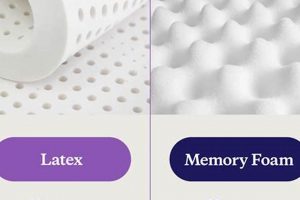
The material composition of a mattress exerts a significant influence on its performance characteristics, playing a critical role in the distinction between Purple mattresses and Tempur-Pedic mattresses. These brands employ fundamentally different materials, resulting in divergent comfort, support, and durability profiles. Tempur-Pedic mattresses primarily utilize viscoelastic memory foam, a synthetic material known for its capacity to conform closely to the body’s contours. This conforming ability provides pressure relief and motion isolation but can also contribute to heat retention. Conversely, Purple mattresses feature a hyper-elastic polymer grid as their primary comfort layer, complemented by underlying layers of polyurethane foam. This grid structure promotes airflow and provides a unique, responsive feel, differing substantially from the conforming sensation of memory foam. For instance, the density and formulation of the memory foam in a Tempur-Pedic mattress directly impact its firmness, support, and longevity. Similarly, the composition and arrangement of the polymer grid and underlying foam layers in a Purple mattress determine its pressure distribution, temperature regulation, and overall feel. The practical significance of this understanding lies in enabling consumers to align their mattress selection with their specific preferences and needs, avoiding potentially unsuitable choices based on incomplete information.
Further analysis reveals that material composition extends beyond the primary comfort layer, encompassing the mattress’s support core, cover, and any additional components. The support core, typically composed of high-density foam or innersprings, provides the foundational support necessary for maintaining proper spinal alignment. The cover material affects breathability, moisture wicking, and overall tactile feel. For example, Tempur-Pedic mattresses often incorporate proprietary foam formulations designed to enhance cooling or support, while Purple mattresses may utilize specialized fabrics in their covers to optimize airflow. These nuances in material selection contribute to the overall performance and longevity of the mattress. The challenge arises in deciphering marketing claims and accurately assessing the true performance characteristics of various materials, emphasizing the need for independent research and critical evaluation. Furthermore, regulatory standards and certifications related to material safety and environmental impact should be considered to ensure a responsible purchase.
In conclusion, the material composition serves as a cornerstone in understanding the differences between Purple and Tempur-Pedic mattresses. The contrasting materials employed by each brand directly influence their comfort, support, temperature regulation, and durability characteristics. Comprehending these material-related nuances enables consumers to make informed decisions aligned with their individual needs and preferences. Addressing the inherent challenges of evaluating material claims and ensuring product safety contributes to a more confident and satisfying mattress selection process. The broader theme underscores the critical importance of scrutinizing material composition as a key determinant of mattress performance and long-term value.
Frequently Asked Questions
This section addresses common inquiries regarding the comparison of Purple and Tempur-Pedic mattresses, providing concise and informative answers to aid in decision-making.
Question 1: What are the primary distinctions in construction between a Purple mattress and a Tempur-Pedic mattress?
Purple mattresses utilize a hyper-elastic polymer Smart Comfort Grid atop foam layers. Tempur-Pedic mattresses consist primarily of viscoelastic memory foam, often layered with varying densities for support and comfort.
Question 2: How does temperature regulation differ between these two mattress types?
The Purple grid design promotes airflow, potentially leading to cooler sleep. Memory foam in Tempur-Pedic mattresses can retain heat due to its conforming nature, though some models incorporate cooling technologies.
Question 3: Which mattress typically offers better motion isolation, Purple or Tempur-Pedic?
Tempur-Pedic mattresses, due to their memory foam composition, generally exhibit superior motion isolation compared to Purple mattresses.
Question 4: How do the pressure relief characteristics compare between the two brands?
Tempur-Pedic’s memory foam contours to the body, distributing weight and alleviating pressure. Purple’s grid buckles under pressure, offering localized pressure relief and support.
Question 5: What are the general price point differences between Purple and Tempur-Pedic mattresses?
Tempur-Pedic mattresses are typically priced higher, reflecting their premium brand positioning and material costs. Purple mattresses generally occupy a mid-range price tier.
Question 6: What should be considered when assessing the durability of these mattresses?
Factors to consider include the density and quality of foam, the resilience of the grid, construction techniques, and warranty terms. User reviews provide insights into real-world longevity.
These frequently asked questions highlight the key differences and considerations relevant to selecting between Purple and Tempur-Pedic mattresses. Individual preferences and needs remain paramount in the decision-making process.
The subsequent sections will summarize the key findings and offer concluding remarks.
Purple Mattress vs. Tempur-Pedic
The preceding analysis has explored the nuanced distinctions between the Purple mattress and Tempur-Pedic mattress lines, focusing on aspects of construction, performance, and value. Key points of divergence include material composition, temperature regulation, motion isolation, pressure relief mechanisms, durability expectations, and relative price points. Both brands offer viable sleep solutions, each catering to distinct preferences and needs. The selection process should prioritize individual sleep styles, body types, and sensitivity to specific materials.
Ultimately, the decision between a Purple mattress and a Tempur-Pedic rests on a thorough assessment of individual requirements and a critical evaluation of each mattress’s features. It is recommended that prospective buyers consult independent reviews, compare warranty terms, and, if possible, test mattresses in person to ensure optimal satisfaction. The informed consumer is best equipped to navigate the complexities of the mattress market and select a product that promotes restorative sleep and long-term well-being.