The spectrum of mattress firmness offers varying levels of support and comfort. Mattresses categorized on the firmer end of this spectrum provide less give and more resistance, while those slightly less firm offer a degree of conforming to the body’s shape. These differing characteristics influence spinal alignment, pressure point relief, and overall sleep experience. Consider, for instance, individuals who sleep on their stomach often benefit from increased support to prevent excessive sinking in the midsection, a characteristic typically found in firmer options.
Selecting the appropriate mattress firmness is crucial for optimizing sleep quality and minimizing musculoskeletal discomfort. A mattress that adequately supports the body’s natural curves can reduce back pain and improve circulation. Historically, preferences for mattress firmness have shifted, influenced by evolving understandings of sleep ergonomics and materials science. The selection process should be based on individual needs and physical characteristics to maximize health and wellness outcomes.
The following discussion will delve into the specific attributes of mattresses with varying firmness levels, outlining the considerations relevant to different sleep positions, body types, and individual preferences. Analysis of the material compositions and construction techniques that contribute to perceived firmness will be presented. Understanding these factors empowers informed decision-making in the purchase of a mattress tailored to individual requirements.
Guidance for Selecting Mattress Firmness
The following recommendations address key considerations when choosing between mattress options that offer varying levels of support. Proper selection is critical to optimizing sleep posture and overall comfort.
Tip 1: Assess Primary Sleep Position: Individuals who primarily sleep on their stomach generally require a higher level of support to prevent excessive sinking of the hips and maintain spinal alignment. Conversely, side sleepers often benefit from a moderate degree of contouring to alleviate pressure on the shoulders and hips.
Tip 2: Consider Body Weight: Individuals with higher body weights typically require greater support to prevent the mattress from bottoming out and compromising spinal alignment. Conversely, individuals with lower body weights may find excessively firm surfaces uncomfortable and prefer a greater degree of give.
Tip 3: Evaluate Existing Musculoskeletal Conditions: Those with pre-existing back pain or joint issues should prioritize a mattress that promotes proper spinal alignment and minimizes pressure points. Consulting with a healthcare professional may be beneficial in determining the optimal firmness level for specific conditions.
Tip 4: Trial Period Utilization: Take full advantage of trial periods offered by mattress retailers. Sleeping on a mattress for an extended period is the most reliable method of assessing its suitability for individual needs and preferences. Short in-store tests are insufficient to determine long-term comfort.
Tip 5: Consider Partner Preferences: If sharing a bed, compromise may be necessary. Explore options such as mattresses with dual firmness zones or consider a firmness level that accommodates both individuals’ needs. Open communication regarding individual comfort requirements is essential.
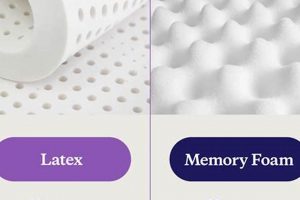
Tip 6: Investigate Mattress Materials: The materials used in mattress construction significantly impact firmness and support. High-density foams and innerspring systems typically offer greater firmness, while softer foams and latex tend to provide more contouring. Research the characteristics of different materials to align with desired levels of support and comfort.
Tip 7: Evaluate Edge Support: Adequate edge support is particularly important for individuals who sleep near the edge of the bed or who require assistance getting in and out of bed. Strong edge support prevents sagging and provides a stable surface.
Proper assessment of sleep habits, physical characteristics, and mattress material properties is vital when making a selection. Considering these factors will enhance the probability of selecting a mattress that promotes restful sleep and minimizes discomfort.
The subsequent sections will explore the long-term impact of mattress firmness on sleep quality and musculoskeletal health, providing a framework for informed purchasing decisions.
1. Spinal Alignment

Maintaining proper spinal alignment during sleep is paramount for musculoskeletal health and overall sleep quality. The selection of mattress firmness plays a critical role in achieving and sustaining this alignment. Different firmness levels provide varying degrees of support, directly affecting the spinal posture of the sleeper.
- Support for Different Sleep Positions
Mattress firmness significantly impacts spinal alignment based on sleep position. Stomach sleepers require a firmer surface to prevent excessive sinking of the abdomen and subsequent arching of the lower back. Side sleepers need a mattress that allows the shoulder and hip to sink in slightly, maintaining a neutral spinal position. Back sleepers generally benefit from a moderate level of support that conforms to the natural curvature of the spine.
- Impact of Body Weight
Body weight influences the degree to which a mattress compresses under pressure. Individuals with higher body weights typically require firmer mattresses to prevent excessive sinking and maintain spinal alignment. Lighter individuals may find that a medium-firm mattress provides adequate support without feeling overly rigid, allowing for proper spinal contouring.
- Long-Term Musculoskeletal Health
Sustained misalignment of the spine during sleep can contribute to chronic back pain, muscle stiffness, and other musculoskeletal issues. Selecting a mattress firmness that promotes proper spinal alignment can alleviate pressure on spinal discs and nerves, reducing the risk of these conditions. Conversely, an inappropriate firmness level can exacerbate existing problems or lead to new ones over time.
- Role of Mattress Materials
The materials used in mattress construction influence its firmness and support characteristics. High-density foams and innerspring systems tend to provide greater firmness and support, while softer foams and latex offer more contouring. The combination of materials and construction techniques determines the overall firmness level and its impact on spinal alignment.
Ultimately, the optimal mattress firmness for spinal alignment is highly individual and depends on a combination of factors including sleep position, body weight, and personal preferences. Prioritizing proper spinal support through informed mattress selection is a critical investment in long-term health and well-being.
2. Pressure point relief

Pressure point relief, a critical consideration in mattress selection, is directly influenced by mattress firmness. The ability of a sleep surface to alleviate concentrated pressure on areas such as the shoulders, hips, and back is a key determinant of sleep comfort and overall well-being, particularly for individuals experiencing joint pain or stiffness.
- Surface Conformity and Pressure Distribution
The degree to which a mattress conforms to the body’s contours dictates its capacity for pressure distribution. Mattresses providing greater conformity allow for a more even dispersion of weight, mitigating the localized pressure that can disrupt sleep. A surface with insufficient give may create or exacerbate pressure points, leading to discomfort and tossing and turning throughout the night. Medium-firm options generally offer a balance, contouring sufficiently while still providing adequate support.
- Impact on Circulation and Nerve Function
Sustained pressure on certain areas of the body can impede circulation and compress nerves, potentially resulting in numbness, tingling, or pain. Effective pressure point relief alleviates these issues by promoting unrestricted blood flow and minimizing nerve compression. Individuals with circulatory problems or nerve-related conditions may find significant benefit from mattresses designed to minimize pressure.
- Material Composition and Pressure Relief Characteristics
Various mattress materials offer different degrees of pressure relief. Memory foam, known for its contouring properties, excels at distributing weight and minimizing pressure points. Latex provides a resilient and responsive surface that conforms to the body while maintaining support. Innerspring mattresses, while offering support, may not provide the same level of pressure relief as foam or latex alternatives, particularly without adequate comfort layers.
- Influence of Sleep Position
The optimal level of pressure point relief varies depending on sleep position. Side sleepers require greater pressure relief in the shoulder and hip regions, while back sleepers may benefit from more uniform support. Stomach sleepers typically need a firmer surface to prevent excessive sinking and maintain spinal alignment, which can indirectly reduce pressure on other areas of the body. Matching mattress firmness to sleep position is crucial for maximizing pressure relief and comfort.
The choice between medium-firm and firm options hinges on the individual’s specific needs and preferences related to pressure point relief. Evaluating factors such as body weight, sleep position, and any pre-existing conditions can guide the selection process, ensuring a sleeping surface that promotes restful sleep and minimizes discomfort. A trial period is recommended to assess long-term comfort and effectiveness in alleviating pressure.
3. Sleep position compatibility

Sleep position exerts a direct influence on the optimal mattress firmness. The interplay between a sleeper’s posture and the support provided dictates the degree of spinal alignment and pressure point relief experienced. A mattress incompatible with a favored sleep position can lead to discomfort, disrupted sleep, and, over time, musculoskeletal problems. For example, a predominantly side-sleeping individual using a very firm mattress may experience concentrated pressure on the shoulder and hip joints, hindering circulation and causing pain. Conversely, a stomach sleeper on a medium-firm mattress may find their pelvis sinking too deeply, leading to lower back strain. The practical significance lies in recognizing that mattress firmness is not a universally optimal characteristic but rather one that must be tailored to individual sleeping habits.
The nuanced relationship between sleep position and mattress firmness demands careful consideration. Back sleepers generally require a balanced level of support, allowing the spine to maintain its natural curvature. Medium-firm mattresses often satisfy this requirement, providing both support and a degree of contouring. Side sleepers, conversely, necessitate a surface that conforms to the body’s curves, particularly in the shoulder and hip regions. Options that are slightly less firm can allow for this necessary give. Stomach sleeping, often discouraged due to its potential for spinal strain, typically necessitates a firmer surface to prevent excessive sinking of the torso. Individuals who frequently switch between sleep positions may benefit from a mattress with a more neutral firmness level or one that incorporates zoned support to accommodate varying needs.
In summary, sleep position compatibility represents a crucial component of the firmness selection process. Failure to account for this factor can negate other potential benefits of a mattress, such as material quality or temperature regulation. While general recommendations exist, individual experimentation and assessment remain paramount. The challenge lies in identifying a firmness level that promotes spinal alignment and pressure relief for the primary sleep position while minimizing potential drawbacks. The understanding of this interaction is vital for informed purchasing decisions, promoting both immediate comfort and long-term musculoskeletal well-being.
4. Body weight support

Body weight support is a critical factor in determining optimal mattress firmness. The ability of a mattress to adequately support an individual’s weight directly impacts spinal alignment, pressure point relief, and overall sleep comfort. Selecting the appropriate firmness level based on body weight is essential for maximizing these benefits.
- Impact on Spinal Alignment
Insufficient support can lead to spinal misalignment, particularly for individuals with higher body weights. A mattress that is too soft will allow the heavier areas of the body to sink excessively, placing stress on the spine and potentially leading to back pain. Conversely, a mattress that is too firm may not conform sufficiently to the body’s natural curves, resulting in pressure points and discomfort. The aim is to find a firmness level that provides adequate support to maintain proper spinal alignment throughout the night. The choice between options depends significantly on whether it can sufficiently distribute and support the sleeper’s weight.
- Pressure Point Distribution
The distribution of body weight across the mattress surface influences pressure point development. A mattress that provides adequate support will distribute weight more evenly, minimizing concentrated pressure on areas such as the shoulders, hips, and knees. Individuals with higher body weights may require firmer mattresses to prevent excessive sinking and maintain a more even distribution of pressure. A mattress option that lacks sufficient support can exacerbate pressure points, leading to discomfort and disrupted sleep.
- Mattress Longevity and Durability
Body weight impacts the longevity and durability of a mattress. Over time, a mattress that is not designed to support a specific weight range may begin to sag or lose its supportiveness. This is particularly true for individuals with higher body weights. Choosing a mattress with appropriate support for one’s weight can extend its lifespan and maintain its performance over time. Options designed with higher density materials and construction techniques may offer enhanced durability for heavier individuals.
- Considerations for Combination Sleepers
Individuals who switch between different sleep positions throughout the night present a unique challenge. A mattress must provide adequate support for both side and back sleeping, while also preventing excessive sinking for stomach sleepers. A more balanced option may be appropriate, offering a blend of support and contouring. It becomes crucial to consider how weight is distributed in different sleeping positions and select a mattress accordingly.
The interplay between body weight and mattress firmness cannot be overstated. The selection should be guided by the need to maintain spinal alignment, distribute pressure effectively, and ensure the longevity of the sleep surface. Failure to account for this relationship can compromise sleep quality and potentially lead to musculoskeletal issues. Options that offer targeted support based on body weight may provide the most customized and effective solution.
5. Durability and longevity
The inherent characteristics of mattress firmness directly influence its potential lifespan and resistance to wear. The selection of a mattress with appropriate firmness is not solely a matter of comfort preference but also a determinant of its long-term performance and structural integrity.
- Core Material Density and Structural Integrity
The density of the core materials used in construction is a primary factor affecting its ability to withstand prolonged use. Firmer mattresses typically utilize higher-density foams or a more robust innerspring system. This increased density translates to greater resistance to compression and sagging over time. Options with lower density cores, often found in less firm models, are more susceptible to degradation and a reduced lifespan. The selection process should include evaluating core material density specifications.
- Impact of Weight Distribution on Wear Patterns
The ability of a mattress to distribute weight evenly across its surface influences the development of wear patterns. Firmer mattresses, with their more uniform support, tend to exhibit more consistent wear compared to less firm options, which may develop localized sagging in areas of concentrated pressure. Uneven wear can compromise spinal alignment and reduce overall comfort. Regular rotation of the mattress can mitigate these effects, but the underlying firmness level plays a significant role in the initial wear pattern.
- Material Fatigue and Resistance to Compression
All mattress materials are subject to fatigue over time, resulting in a gradual loss of their original properties. Firmer materials, due to their higher density and greater resistance to initial compression, typically exhibit a slower rate of fatigue. Less firm materials, particularly those with a lower density or open-cell structure, tend to compress more readily and may lose their supportiveness more quickly. Material composition, therefore, is a critical consideration in assessing the potential lifespan.
- Construction Techniques and Edge Support
The construction techniques employed and the presence of robust edge support systems contribute to the overall durability. Reinforced edges prevent sagging and provide a stable sleeping surface, particularly for individuals who sleep near the edge of the bed. Mattresses with poorly constructed edges are more prone to premature wear and a reduced lifespan. The assessment of construction quality and edge support is an essential component of evaluating the overall durability and longevity.
In summary, the correlation between firmness and durability is multifaceted. While firmer mattresses often exhibit greater resistance to wear and compression due to higher density core materials, construction techniques and weight distribution also play a crucial role. A thorough assessment of material specifications, construction quality, and support characteristics is essential for selecting a mattress that offers both comfort and long-term durability.
6. Temperature regulation

Temperature regulation in mattresses is a critical factor affecting sleep comfort. The degree to which a mattress allows heat to dissipate or retains it is significantly influenced by its firmness and construction.
- Material Density and Airflow
Firmer mattresses, often characterized by higher material density, tend to exhibit reduced airflow compared to less firm alternatives. Denser materials restrict the circulation of air, potentially leading to heat accumulation. Conversely, less dense materials promote airflow, facilitating heat dissipation and contributing to a cooler sleeping environment. Material composition, such as open-cell foam versus closed-cell foam, further influences air circulation.
- Conformity and Body Contact Area
The extent to which a mattress conforms to the body affects the contact area and, consequently, heat retention. Firmer mattresses, providing less conformity, result in reduced body contact, potentially minimizing heat build-up. In contrast, mattresses that conform more closely to the body increase the surface area of contact, potentially trapping heat. The degree of conformity is directly related to the firmness level and influences the thermal properties of the sleep surface.
- Material Composition and Thermal Conductivity
The inherent thermal conductivity of mattress materials plays a significant role in temperature regulation. Some materials, such as latex and certain gel-infused foams, exhibit enhanced thermal conductivity compared to traditional memory foam. These materials facilitate the transfer of heat away from the body, contributing to a cooler sleeping experience. Material selection is thus a critical determinant of the thermal performance of mattresses.
- Cover Materials and Breathability
The mattress cover material impacts breathability and moisture wicking. Covers constructed from natural fibers, such as cotton or bamboo, tend to promote airflow and moisture evaporation, reducing heat retention. Synthetic materials may restrict airflow and contribute to a warmer sleeping environment. The choice of cover material is an important consideration in optimizing the thermal comfort of a mattress, regardless of its firmness.
The interplay between mattress firmness and temperature regulation is complex, involving considerations of material density, conformity, thermal conductivity, and cover breathability. While firmer mattresses may reduce body contact and potentially minimize heat build-up, material composition and construction techniques ultimately determine the thermal properties of the sleep surface. A comprehensive approach to mattress selection requires consideration of these factors to optimize sleep comfort.
Frequently Asked Questions
This section addresses common inquiries and clarifies misconceptions surrounding mattress firmness options. The information presented aims to provide a factual basis for informed decision-making.
Question 1: Does mattress firmness directly correlate with support?
While a firmer mattress often provides more support, this is not universally true. Support is determined by the mattress’s overall construction and materials, not solely its surface feel. A poorly constructed, extremely firm mattress may offer inadequate support, whereas a well-constructed mattress may offer substantial support despite having less initial firmness.
Question 2: Is a firmer mattress always better for back pain?
No. The optimal mattress firmness for back pain is highly individualized. A mattress that is too firm may exacerbate pressure points and discomfort, while one that is too soft may lack adequate support. Individuals experiencing back pain should consider their sleep position, body weight, and the specific nature of their pain when selecting a mattress.
Question 3: Do heavier individuals always require the firmest mattress?
Generally, individuals with higher body weights benefit from a firmer mattress to prevent excessive sinking and maintain spinal alignment. However, personal preference and sleep position remain critical factors. A moderately firm mattress, constructed with high-density materials, may provide sufficient support without sacrificing comfort.
Question 4: Will a firm mattress last longer than a option with less firmness?
The durability of a mattress depends on the quality of materials and construction, not solely on its firmness. While firmer mattresses often utilize higher-density materials that resist compression, a well-constructed mattress with less firmness can be equally durable. Material composition, such as latex or high-density memory foam, plays a significant role in longevity.
Question 5: Does mattress firmness impact temperature regulation?
Yes. Firmer mattresses tend to have less surface conformity, potentially allowing for greater airflow and reducing heat retention. However, the materials used in mattress construction, such as gel-infused foam or breathable covers, have a more significant impact on temperature regulation. Material selection remains paramount in managing heat build-up.
Question 6: Can a mattress topper adjust the firmness of an existing mattress effectively?
A mattress topper can alter the surface feel of an existing mattress, providing a temporary adjustment to firmness. However, a topper cannot correct underlying support issues. If the existing mattress lacks adequate support, a topper will not remedy this deficiency. A topper is most effective for fine-tuning comfort, not for addressing fundamental support problems.
In summary, selecting the appropriate mattress firmness requires considering individual needs, sleep habits, and physical characteristics. No single firmness level is universally optimal. Evaluating these factors through research and practical assessment is essential.
The subsequent section will explore the impact of mattress technology on achieving optimal firmness and support.
Medium Firm vs Firm Mattress
The preceding analysis has dissected the characteristics and implications of various mattress firmness levels, focusing specifically on the distinction between surfaces offering moderate and robust support. Key considerations have included spinal alignment, pressure point relief, sleep position compatibility, body weight support, durability, and temperature regulation. No single level emerges as universally superior; rather, the optimal choice hinges on a complex interplay of individual factors.
The long-term consequences of selecting an inappropriate mattress firmness can extend beyond mere discomfort, potentially impacting musculoskeletal health and sleep quality. Therefore, a prospective mattress purchaser is urged to approach the selection process with diligence, informed by both research and practical assessment. The ongoing evolution of mattress technology promises increasingly refined solutions for personalized sleep support, warranting continued attention and informed consideration.