The choice between yielding and unyielding sleep surfaces constitutes a fundamental aspect of bedding selection. One option provides considerable give and contouring, while the other offers substantial resistance and support. These differing characteristics significantly influence spinal alignment and pressure distribution during rest.
Selecting an appropriate sleep surface impacts sleep quality and physical well-being. Historically, preferences have shifted based on evolving understanding of biomechanics and material science. A correctly chosen sleeping platform contributes to reduced back pain, improved circulation, and enhanced restfulness. This decision is critical for individuals seeking to optimize their sleep experience and promote long-term musculoskeletal health.
The subsequent discussion will delve into the specific properties of differing sleep surface types, exploring their impact on various sleep positions, body types, and common physical ailments. Furthermore, material composition, construction techniques, and long-term durability will be examined to provide a comprehensive understanding of factors influencing the ultimate sleep experience.
Considerations for Optimal Sleep Surface Selection
The following outlines key considerations when evaluating appropriate bedding solutions. Careful assessment of individual needs and preferences is paramount in ensuring a restful and restorative sleep experience.
Tip 1: Assess Spinal Alignment: The chosen sleeping platform should promote neutral spinal alignment. Improper alignment can exacerbate existing back pain and contribute to musculoskeletal discomfort. Evaluate alignment by lying on the side; the spine should maintain a straight line from head to tailbone.
Tip 2: Evaluate Pressure Distribution: The sleep surface should effectively distribute weight, minimizing pressure points. Excessive pressure can lead to discomfort, numbness, and restricted circulation, particularly in the hips and shoulders. Identify areas of discomfort after lying down for several minutes to assess pressure distribution.
Tip 3: Account for Sleep Position: Primary sleep position influences the ideal level of support. Side sleepers typically benefit from greater contouring to accommodate the curvature of the spine. Stomach sleepers generally require firmer support to prevent excessive arching of the back. Back sleepers often fall between these two extremes, benefiting from moderate support.
Tip 4: Factor in Body Weight: Individuals with higher body weights generally require greater support to prevent excessive sinking and maintain spinal alignment. Conversely, lighter individuals may find firmer surfaces too rigid and uncomfortable.
Tip 5: Consider Material Composition: The materials used in construction affect overall feel, durability, and temperature regulation. Memory foam provides significant contouring but can retain heat. Latex offers a responsive feel and good breathability. Innerspring systems offer varied levels of support and airflow.
Tip 6: Trial Period Utilization: Reputable retailers offer trial periods, allowing consumers to test the bedding at home. Take advantage of this opportunity to thoroughly evaluate the suitability of the sleep surface before making a final decision. Pay close attention to any changes in sleep quality, pain levels, and overall comfort during the trial period.
Tip 7: Address Pre-existing Conditions: Individuals with specific medical conditions, such as arthritis or fibromyalgia, should consult with a healthcare professional to determine the most appropriate sleep surface. Medical advice can help guide selection based on individual needs and limitations.
Optimal sleep surface selection is a personalized process requiring careful consideration of individual needs and preferences. Prioritizing spinal alignment, pressure distribution, and material properties ensures a comfortable and restorative sleep experience.
The following sections will explore common misconceptions and address frequently asked questions regarding sleep surface selection, providing further clarity and guidance.
1. Spinal Alignment

Spinal alignment, a critical factor in musculoskeletal health, is profoundly influenced by the support characteristics of a sleeping surface. The relationship between spinal alignment and the firmness of a bedding solution is not linear; the optimal firmness level varies based on individual anatomy, sleep position, and weight distribution. Inadequate support, such as that offered by an excessively yielding sleep surface, can cause spinal misalignment, resulting in muscle strain and potential nerve compression. Conversely, an overly rigid surface may fail to accommodate natural spinal curvature, leading to pressure points and discomfort.
Consider, for example, an individual who sleeps primarily on their side. A sleep surface that is excessively soft will allow the shoulder and hip to sink too deeply, causing the spine to curve unnaturally. This lateral flexion can lead to pain in the neck, lower back, and hips. Conversely, an overly firm surface will fail to provide adequate pressure relief at these points, leading to concentrated stress and potential discomfort. A more appropriate sleeping platform will provide sufficient give to accommodate the shoulder and hip while maintaining a relatively straight spinal column. For individuals who sleep primarily on their back, the objective is to maintain the natural lordotic curve of the lumbar spine. A moderately firm surface is generally recommended to prevent excessive sinking of the pelvis, which can flatten the natural spinal curvature.
Maintaining proper spinal alignment during sleep is paramount for preventing musculoskeletal problems and ensuring restorative rest. The choice between different levels of firmness should be guided by a thorough assessment of individual needs and preferences, considering factors such as sleep position, body weight, and pre-existing conditions. Understanding the interplay between sleeping surface and spinal health enables individuals to make informed decisions regarding bedding selection, ultimately contributing to improved overall well-being.
2. Pressure Relief

Pressure relief, a critical determinant of sleep quality, is intrinsically linked to the selection of an appropriate sleeping surface. The degree to which a sleep surface conforms to the body directly influences the distribution of weight and the concentration of pressure at specific points. Inadequate pressure relief can lead to discomfort, restricted circulation, and, in severe cases, the development of pressure ulcers. Conversely, excessive yielding may compromise spinal alignment and provide insufficient support, potentially exacerbating existing musculoskeletal conditions. The interplay between surface firmness and pressure distribution necessitates a nuanced understanding of individual needs and anatomical considerations.
The human body is not uniformly shaped; bony prominences, such as the hips, shoulders, and heels, are particularly susceptible to concentrated pressure. Sleeping on a surface that fails to accommodate these anatomical contours results in localized compression of blood vessels, leading to ischemia and potential tissue damage. A yielding surface, such as one composed of memory foam, may effectively contour to the body, distributing weight more evenly and reducing pressure on these vulnerable areas. However, the degree of yielding must be balanced against the need for adequate support to maintain spinal alignment. An excessively yielding surface may compromise spinal integrity, negating the benefits of improved pressure distribution. The optimal level of firmness is, therefore, highly individualized.
Ultimately, the selection of a sleeping surface that effectively balances pressure relief and spinal support is paramount for promoting restorative sleep and preventing adverse physiological consequences. Understanding the relationship between surface firmness, pressure distribution, and individual anatomy enables informed decision-making, leading to improved sleep quality and overall well-being. Further research into the biomechanical properties of various sleep surface materials is crucial for optimizing bedding solutions and addressing the diverse needs of the population.
3. Body Weight

Body weight significantly influences the perceived firmness and support provided by a sleeping surface. The interaction between body mass and mattress composition directly affects spinal alignment, pressure distribution, and overall sleep comfort. An understanding of this relationship is crucial for selecting a bedding solution that promotes restorative rest and minimizes musculoskeletal strain.
- Support and Immersion Depth
Individuals with higher body weights exert greater force on the mattress surface, resulting in increased immersion depth. A yielding sleeping platform may allow excessive sinking, compromising spinal alignment and potentially leading to discomfort or pain. Firmer surfaces provide greater resistance, preventing excessive sinking and maintaining a more neutral spinal posture. Conversely, lighter individuals may find firmer mattresses too rigid, failing to provide adequate contouring and pressure relief. The ideal support level must accommodate individual weight distribution.
- Pressure Distribution and Surface Area
Body weight impacts the distribution of pressure across the sleeping surface. Higher body weights concentrate pressure on specific areas, such as the hips and shoulders. A suitable mattress should effectively distribute this pressure, minimizing localized compression and promoting circulation. Firmer surfaces tend to distribute weight over a broader area, reducing pressure points for heavier individuals. Conversely, yielding surfaces may offer better pressure relief for lighter individuals by conforming more closely to body contours.
- Material Durability and Longevity
Mattress materials respond differently to varying weight loads. High-density foams and robust innerspring systems are generally more durable and resistant to compression under heavier loads. Over time, repeated compression can degrade the structural integrity of the mattress, leading to sagging and diminished support. Selecting a mattress with appropriate weight-bearing capacity is essential for ensuring longevity and maintaining optimal performance over the lifespan of the product. This is specially true with soft mattress vs firm mattress.
- Thermoregulation and Airflow
Body weight can indirectly influence thermoregulation during sleep. Higher body mass may result in increased heat retention, particularly on memory foam mattresses with limited airflow. Firmer mattresses, especially those with coil or hybrid constructions, often promote better airflow and reduce heat buildup. Choosing materials with enhanced breathability is particularly important for individuals who tend to sleep hot, regardless of body weight, to create a comfortable sleeping microclimate.
Considering the interplay between body weight and mattress characteristics is paramount for optimizing sleep quality. While general guidelines exist, individual preferences and physiological needs should ultimately guide the selection process. Trialling different mattress types and consulting with sleep specialists can further refine the decision-making process, ensuring a personalized bedding solution that promotes restorative sleep and overall well-being.
4. Sleep Position

Sleep position exerts a substantial influence on the perceived comfort and support derived from differing mattress firmness levels. The alignment of the spine, the distribution of pressure, and the engagement of musculature vary significantly depending on whether an individual sleeps primarily on their side, back, or stomach. Consequently, a bedding solution that provides optimal support for one sleep position may prove detrimental to another. Therefore, understanding the interaction between habitual sleep position and mattress firmness is critical for promoting restorative sleep and preventing musculoskeletal discomfort.
Side sleeping, characterized by lateral spinal flexion, necessitates a mattress that allows for adequate shoulder and hip sinkage while maintaining proper spinal alignment. A yielding mattress may effectively contour to the body, distributing weight and minimizing pressure points on these prominent areas. However, excessive yielding can lead to spinal misalignment, resulting in neck and back pain. Conversely, back sleeping requires a mattress that provides sufficient support to maintain the natural curvature of the spine. A moderately firm surface typically prevents excessive pelvic sinking, preserving the lordotic curve of the lumbar spine. Stomach sleeping, generally discouraged due to its potential to exacerbate spinal strain, often benefits from a firmer mattress to minimize arching of the back and maintain a more neutral spinal posture. In practice, individuals who predominantly sleep on their side may benefit from a softer or medium-firm mattress, while those who sleep on their backs may find medium-firm to firm mattresses more suitable. Stomach sleepers typically require a firmer surface.
The selection of an appropriate mattress firmness level should be guided by a comprehensive assessment of individual sleep habits and anatomical considerations. While general guidelines exist, the optimal choice remains highly individualized. Consideration should be given to the dominant sleep position, body weight, and any pre-existing musculoskeletal conditions. Ultimately, prioritizing spinal alignment and pressure distribution is paramount for promoting a comfortable and restorative sleep experience, regardless of the preferred sleep position. The interplay between sleep position and the right platform plays a vital role for health of each individuals, it’s up to their choice to see if a soft vs firm mattress can suits them.
5. Material Density

Material density plays a pivotal role in determining the firmness characteristics of sleep surfaces. The mass per unit volume of the constituent materials directly influences the support, contouring, and overall feel of a mattress. Denser materials generally provide greater resistance to compression, resulting in a firmer sleeping platform. Conversely, lower-density materials tend to yield more readily under pressure, creating a softer, more conforming surface. This fundamental relationship governs the suitability of different materials for achieving desired firmness levels.
For example, high-density memory foam, with its closely packed cellular structure, offers substantial support and pressure relief while exhibiting a slower response to compression. This characteristic contributes to the signature “sinking-in” sensation associated with memory foam mattresses. In contrast, lower-density memory foam compresses more easily, providing less support and a quicker rebound. Similarly, the density of latex foam influences its firmness; denser latex provides a more resilient and supportive feel, while lower-density latex offers greater plushness. In innerspring mattresses, coil gauge and coil density directly impact the overall firmness. Thicker gauge coils and a higher number of coils per unit area result in a firmer, more supportive surface. Therefore, manufacturers carefully select materials with specific density characteristics to achieve targeted firmness levels, catering to diverse consumer preferences.
In summary, material density is a primary determinant of mattress firmness. Understanding the relationship between density and firmness allows consumers to make informed decisions when selecting a sleep surface. High-density materials typically result in firmer mattresses, offering greater support and resistance to compression, while low-density materials generally produce softer, more conforming mattresses. Evaluating material density, alongside other factors such as construction and design, ensures a personalized bedding solution that promotes optimal sleep quality and musculoskeletal health.
6. Long-term durability
The longevity of a sleep surface is directly linked to its construction and inherent firmness characteristics. Over time, all mattresses experience some degree of material degradation, but the rate and extent of this degradation are influenced by factors such as core materials, construction techniques, and the initial firmness level. An understanding of these factors is crucial for assessing the long-term investment value of bedding solutions.
- Core Material Resilience
The core materials significantly determine the lifespan of a mattress. High-density foams, such as latex or high-grade polyurethane, tend to exhibit greater resistance to compression and deformation compared to lower-density counterparts. In innerspring mattresses, the gauge and type of steel used in the coils influence their ability to withstand repeated stress. A sleeping platform employing more resilient core materials is inherently more durable, regardless of its initial firmness level.
- Construction and Layering Techniques
The manner in which a mattress is constructed impacts its long-term structural integrity. Robust stitching, reinforced edges, and strategically layered materials contribute to enhanced durability. Mattresses with simpler construction, regardless of firmness, may be more susceptible to premature sagging or deformation. Proper layering can distribute weight more effectively, mitigating stress on individual components and prolonging the lifespan of the mattress.
- Firmness and Compression Set
Firmness, irrespective of material composition, plays a role in compression set the permanent deformation of materials under sustained load. Softer mattresses, by their nature, tend to experience greater compression over time, potentially leading to a loss of support and the development of body impressions. Firmer mattresses, while generally more resistant to initial compression, can still exhibit degradation, particularly in the comfort layers. Selecting a mattress with appropriate firmness for body weight and sleep position is crucial for minimizing compression set and maximizing lifespan.
- Support System Integrity
The integrity of the support system is critical to the overall durability. Hybrid mattresses, combining innerspring and foam layers, must maintain the coil system’s integrity to ensure continued support. For foam mattresses, a high-density support core can prevent premature sinking. Regardless of whether a mattress is categorized as soft or firm, the underlying support structure directly affects its long-term performance. A well-designed and robust support system provides uniform support and minimizes the risk of localized sagging, irrespective of firmness level.
In summary, while the initial firmness level influences comfort perception, long-term durability is predominantly determined by the quality of materials, construction techniques, and the integrity of the core support system. A well-constructed mattress, regardless of its initial firmness, will consistently outperform inferiorly constructed models in terms of longevity and sustained support.
7. Thermoregulation

Thermoregulation during sleep is a critical factor influencing sleep quality and overall comfort. The characteristics of a sleeping surface, specifically its firmness and material composition, significantly impact the body’s ability to maintain a stable core temperature throughout the night. The interaction between mattress firmness and thermal properties necessitates a careful evaluation of individual needs and environmental conditions.
- Airflow and Breathability
Mattress firmness influences airflow and breathability within the sleeping environment. Firmer mattresses, particularly those with innerspring or hybrid constructions, generally promote greater airflow due to the presence of open spaces within the support core. This enhanced airflow facilitates the dissipation of heat and moisture, preventing overheating and promoting a cooler sleep environment. Conversely, softer mattresses, especially those composed of dense memory foam, tend to restrict airflow, potentially leading to increased heat retention. The reduced breathability can contribute to discomfort and sleep disturbances, particularly in warmer climates or for individuals prone to night sweats.
- Material Composition and Heat Retention
The materials used in mattress construction exhibit varying degrees of thermal conductivity and heat retention. Memory foam, known for its conforming properties, tends to trap heat due to its dense structure and limited airflow. Latex foam, particularly natural latex, offers better breathability and temperature regulation compared to memory foam. Innerspring mattresses, with their open coil structure, generally provide the best airflow and minimal heat retention. The choice of material should be guided by individual temperature preferences and the prevailing climate conditions. A cooler sleeping surface can promote more restful sleep, while a warmer surface may be preferred by individuals who tend to feel cold during the night. The soft vs firm mattress comes second to this.
- Surface Contact Area and Insulation
Mattress firmness affects the surface contact area between the body and the sleeping surface. Softer mattresses tend to conform more closely to the body, increasing the contact area and potentially enhancing insulation. This increased insulation can trap heat and reduce the body’s ability to dissipate heat effectively. Firmer mattresses, with their reduced surface contact area, allow for greater airflow and heat dissipation. The extent of contact between the body and the surface plays a crucial role in the body’s thermal regulation. Therefore, individuals must consider their sensitivity to temperature variations.
- Moisture Wicking Properties
The ability of a mattress to wick away moisture is another critical factor influencing thermoregulation. Materials with good moisture-wicking properties, such as wool or certain synthetic fibers, help to draw sweat away from the body, preventing discomfort and promoting a cooler sleep environment. Mattresses with poor moisture-wicking properties can become damp and uncomfortable, especially in humid conditions. The softness or firmness doesn’t directly dictate this property but is linked to the selection of materials. Always prioritize breathable materials for improved sleeping quality.
In conclusion, thermoregulation is an essential consideration when selecting a mattress. The firmness and material composition of the sleeping surface directly influence airflow, heat retention, surface contact area, and moisture wicking, all of which contribute to the body’s ability to maintain a stable core temperature during sleep. Understanding the interplay between mattress characteristics and thermal properties enables individuals to make informed decisions, promoting a more comfortable and restful sleep experience. Soft vs firm mattress depends on your current choice
Frequently Asked Questions Regarding Soft vs Firm Mattress Selection
The following addresses common inquiries and concerns surrounding the selection of bedding solutions, focusing on the interplay between mattress firmness and its impact on sleep quality.
Question 1: Is a firm mattress always better for back pain?
The assertion that firm bedding universally alleviates back discomfort is a misconception. While increased support may benefit some individuals, an overly rigid surface can exacerbate pain by failing to conform to natural spinal curvature and create pressure points. The optimal firmness level is determined by individual anatomy, sleep position, and specific spinal conditions. A consultation with a medical professional is recommended for individuals experiencing persistent back pain.
Question 2: How does body weight influence the choice between sleeping platforms?
Body weight is a significant factor in bedding selection. Individuals with higher body mass generally require a firmer sleeping surface to prevent excessive sinking and maintain proper spinal alignment. Lighter individuals may find overly firm surfaces uncomfortable, as they may not provide sufficient contouring and pressure relief. Selecting a mattress that adequately supports and distributes weight is paramount.
Question 3: Does sleep position dictate the ideal firmness level?
Habitual sleep position substantially influences the suitability of different firmness levels. Side sleepers typically benefit from a surface that allows for shoulder and hip sinkage while maintaining spinal alignment. Back sleepers generally require moderate support to preserve the natural spinal curvature. Stomach sleepers often benefit from a firmer platform to prevent excessive arching of the back. Considering dominant sleep position is essential for optimizing comfort and spinal support.
Question 4: What are the key differences between memory foam and latex mattresses in terms of firmness?
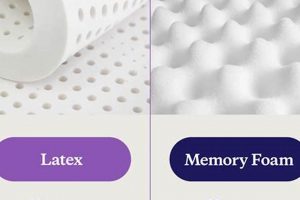
Memory foam and latex mattresses exhibit distinct firmness characteristics. Memory foam typically conforms closely to the body, providing significant pressure relief. Latex offers a more resilient and responsive feel, providing a balance of support and contouring. The inherent firmness level of each material can be adjusted through varying density and manufacturing processes. Individual preferences should guide the selection between these materials.
Question 5: How important is a trial period when selecting a mattress?
Utilizing a trial period is strongly recommended before committing to a mattress purchase. Trial periods allow for thorough evaluation of the mattress in a home environment, providing valuable insights into its suitability for individual needs and preferences. Sleep quality, pain levels, and overall comfort can be assessed over an extended period, ensuring a more informed decision.
Question 6: How does sleeping platform affect temperature regulation during sleep?
The sleeping platform significantly impacts thermoregulation during sleep. Firmer mattresses with innerspring or hybrid constructions generally promote greater airflow, facilitating heat dissipation. Softer mattresses, particularly those composed of dense memory foam, can restrict airflow and lead to heat retention. Selecting a mattress with appropriate breathability is important for maintaining a comfortable sleep temperature.
In summary, numerous factors influence the optimal selection of a sleeping platform. Considering body weight, sleep position, material composition, and individual preferences is paramount for ensuring a comfortable and restorative sleep experience.
The subsequent section will delve into advanced mattress technologies and their impact on sleep quality, providing further insights into optimizing bedding selection.
Conclusion
The preceding discussion elucidates the critical distinctions between bedding options, emphasizing the interplay of material properties, individual physiology, and preferred sleep habits. The determination of appropriate support characteristics requires careful consideration of spinal alignment, pressure distribution, and thermal regulation, underscoring the personalized nature of bedding selection. This exploration highlights the nuanced factors influencing sleep quality and long-term musculoskeletal health.
Ultimately, the informed selection of a sleeping platform transcends mere comfort; it represents a proactive investment in well-being. Continuing advancements in material science and sleep technology promise further refinements in bedding solutions, offering the potential for enhanced sleep quality and improved overall health outcomes. Continued research and a commitment to personalized assessment will drive future innovation in this critical area.