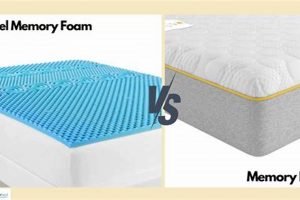
The comparison of innerspring and foam sleep surfaces is a common consideration for individuals seeking optimal rest. One option utilizes a coil support system, often encased in padding, while the other employs various densities of manufactured material to provide comfort and support. These two constructions represent distinct approaches to achieving a restful night’s sleep.
The significance of selecting the appropriate sleep surface lies in its impact on spinal alignment, pressure point relief, and overall sleep quality. Historically, innerspring designs dominated the market, but advancements in material science have led to the increased popularity and availability of foam alternatives. Choosing between these two requires careful evaluation of individual needs and preferences.
The following sections will delve into the specific characteristics of each type, exploring their construction, advantages, disadvantages, and suitability for different sleep styles. This analysis will provide a framework for making an informed decision regarding the selection of a suitable sleep product.
Considerations for Selecting Between Innerspring and Foam Sleep Surfaces
Making an informed decision regarding sleep surface selection requires careful assessment of individual needs and product characteristics. The following tips offer guidance in navigating the complexities of choosing between coil-based and foam-based constructions.
Tip 1: Assess Individual Sleep Style: Side sleepers may benefit from the pressure relief offered by foam, while stomach sleepers might prefer the firmer support of innerspring. Back sleepers should consider a balance of support and comfort. Analyze your typical sleeping position to inform your choice.
Tip 2: Evaluate Body Weight: Individuals with higher body weights may find that innerspring models with higher coil counts provide adequate support and prevent excessive sinking. Lighter individuals might prefer the conforming properties of foam.
Tip 3: Consider Temperature Regulation: Innerspring models generally offer better airflow and temperature regulation compared to traditional foam. Individuals prone to overheating during sleep should prioritize breathability.
Tip 4: Research Density and ILD Ratings: Foam density and Indentation Load Deflection (ILD) ratings provide insights into firmness and durability. Higher density often correlates with greater longevity and support. Investigate these metrics when considering a foam option.
Tip 5: Evaluate Edge Support: Edge support is crucial for preventing roll-off and maximizing usable sleep surface. Innerspring designs with reinforced edges typically offer superior edge support compared to all-foam models. Consider edge support needs based on whether you share a bed or utilize the edge to sit and get dressed.
Tip 6: Inquire About Trial Periods and Warranties: Reputable manufacturers offer trial periods and warranties. These provisions allow consumers to test the product and assess its suitability for their individual needs. Carefully review the terms and conditions before making a purchase.
Tip 7: Compare Prices and Features: Prices vary significantly based on materials, construction, and brand reputation. Comparing prices across different models and retailers can help ensure value for money. However, prioritize quality and suitability over cost alone.
Selecting the optimal sleep surface involves a thorough evaluation of individual needs, product characteristics, and available options. These tips provide a framework for making an informed decision that promotes restful and restorative sleep.
The following sections will delve into other key mattress features, such as materials and construction, which can help solidify the decision-making process.
1. Support

The capacity of a sleep surface to provide adequate support is a primary consideration when choosing between innerspring and foam options. Support directly influences spinal alignment, pressure distribution, and overall comfort, thereby affecting sleep quality and long-term physical well-being.
- Coil Systems in Innerspring Mattresses
Innerspring mattresses utilize various coil systems, such as Bonnell, offset, continuous, and pocketed coils. The type and gauge of the coils determine the level of support offered. Higher coil counts and thicker gauge coils generally provide firmer support and greater resistance to compression. The arrangement of the coils also affects support; pocketed coils, for instance, offer more localized support compared to interconnected systems.
- Foam Density and ILD Ratings
Foam mattresses derive their support from the density and Indentation Load Deflection (ILD) rating of the foam layers. Higher density foams offer greater resistance to compression and provide more substantial support. The ILD rating indicates the firmness of the foam; a higher ILD signifies a firmer feel and enhanced support. Layering different densities of foam allows manufacturers to create mattresses with varying levels of support and contouring.
- Zoned Support Systems
Both innerspring and foam mattresses can incorporate zoned support systems to provide targeted support to different areas of the body. These systems typically feature firmer support in the lumbar region and softer support in the shoulder and hip areas to promote spinal alignment and pressure relief. Zoned support can enhance the overall comfort and support offered by either type of mattress.
- Edge Support Considerations
Edge support refers to the stability and support provided along the perimeter of the mattress. Strong edge support prevents sagging and roll-off, maximizing the usable sleep surface. Innerspring mattresses often utilize reinforced edges to enhance edge support, while foam mattresses may incorporate high-density foam or edge encasement systems. Adequate edge support is particularly important for individuals who share a bed or sit on the edge of the bed frequently.
The choice between innerspring and foam based on support depends on individual preferences, body weight, and sleeping position. Innerspring mattresses generally offer firmer, more resilient support, while foam mattresses provide contouring support that conforms to the body’s shape. Evaluating the coil system, foam density, and the presence of zoned support and edge support systems is essential for selecting a mattress that provides optimal support for restful and restorative sleep.
2. Conformity

Conformity, in the context of sleep surfaces, refers to the ability of a mattress to adapt to the contours of the body, distributing weight evenly and minimizing pressure points. The degree of conformity differs significantly between innerspring and foam constructions, influencing comfort, spinal alignment, and overall sleep experience. Greater conformity generally results in reduced pressure on sensitive areas such as the shoulders and hips, promoting better circulation and reducing tossing and turning. The impact of this characteristic, therefore, is relevant to sleep quality and related physical health.
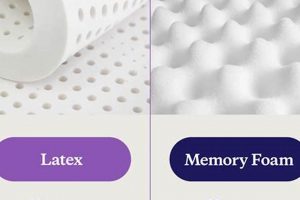
Innerspring mattresses, due to their coil-based support system, typically exhibit a lesser degree of conformity compared to foam options. While the padding layers atop the coils provide some cushioning, the underlying structure remains relatively rigid, limiting its ability to mold to the body’s unique shape. Foam mattresses, conversely, possess a inherent capacity to conform to the body’s curves. Memory foam, for example, reacts to body heat and weight, molding to the individual’s form and providing customized support. Latex foam offers a more responsive conformity, adapting quickly to changes in position. Hybrid designs combine the support of innerspring with the conforming properties of foam layers, aiming to strike a balance between support and pressure relief.
The choice between innerspring and foam based on conformity depends on individual preferences and needs. Those seeking maximum pressure relief and a cradling sensation may favor foam, while individuals prioritizing firmer support and greater responsiveness may opt for innerspring or hybrid models. Ultimately, understanding the distinct conforming characteristics of each sleep surface is crucial for making an informed decision that aligns with individual sleep preferences and promotes restorative rest. Lack of sufficient conformity can lead to localized pressure and discomfort, whereas excessive sinkage can hinder movement and create a feeling of being trapped, so careful consideration is beneficial.
3. Durability

Durability represents a crucial element in the long-term value and performance of any sleep surface. When comparing innerspring and foam constructions, durability manifests differently due to their distinct material compositions and structural designs. In an innerspring mattress, the coil system’s gauge and construction influence its resistance to sagging and deformation over time. High-gauge steel coils and robust interconnection methods tend to provide greater longevity. The quality of the upholstery layers atop the coils also contributes; denser, higher-quality materials withstand compression and wear more effectively. Conversely, foam mattress durability hinges on the density and resilience of the constituent foams. Higher-density foams exhibit greater resistance to compression and maintain their shape and support characteristics for extended periods. The layering and arrangement of different foam types can further enhance or detract from overall durability.
The practical significance of durability manifests in multiple ways. A more durable sleep surface retains its support and comfort characteristics longer, minimizing the need for frequent replacement. This translates to reduced long-term cost and a more consistent sleep experience. Reduced durability can lead to sagging, body impressions, and diminished support, negatively impacting spinal alignment and sleep quality. For instance, an innerspring mattress with low-gauge coils may develop significant sagging in high-pressure areas within a few years, requiring replacement. Similarly, a foam mattress constructed with low-density foams may lose its shape and support properties relatively quickly, leading to discomfort and compromised sleep. Material density and coil gauge are crucial to understand in the bed-buying proccess. Therefore, understanding the durability characteristics of each type is vital for making an informed purchasing decision.
In summary, durability is a key determinant of a sleep surface’s long-term value and performance. Innerspring durability depends on coil gauge, construction, and upholstery material quality, while foam durability depends on foam density and layering. Selecting a mattress with durable materials and robust construction methods is crucial for ensuring consistent support, comfort, and longevity. Considering both these factors when making a purchase decision increases the likelihood of selecting a product that offers lasting value and promotes restful sleep.
4. Temperature

Temperature regulation represents a significant factor influencing sleep quality and overall comfort, particularly when considering innerspring versus foam sleep surfaces. The inherent properties of the materials used in each construction impact heat retention and dissipation, affecting the sleeping environment. Innerspring designs, characterized by their open structure and coil systems, typically exhibit superior airflow compared to denser foam counterparts. This enhanced airflow facilitates heat dissipation, reducing the likelihood of overheating during sleep. Conversely, traditional foam, especially memory foam, tends to trap heat due to its dense structure and limited air circulation. This heat retention can lead to discomfort and disrupted sleep, especially for individuals prone to night sweats or those residing in warmer climates. For example, a study showed that individuals using traditional memory foam mattresses experienced higher skin temperatures compared to those using innerspring mattresses, leading to increased sleep disturbances. The relationship between mattress material and temperature is therefore of vital significance.
The practical significance of understanding these temperature-related differences lies in the ability to select a sleep surface that aligns with individual needs and preferences. Individuals who prioritize breathability and tend to sleep hot may benefit from innerspring or hybrid models incorporating breathable foam layers. Manufacturers have also developed innovative cooling technologies, such as gel-infused foams and open-cell foam structures, to mitigate heat retention in foam mattresses. These technologies aim to improve airflow and dissipate heat more effectively, enhancing comfort. A person experiencing persistent night sweats may find that switching from a memory foam mattress to an innerspring model, or a memory foam mattress with gel infusions, significantly improves their sleep comfort.
In conclusion, temperature regulation is an important aspect when considering innerspring and foam sleep surfaces. Innerspring models generally offer better airflow and temperature control due to their open structure, while traditional foam mattresses can retain heat. The choice between these two options should be based on individual sleep preferences, climate, and susceptibility to overheating. New developments in foam technologies aim to address temperature concerns, offering cooling solutions for those who prefer the comfort of foam. Selecting a mattress with appropriate temperature regulation can contribute to a more comfortable and restorative sleep experience. The selection process involves balancing personal thermal comfort needs against preferences regarding support and conforming properties.
5. Motion Transfer

Motion transfer, in the context of sleep surfaces, describes the degree to which movement on one area of the mattress is felt in other areas. This is a particularly important consideration for couples or individuals who share a bed with a pet, as excessive motion transfer can disrupt sleep. The construction of innerspring and foam mattresses significantly impacts motion isolation, influencing sleep quality and overall partner comfort. Innerspring mattresses, with their interconnected coil systems, tend to transmit motion more readily. When one partner moves, the coils compress, and this compression can propagate across the mattress surface, causing the other partner to feel the disturbance. The magnitude of motion transfer depends on the type of coil system; interconnected coils (like Bonnell coils) typically exhibit greater motion transfer than individually pocketed coils. For example, if one partner gets out of bed on an innerspring mattress with interconnected coils, the other partner may feel a noticeable jolt or ripple effect. The practical significance of minimizing motion transfer becomes evident in scenarios where one partner is a light sleeper or has a different sleep schedule than the other. Frequent disturbances due to motion can lead to fragmented sleep and reduced overall restfulness.
Foam mattresses, especially those made with memory foam or latex, excel at isolating motion due to their dense, conforming structure. These materials absorb movement at the point of impact, preventing it from spreading across the mattress. When one partner moves on a foam mattress, the motion is localized to that area, minimizing disturbance to the other partner. This is because the foam compresses and conforms to the body, absorbing the energy of the movement rather than transmitting it outwards. For example, if one partner tosses and turns on a memory foam mattress, the other partner is less likely to feel the movement compared to an innerspring mattress. Hybrid mattresses attempt to balance motion isolation and support by combining a coil system with foam layers. The foam layers dampen motion transfer, while the coils provide support. The effectiveness of motion isolation in a hybrid mattress depends on the thickness and density of the foam layers, as well as the type of coil system used. Understanding motion transfer characteristics is essential for selecting a sleep surface that promotes undisturbed sleep for both partners.
In summary, motion transfer is a key factor to consider when comparing innerspring and foam mattresses, particularly for couples. Innerspring mattresses generally exhibit greater motion transfer due to their interconnected coil systems, while foam mattresses excel at isolating motion due to their dense, conforming structure. Hybrid mattresses aim to balance motion isolation and support. The choice between these options depends on individual sleep preferences and the sensitivity of each partner to movement. Selecting a mattress with effective motion isolation can significantly improve sleep quality and promote harmonious co-sleeping. The challenges related to balancing motion isolation with other desirable mattress characteristics, such as support and temperature regulation, often drive innovation in mattress design and material science, constantly refining options available to consumers.
6. Cost

The cost of sleep surfaces represents a significant consideration for consumers evaluating innerspring versus foam options. Price points vary widely, influenced by material composition, construction complexity, brand reputation, and technological innovations. Understanding the factors that contribute to the overall cost is crucial for making an informed purchasing decision that balances budgetary constraints with desired sleep quality and long-term value.
- Material Composition and Manufacturing Processes
The raw materials used in mattress construction significantly impact the final cost. High-quality steel coils, dense memory foam, and natural latex command higher prices compared to lower-grade alternatives. Manufacturing processes also play a role; complex designs involving multiple layers, specialized quilting, or advanced cooling technologies contribute to increased production costs. For example, a mattress utilizing individually wrapped coils and multiple layers of high-density memory foam requires more materials and labor compared to a basic innerspring model with a simple construction.
- Brand Reputation and Marketing Costs
Established brands often command premium prices due to their reputation for quality, durability, and customer service. Marketing and advertising expenses also contribute to the overall cost of the mattress. Brands invest in promoting their products, which can increase the price consumers ultimately pay. Less well-known brands may offer comparable products at lower prices, but consumers should carefully evaluate the quality and features before making a decision. Luxury brands spend a lot of their budget in high quality material and labor, also add to the increased overall prices.
- Technological Innovations and Features
Mattresses incorporating advanced technologies, such as gel-infused foams, zoned support systems, or smart features like sleep tracking, typically carry higher price tags. These innovations aim to enhance comfort, support, and sleep quality, but they also add to the production cost. Consumers should assess whether these features align with their individual needs and justify the additional expense. A mattress with adjustable firmness settings and integrated sensors may appeal to tech-savvy individuals, but a simpler, more affordable model may suffice for those seeking basic comfort and support. Many of this features also increase production cost, which has to be considered when factoring price.
- Longevity and Replacement Frequency
While initial cost is a primary concern, the durability and lifespan of the mattress should also be factored into the overall value proposition. A more expensive mattress constructed with high-quality materials may last longer and provide consistent support and comfort over time, potentially reducing the need for frequent replacements. Conversely, a cheaper mattress may wear out quickly, requiring replacement within a few years. Considering the long-term cost of ownership is crucial for making a fiscally responsible decision. Consider warranties, too, to know the product will last long enough.
Ultimately, the cost of a sleep surface is a multifaceted consideration encompassing material composition, brand reputation, technological features, and long-term durability. Consumers should carefully evaluate their individual needs, preferences, and budgetary constraints to select a mattress that provides optimal value and promotes restful sleep. This evaluation requires a comparison of different options, considering both the initial price and the potential long-term benefits and costs associated with each choice. A balance between affordability and quality is key to a satisfied customer.
7. Edge Support
Edge support, the reinforcement along the perimeter of a sleep surface, plays a crucial role in the overall functionality and perceived value of both innerspring and foam mattresses. Its presence or absence directly influences the usable sleep surface area, the ease of getting in and out of bed, and the mattress’s long-term structural integrity. In innerspring mattresses, edge support is commonly achieved through the use of thicker gauge coils along the border, steel rods, or foam encasements surrounding the coil system. Without adequate edge support, the mattress perimeter tends to sag under weight, reducing the sleeping area and potentially leading to a feeling of instability when sitting or lying near the edge. A lack of edge support can accelerate wear and tear, diminishing the mattress’s lifespan.
Foam mattresses present a different set of considerations regarding edge support. All-foam designs often incorporate high-density foam along the edges to provide reinforcement and prevent collapse. Some manufacturers use specialized foam formulations or structural designs to enhance edge support in foam mattresses. Hybrid mattresses, combining innerspring and foam components, seek to leverage the strengths of both materials. In these designs, the innerspring system provides the primary support structure, while foam layers offer comfort and contouring. Effective edge support in a hybrid model typically involves a combination of reinforced coils and high-density foam encasement along the perimeter. The practical implications of edge support extend beyond comfort and convenience. Strong edge support facilitates getting in and out of bed, particularly for individuals with mobility limitations. It also prevents roll-off, providing a greater sense of security and maximizing the usable sleep surface, especially for couples sharing a bed. The absence of proper edge support can exacerbate existing mobility issues or create safety concerns.
In summary, edge support is an integral component of both innerspring and foam mattresses, influencing comfort, stability, and longevity. Inadequate edge support can compromise the functionality of either type of mattress, reducing the usable sleep surface, accelerating wear and tear, and creating safety concerns. Hybrid designs aim to balance the benefits of innerspring and foam, but require careful attention to edge support construction to achieve optimal performance. Choosing a mattress with appropriate edge support is crucial for maximizing its value and ensuring a comfortable and supportive sleep environment. The engineering challenges lie in balancing edge support with other desired characteristics, such as conforming comfort and motion isolation. The focus is thus in long lasting comfort through high quality and design.
Frequently Asked Questions
This section addresses common inquiries regarding the characteristics, performance, and suitability of innerspring and foam mattresses. The information provided aims to clarify misconceptions and assist in making informed purchasing decisions.
Question 1: How does the support provided by innerspring mattresses differ from that of foam mattresses?
Innerspring mattresses typically offer firmer, more resilient support due to their coil systems. The type and gauge of the coils influence the level of support. Foam mattresses provide contouring support, conforming to the body’s shape and distributing weight more evenly.
Question 2: Which type of mattress is better for individuals with back pain?
The optimal mattress for back pain depends on individual preferences and spinal alignment needs. Some individuals find the firmer support of innerspring models beneficial, while others prefer the pressure relief offered by foam. A mattress that maintains proper spinal alignment is crucial.
Question 3: Are foam mattresses generally hotter to sleep on than innerspring mattresses?
Traditional foam mattresses, especially those made with memory foam, tend to retain heat due to their dense structure. Innerspring mattresses typically offer better airflow and temperature regulation. However, advancements in foam technology, such as gel infusions, aim to mitigate heat retention.
Question 4: How does motion transfer differ between innerspring and foam mattresses?
Innerspring mattresses generally exhibit greater motion transfer due to their interconnected coil systems. Foam mattresses excel at isolating motion, preventing movement from spreading across the mattress surface.
Question 5: Which type of mattress is more durable?
The durability of both innerspring and foam mattresses depends on the quality of materials and construction. High-gauge steel coils and dense, resilient foams contribute to greater longevity.
Question 6: Are foam mattresses significantly more expensive than innerspring mattresses?
The cost of mattresses varies widely depending on brand, features, and materials. While some specialized foam mattresses can be more expensive, budget-friendly foam options are also available. Comparing prices across different models is recommended.
Ultimately, the choice between an innerspring and foam mattress is a matter of individual preference and specific needs. Considering support, comfort, temperature regulation, motion transfer, durability, and cost is crucial for selecting the optimal sleep surface.
The following section summarizes the key considerations to keep in mind when comparing spring vs. foam mattresses.
Concluding Remarks on Sleep Surface Selection
The preceding analysis explored the nuanced distinctions between innerspring and foam sleep surfaces, acknowledging that the choice involves careful consideration of individual needs and preferences. Key aspects such as support, conformity, temperature regulation, motion transfer, durability, cost, and edge support were examined to provide a comprehensive understanding of the performance characteristics associated with each type.
Ultimately, the selection of a sleep surface constitutes a personal decision that should be informed by thorough research, product evaluation, and an objective assessment of individual requirements. Prioritizing sleep quality and long-term well-being is paramount, and the information presented serves as a foundation for making a judicious choice that aligns with specific sleep needs and lifestyle considerations. Careful consideration of the distinctions between “spring vs foam mattress” designs ensures a foundation for restorative rest.