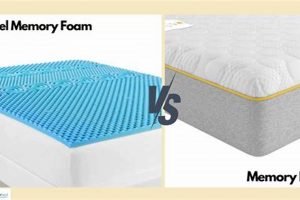
The terms “plush” and “firm,” when applied to mattresses, denote the relative softness or hardness of the sleeping surface. A plush mattress offers a yielding feel, allowing the sleeper to sink into the material, while a firm mattress provides greater resistance and support, maintaining a more level sleeping plane. For example, a mattress with several inches of soft foam layers would generally be considered plush, whereas a mattress with minimal padding and a strong innerspring system would be characterized as firm.
The choice between a softer or harder sleeping surface is critical for optimizing sleep quality and minimizing discomfort. Historically, preferences for mattress firmness have varied based on cultural norms and available materials. Modern mattress design recognizes the importance of individual needs, tailoring support levels to body weight, sleeping position, and personal preferences. Selecting an appropriate level of support can significantly impact spinal alignment, pressure point relief, and overall comfort during sleep.
The following sections will examine the specific characteristics of different mattress types in greater detail, providing a framework for evaluating the advantages and disadvantages of each option based on individual requirements. Considerations will include construction materials, suitability for various sleep positions, and potential impact on back pain or other musculoskeletal conditions.
Selecting a Suitable Mattress
Choosing between a softer or harder sleeping surface requires careful assessment of individual needs and physical characteristics. The following recommendations provide guidance for making an informed decision.
Tip 1: Evaluate Sleeping Position: Side sleepers often benefit from a more yielding surface to accommodate the shoulders and hips, promoting spinal alignment. Conversely, stomach sleepers typically require a firmer surface to prevent excessive sinking of the midsection.
Tip 2: Consider Body Weight: Individuals with higher body weight may require a firmer mattress to provide adequate support and prevent excessive compression of the comfort layers. Lighter individuals may find a plusher mattress more comfortable, as it allows for better contouring and pressure relief.
Tip 3: Assess Existing Pain Conditions: Those with back pain should consult with a medical professional to determine the optimal support level. Generally, a medium-firm mattress is recommended to provide both support and pressure relief. However, individual needs may vary depending on the specific condition.
Tip 4: Research Mattress Construction: Different mattress types, such as innerspring, memory foam, and latex, offer varying degrees of firmness and support. Understanding the properties of each material is crucial for making an informed decision.
Tip 5: Trial Period Utilization: Many mattress retailers offer trial periods, allowing customers to test the mattress at home before committing to a purchase. This is an invaluable opportunity to assess comfort and support over an extended period.
Tip 6: Partner Considerations: If sharing a bed, consider the preferences and needs of both partners. A mattress with motion isolation properties can minimize disturbances caused by movement during sleep.
Tip 7: Consider Edge Support: Firm edge support prevents roll-off and provides a more usable sleep surface. This is particularly important for individuals who sleep near the edge of the bed.
Selecting the appropriate mattress firmness level is paramount for optimizing sleep quality and minimizing discomfort. By considering individual needs and physical characteristics, an informed decision can be made, leading to improved sleep and overall well-being.
The following sections will offer a comprehensive comparison of specific mattress types and their suitability for diverse sleeping preferences and physical conditions.
1. Spinal Alignment

Spinal alignment, the natural curvature and positioning of the spine during sleep, is significantly influenced by mattress firmness. A mattress that inadequately supports the spine can lead to misalignment, resulting in discomfort, pain, and potentially chronic musculoskeletal issues. The interaction between spinal alignment and mattress firmness manifests differently depending on sleeping position and body type. For example, a side sleeper on a mattress that is too firm may experience pressure points on the shoulder and hip, forcing the spine out of alignment. Conversely, a stomach sleeper on a mattress that is too soft may experience excessive sinking of the midsection, leading to spinal hyperextension.
Maintaining proper spinal alignment while sleeping necessitates selecting a mattress that offers adequate support and contouring. A mattress that conforms to the body’s natural curves helps distribute weight evenly, reducing pressure on specific areas of the spine. The choice between a softer or harder mattress should be dictated by individual needs, with consideration given to factors such as body weight, sleeping position, and any pre-existing spinal conditions. A real-world example illustrates this point: individuals with scoliosis often require mattresses that provide targeted support to specific areas of the spine to counteract the asymmetrical curvature. Understanding this connection allows for proactive management of spinal health.
In conclusion, spinal alignment is a critical factor in mattress selection. Misalignment during sleep can lead to adverse health outcomes. The practical significance of understanding the relationship between spinal alignment and mattress firmness lies in the ability to make informed choices that promote healthy spinal posture during sleep, thus mitigating pain and discomfort. Challenges arise in accurately assessing individual needs, highlighting the importance of trial periods and professional consultations in determining the optimal mattress firmness for spinal health.
2. Pressure Point Relief

Pressure point relief, defined as the reduction of concentrated force on specific areas of the body during sleep, is a primary consideration when evaluating mattress firmness. The ability of a mattress to alleviate pressure points directly impacts sleep quality, comfort, and the prevention of musculoskeletal discomfort. The choice between a plusher or firmer sleeping surface significantly influences the distribution of body weight and subsequent pressure on sensitive areas such as the shoulders, hips, and back.
- Surface Conformity
Surface conformity refers to the mattress’s ability to mold to the contours of the body. Plusher mattresses, typically constructed with thicker comfort layers of memory foam or latex, excel at conforming to the body’s shape, thereby distributing weight more evenly and reducing pressure point formation. Conversely, firmer mattresses provide less give, leading to greater concentration of pressure on prominent areas of the body. An example is a side sleeper on a firm mattress experiencing increased pressure on the shoulder and hip joints. The practical implication is that a higher degree of surface conformity generally correlates with enhanced pressure point relief.
- Material Composition
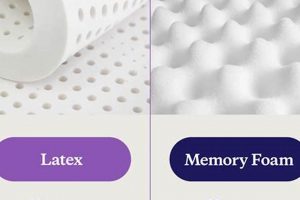
The materials used in a mattress’s construction play a critical role in pressure point relief. Memory foam, known for its viscoelastic properties, exhibits superior contouring capabilities, effectively cradling the body and minimizing pressure. Latex, both natural and synthetic, offers a balance of support and pressure relief due to its inherent elasticity. In contrast, innerspring mattresses, while providing support, may not conform as closely to the body’s curves, potentially leading to increased pressure points. The selection of materials directly impacts the mattress’s ability to alleviate concentrated force.
- Sleeping Position Influence
Sleeping position significantly affects the optimal level of pressure point relief. Side sleepers, due to their concentrated weight distribution on the shoulders and hips, generally benefit from mattresses that offer superior surface conformity. Back sleepers require a balance of support and pressure relief to maintain spinal alignment while minimizing stress on the lower back. Stomach sleepers typically need a firmer surface to prevent excessive sinking of the midsection, which can exacerbate pressure points. Consequently, the ideal mattress firmness for pressure point relief is contingent upon the individual’s preferred sleep posture.
- Impact on Circulation
Sustained pressure on specific areas of the body can impede blood circulation, potentially leading to discomfort, numbness, and restless sleep. Mattresses that effectively alleviate pressure points promote healthy blood flow throughout the night. This is particularly relevant for individuals with circulatory issues or those prone to tossing and turning. By minimizing pressure-induced circulatory restrictions, appropriate mattress firmness can contribute to improved sleep quality and overall well-being.
The facets of surface conformity, material composition, sleeping position, and circulatory impact converge to underscore the importance of pressure point relief in mattress selection. The interplay between these elements dictates the optimal firmness level for each individual, highlighting the necessity of a personalized approach to ensure maximum comfort and minimize potential health concerns.
3. Sleep Position Suitability

Sleep position suitability, regarding mattress selection, denotes the congruence between a sleeper’s preferred posture and the support characteristics of the sleeping surface. The effectiveness of a plush or firm mattress is contingent upon its ability to accommodate the biomechanical demands of various sleep positions. A mismatch between sleep position and mattress firmness can result in spinal misalignment, pressure point exacerbation, and diminished sleep quality. For instance, side sleepers require a degree of surface compliance to allow the shoulder and hip to sink into the mattress, maintaining spinal alignment. A firm mattress may resist this accommodation, leading to discomfort and potential joint strain. Conversely, stomach sleepers often necessitate a firmer surface to prevent excessive sinking of the midsection, which can cause hyperextension of the lower back. The causal relationship is clear: inappropriate mattress firmness directly influences spinal posture and comfort levels.
The practical significance of understanding sleep position suitability lies in its impact on musculoskeletal health and sleep architecture. Improper support can contribute to chronic back pain, neck stiffness, and disrupted sleep patterns. Consider the case of an individual who primarily sleeps on their back. This sleep position generally requires a mattress with a medium firmness to provide adequate lumbar support while allowing for slight contouring to the natural spinal curvature. A mattress that is too soft may lack the necessary support, leading to lower back pain, while a mattress that is too firm may create pressure points on the sacrum. The importance of sleep position suitability extends beyond mere comfort; it directly affects long-term physical well-being.
In summary, sleep position suitability is a critical component in the selection of a plush or firm mattress. The ability of the mattress to accommodate the specific needs of each sleep position is paramount for maintaining spinal alignment, minimizing pressure points, and promoting restorative sleep. Challenges arise in accurately assessing individual needs and sleep habits, necessitating careful consideration of factors such as body weight, pre-existing conditions, and personal preferences. The interaction between sleep position and mattress firmness underscores the need for a personalized approach to mattress selection, prioritizing both comfort and biomechanical support.
4. Body Weight Consideration

Body weight is a significant determinant in selecting an appropriate mattress firmness. A heavier individual will generally require a firmer mattress to prevent excessive sinking and maintain spinal alignment. Insufficient support can lead to the development of pressure points, particularly in the hips and shoulders, and may contribute to lower back pain. Conversely, a lighter individual may find a firmer mattress uncomfortable, as it may not provide adequate contouring to the body, resulting in a sensation of sleeping “on top” of the mattress rather than being cradled by it. The causal link is that body weight influences the degree of compression exerted on the mattress layers, directly affecting support and comfort.
The importance of body weight consideration is evident in its impact on mattress longevity and performance. Over time, mattresses can lose their support capabilities, particularly under heavier loads. Selecting a mattress designed to accommodate a specific weight range can prolong its lifespan and ensure consistent performance. For example, an individual weighing over 250 pounds may benefit from a mattress with reinforced coils or high-density foam to provide adequate support and prevent premature sagging. Conversely, a lighter individual may find a softer mattress more comfortable and supportive, as it will conform more readily to their body shape. The practical application of understanding this relationship is in making informed purchase decisions that optimize both comfort and durability.
In summary, body weight is a critical factor in determining the optimal firmness level. Failure to consider this aspect can lead to discomfort, pain, and reduced mattress lifespan. Challenges exist in accurately assessing individual needs, particularly for couples with disparate body weights. A balanced approach, considering both individual preferences and the biomechanical requirements dictated by body weight, is essential for selecting a mattress that promotes restful sleep and long-term spinal health.
5. Material Composition Impact

The material composition of a mattress directly influences its firmness, determining whether it is categorized as plush or firm. The type and density of materials used in the comfort layers and support core dictate the overall feel and support characteristics of the sleeping surface. A mattress constructed with thick layers of low-density memory foam will typically exhibit a plusher feel, allowing the sleeper to sink into the material. In contrast, a mattress utilizing a high-density innerspring system with minimal padding will provide a firmer feel, offering greater resistance and support. This relationship is causal: material properties directly affect the perception of firmness.
Understanding the impact of material composition is crucial for selecting a mattress that meets individual needs. For instance, latex mattresses, whether natural or synthetic, offer a range of firmness options depending on their density and processing. Dunlop latex tends to be denser and firmer, while Talalay latex is generally softer and more resilient. Memory foam, another common material, varies in density and formulation, influencing its contouring ability and temperature sensitivity. Furthermore, the arrangement and gauge of coils in an innerspring system significantly affect its firmness and support. Therefore, a comprehensive evaluation of material specifications is essential for accurately assessing a mattress’s suitability.
In summary, material composition is a primary determinant of mattress firmness, playing a key role in defining its plushness or firmness. The properties of materials such as memory foam, latex, and innerspring systems dictate the level of support, contouring, and overall comfort provided. Accurately interpreting material specifications allows for informed decision-making, facilitating the selection of a mattress that aligns with individual preferences and physical requirements. Challenges arise in navigating the diverse range of materials and marketing claims, underscoring the importance of thorough research and, when possible, testing before purchase.
Frequently Asked Questions
The following questions address common inquiries regarding mattress firmness, providing clarity and guidance for informed decision-making.
Question 1: Is a firmer mattress always better for back pain?
A common misconception is that a firmer mattress invariably alleviates back pain. While a very soft mattress may lack adequate support, causing spinal misalignment, an excessively firm surface can exacerbate pressure points and increase discomfort. The optimal firmness level for back pain varies depending on the individual’s condition, sleeping position, and body weight. A medium-firm mattress often strikes a balance between support and pressure relief, but consultation with a medical professional is recommended for personalized guidance.
Question 2: How does body weight influence mattress firmness selection?
Body weight significantly impacts the perceived firmness of a mattress. Individuals with higher body weight require a firmer sleeping surface to prevent excessive sinking and maintain spinal alignment. Conversely, lighter individuals may find a plusher mattress more comfortable, as it allows for greater contouring to the body. Failure to consider body weight can result in discomfort, inadequate support, and reduced mattress lifespan.
Question 3: Does sleeping position dictate mattress firmness preference?
Sleeping position plays a crucial role in determining the ideal mattress firmness. Side sleepers generally benefit from a more yielding surface to accommodate the shoulders and hips, promoting spinal alignment. Back sleepers typically require a medium-firm mattress to provide lumbar support while allowing for slight contouring. Stomach sleepers often necessitate a firmer surface to prevent excessive sinking of the midsection.
Question 4: What is the difference between “plush” and “firm” when referring to mattresses?
The terms “plush” and “firm” describe the relative softness or hardness of a mattress. A plush mattress offers a yielding feel, allowing the sleeper to sink into the material. A firm mattress provides greater resistance and support, maintaining a more level sleeping plane. The choice between the two depends on individual preferences and the factors outlined in previous questions.
Question 5: How do mattress materials contribute to overall firmness?
Mattress materials significantly impact firmness. Memory foam and latex, for instance, contour to the body, offering pressure relief and a softer feel, particularly in lower densities. Innerspring mattresses, with varying coil gauges and constructions, range from firm to medium-firm. Hybrid mattresses combine these materials, providing a balance of support and comfort. Material composition is a primary determinant of mattress firmness, and understanding the properties of each material allows for informed selection.
Question 6: Can mattress firmness preferences change over time?
Yes, mattress firmness preferences can evolve due to factors such as age, changes in body weight, the development of musculoskeletal conditions, or a simple shift in personal preference. It is important to periodically reassess mattress needs to ensure continued comfort and support.
In summary, selecting the appropriate mattress firmness requires careful consideration of multiple factors, including body weight, sleeping position, and individual health conditions. There is no one-size-fits-all solution, and a personalized approach is essential for optimizing sleep quality.
The subsequent section will delve into specific mattress types and their suitability for diverse needs and preferences.
Plush vs Firm Mattress
This exploration of “plush vs firm mattress” has illuminated the multifaceted nature of mattress selection. The analysis underscores the critical role of individual factors, including body weight, sleeping position, and pre-existing health conditions, in determining the optimal firmness level. Furthermore, the impact of material composition on the overall feel and support characteristics of a mattress has been thoroughly examined, emphasizing the importance of informed decision-making based on specific material properties.
Ultimately, the selection between “plush vs firm mattress” represents a crucial investment in long-term sleep quality and musculoskeletal health. Continued awareness of individual needs and advancements in mattress technology will undoubtedly contribute to improved sleep experiences. Further research into the biomechanical effects of different mattress types is warranted to refine guidelines and enhance the personalization of mattress selection processes. A focus on informed consumer choices remains paramount.