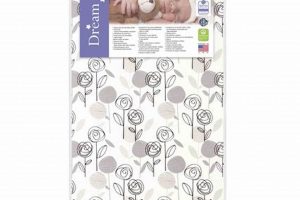
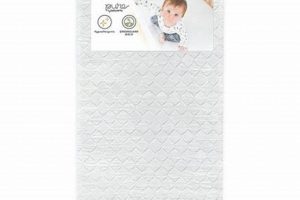
This essential pairing provides a secure and comfortable sleep environment for infants. It typically includes a framework constructed to meet stringent safety standards and a supporting surface designed to properly support a baby’s body. For instance, models often feature adjustable heights and durable materials to accommodate a child’s growth and activity.
The selection of such a coordinated system offers parents peace of mind, knowing that their child is resting in a space designed for safety and well-being. Historically, advancements in design and material science have led to safer and more supportive products, contributing to improved sleep quality and reduced risk factors for infants. This contributes significantly to the health and developmental outcomes for the child.
The forthcoming sections will delve into specific criteria for selecting a safe and suitable example, exploring different types available on the market, and providing guidance on maintaining a hygienic and secure sleep space for the infant. Furthermore, legal and safety aspects pertaining to manufacturing standards will also be discussed.
Crib and Mattress Set
Optimal selection requires careful consideration of safety standards, material composition, and fit to ensure a secure and healthy sleep environment for the infant.
Tip 1: Verify Compliance with Safety Standards: Confirm that any unit adheres to the latest safety regulations established by recognized organizations. Check for certifications from relevant testing agencies; these indicate rigorous safety testing and compliance.
Tip 2: Prioritize a Snug Mattress Fit: The mattress must fit snugly within the bed frame, leaving no gaps larger than two fingers’ width. Excessive space poses entrapment risks.
Tip 3: Assess Mattress Firmness: The mattress should be sufficiently firm to provide adequate support for the infant. Soft mattresses can increase the risk of suffocation.
Tip 4: Consider Material Composition: Opt for materials that are non-toxic and hypoallergenic. Ensure that paints and finishes are lead-free and compliant with safety standards. Certifications from organizations like Oeko-Tex indicate that the textiles have been tested for harmful substances.
Tip 5: Evaluate Construction Quality: Inspect the bed frame for sturdy construction, smooth surfaces, and the absence of sharp edges or loose parts. Regularly check all hardware to ensure it is securely fastened.
Tip 6: Understand Assembly Instructions: Follow the manufacturer’s assembly instructions precisely. Improper assembly can compromise the structural integrity, potentially leading to safety hazards.
Tip 7: Check for Recall Notices: Prior to purchasing a particular unit, verify that it is not subject to any safety recalls. Reputable sources, such as the Consumer Product Safety Commission (CPSC), maintain databases of recalled items.
Adhering to these recommendations minimizes risks and promotes a secure sleep environment. Prioritizing safety and quality throughout the selection process contributes to the childs well-being.
The subsequent sections will elaborate on specific types of product designs, cleaning and maintenance procedures, and other vital factors that impact the safety and functionality of this crucial piece of nursery furniture.
1. Safety Standards Compliance

Adherence to established safety standards is paramount when selecting a bed frame and accompanying sleep surface for infants. These standards are designed to mitigate potential hazards and promote a secure sleep environment, significantly reducing the risk of injury or fatality.
- Material Toxicity Regulations
Safety standards often dictate permissible materials and prohibit toxic substances like lead, phthalates, and formaldehyde in the construction of the bed and sleep surface. For instance, regulations may mandate the use of water-based, lead-free paints and finishes, ensuring that infants are not exposed to harmful chemicals that could leach from the product. Violation of these standards can lead to recalls and legal action against manufacturers.
- Structural Integrity Requirements
Standards stipulate minimum requirements for structural integrity, including slat strength, side rail height, and corner post extensions. Requirements may mandate that slats withstand specific weight loads without breaking or bowing excessively. A failure to meet these structural benchmarks can result in collapse, creating potential fall hazards or entrapment risks for the infant. Regulatory bodies often conduct independent testing to verify compliance.
- Mattress Fit Specifications
Safety protocols establish precise dimensions for the mattress to ensure a tight fit within the bed frame, minimizing gaps between the mattress and side rails. Standards may specify that the gap should not exceed a certain width (e.g., two finger widths) to prevent the infant from becoming entrapped. Non-compliant products present a suffocation or strangulation hazard, prompting corrective actions and consumer warnings from regulatory agencies.
- Labeling and Information Disclosure
Standards mandate clear and comprehensive labeling, providing essential information such as assembly instructions, age and weight recommendations, and safety warnings. These labeling requirements ensure that caregivers have the necessary guidance to assemble and use the product safely. For example, labels must clearly state weight limits and warn against adding extra padding that could pose a suffocation hazard. Failure to provide adequate information can result in misuse and increased risk of injury.
The facets of material toxicity regulations, structural integrity requirements, mattress fit specifications, and labeling regulations all ensure safety for crib and mattress set.
2. Mattress Firm Support
Firmness within a system intended for infant sleep is a critical determinant of safety and developmental well-being. The supporting surface’s rigidity directly influences the infant’s ability to maintain an open airway and reduce the risk of sudden infant death syndrome (SIDS). A yielding surface can conform to the infant’s face, potentially obstructing breathing, which necessitates a sufficiently firm mattress.
Insufficient support can also impede proper skeletal development. Infants require a stable and level surface to promote healthy spinal alignment during sleep. A sagging or excessively soft supporting surface may contribute to musculoskeletal issues as the infant grows. For example, overly plush models, while seemingly comfortable, lack the necessary resistance to counteract an infant’s weight, leading to spinal curvature over time. Furthermore, mattress firmness affects the infant’s motor skill development. The ability to push up, roll over, and eventually crawl depends on a stable surface that allows for leverage and resistance. Conversely, a soft surface can hinder these movements, delaying motor development milestones.
In summation, mattress firmness within a designated infant sleeping apparatus is more than a matter of comfort; it is a key safety feature and a contributor to healthy physical development. Selection should prioritize adherence to established safety guidelines for firmness to minimize health risks. Awareness of this connection facilitates informed decision-making and promotes a secure and conducive environment for infant rest.
3. Frame Secure Construction

The structural integrity of the bed frame is paramount to the safety and functionality of any infant sleep system. A secure frame ensures the stability and durability of the entire unit, directly impacting the well-being of the occupant. Compromised construction introduces risks of collapse, component failure, and potential injury. The following facets highlight the critical elements of a secure frame in the context of the aforementioned baby furniture.
- Material Selection and Durability
The choice of materials significantly influences frame security. Solid hardwoods, like beech or maple, offer superior strength and resistance to wear compared to softer woods or composite materials. Metal frames, constructed from steel or aluminum alloys, provide a robust alternative, provided they meet stringent welding and finishing standards. For instance, a frame constructed from low-grade particleboard is more susceptible to cracking and joint failure under stress. The material’s ability to withstand repeated use and potential impacts determines the frame’s long-term security and reliability. Regularly inspect all hardware to ensure it remains securely fastened.
- Joint Integrity and Fastening Systems
The method of joining frame components is crucial for overall stability. Mortise-and-tenon joints, dowel joints with adhesive, and bolted connections provide robust and durable unions. Poorly constructed joints, secured with staples or flimsy screws, are prone to loosening and failure over time. A secure frame features joints that resist twisting, bending, and pulling forces. For instance, corner joints reinforced with metal brackets or corner blocks enhance stability and prevent wobbling. Examine all joints for tightness and stability before use.
- Slat Support System Strength
The slat system, which supports the mattress, must be capable of bearing the weight of the infant without excessive deflection or breakage. Solid wood slats, spaced closely together, provide optimal support and ventilation. Spring steel slat systems offer enhanced flexibility and weight distribution. Weak or widely spaced slats can lead to mattress sagging, creating an uneven sleep surface and increasing the risk of entrapment. Regulations specify minimum slat dimensions and spacing to ensure adequate support. Always verify that the slat system is securely attached to the frame.
- Hardware Security and Locking Mechanisms
Adjustable-height frames often incorporate locking mechanisms to secure the mattress support at different levels. These mechanisms must engage firmly and prevent accidental disengagement. Hardware components, such as bolts, screws, and brackets, should be made from high-quality materials and resistant to corrosion. Regularly inspect locking mechanisms to ensure they function properly and that all hardware is securely tightened. Replace any worn or damaged hardware immediately to maintain frame security.
These facets of material selection, joint integrity, slat support, and hardware security collectively contribute to the overall structural integrity of the frame. Neglecting these aspects can compromise the safety and longevity of the unit, emphasizing the importance of thorough inspection and adherence to safety guidelines when selecting and assembling such infant sleep furniture. Prioritizing secure construction minimizes risks and promotes a safe sleep environment for the child.
4. Material non-toxic composition

The selection of materials in infant sleep products directly influences the child’s health and safety, making non-toxic composition a primary consideration. Absence of harmful substances within the construction of the bed and supporting sleep surface mitigates potential risks associated with chemical exposure, fostering a healthier sleep environment.
- Adherence to Regulatory Standards
Stringent regulatory standards dictate permissible levels of volatile organic compounds (VOCs), heavy metals, and phthalates in materials used for manufacturing infant products. Compliance with certifications such as GREENGUARD Gold ensures materials have undergone rigorous testing and meet established emission limits. Non-compliance can lead to the release of harmful chemicals into the infant’s environment, potentially causing respiratory irritation, allergies, or long-term health effects. Therefore, verification of adherence to these standards is essential when assessing material safety.
- Natural Fiber Utilization
Natural fibers, such as organic cotton, wool, and latex, offer a safer alternative to synthetic materials. These materials are typically cultivated without the use of pesticides, herbicides, or synthetic fertilizers, reducing the risk of chemical residues. For instance, organic cotton mattresses encased in certified organic fabric minimize exposure to allergens and irritants. Utilization of natural fibers provides a breathable and hypoallergenic sleep surface, promoting comfort and reducing the likelihood of adverse reactions.
- Avoidance of Chemical Treatments
Certain chemical treatments, such as flame retardants and stain repellents, can introduce potentially harmful substances into the product. Flame retardants, in particular, have been linked to adverse health effects, including endocrine disruption and neurodevelopmental issues. Opting for models that meet flammability standards without the use of chemical treatments minimizes the risk of exposure. Instead, manufacturers can employ tightly woven fabric or natural barriers, such as wool, to enhance fire resistance without compromising safety.
- Low-Emission Manufacturing Processes
Manufacturing processes play a crucial role in minimizing chemical exposure. Low-emission processes, such as water-based adhesives and powder-coated finishes, reduce the release of VOCs into the surrounding environment. Traditional solvent-based adhesives and paints can emit harmful fumes for extended periods, posing a risk to infant health. Choosing products manufactured using low-emission processes ensures a cleaner and healthier indoor air quality, further mitigating potential health hazards.
The integration of these facets regulatory adherence, natural fiber usage, avoidance of chemical treatments, and low-emission manufacturing reinforces the imperative of non-toxic material composition. A comprehensive approach to material selection safeguards infant health by minimizing exposure to potentially harmful chemicals, thereby fostering a secure and conducive sleep environment.
5. Proper mattress fit

The correlation between appropriate sleep surface dimensions and the surrounding structure is integral to the functionality and safety of infant sleep furniture. An undersized sleep surface within a bed frame creates hazardous gaps, increasing the risk of infant entrapment. Conversely, an oversized sleep surface may buckle or compress against the frame, creating an uneven sleeping area and compromising structural integrity. The intended interaction between the bed frame and sleep surface necessitates precision in dimensional compatibility.
Consider the potential consequences of improper fit. For example, if a 51 5/8″ x 27 1/4″ sleep surface is placed within a bed frame designed for a 52″ x 28″ model, the resulting gaps present a potential hazard for infants. An infant could roll into the space and become trapped, leading to suffocation or other injuries. Recognizing this risk, regulatory standards mandate specific dimensional tolerances to minimize such hazards. Strict adherence to these guidelines during both manufacturing and assembly contributes directly to infant safety. Furthermore, using the right mattress for the crib affects its lifespan and structural integrity over time. Proper mattress distributes the weight equally, preventing concentrated pressure points on the crib’s frame.
The foregoing demonstrates that appropriate sleep surface dimensions are not merely a matter of convenience, but an essential safety component. Addressing fit discrepancies necessitates careful measurement and adherence to manufacturer specifications. By prioritizing dimensional accuracy, manufacturers and caregivers contribute to a safer sleep environment, reducing the potential for adverse events and promoting infant well-being. Therefore, before using infant sleeping furniture, ensure dimensional compatibility; any discrepancy should prompt immediate action to rectify the potential hazard.
6. Adjustable height features
The incorporation of adjustable height features within a infant sleep system addresses evolving infant developmental stages and caregiver ergonomic needs. Initial, higher settings facilitate easy access to the infant during the newborn phase, minimizing strain on the caregiver’s back. As the infant matures and gains mobility, lowering the sleep surface prevents the child from climbing out, a critical safety consideration. Absent these features, caregivers face increased risk of injury while handling the infant, and the potential for the child to fall from the structure escalates.
For example, a caregiver recovering from childbirth might find it difficult to bend deeply to lift a newborn from a low-lying sleep surface. Adjustable height functionality mitigates this issue. Conversely, an active toddler in a fixed-height system presents a fall risk if the side rail height becomes insufficient to contain the child. Lowering the sleep surface increases the rail height, thus enhancing safety. Without adjustable settings, parents may prematurely transition the child to a toddler bed, potentially disrupting sleep patterns and introducing new safety concerns before the child is developmentally ready.
In summary, adjustable height features represent a crucial safety and ergonomic component. By accommodating changing infant capabilities and caregiver needs, this functionality extends the usable lifespan of the unit and promotes a secure environment for the developing child. The absence of adjustable height settings can lead to preventable injuries and developmental disruptions, underscoring the practical significance of this design element.
Frequently Asked Questions
The following addresses common inquiries regarding infant sleep systems, providing essential information to facilitate informed decision-making.
Question 1: What are the primary safety standards governing manufacturing?
Stringent regulations, such as those established by the Consumer Product Safety Commission (CPSC), dictate permissible materials, structural integrity, and labeling requirements. Adherence to these standards is mandatory for all manufacturers distributing products within regulated markets.
Question 2: How often should the unit be inspected for potential hazards?
A thorough inspection should be conducted prior to initial use and at least monthly thereafter. Regular inspection facilitates the early detection of loose hardware, damaged components, or other potential safety issues.
Question 3: What constitutes a proper fit between sleep surface and frame?
The sleep surface must fit snugly within the bed frame, with no gaps exceeding two finger widths. Excessive space presents an entrapment hazard.
Question 4: At what point should the sleep surface height be lowered?
The sleep surface height should be lowered as soon as the infant demonstrates the ability to sit up unassisted or begins to push up on hands and knees. Lowering the surface reduces the risk of falls.
Question 5: What materials are considered non-toxic and safe for infant contact?
Materials such as organic cotton, solid hardwoods with non-toxic finishes, and GREENGUARD Gold certified foams are generally considered safe. Avoid products containing lead, phthalates, or flame retardants.
Question 6: What are the recommended cleaning and maintenance procedures?
Regularly clean the sleep surface and frame with mild soap and water. Avoid using harsh chemicals or abrasive cleaners, which can damage the materials and release harmful fumes. Ensure all components are thoroughly dried before reassembly.
Prioritizing safety and adherence to established guidelines is paramount when selecting and maintaining infant sleep furniture. Informed decision-making contributes significantly to infant well-being.
The subsequent section will provide an overview of available product types and their specific features, enabling a more nuanced understanding of the market landscape.
Conclusion
This exploration has emphasized critical aspects of the infant sleep environment, specifically pertaining to the selection and maintenance of the bed frame and supporting sleep surface. Adherence to safety standards, material composition, proper fit, and adjustable height features have been identified as essential factors influencing infant well-being. Furthermore, routine inspection and cleaning protocols contribute to a secure and hygienic sleep space.
Given the direct impact on infant health and safety, a comprehensive understanding of these elements is paramount. Continued vigilance in product selection and usage is strongly encouraged, ensuring a safe and conducive environment for optimal infant development. Future research and technological advancements should focus on enhancing safety features and material innovation to further mitigate potential risks associated with infant sleep.
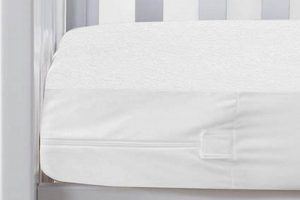

![Best Organic Crib Mattress Protector [Safe Sleep] | Organic & Natural Mattress Buyer’s Guide: Non-Toxic Sleep Solutions](https://mattressworldpa.com/wp-content/uploads/2025/07/th-1363-300x200.jpg "Best Organic Crib Mattress Protector [Safe Sleep] Organic & Natural Mattress Buyer’s Guide: Non-Toxic Sleep Solutions")