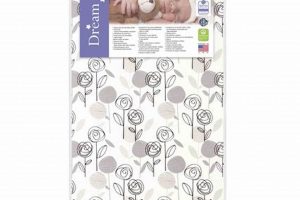
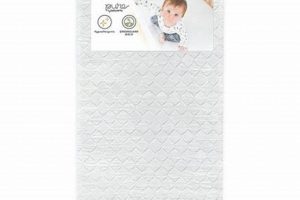
A sleeping surface designed for infants, this product prioritizes air circulation and a firm foundation. The core construction typically involves materials engineered to enhance airflow, aiming to regulate temperature and reduce the risk of overheating. Often, the design includes a washable cover, promoting hygiene and simplifying maintenance for caregivers.
The enhanced breathability of such a mattress contributes to a safer sleep environment for infants. Proper air circulation is believed to reduce the risk of re-breathing exhaled carbon dioxide. Furthermore, a firm sleeping surface is a widely recommended safety measure, aiding in minimizing the risk of Sudden Infant Death Syndrome (SIDS). These considerations represent significant advancements in infant sleep product development, reflecting an ongoing commitment to improving infant safety standards.
The subsequent sections will delve into specific aspects of this type of mattress, including materials composition, cleaning and care guidelines, and comparison with traditional crib mattresses.
Guidance on Usage and Maintenance
The following recommendations are intended to maximize the safety and longevity of this infant sleep product.
Tip 1: Ensure Proper Fit. Verify the mattress dimensions correspond precisely with the interior dimensions of the crib. Gaps between the mattress edge and crib frame pose a potential safety hazard.
Tip 2: Maintain Cleanliness. Regularly launder the mattress cover according to manufacturer instructions. Promptly address any spills or soiling to prevent bacterial growth and maintain a hygienic sleep surface.
Tip 3: Inspect for Wear. Periodically examine the mattress for signs of damage, such as tears, indentations, or structural weakness. Discontinue use if any compromise to the structural integrity is detected.
Tip 4: Use Fitted Sheets Appropriately. Employ only fitted sheets specifically designed for crib mattresses. Loose bedding introduces a suffocation risk and should be avoided.
Tip 5: Avoid Overheating. Dress the infant appropriately for the room temperature to prevent overheating. Overbundling or the use of excessive blankets negates the breathability benefits.
Tip 6: Rotate the Mattress. Periodically rotate the mattress to promote even wear and prevent the development of permanent indentations.
Adherence to these guidelines promotes both the safety and long-term performance of the mattress, contributing to a secure sleep environment for the infant.
The subsequent section will provide a comparative analysis of the mattress against traditional alternatives, outlining the distinct advantages of the enhanced breathability feature.
1. Breathability

Breathability is a paramount consideration in the design and construction of infant sleep surfaces, particularly in products such as the halo dreamweave breathable crib mattress. Its significance stems from the direct impact on infant respiratory safety and comfort, influencing core temperature regulation and minimizing re-breathing risks.
- Airflow Dynamics
The primary role of breathability relates to facilitating unobstructed airflow through the mattress core and surface layers. Materials are selected and configured to permit the free passage of air, preventing heat buildup and moisture accumulation. In practice, this translates to a cooler, drier sleep environment, reducing the potential for overheating and discomfort for the infant. The halo dreamweave employs specialized materials and construction techniques to maximize airflow efficiency.
- Carbon Dioxide Dissipation
Infants exhale carbon dioxide, which, if trapped near the face, can pose a re-breathing hazard. Breathable mattresses promote rapid dissipation of exhaled gases, reducing the concentration of carbon dioxide in the immediate vicinity of the infant’s face. The halo dreamweave’s design is specifically engineered to enhance carbon dioxide dispersal, contributing to a safer sleep environment.
- Temperature Regulation
Infants are less efficient at regulating their body temperature than adults. Breathable mattresses aid in temperature regulation by allowing excess heat to dissipate, preventing overheating, a known risk factor for Sudden Infant Death Syndrome (SIDS). The halo dreamweave materials are chosen for their ability to promote thermal equilibrium, helping maintain a stable and comfortable sleep temperature for the infant.
- Moisture Management
Breathability also facilitates the evaporation of moisture, such as perspiration or drool. This helps prevent the growth of bacteria and mold, contributing to a more hygienic sleep surface. The halo dreamweave mattress incorporates moisture-wicking materials that promote evaporation and minimize the potential for microbial growth.
The interconnected facets of airflow dynamics, carbon dioxide dissipation, temperature regulation, and moisture management underscore the critical role of breathability in infant sleep safety. The halo dreamweave breathable crib mattress integrates these principles through specialized materials and design, aiming to provide an environment that minimizes potential risks and promotes infant well-being. These features distinguish it from traditional mattresses with less emphasis on breathability.
2. Firmness

Firmness is a critical characteristic of infant mattresses, including the halo dreamweave breathable crib mattress, directly impacting infant safety and development. A sufficiently firm sleep surface reduces the risk of Sudden Infant Death Syndrome (SIDS). This is because a firm surface minimizes the likelihood of an infant’s face becoming entrapped and restricting airflow, particularly when the infant is placed on their back to sleep, as recommended by pediatric guidelines. The structural integrity of the mattress and the density of its core materials determine the degree of firmness.
The halo dreamweave addresses firmness by employing high-density materials and a layered construction that resists compression and conforms to established safety standards. For instance, a demonstration of adequate firmness involves applying pressure to the mattress surface; minimal indentation confirms sufficient resistance. Furthermore, many certifications require that a mattress meets specific firmness criteria before receiving approval. Insufficient firmness can cause an infant to sink into the mattress, potentially obstructing breathing. The practical significance of appropriate firmness is realized in reduced instances of positional asphyxia and a lower overall SIDS risk within populations adhering to safe sleep practices.
In summary, firmness, as a key attribute, ensures the halo dreamweave mattress aligns with safety recommendations. Achieving a balance between sufficient firmness and adequate comfort represents a design challenge addressed through material selection and engineering. Ongoing monitoring of firmness standards and adherence to safety guidelines remains essential for continuous improvement and the overall reduction of SIDS.
3. Washability
Washability constitutes a critical design element of the halo dreamweave breathable crib mattress. Infant sleep environments are inherently susceptible to contamination from spills, bodily fluids, and allergens. The capacity to effectively clean the mattress directly impacts hygiene, sanitation, and the overall longevity of the product. The halo dreamweave incorporates design features specifically to facilitate cleaning, mitigating the risk of bacterial growth and allergen accumulation. A primary component of washability involves a removable, machine-washable cover. This feature permits routine laundering, removing surface contaminants and maintaining a hygienic sleep surface for the infant. Failure to address surface contaminants can contribute to skin irritation, allergic reactions, and the proliferation of harmful microorganisms. Therefore, ease of cleaning is not merely a convenience but a safety imperative.
The breathable core of the mattress also influences washability. Materials are selected to permit air circulation, facilitating rapid drying after cleaning. This prevents moisture retention, which can foster mold and mildew growth. Further, some models feature a core that is also washable. This permits more thorough cleaning to eliminate deeply embedded contaminants. Practical application of washability manifests in the reduction of allergens such as dust mites, pet dander, and mold spores. Regular washing of the cover and, when applicable, the core reduces these allergens, contributing to a healthier sleep environment, particularly for infants with sensitivities or allergies. Routine cleaning minimizes the risk of exposure to these irritants, improving respiratory health and reducing the incidence of skin reactions.
In conclusion, washability is intrinsically linked to the hygiene and safety profile of the halo dreamweave breathable crib mattress. The combination of removable, machine-washable components and breathable materials simplifies the cleaning process, minimizes the risk of allergen accumulation, and promotes a more hygienic sleep environment for the infant. Challenges in achieving optimal washability include balancing durability of materials with ease of cleaning and ensuring that cleaning processes do not compromise the mattress’s structural integrity. The emphasis on washability underscores a commitment to infant health and well-being, recognizing that a clean sleep environment is essential for healthy development.
4. Materials
The composition of materials in the halo dreamweave breathable crib mattress directly influences its safety, comfort, and functionality. Material selection is a critical factor affecting breathability, firmness, hygiene, and durability. The specific materials chosen dictate the mattress’s ability to regulate temperature, resist microbial growth, and provide adequate support for the infant.
- Core Composition
The core often consists of high-density polyethylene or polyester fibers engineered for enhanced airflow. This open-cell structure promotes air circulation, reducing the risk of overheating and carbon dioxide re-inhalation. For instance, testing reveals that cores with these materials demonstrate superior breathability compared to traditional foam cores. The cores material composition must also meet stringent safety standards for emissions and flammability.
- Cover Fabric
The mattress cover typically utilizes a breathable, hypoallergenic fabric such as organic cotton or a polyester blend with moisture-wicking properties. These materials minimize skin irritation and promote a dry sleep surface. A waterproof backing may also be incorporated, preventing fluids from penetrating the core and promoting hygiene. Practical applications include resistance to staining and simplified cleaning procedures.
- Flame Retardants
The selection of flame retardants is a critical safety consideration. Materials must comply with federal flammability standards. Boric acid or inherently flame-resistant fibers may be used as alternatives to chemical flame retardants, minimizing potential exposure to harmful substances. The use of specific materials ensures regulatory compliance and reduces potential health risks for the infant.
- Adhesives and Binding Agents
Adhesives used in the mattress construction must be low-VOC (Volatile Organic Compound) and non-toxic to prevent off-gassing and potential respiratory irritation. Water-based adhesives are often preferred over solvent-based options. The specific types of binding agents directly impact the mattress’s overall air quality and the infant’s exposure to potentially harmful chemicals.
These material choices collectively determine the halo dreamweave’s ability to provide a safe and comfortable sleep environment for infants. The interplay between core structure, cover fabric, flame retardants, and adhesives underscores the importance of careful material selection in achieving optimal breathability, hygiene, and safety. This distinguishes the mattress from traditional models that may utilize less advanced materials and construction techniques.
5. Dimensions
The physical measurements of a crib mattress are paramount to its safe and effective use. In the context of the halo dreamweave breathable crib mattress, precise dimensions ensure proper fit within standard crib frames, mitigating potential hazards and maximizing the benefits of its design.
- Standard Crib Compatibility
The halo dreamweave is engineered to conform to standard crib dimensions, typically 28 inches wide by 52 inches long. This standardization ensures compatibility with the majority of crib frames sold in the market. Deviations from these dimensions can result in gaps between the mattress and crib sides, posing a risk of entrapment for infants. Crib manufacturers adhere to these size constraints to ensure maximum safety and compatibility.
- Thickness and Support
Mattress thickness impacts the level of support provided to the infant. The halo dreamweave’s thickness is optimized to provide a firm, stable surface, crucial for preventing SIDS. Excessively thin mattresses may lack adequate support, while excessively thick mattresses may compromise the crib’s safety rail height. Industry standards dictate a range of acceptable thickness levels, balancing support with safety.
- Weight Considerations
While not directly a dimensional measurement, the mattress’s weight influences ease of handling and maintenance. A lighter mattress facilitates changing sheets and cleaning. The halo dreamweave aims to balance weight with material density, ensuring durability without compromising convenience. Weight limitations also affect shipping costs and consumer handling capacity.
- Dimensional Stability Over Time
The halo dreamweave is designed to maintain its dimensions throughout its lifespan. Material selection and construction techniques minimize compression and deformation. Dimensional stability ensures consistent support and safety over extended use, preventing sagging or uneven surfaces that could pose a risk to the infant. The mattress is engineered to retain its shape and size despite repeated use and cleaning.
The interplay of standard dimensions, thickness, weight, and long-term stability ensures that the halo dreamweave breathable crib mattress provides a safe and effective sleep environment. Adherence to established standards and optimized design choices contribute to the mattress’s overall performance and safety profile, distinguishing it from alternatives with less precise dimensional characteristics.
6. Safety Standards

Adherence to established safety standards constitutes a fundamental component in the design, manufacturing, and marketing of the halo dreamweave breathable crib mattress. These standards, often mandated by governmental agencies or industry organizations, serve as a benchmark for product safety, aiming to minimize risks associated with infant sleep environments. The correlation between these standards and the mattress lies in their direct impact on its construction, material selection, and overall performance characteristics. For example, flammability standards necessitate the use of flame-retardant materials or design features, thereby reducing the potential for fire-related hazards. Compliance is not merely a formality but a critical factor in ensuring the well-being of infants utilizing the product.
A practical example of safety standards affecting the halo dreamweave mattress involves the regulation of potentially harmful chemicals. Standards often restrict or prohibit the use of phthalates, lead, and other substances known to pose health risks to infants. This necessitates careful material selection and rigorous testing throughout the manufacturing process. Similarly, standards pertaining to mattress firmness are directly related to the prevention of Sudden Infant Death Syndrome (SIDS). These require that the mattress provide a sufficiently firm surface to minimize the risk of suffocation. Manufacturers must demonstrate compliance through independent testing and certification processes, ensuring that the mattress meets established safety benchmarks.
In conclusion, safety standards are integral to the credibility and reliability of the halo dreamweave breathable crib mattress. They provide a framework for product development, ensuring that safety considerations are prioritized throughout the design and manufacturing process. While compliance with these standards presents challenges in terms of material selection and production costs, the benefits in terms of enhanced infant safety far outweigh the associated difficulties. Continuous monitoring and updating of safety standards are essential to address emerging risks and improve the overall safety of infant sleep products.
7. Weight
The weight of the halo dreamweave breathable crib mattress, although seemingly a minor attribute, correlates directly with several practical aspects of its use and long-term value. The weight influences ease of handling during initial setup, routine cleaning, and sheet changes. A lighter mattress simplifies these tasks, minimizing physical strain on caregivers. Conversely, excessively lightweight construction may compromise durability and the integrity of the mattress core. The optimal weight represents a balance between ease of handling and the robustness of materials required to provide adequate support and breathability.
The weight also contributes indirectly to the mattress’s suitability for travel. Though primarily intended for stationary use, a moderately weighted mattress allows for occasional relocation within the home or transport to a secondary residence. Extreme weight hinders portability, limiting its applicability in different contexts. Furthermore, the distribution of weight across the mattress surface affects its stability within the crib frame. Uneven weight distribution can lead to rocking or shifting, potentially disturbing the infant’s sleep or creating safety hazards. The specific weight, therefore, is a factor considered during engineering to provide optimal stability within the crib.
Ultimately, the weight of the halo dreamweave breathable crib mattress is not an isolated characteristic but an integral part of its overall design. It reflects decisions made regarding material density, core construction, and the intended user experience. A careful consideration of weight ensures a balance between ease of use, durability, and, most importantly, the safety and comfort of the infant. Trade-offs made in material selection contribute to the final weight and influence long-term utility.
Frequently Asked Questions
The following section addresses common inquiries concerning the attributes, maintenance, and safe utilization of the breathable crib mattress.
Question 1: What is the recommended method for cleaning the mattress cover?
The mattress cover should be removed and machine washed using a mild detergent. A cold water cycle is advised to prevent shrinkage or damage to the fabric. Tumble drying on a low setting or air drying is recommended.
Question 2: How often should the mattress cover be cleaned?
The mattress cover should be cleaned regularly, ideally every 1-2 weeks, or immediately following any spills or soiling incidents. Frequent cleaning maintains a hygienic sleep environment and minimizes allergen accumulation.
Question 3: What is the optimal level of firmness for a crib mattress?
A crib mattress should be sufficiently firm to provide adequate support and minimize the risk of Sudden Infant Death Syndrome (SIDS). The surface should not conform significantly to the infant’s body, ensuring an open airway and preventing suffocation hazards.
Question 4: What safety standards does this product adhere to?
The mattress is designed to comply with relevant safety standards, including those pertaining to flammability, chemical emissions, and physical construction. Specific certifications and compliance details are generally listed on the product packaging or manufacturer’s website.
Question 5: Can this mattress be used with all crib types?
The mattress is designed to fit standard-sized cribs. Verify that the mattress dimensions correspond precisely with the interior dimensions of the crib frame to prevent gaps and ensure a secure fit.
Question 6: What is the anticipated lifespan of this mattress?
The lifespan of the mattress depends on usage and maintenance. However, with proper care and adherence to cleaning guidelines, the mattress should provide several years of safe and comfortable sleep for the infant.
In summary, these FAQs cover essential aspects of care, safety, and compatibility. Proper cleaning, appropriate firmness, adherence to safety standards, correct fit, and expected lifespan are crucial considerations.
The succeeding segment of this article will discuss comparisons with other available infant sleep products.
In Conclusion
This article has explored various facets of the halo dreamweave breathable crib mattress, encompassing its design principles, material composition, safety features, and maintenance requirements. Key aspects discussed include its focus on breathability, achieved through specialized materials and construction techniques, as well as the importance of firmness in mitigating risks associated with infant sleep. Emphasis was placed on washability, ensuring a hygienic sleep environment, and compliance with established safety standards to protect infant well-being. Finally, practical considerations such as dimensions and weight were examined in relation to overall usability and suitability.
The information presented intends to equip caregivers with a comprehensive understanding of the product’s features and benefits. Informed decision-making regarding infant sleep environments remains paramount, and the presented analysis serves to contribute to responsible selection. Further research and consultation with healthcare professionals are encouraged to determine the optimal sleep surface for individual infants.
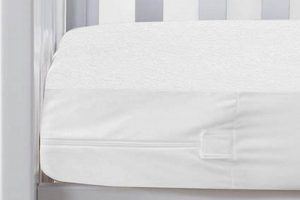

![Best Organic Crib Mattress Protector [Safe Sleep] | Organic & Natural Mattress Buyer’s Guide: Non-Toxic Sleep Solutions](https://mattressworldpa.com/wp-content/uploads/2025/07/th-1363-300x200.jpg "Best Organic Crib Mattress Protector [Safe Sleep] Organic & Natural Mattress Buyer’s Guide: Non-Toxic Sleep Solutions")