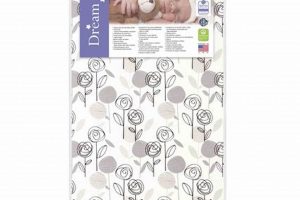
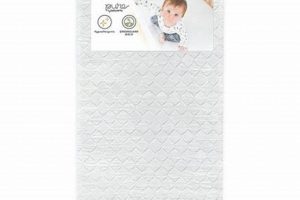
A standardized infant bed sleeping surface, conforming to defined dimensional specifications, offers a safe and supportive environment for a baby’s rest. These mattresses are designed to fit securely within the interior frame of a standard crib, minimizing the risk of gaps and potential hazards. A firm sleeping surface is generally recommended by pediatricians to reduce the likelihood of suffocation and promote healthy spinal development.
The availability of a consistent mattress size allows for easier selection of fitted sheets and bedding accessories, streamlining the purchasing process for parents. The prevalence of this standardized dimension in the market simplifies product manufacturing and distribution, leading to greater affordability and accessibility for consumers. Historically, variations in infant bed sizes posed safety concerns; the standardization efforts have contributed significantly to safer sleep practices and reduced infant mortality rates.
The following sections will delve into specific aspects, including material composition, safety certifications, cleaning and maintenance procedures, and factors to consider when making a purchasing decision. Exploring these elements will provide a comprehensive understanding of choosing an appropriate option for a young child’s sleeping needs.
Guidance on Selecting a Suitable Infant Bed Mattress
The following recommendations offer essential considerations for selecting a sleeping surface intended for infant use, focusing on optimizing safety and durability.
Tip 1: Prioritize Firmness. The mattress should exhibit minimal give when pressed, ensuring a stable and supportive sleeping environment. A soft surface can pose a suffocation hazard.
Tip 2: Verify Dimensional Accuracy. Measure the interior of the crib frame to confirm the mattress fits snugly, leaving no gaps exceeding two finger widths. Gaps present a risk of entrapment.
Tip 3: Scrutinize Material Composition. Opt for mattresses constructed from non-toxic materials, free from harmful chemicals such as phthalates and lead. Certifications like GREENGUARD Gold provide assurance of low chemical emissions.
Tip 4: Assess Weight and Durability. A heavier mattress constructed with high-density materials typically indicates greater durability and resistance to compression over time. Consider the anticipated lifespan and potential for future use.
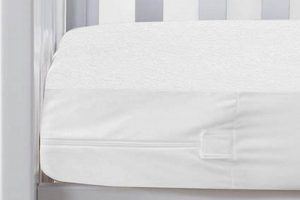
Tip 5: Examine Cover Material. The mattress cover should be waterproof or water-resistant and easily cleanable to prevent bacterial growth and facilitate hygiene maintenance. Look for materials that are tear-resistant and designed to withstand frequent cleaning.
Tip 6: Investigate Safety Certifications. Check for certifications from reputable organizations, such as the Juvenile Products Manufacturers Association (JPMA) and the Consumer Product Safety Commission (CPSC), indicating compliance with established safety standards.
Tip 7: Consider Dual-Sided Options. Some mattresses feature a firmer infant side and a slightly softer toddler side, offering extended usability as the child grows. Ensure both sides meet firmness recommendations for their respective age groups.
Adhering to these guidelines promotes the selection of an appropriate and safe sleeping surface for an infant, mitigating potential hazards and contributing to a secure sleep environment.
The subsequent discussion will address proper care and maintenance procedures to extend the life of the chosen mattress and maintain its hygienic properties.
1. Dimensions

The standardized dimensions of a designated infant sleeping surface, conforming to approximately 28 inches in width and 52 inches in length, are a defining characteristic. These established measurements are not arbitrary; they are engineered to ensure a precise fit within the interior frame of a standard-sized crib. The causality is clear: standardized cribs necessitate standardized mattresses. An improperly sized mattress, whether too large or too small, negates the intended safety features of the crib itself. For example, an oversized mattress may bow the crib frame, compromising its structural integrity. A mattress that is too small creates dangerous gaps where an infant could become entrapped, leading to potential suffocation or injury.
The importance of adhering to these dimensions is underscored by regulatory standards enforced by organizations such as the Consumer Product Safety Commission (CPSC). These regulations mandate that cribs and their corresponding mattresses meet specific dimensional criteria to minimize the risk of infant injury. The practical significance of understanding these dimensions extends to consumers who must ensure compatibility when purchasing a mattress for an existing crib. Failure to verify dimensions before purchase can result in a hazardous sleeping environment, negating the benefits of other safety features such as firm support and non-toxic materials.
In summary, the dimensions of a standard-sized infant bed sleeping surface are paramount for ensuring infant safety within a crib. Adherence to these dimensions is not merely a matter of convenience but a critical prerequisite for preventing entrapment and suffocation hazards. The challenge lies in consistently enforcing these standards across manufacturers and ensuring consumer awareness of their importance. Furthermore, understanding the dimensional specifications supports informed purchasing decisions that prioritize the well-being of the infant.
2. Firmness Standard

The firmness standard for a standardized infant bed sleeping surface is a crucial safety parameter directly impacting infant well-being. It dictates the degree of resistance the mattress exhibits under compression, significantly influencing the risk of suffocation and contributing to healthy skeletal development during infancy.
- Suffocation Risk Mitigation
A firm surface minimizes the potential for an infant’s face to sink into the mattress, thereby reducing the risk of airway obstruction and suffocation. Soft surfaces conform to the infant’s face, creating a pocket that can impede breathing. Regulatory guidelines often specify minimum firmness levels based on scientific studies of infant respiratory safety. Example: CPSC regulations address this.
- Skeletal Development Support
Adequate firmness provides proper support for the infant’s developing spine and musculoskeletal system. A mattress that is too soft can lead to improper spinal alignment and potentially contribute to developmental issues over time. Example: Pediatricians typically advise against using soft mattresses or toppers.
- Testing and Compliance Procedures
Mattress manufacturers employ specific testing methodologies to assess and ensure compliance with established firmness standards. These tests often involve applying controlled pressure to the mattress surface and measuring the degree of indentation. Compliance with these standards is frequently verified by independent certification organizations. Example: JPMA certification often includes firmness testing.
- Variations in Materials and Construction
The materials used in mattress construction, such as foam density and innerspring coil count, significantly influence firmness. Higher density foams and a greater number of coils generally contribute to a firmer surface. Manufacturers must carefully select materials and construction techniques to meet firmness standards while balancing other factors like comfort and durability. Example: A high-density foam mattress will generally be firmer than a low-density foam mattress.
These facets collectively underscore the critical role of the firmness standard in ensuring a safe and supportive sleeping environment for infants. Maintaining compliance with this standard, through rigorous testing and careful material selection, is paramount in the design and manufacture of standardized infant bed sleeping surfaces.
3. Material Safety

Material safety in the context of a standardized infant bed sleeping surface is of paramount importance, directly impacting infant health and well-being. The materials comprising the mattress must be carefully selected and rigorously tested to mitigate the risk of exposure to harmful chemicals and potential allergens. The stringent requirements for these mattresses reflect the vulnerability of infants and the necessity of providing a safe sleeping environment.
- Volatile Organic Compounds (VOCs)
VOCs, released from various mattress components such as foams and adhesives, can contribute to indoor air pollution and potentially trigger respiratory irritation or allergic reactions in sensitive individuals. Certifications such as GREENGUARD Gold ensure that mattresses meet strict emission standards for VOCs, reducing the risk of exposure. For example, a mattress lacking such certification may off-gas higher levels of formaldehyde, a known irritant and carcinogen. Choosing certified options mitigates this potential harm.
- Phthalates and Heavy Metals
Phthalates, commonly used as plasticizers, and heavy metals like lead and mercury, pose significant health risks to infants, including endocrine disruption and neurodevelopmental effects. Regulations restrict the use of these substances in infant products. Mattresses bearing certifications such as Oeko-Tex Standard 100 are tested to ensure they do not contain harmful levels of these chemicals. The presence of these substances, even in trace amounts, can have detrimental long-term consequences for infant health.
- Flame Retardants
While flame retardants are intended to enhance fire safety, some chemicals historically used for this purpose have been linked to adverse health effects. Legislation has prompted a shift towards safer alternatives or the use of flame-resistant materials such as wool. Mattresses meeting current safety standards utilize flame-retardant barriers that do not pose the same health risks as older chemical treatments. The selection of mattresses with inherently flame-resistant materials reduces the potential for exposure to harmful flame retardants.
- Allergenic Materials
Certain mattress materials, such as latex or certain types of foam, may trigger allergic reactions in susceptible infants. Manufacturers often offer hypoallergenic options made from materials that are less likely to cause allergic responses. Consumers should carefully review the material composition and select mattresses specifically designed to minimize allergen exposure. For instance, a mattress encased in an allergen-resistant cover can provide an additional barrier against dust mites and other common allergens.
These facets highlight the critical importance of material safety when selecting a standardized infant bed sleeping surface. Prioritizing mattresses with relevant certifications and a transparent list of materials helps mitigate the risk of exposing infants to harmful chemicals and allergens, fostering a safer and healthier sleep environment. Careful consideration of material composition and manufacturing processes is essential for ensuring the well-being of the infant.
4. Crib Compatibility

Crib compatibility, in the context of a standardized infant bed sleeping surface, denotes the degree to which the mattress conforms to the dimensional specifications of the crib frame. This is not merely a matter of fit; it is a critical safety component. The cause-and-effect relationship is straightforward: a mattress that does not precisely fit the crib can lead to hazardous gaps, creating potential entrapment zones for an infant. The importance of proper fit is underscored by regulatory standards and safety guidelines established by organizations like the CPSC. A mattress too small allows an infant to become wedged between the mattress and the crib side, leading to suffocation. Conversely, a mattress too large may bow the crib frame, compromising its structural integrity.
Real-life examples demonstrate the practical significance of understanding crib compatibility. Numerous incidents have been documented where infants have suffered injuries, including asphyxiation, due to improperly fitted mattresses. In such cases, the mattress either created a gap where an infant could become trapped or compromised the structural stability of the crib, leading to collapses. Therefore, ensuring a snug and secure fit is paramount. Parents should always verify the interior dimensions of the crib frame and compare them to the stated dimensions of the prospective mattress. A difference exceeding a specified tolerance, typically no more than two finger widths, indicates a potential safety hazard. This proactive approach mitigates the risk of entrapment and ensures the intended safety features of the crib and mattress are effective.
In summary, crib compatibility is an indispensable component of a safe infant sleeping environment. The correct dimensional relationship between the crib and the mattress is crucial for preventing entrapment and suffocation hazards. Challenges remain in consistently enforcing these standards across manufacturers and educating consumers about the importance of verifying crib and mattress compatibility. A thorough understanding of this relationship and adherence to safety guidelines are essential for providing a secure sleep space for infants.
5. Water Resistance

Water resistance, a critical feature in a standard-sized infant bed sleeping surface, mitigates the effects of moisture exposure, thereby safeguarding both the mattress integrity and the infant’s health. The direct relationship is clear: the absence of effective water resistance leads to liquid absorption, fostering bacterial growth and material degradation. This attribute is not merely a convenience but a fundamental component of hygiene and durability. The consequences of inadequate water resistance extend beyond mere staining; absorbed liquids create a breeding ground for mold, mildew, and bacteria, posing respiratory and dermatological risks to the infant. Furthermore, repeated exposure to moisture compromises the structural integrity of the mattress core, reducing its lifespan and potentially diminishing its supportiveness. Examples include instances where urine or spilled liquids, uncontained by a water-resistant barrier, permeate the mattress, leading to irreversible damage and necessitating premature replacement.
The practical significance of this understanding is evident in product design and material selection. Manufacturers employ various strategies to achieve water resistance, including the use of laminated or coated fabrics for mattress covers. These materials, typically constructed from polyurethane or vinyl, create a protective barrier that prevents liquid penetration while remaining breathable to minimize overheating. Regular cleaning and maintenance further enhance the effectiveness of water resistance. Promptly addressing spills with appropriate cleaning agents inhibits bacterial growth and prevents staining. The selection of a mattress with a durable, easily cleaned, and genuinely water-resistant cover is a proactive measure in maintaining a hygienic sleep environment for the infant.
In summary, water resistance is an indispensable attribute of a standardized infant bed sleeping surface. Its presence directly contributes to hygiene, durability, and infant health. The challenge lies in verifying the effectiveness of water-resistant claims and educating consumers on proper maintenance procedures. Understanding the ramifications of moisture exposure and prioritizing water resistance during mattress selection are crucial steps in creating a safe and sanitary sleep environment for the infant.
6. Certifications

Certifications pertaining to a standardized infant bed sleeping surface serve as independent validation of product safety and performance. These endorsements, conferred by third-party organizations, attest to adherence to specific standards concerning material composition, structural integrity, and potential hazards. Their presence is critical for informed consumer decision-making.
- GREENGUARD Gold Certification
This certification indicates that a mattress has been tested for chemical emissions, including volatile organic compounds (VOCs), phthalates, and other substances known to impact indoor air quality. Mattresses bearing this mark meet stringent emission limits, reducing the potential for infant exposure to harmful chemicals. For example, a mattress lacking this certification may emit VOCs that can cause respiratory irritation or allergic reactions in susceptible infants. This certification provides assurance of a healthier sleep environment.
- CertiPUR-US Certification
This program certifies that the flexible polyurethane foam used in a mattress has been tested and found to be free of certain harmful substances, including ozone depleters, heavy metals, and flame retardants regulated by the Consumer Product Safety Commission (CPSC). A mattress with this certification assures consumers that the foam component meets specific standards for content, emissions, and durability. A foam mattress without this certification may contain prohibited substances, posing potential health risks to the infant.
- Oeko-Tex Standard 100 Certification
This certification system tests textile products, including mattress covers, for harmful substances at all stages of production. Mattresses with this certification have been tested and found to be free of allergenic dyes, formaldehyde, and other chemicals known to be harmful to human health. For example, a mattress cover without this certification may contain dyes that can cause skin irritation or allergic reactions in infants. This provides an additional layer of safety by ensuring that all textile components are safe for contact with sensitive skin.
- JPMA Certification
The Juvenile Products Manufacturers Association (JPMA) certification signifies that a mattress has been independently tested and meets established safety standards set by ASTM International. This certification process includes testing for structural integrity, flammability, and other potential hazards. A mattress bearing the JPMA seal provides consumers with assurance that the product has undergone rigorous testing and complies with industry safety standards. A crib mattress lacking this certification might not meet minimum safety requirements.
These certifications collectively provide a framework for evaluating the safety and quality of a standardized infant bed sleeping surface. Consumers are encouraged to seek out mattresses bearing these marks to ensure that the product meets established safety standards and minimizes the risk of exposure to harmful substances. Reliance on these certifications facilitates informed purchasing decisions that prioritize infant health and well-being.
7. Durability
Durability, concerning a standardized infant bed sleeping surface, denotes its capacity to withstand prolonged use and maintain its structural integrity and performance characteristics over an extended period. The service life of the sleeping surface impacts both infant safety and long-term cost-effectiveness. A mattress that degrades prematurely compromises support and hygiene, necessitating earlier replacement.
- Material Composition and Construction
The inherent durability of a mattress is fundamentally determined by the quality and resilience of its constituent materials. High-density foams, robust innerspring systems, and tightly woven cover fabrics contribute to enhanced longevity. Inferior materials, conversely, exhibit premature wear and tear, including sagging, compression, and fabric degradation. For example, a mattress employing low-density foam may lose its shape and supportiveness within a relatively short timeframe, necessitating replacement. A mattress constructed with high-quality components will better withstand the rigors of daily use, maintaining its structural integrity over an extended period.
- Resistance to Sagging and Compression
A durable mattress resists deformation and maintains its original shape under consistent pressure. Sagging and compression compromise support and can lead to uneven sleeping surfaces, potentially affecting infant posture and comfort. Testing protocols often assess the mattress’s ability to recover its original form after sustained compression. A mattress exhibiting minimal sagging or compression after prolonged use demonstrates superior durability. Examples include mattresses utilizing reinforced edge support systems to prevent perimeter collapse.
- Seam and Stitch Strength
The integrity of seams and stitching directly influences the overall durability of the mattress. Weak or poorly constructed seams are prone to tearing and unraveling, leading to structural failure and compromising the integrity of the mattress cover. Reinforced seams and high-quality stitching enhance the mattress’s resistance to wear and tear, extending its lifespan. Examples include mattresses with double-stitched seams and reinforced corners to prevent fraying and tearing. These features are critical for maintaining the mattress’s structural integrity over time.
- Resistance to Moisture and Staining
A durable mattress exhibits resistance to moisture penetration and staining, preventing the growth of mold, mildew, and bacteria, all of which compromise hygiene and accelerate material degradation. Water-resistant covers and antimicrobial treatments contribute to enhanced durability by minimizing the effects of spills and accidents. Mattresses lacking these features are susceptible to moisture damage, leading to premature deterioration. Examples include mattresses with waterproof covers that can be easily wiped clean, preventing liquid absorption and maintaining a sanitary sleep environment.
These aspects underscore the multifaceted nature of durability in a standard-sized infant bed sleeping surface. Careful consideration of material selection, construction techniques, and resistance to common wear factors is essential for maximizing mattress lifespan and ensuring a safe and supportive sleep environment for the infant. Investing in a durable mattress not only extends its usable life but also minimizes the long-term costs associated with premature replacement, contributing to both economic and practical benefits.
Frequently Asked Questions
The following addresses commonly encountered inquiries regarding standardized infant bed sleeping surfaces, focusing on safety, selection, and maintenance.
Question 1: What are the dimensions of a standard infant bed mattress?
A standard infant bed mattress measures approximately 28 inches in width and 52 inches in length. These dimensions are designed to fit snugly within the frame of a standard-sized crib, minimizing the risk of gaps.
Question 2: Why is firmness a critical factor in selecting a mattress?
Firmness is paramount to mitigate the risk of suffocation. A firm surface prevents the infant’s face from sinking into the mattress, reducing the potential for airway obstruction.
Question 3: What material certifications should be sought when purchasing?
Certifications such as GREENGUARD Gold, CertiPUR-US, and Oeko-Tex Standard 100 indicate that the mattress has been tested for harmful chemicals and meets established emission standards.
Question 4: How often should a standard infant bed mattress be replaced?
A mattress should be replaced if it exhibits signs of wear, sagging, or damage, or if it no longer fits snugly within the crib frame. A general recommendation is to replace the mattress after several years of use, particularly if it has been subjected to significant wear and tear.
Question 5: How is a standard infant bed mattress properly cleaned and maintained?
Regularly wipe the mattress surface with a damp cloth and mild detergent to remove spills and stains. Ensure the mattress is completely dry before placing bedding on it. Avoid using harsh chemicals or abrasive cleaners.
Question 6: Does mattress weight indicate its quality and durability?
In general, a heavier mattress, constructed with high-density materials, suggests greater durability and resistance to compression over time. However, weight alone is not the sole determinant of quality; material composition and construction techniques are also important factors.
These answers provide a concise overview of essential considerations for selecting and maintaining a standard infant bed mattress. Prioritizing safety, material quality, and proper fit is crucial for creating a secure sleep environment.
The subsequent section will explore regulatory standards and compliance requirements governing these products.
Full Size Crib Mattress
This exploration has illuminated the multifaceted considerations surrounding the standardized infant bed sleeping surface, commonly termed the “full size crib mattress.” It emphasized the critical interplay of dimensions, firmness, material safety, crib compatibility, water resistance, and independent certifications in ensuring infant well-being. The discussion underscored the importance of adhering to regulatory standards, prioritizing non-toxic materials, and maintaining a hygienic sleep environment to mitigate potential hazards.
The pursuit of a safe and supportive sleep environment for infants necessitates diligent evaluation and informed decision-making. Continuous advancements in materials science and manufacturing processes warrant ongoing vigilance in assessing product safety and performance. Sustained awareness and adherence to established guidelines remain paramount in promoting infant health and reducing sleep-related risks.
![Best Organic Crib Mattress Protector [Safe Sleep] | Organic & Natural Mattress Buyer’s Guide: Non-Toxic Sleep Solutions](https://mattressworldpa.com/wp-content/uploads/2025/07/th-1363-300x200.jpg "Best Organic Crib Mattress Protector [Safe Sleep] Organic & Natural Mattress Buyer’s Guide: Non-Toxic Sleep Solutions")