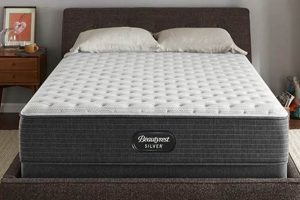
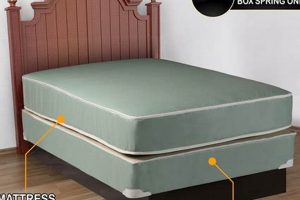
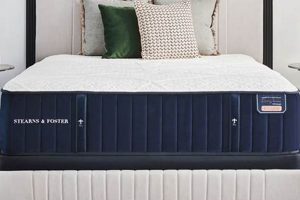
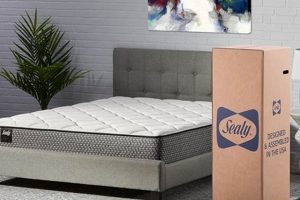
The convergence of retail promotions and a national holiday creates a significant opportunity for consumers seeking to purchase sleep-related products. These events typically offer substantial discounts on a wide array of bedding options, from basic innerspring models to advanced memory foam and hybrid designs. For example, a queen-sized memory foam mattress regularly priced at $1200 might be offered at $900 during this period, reflecting a considerable cost saving.
This timing is beneficial for several reasons. It aligns with a period when many individuals have extended time off from work, allowing for more leisurely shopping and product research. Furthermore, the increased competition among retailers during this period often results in more aggressive price reductions and favorable financing options. Historically, this period has consistently been a top-performing sales event for the mattress industry, indicating strong consumer demand and willingness to invest in improved sleep quality.
Considering the financial and lifestyle implications associated with acquiring new bedding, the subsequent sections will delve into strategies for navigating this market, evaluating product quality, and maximizing the value derived from these promotional offerings.
Strategic Approaches to Limited-Time Mattress Promotions
Maximizing value during these events necessitates a proactive and informed approach. The following guidelines outline key considerations for prospective purchasers:
Tip 1: Conduct Preemptive Research: Prior to the commencement of advertised savings opportunities, establish specific requirements. This includes preferred mattress type (innerspring, memory foam, hybrid), desired firmness level, and applicable size constraints. Comparative analysis of established brands and models facilitates efficient decision-making.
Tip 2: Establish a Budgetary Framework: Determine a maximum expenditure threshold beforehand. This prevents impulsive purchases driven by perceived discounts and maintains fiscal responsibility. Consider factoring in ancillary costs such as delivery fees, old mattress removal charges, and the potential need for new bedding accessories.
Tip 3: Scrutinize Promotional Fine Print: Thoroughly review offer terms and conditions. Pay particular attention to potential exclusions, warranty limitations, and return policies. Confirm if advertised prices are contingent upon specific financing options or bundled purchases.
Tip 4: Compare Across Retailers: Do not limit evaluations to a single vendor. Identical models may be offered at varying price points across different retailers. Utilize online comparison tools and price tracking websites to identify the most advantageous offers.
Tip 5: Assess Material Quality and Construction: Examine mattress specifications regarding material composition, coil count (if applicable), and construction techniques. Higher quality materials typically correlate with enhanced durability and longevity. Seek out independent product reviews from reputable sources.
Tip 6: Verify Trial Periods and Return Policies: A trial period is essential for properly assessing comfort and suitability. Ensure the vendor offers a reasonable trial window (ideally 30 days or more) and a clear, uncomplicated return procedure in the event of dissatisfaction. Understand any associated restocking fees or return shipping costs.
Adherence to these guidelines enhances the likelihood of a satisfactory purchase, optimizing both financial investment and sleep quality.
The following sections will explore long-term care and maintenance to further protect this investment.
1. Discounts Magnitude

The “Discounts Magnitude” represents a pivotal factor influencing consumer behavior during the specified bedding promotional window. The extent of price reductions significantly impacts purchase decisions and overall market dynamics during this time. A careful examination of the scale of discounts offered is essential for both consumers and retailers to understand the economic implications.
- Percentage Reduction and Price Thresholds
The percentage of the original price that is discounted acts as an immediate motivator for consumers. Crossing certain price thresholds (e.g., saving over $500 or reducing the price below $1000) often triggers increased purchase intent. The psychological impact of these thresholds can override other considerations like brand loyalty.
- Competitive Pricing Strategies
Retailers frequently engage in competitive pricing, adjusting discount magnitudes to match or undercut competitors’ offers. This can lead to a “race to the bottom” scenario, benefiting consumers but potentially impacting retailer profit margins. Monitoring competitive discounts is crucial for strategic pricing decisions.
- Impact on Perceived Value
While larger discounts can attract more customers, they can also influence the perceived value of the product. Excessively high discounts might lead consumers to question the original price or the inherent quality of the mattress. Maintaining a balance between attractiveness and credibility is critical.
- Long-Term Revenue Implications
The emphasis on deep discounts during a limited period can potentially cannibalize sales at other times of the year. Consumers may delay purchases, anticipating similar promotional events. Therefore, retailers must carefully consider the long-term revenue implications of aggressive discounting strategies.
In summary, the discounts magnitude during this promotional window acts as a central economic driver, shaping both consumer decisions and retailer strategies. A nuanced understanding of these multifaceted effects is essential for optimizing results and ensuring long-term sustainability in the mattress market.
2. Product Variety

The scope of available options represents a critical determinant of a successful “mattress sale july 4th”. The degree to which retailers can cater to diverse consumer preferences directly influences purchase conversion rates and overall revenue generation. A limited selection restricts the appeal of the promotion, whereas an expansive inventory attracts a broader demographic. For instance, a retailer focusing solely on innerspring mattresses may miss potential sales from customers seeking memory foam or hybrid models. This limitation directly impacts their competitive positioning and revenue potential during this peak sales period.
The composition of product offerings should encompass a spectrum of firmness levels, sizes, and materials. Failure to address specific needs, such as mattresses designed for side sleepers or those with back pain, diminishes the effectiveness of the sale. A real-world example involves retailers who have expanded their product lines to include adjustable bases and specialized bedding accessories, thereby increasing the average transaction value and enhancing customer satisfaction. Moreover, the availability of organic or hypoallergenic options caters to a growing segment of health-conscious consumers, demonstrating the practical significance of aligning product variety with evolving market demands.
In summation, “Product Variety” acts as a linchpin for the effectiveness of a “mattress sale july 4th”. The challenge lies in strategically curating an inventory that addresses a wide range of preferences without overextending resources. A balanced approach, encompassing both standard models and niche offerings, optimizes consumer engagement and financial outcomes during this pivotal promotional event.
3. Financing Options

The availability of favorable payment structures represents a critical component influencing consumer participation in bedding promotions. The ability to defer or distribute the cost of a mattress acquisition significantly reduces the barrier to entry, particularly for higher-priced models or those offered during sales events.
- Deferred Interest Plans
These plans allow consumers to postpone interest accrual for a specified period, often ranging from six months to several years. If the principal is repaid within this timeframe, no interest is charged. However, failure to adhere to the repayment schedule can result in retroactive interest charges on the entire purchase amount, potentially negating the intended savings. Retailers utilize these plans to incentivize immediate purchases, while consumers benefit from short-term payment flexibility.
- Equal Payment Installments
Under this structure, the purchase price is divided into a series of equal monthly payments, often with a fixed interest rate. This provides predictable budgeting for consumers and allows retailers to project future revenue streams. The interest rates associated with these plans are typically lower than those of unsecured credit cards, making them an attractive alternative for financing large purchases.
- Store Credit Cards
Many retailers offer proprietary credit cards that provide exclusive promotional offers, such as extended financing terms or bonus rewards points. While these cards can offer immediate benefits, they often carry higher interest rates than general-purpose credit cards. Responsible utilization requires careful monitoring of spending and timely repayment to avoid accruing excessive interest charges.
- Third-Party Financing
Retailers may partner with external financial institutions to offer financing solutions. These partnerships can provide access to a wider range of loan products and credit terms, allowing consumers to compare options and select the most suitable plan. However, consumers should independently evaluate the terms and conditions offered by these third-party lenders to ensure transparency and avoid hidden fees.
The strategic implementation of diverse payment structures acts as a catalyst for increased sales volume during promotional periods, enhancing affordability and driving consumer engagement. The specific financing options available and their associated terms directly impact the perceived value of the promotion and, ultimately, purchase decisions.
4. Warranty Coverage

The provision of comprehensive guarantees directly correlates with consumer confidence during major promotional periods such as a mattress sale. Warranty terms serve as a tangible indicator of manufacturer or retailer belief in product durability. During a sales event, potential customers are often swayed by discounted prices, but the assurance of long-term protection significantly influences the final purchase decision. A limited or nonexistent warranty creates apprehension regarding premature product failure, potentially outweighing the perceived benefits of the price reduction. For instance, a mattress offered at 40% off with only a one-year warranty may be viewed less favorably than a similar model with a smaller discount but a ten-year warranty.
The scope and conditions of coverage represent critical elements of the guarantee. Variations in terms, such as prorated coverage or exclusions for specific types of damage, impact the actual value of the warranty. For example, a warranty that only covers manufacturing defects but excludes issues arising from normal wear and tear provides limited practical protection. Conversely, a warranty that includes coverage for sagging or body impressions exceeding a certain threshold demonstrates a higher level of commitment to product quality. Real-world examples demonstrate that consumers are increasingly attentive to these details, actively comparing warranty terms across different brands and models before making a purchase.
In conclusion, the degree and nature of a warranty offered is inextricable linked to both customer perception and purchase confidence during prominent sales opportunities. A robust warranty, coupled with transparent terms and conditions, serves as a crucial element in differentiating products and fostering long-term customer satisfaction. Neglecting warranty considerations during a sales event can undermine the overall effectiveness of the promotion and erode consumer trust.
5. Delivery Logistics

The efficiency of transportation and coordination is paramount to the success of a major promotional event. The surge in sales volume associated with the event necessitates scalable infrastructure to ensure timely and damage-free arrival. Inadequate logistical planning directly translates to delayed deliveries, increased customer dissatisfaction, and potentially, order cancellations, thereby negating the positive impact of price reductions. For example, if a retailer experiences a significant backlog in delivery scheduling due to insufficient staffing or vehicle capacity, customers may opt to purchase from competitors who offer more expedient service.
Accurate inventory management is inextricably linked to effective distribution. Without real-time visibility into stock levels across distribution centers, retailers risk overselling products or offering discounts on items that are unavailable. This discrepancy leads to order fulfillment errors and necessitates costly reverse logistics to rectify the situation. Some retailers have invested in sophisticated warehouse management systems that integrate with their point-of-sale systems, enabling them to optimize delivery routes, predict demand fluctuations, and minimize logistical inefficiencies. These systems may also incorporate features such as automated address verification and pre-delivery communication with customers, further enhancing the overall experience.
Streamlined processes for handling returns and exchanges are equally critical. An inefficient returns process not only incurs additional costs but also damages the customer relationship. Clear and concise communication regarding return policies and procedures is essential for managing customer expectations. In summary, the integration of meticulous scheduling, precise inventory tracking, and effective management of returns are not merely operational details but fundamental drivers of customer satisfaction and overall profitability during a major promotional campaign.
6. Inventory Levels

The strategic management of “Inventory Levels” is paramount to maximizing the effectiveness and profitability of a “mattress sale july 4th”. Insufficient stock can lead to lost sales and customer dissatisfaction, while excessive inventory ties up capital and increases storage costs. Effective management requires a nuanced understanding of demand forecasting, lead times, and logistical capabilities.
- Demand Forecasting Accuracy
Accurate prediction of consumer demand during the promotional period is crucial. Historical sales data, market trends, and competitor analysis inform these forecasts. Overestimation leads to surplus inventory and potential markdowns, while underestimation results in stockouts and lost revenue. Example: If historical data indicates a 30% increase in queen-size mattress sales during previous promotions, inventory should be adjusted accordingly, accounting for potential variability.
- Optimal Stock Levels
Maintaining optimal stock levels requires balancing supply and demand to minimize both stockouts and overstocking. Safety stock, which is a buffer against unexpected demand surges or supply chain disruptions, should be strategically implemented. Insufficient safety stock increases the risk of stockouts, particularly for popular models. Conversely, excessive safety stock increases storage costs and the risk of obsolescence.
- Supply Chain Coordination
Effective coordination with suppliers is essential to ensure timely replenishment of inventory. Lead times for mattress production and delivery should be carefully considered. Disruptions in the supply chain, such as factory closures or transportation delays, can significantly impact “Inventory Levels” and the ability to meet customer demand during the sale. Contingency plans, such as diversifying suppliers, are critical for mitigating these risks.
- Inventory Turnover Rate
Inventory turnover rate, measured as the cost of goods sold divided by average inventory, indicates the efficiency of inventory management. A high turnover rate suggests that inventory is being sold quickly, minimizing storage costs and the risk of obsolescence. A low turnover rate indicates that inventory is sitting in warehouses for extended periods, tying up capital. During a “mattress sale july 4th”, retailers aim to maximize turnover by strategically pricing and promoting products to stimulate demand.
In conclusion, the strategic management of “Inventory Levels” is not merely a logistical concern but a fundamental driver of success. Careful planning and execution can maximize sales, minimize costs, and enhance customer satisfaction during this critical promotional period. The effectiveness of these strategies directly influences the financial outcomes and brand reputation associated with the event.
Frequently Asked Questions Regarding Bedding Promotions During the Independence Day Holiday
The following addresses commonly encountered inquiries concerning discounted bedding products offered around July 4th. The intent is to provide factual and objective information to assist in informed decision-making.
Question 1: Are prices during this period genuinely lower compared to other times of the year?
Statistical analyses indicate that bedding prices, on average, experience a notable decrease during this promotional period. However, the extent of the reduction varies depending on the specific model, retailer, and prevailing market conditions. Thorough price comparison is advised.
Question 2: Is product quality compromised to facilitate discounted pricing?
Retailers may offer both standard inventory and specially manufactured models during sales events. The latter may utilize slightly different materials or construction techniques to achieve lower price points. Scrutinizing product specifications is essential to ensure alignment with expectations.
Question 3: What factors should be considered when evaluating mattress warranties during this period?
Warranty terms, including the duration of coverage, covered defects, and claim procedures, should be carefully reviewed. Prorated warranties, which reduce coverage over time, and exclusions for specific types of damage are common. Understanding these limitations is critical.
Question 4: How does inflation affect price changes of mattresses?
Inflation causes price increases and changes to the value of money, that is why mattresses that use to be cheap will become more expensive as time goes by. Price increases because costs of raw materials and other things that matter to producing mattresses increases.
Question 5: How can one mitigate the risk of impulsive purchases during the heightened promotional environment?
Preemptive research, budgetary planning, and adherence to a predetermined shopping list are effective strategies for avoiding impulsive acquisitions. Resisting the pressure of limited-time offers and prioritizing objective evaluation is crucial.
Question 6: What recourse exists if the delivered product deviates significantly from its advertised description?
Consumers retain rights under applicable consumer protection laws. Documenting discrepancies, contacting the retailer directly, and, if necessary, filing a formal complaint with consumer protection agencies are appropriate courses of action.
In summary, responsible participation in bedding promotions necessitates diligence and a critical approach to evaluating advertised claims. Prioritizing informed decision-making ensures a satisfactory outcome.
The subsequent section will provide insights into proper maintenance protocols to maximize the longevity of acquired bedding products.
mattress sale july 4th
The analysis presented has detailed the multifaceted nature of bedding promotions during the Independence Day period. From strategic planning regarding inventory and financing to consumer-focused considerations of warranty and product quality, the elements discussed represent critical factors influencing market behavior. Adherence to the principles outlined fosters a more informed and efficient transactional environment for both retailers and consumers.
As the marketplace evolves, continued vigilance and adaptation to changing consumer demands are essential. The information provided serves as a foundation for navigating future promotional cycles and optimizing outcomes related to bedding acquisitions. Maintaining a critical and informed perspective will ensure effective participation in this dynamic segment of the retail sector.

![Find Bob Mills Mattress Sale Deals | [Your City] Offers | Organic & Natural Mattress Buyer’s Guide: Non-Toxic Sleep Solutions](https://mattressworldpa.com/wp-content/uploads/2025/07/th-1595-300x200.jpg "Find Bob Mills Mattress Sale Deals | [Your City] Offers Organic & Natural Mattress Buyer’s Guide: Non-Toxic Sleep Solutions")