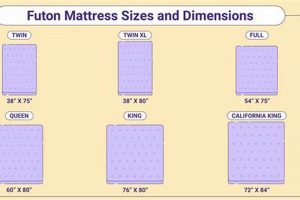
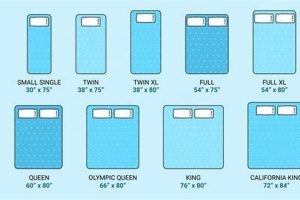
The measurements of a recreational vehicle twin-sized bed represent a crucial factor in optimizing space within the compact environment of an RV. Typically, these mattresses are designed to be narrower and shorter than a standard residential twin mattress, acknowledging the need for efficient use of interior area. These dimensions commonly hover around 28-38 inches in width and 72-75 inches in length, though slight variations can exist among manufacturers and models.
Accurate bed size is paramount for comfortable sleep and mobility within the RV. Properly sized bedding allows for ease of movement around the sleep area and ensures compatibility with RV sleeping spaces. Historically, RVs prioritized functionality over luxury; however, contemporary designs emphasize both efficient spatial arrangement and occupant comfort, driving demand for specifically dimensioned mattresses.
The following article will explore factors to consider when choosing a mattress for your RV, focusing on how material, construction, and custom sizing options further impact overall sleep quality and space management.
Tips Regarding RV Twin Mattress Dimensions
Selecting the correct RV mattress size requires careful consideration. Prioritizing accurate measurements and understanding the implications for overall comfort are essential.
Tip 1: Measure Accurately: Precisely measure the available space in the RV sleeping area before purchasing a mattress. Account for any built-in structures or obstructions.
Tip 2: Consider Mattress Type: Various mattress types, such as memory foam, innerspring, and latex, influence overall thickness. Ensure that the chosen mattress type does not impede access to storage or other RV features.
Tip 3: Check for Custom Options: If standard sizes are unsuitable, explore custom mattress manufacturers. Many companies specialize in crafting mattresses to precise specifications.
Tip 4: Account for Bedding: Factor in the dimensions of bedding, such as sheets and blankets, to ensure a proper fit. Oversized bedding can be cumbersome in the confined space of an RV.
Tip 5: Consider Weight: Lighter mattresses contribute to improved fuel efficiency and reduce overall vehicle weight. Research the weight of various mattress options.
Tip 6: Check for Certifications: Look for certifications such as CertiPUR-US to ensure that the mattress meets established standards for content, emissions, and durability.
Adhering to these tips enables optimal utilization of limited space. The result is a comfortable sleep environment and ease of mobility within the recreational vehicle.
In conclusion, careful planning ensures correct RV mattress selection.
1. Width Variability

Width variability in RV twin mattress dimensions represents a significant design consideration within recreational vehicles. The limited interior space necessitates optimization, making the width of the mattress a key factor influencing mobility and usable area. The typical range, often spanning from 28 to 38 inches, reflects an attempt to balance sleeper comfort with spatial constraints. For instance, a narrower mattress (e.g., 28 inches) might be preferred in RV models with particularly tight quarters, sacrificing some individual sleeping space for enhanced access to other areas of the vehicle, such as walkways or storage compartments. Conversely, a wider mattress (e.g., 38 inches), while offering increased sleeping surface, reduces available floor space, potentially hindering movement and storage accessibility.
The chosen width also affects the availability of appropriately sized bedding. While standard twin-size sheets may sometimes be adaptable, a mattress significantly deviating from the average width may necessitate custom-made bedding, adding to the overall expense. Moreover, the width influences the structural support needed from the bed frame. A wider mattress demands a more robust frame to prevent sagging and ensure adequate weight distribution. Examples include conversion vans where space is at a premium and wider mattresses are unlikely to be used.
In summary, width variability constitutes a critical component of RV twin mattress dimensions. Its effective management requires careful assessment of spatial limitations, comfort preferences, and logistical considerations such as bedding availability and structural support, affecting the functionality of living space. RV owners will be able to choose the right mattress that suits their needs and lifestyle.
2. Length Constraints

Length constraints are an essential component of RV twin mattress dimensions due to the inherent spatial limitations within recreational vehicles. These constraints directly influence sleeper comfort and the overall functionality of the living area. The length of an RV twin mattress typically falls within the 72 to 75-inch range, shorter than a standard residential twin mattress, a design decision driven by the need to maximize usable space. Failure to account for length constraints can result in discomfort for taller individuals and inefficient use of available space, potentially obstructing walkways or storage access.
The impact of length constraints is evident in various RV models. In smaller Class B vans, where every inch matters, a shorter mattress may be necessary to accommodate other essential features, such as a kitchenette or bathroom. Conversely, larger Class A RVs might offer slightly more leeway in mattress length, but even in these spacious models, optimizing space remains a priority. Examples of non-compliance can be found in older RV designs that do not fully consider ergonomic factors, resulting in cramped sleeping arrangements and compromised comfort. RV manufacturers will consider the size of an rv twin mattress dimensions for design to avoid those issues.
In summary, length constraints are a fundamental aspect of RV twin mattress dimensions, requiring careful consideration to balance comfort and spatial efficiency. Understanding these constraints is crucial for RV owners seeking to optimize their living space and ensure a restful sleep. The interplay between length limitations and overall RV design underscores the importance of informed mattress selection. For best mattress choices, it’s a good idea to consult a professional designer.
3. Thickness Impacts

Mattress thickness represents a critical dimension impacting the functionality and comfort within recreational vehicles. As a component of RV twin mattress dimensions, thickness directly influences headroom, storage capacity, and overall ease of movement inside the confined space. A thicker mattress, while potentially offering enhanced comfort and support, reduces vertical clearance, which is a crucial consideration, particularly in RV models with low ceilings or overhead storage compartments. Conversely, a thinner mattress conserves space but may compromise sleep quality and long-term durability. Therefore, selecting the appropriate mattress thickness requires balancing comfort preferences with spatial limitations.
The practical implications of mattress thickness are observable in various RV layouts. For instance, in pop-up campers or smaller travel trailers, a thicker mattress might obstruct access to storage areas located beneath the bed or impede the folding mechanisms essential for collapsing the RV for transport. In contrast, larger Class A motorhomes may accommodate thicker mattresses without significantly affecting headroom or storage. The material composition of the mattress also plays a role, as memory foam and latex mattresses tend to be thicker than traditional innerspring models. The end-user must also consider the RV’s entry and exit heights as it relates to the chosen mattress. For example, someone with restricted mobility might choose a thinner mattress to reduce the height required to climb into the bed.
In conclusion, mattress thickness is inextricably linked to RV twin mattress dimensions and has substantial ramifications for spatial efficiency and comfort. A comprehensive understanding of thickness impacts allows RV owners to make informed decisions, optimizing their sleeping arrangements and overall travel experience. Overlooking thickness factors can lead to compromised comfort or reduced functionality, underscoring the importance of careful planning and selection.
4. Corner Shape

The corner shape of an RV twin mattress represents a subtle yet crucial element within overall RV twin mattress dimensions. Its influence on fit, space utilization, and safety necessitates careful consideration during mattress selection. Variations in corner design, such as squared versus rounded configurations, can significantly impact the ease with which a mattress integrates into the RV’s sleeping area and contribute to occupant comfort and accessibility. Different RV models have different needs and consideration.
- Squared Corners: Efficient Space Utilization
Squared corners maximize the usable surface area of the mattress, conforming precisely to the often boxy or rectangular layouts found in RV sleeping spaces. This design minimizes gaps between the mattress and surrounding walls or furniture, preventing items from falling into crevices and facilitating efficient space utilization. However, squared corners can present a greater risk of injury from sharp edges, particularly in high-traffic areas within the RV.
- Rounded Corners: Enhanced Safety and Aesthetics
Rounded corners prioritize safety by eliminating sharp edges, reducing the likelihood of bumps and scrapes, especially in the tight confines of an RV. This design also offers a softer, more aesthetically pleasing appearance. However, rounded corners can result in small gaps between the mattress and adjacent surfaces, potentially leading to wasted space and the accumulation of debris. Rounded corner mattresses may need additional securing to prevent movement.
- Custom Corner Shapes: Optimized for Specific RV Models
Certain RV manufacturers incorporate uniquely shaped sleeping areas that necessitate custom mattress corner designs. These shapes may involve angled or beveled corners to accommodate wheel wells, cabinetry, or other structural elements. Custom corner shapes ensure a precise fit, maximizing both comfort and space utilization. However, custom mattresses often entail higher costs and longer lead times compared to standard configurations.
- Impact on Bedding Fit: Considerations for Sheets and Mattress Protectors
The corner shape influences the fit of sheets and mattress protectors. Squared corners typically require fitted sheets with deeper pockets to ensure a secure fit, while rounded corners may be more forgiving and accommodate a wider range of bedding styles. Custom corner shapes necessitate specially tailored bedding to prevent bunching or slipping, adding to the overall expense and complexity of mattress maintenance. The fabric used may also change depending on whether its square or round.
In conclusion, the corner shape constitutes a critical aspect of RV twin mattress dimensions, impacting space utilization, safety, aesthetics, and bedding compatibility. The optimal corner design depends on the specific RV model, individual preferences, and budgetary constraints. Careful consideration of these factors facilitates informed decision-making, optimizing both comfort and functionality within the limited space of a recreational vehicle. An informed decision may be to seek advice from professionals in the RV industry.
5. Weight Considerations
The weight of an RV twin mattress, intrinsically linked to its dimensions, represents a significant factor influencing the overall performance and efficiency of a recreational vehicle. Excess weight negatively affects fuel economy, handling, and payload capacity, making careful consideration of mattress weight essential. The relationship between the mattress’s physical size and its constituent materials determines its total weight, impacting several aspects of RV operation.
- Fuel Efficiency Reduction
Increased weight directly correlates with reduced fuel efficiency. A heavier mattress necessitates more engine power to propel the RV, leading to higher fuel consumption. The cumulative effect of added weight from mattresses, coupled with other onboard items, can substantially decrease miles per gallon, increasing travel costs. This is especially important in smaller RVs.
- Handling and Stability Impairment
Excess weight can negatively affect the RV’s handling characteristics, particularly during cornering and braking. A heavier mattress, concentrated in the sleeping area, alters the vehicle’s center of gravity, potentially reducing stability and increasing the risk of rollovers, especially in high-profile RVs. The dimensions of the mattress affect the distribution of that weight.
- Payload Capacity Limitations
Every RV has a specified payload capacity, representing the maximum allowable weight of passengers, cargo, and onboard equipment. A heavy mattress consumes a significant portion of this capacity, limiting the amount of personal belongings and supplies that can be safely carried. Exceeding the payload capacity can compromise the vehicle’s structural integrity and void warranties. This must be determined and weighed before purchase.
- Material Composition Influence
The materials used in mattress construction significantly contribute to its weight. Memory foam and latex mattresses tend to be heavier than traditional innerspring models due to their higher density. Opting for lighter materials, such as specific types of foam or hybrid constructions, can mitigate the weight impact without sacrificing comfort. The core structure of the mattress plays a vital role.
In summary, the weight of an RV twin mattress, a direct consequence of its dimensions and material composition, profoundly influences fuel efficiency, handling, and payload capacity. Prudent selection of lightweight materials and appropriate dimensions is crucial for optimizing RV performance and ensuring safe and economical travel. Ignoring these considerations can result in compromised handling, increased fuel costs, and potential safety hazards. For design related needs, it is beneficial to consult a design professional.
Frequently Asked Questions
The following section addresses common inquiries regarding the dimensional specifics of RV twin mattresses, providing clear and concise information relevant to recreational vehicle owners.
Question 1: What are the standard dimensions of an RV twin mattress?
Typical dimensions range from 28 to 38 inches in width and 72 to 75 inches in length. Exact measurements can vary based on manufacturer and specific RV model.
Question 2: Why are RV twin mattresses smaller than standard residential twin mattresses?
Reduced dimensions are necessary to optimize space within the limited confines of recreational vehicles, balancing comfort with spatial efficiency.
Question 3: Does the thickness of an RV twin mattress affect its suitability?
Yes, thickness influences headroom, storage capacity, and overall ease of movement within the RV. A balance between comfort and spatial constraints is required.
Question 4: How does the corner shape of an RV twin mattress impact its performance?
Corner shape affects fit, space utilization, and safety. Squared corners maximize space, while rounded corners reduce the risk of injury. The RV’s unique design should be examined to determine shape.
Question 5: What effect does the weight of an RV twin mattress have on the recreational vehicle?
Mattress weight influences fuel efficiency, handling, and payload capacity. Lighter materials are preferable to minimize negative impacts.
Question 6: Are custom-sized RV twin mattresses available?
Yes, custom options exist for RVs with non-standard sleeping area dimensions, allowing for a precise fit and optimized space utilization. However, they may be more expensive. Consulting with a professional is recommended.
Understanding these fundamental aspects ensures an informed approach to selecting the appropriate RV twin mattress, maximizing both comfort and functionality.
The next section will delve into specific examples of RV twin mattress dimensions across various RV models, providing practical applications of the concepts discussed herein.
RV Twin Mattress Dimensions
The preceding discourse has meticulously examined the multifaceted implications of `rv twin mattress dimensions`. It has underscored the critical interplay between mattress size, spatial constraints within recreational vehicles, and their combined impact on comfort, functionality, and vehicle performance. Key considerations include width variability, length limitations, thickness impacts, corner shape designs, and the overarching influence of mattress weight. Understanding these factors is paramount for optimizing the RV living space and ensuring a restful and practical travel experience.
Ultimately, the selection of an RV twin mattress transcends mere personal preference; it is a decision inextricably linked to the overall efficiency and safety of the vehicle. Prospective buyers are strongly encouraged to meticulously assess their specific RV model’s dimensional requirements and prioritize informed decision-making. Failure to do so may result in compromised comfort, reduced space utilization, and potential safety hazards. Rigorous planning and professional consultation are highly recommended to ensure an optimal outcome.