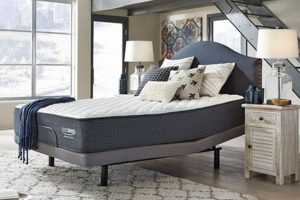
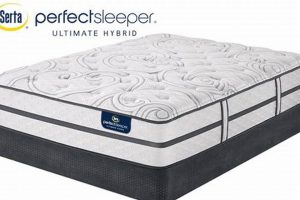
An elevated sleep surface engineered for optimal rest facilitates an environment conducive to improved health. These advanced designs often incorporate materials such as high-density memory foam, individually wrapped coils, or specialized latex, all contributing to enhanced support and pressure relief. For example, a product utilizing zoned support targets specific areas of the body, promoting spinal alignment and reducing tossing and turning throughout the night.
The benefits of a well-constructed sleep surface extend beyond mere comfort. Adequate support can alleviate chronic back pain, improve circulation, and promote deeper, more restorative sleep cycles. Historically, advancements in mattress technology have continually strived to enhance the sleeping experience, moving from simple straw-filled ticks to complex systems designed to address individual needs and preferences. This evolution reflects a growing understanding of the integral role sleep plays in overall well-being.
The following sections will delve into specific features and considerations for choosing the appropriate sleep surface, including material composition, support systems, and factors to consider when evaluating long-term comfort and durability. This comprehensive examination will provide valuable insights for making an informed decision regarding the investment in a quality sleep environment.
Essential Considerations for Optimal Sleep Support
Selecting the appropriate sleep support structure is crucial for achieving restorative rest and long-term physical well-being. The following tips outline essential considerations for evaluating and choosing a surface designed to promote superior sleep.
Tip 1: Assess Individual Sleep Needs: Individual sleep preferences and physical requirements should be the primary driver in the selection process. Factors such as sleeping position, body weight, and pre-existing conditions (e.g., back pain, arthritis) significantly impact the optimal level of support and firmness.
Tip 2: Evaluate Material Composition: Different materials offer varying levels of support, pressure relief, and temperature regulation. Memory foam conforms to the body’s contours, while latex provides a more responsive and breathable surface. Hybrid models combine the benefits of both, offering a balanced approach.
Tip 3: Consider Support System Construction: The internal support system plays a crucial role in overall comfort and durability. Innerspring systems with individually wrapped coils minimize motion transfer, while solid foam cores provide consistent support across the entire surface.
Tip 4: Research and Compare Brands: Reputable brands often invest in rigorous testing and quality control measures, ensuring product consistency and longevity. Investigate customer reviews and independent ratings to gauge real-world performance and satisfaction.
Tip 5: Prioritize Spinal Alignment: Proper spinal alignment is essential for reducing back pain and promoting comfortable sleep. Choose a surface that adequately supports the natural curvature of the spine, regardless of sleeping position.
Tip 6: Evaluate Edge Support: Strong edge support prevents sagging and maximizes the usable sleep surface area. This is particularly important for individuals who sleep near the edge of the bed or require assistance getting in and out of bed.
Tip 7: Consider Temperature Regulation: Overheating can disrupt sleep and reduce comfort. Look for materials and designs that promote airflow and dissipate heat, such as breathable foams, coil systems, and moisture-wicking fabrics.
Adhering to these guidelines will greatly enhance the likelihood of selecting a sleep surface that provides optimal support, promotes restful sleep, and contributes to long-term health and well-being. The proper foundation is a fundamental investment in personal wellness.
The subsequent sections will delve into specific product categories and technological advancements within the sleep industry, further aiding in the process of informed decision-making.
1. Support System

The support system constitutes the foundational element of any mattress aiming to provide superior sleep. Its primary function is to evenly distribute weight, maintain spinal alignment, and minimize motion transfer, thereby directly impacting the overall quality of rest.
- Coil Density and Configuration
Coil density, or the number of coils per unit area, directly correlates to the level of support provided. Higher coil counts typically offer more consistent and conforming support. Coil configuration, such as individually wrapped coils, minimizes motion transfer, preventing disturbances from a partner’s movements. For example, mattresses with nested coil arrangements provide enhanced edge support and durability. Inferior coil systems often result in sagging and uneven support, negating the potential for restorative sleep.
- Foam Core Construction
Foam core systems, commonly found in all-foam mattresses, rely on varying densities and compositions of foam to provide support. High-density foam provides a stable base, while layers of memory foam or latex conform to the body’s contours for pressure relief. The layering and arrangement of these foam types are critical in determining the overall support and comfort. An improperly constructed foam core can lead to overheating and inadequate spinal alignment.
- Zoned Support
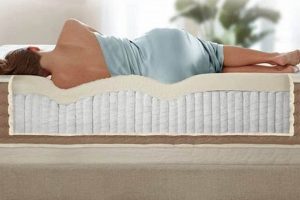
Zoned support systems strategically vary the firmness of different areas of the mattress to target specific regions of the body. For instance, firmer support may be provided in the lumbar region to maintain spinal alignment, while softer support is offered in the shoulder and hip areas for pressure relief. This targeted approach caters to individual sleeping positions and body types. Without proper zonal differentiation, pressure points and discomfort can hinder sleep quality.
- Edge Support Reinforcement
Edge support reinforcement prevents sagging along the perimeter of the mattress, maximizing the usable sleep surface area and facilitating easier entry and exit. This reinforcement can be achieved through the use of high-density foam encasements or strategically placed coils. Adequate edge support is particularly beneficial for couples and individuals who tend to sleep near the edge of the bed. The absence of robust edge support can lead to a feeling of instability and reduced sleep space.
The effectiveness of a mattress support system directly influences its ability to provide optimal spinal alignment, pressure relief, and motion isolation. The selection of an appropriate support system is, therefore, a crucial component in achieving the benefits associated with a sleep surface designed for superior rest. Mattresses with poorly designed or constructed support systems are unlikely to deliver the intended benefits, regardless of the quality of other materials used.
2. Material Density

Material density within a mattress is a critical determinant of both its support characteristics and its long-term durability, factors that are fundamentally linked to a sleep surface’s capacity to provide superior rest. Higher density materials, whether foam or latex, generally exhibit greater resistance to compression, offering enhanced support and preventing premature sagging. This resistance directly translates to improved spinal alignment and reduced pressure points, key elements in achieving restful sleep. For example, a high-density memory foam mattress conforms closely to the body’s contours, distributing weight evenly and minimizing stress on pressure-sensitive areas such as the hips and shoulders.
The significance of material density extends beyond immediate comfort. Over time, lower density materials are prone to degradation and compression, leading to a loss of support and the formation of indentations. This degradation compromises spinal alignment and increases the likelihood of discomfort, negatively impacting sleep quality. Consider a mattress constructed with low-density polyurethane foam; while initially comfortable, it will likely lose its supportive properties within a relatively short period, necessitating replacement. In contrast, a mattress utilizing high-density latex or memory foam maintains its structural integrity for a considerably longer duration, providing consistent support and preserving its ability to promote optimal sleep.
In conclusion, the selection of mattress materials with appropriate density is paramount when pursuing a sleep surface designed for superior rest. Higher density materials contribute to enhanced support, improved durability, and a reduced risk of premature degradation, all of which are essential for maintaining spinal alignment and promoting restorative sleep. Neglecting the importance of material density can result in a compromised sleep experience and a reduced lifespan of the mattress, ultimately undermining the investment in a quality sleep environment. Careful consideration of material density is thus a crucial step in ensuring a lasting and comfortable sleep surface.
3. Pressure Relief

Pressure relief, in the context of sleep surfaces, refers to the ability of a mattress to redistribute the body’s weight, minimizing concentrated force on specific areas. This is a critical characteristic for achieving optimal sleep because sustained pressure on bony prominences, such as hips, shoulders, and knees, can restrict blood flow and trigger discomfort, leading to tossing, turning, and fragmented sleep patterns. A surface engineered for pressure relief conforms to the body’s contours, providing uniform support and reducing localized stress. For example, a sleeper experiencing hip pain may find that a mattress lacking adequate pressure relief exacerbates their discomfort, resulting in a restless night. Conversely, a mattress that effectively cradles the hips and redistributes weight allows for improved circulation and reduced pain, fostering deeper and more restful sleep.
The materials used in the construction of a mattress directly impact its pressure-relieving capabilities. Memory foam, for instance, is renowned for its ability to contour to the body and evenly distribute weight, making it a popular choice for individuals seeking pressure relief. Latex, both natural and synthetic, also offers excellent pressure relief due to its inherent elasticity and responsiveness. Hybrid mattresses, which combine innerspring systems with layers of memory foam or latex, can provide a balance of support and pressure relief. Practical application of this understanding involves carefully evaluating the materials and construction of a mattress to ensure they align with individual sleep needs and pressure point sensitivities. Individuals with arthritis or fibromyalgia, for example, often benefit from mattresses with superior pressure-relieving properties.
In summary, pressure relief is an indispensable component of a superior sleep mattress. By minimizing concentrated force on pressure points and promoting healthy circulation, mattresses designed for pressure relief contribute significantly to improved sleep quality and reduced discomfort. The practical significance of understanding this connection lies in the ability to make informed choices when selecting a mattress, prioritizing materials and construction techniques that prioritize pressure relief and ultimately enhance the overall sleep experience. While challenges may exist in accurately assessing pressure relief characteristics without direct experience, seeking expert advice and reading customer reviews can aid in the selection process, ensuring a more restful and restorative night’s sleep.
4. Spinal Alignment

Spinal alignment constitutes a fundamental biomechanical principle directly influencing sleep quality and overall musculoskeletal health. A superior sleep mattress is engineered to maintain the natural curvature of the spine throughout the night, irrespective of sleeping position. This support prevents undue stress on spinal structures, including intervertebral discs, muscles, and ligaments. Failure to maintain proper spinal alignment during sleep can contribute to a cascade of adverse effects, ranging from chronic back pain and stiffness to nerve impingement and reduced respiratory function. For instance, an individual sleeping on a mattress that is too soft may experience excessive spinal flexion, leading to morning back pain and potentially exacerbating pre-existing spinal conditions. Conversely, a mattress that is too firm may fail to conform to the body’s contours, resulting in pressure points and compromised spinal alignment.
The design and materials of a mattress play a critical role in achieving optimal spinal alignment. Mattresses incorporating zoned support systems strategically vary firmness across different regions, accommodating the unique contours of the body. Memory foam, latex, and hybrid constructions are frequently utilized to provide conforming support and minimize pressure points, thereby promoting proper spinal alignment. Furthermore, the selection of an appropriate pillow is integral to maintaining the cervical spine’s natural curvature. Practical application of this principle involves carefully evaluating individual sleeping positions, body weight, and pre-existing spinal conditions when choosing a mattress. Consulting with a healthcare professional or sleep specialist can provide personalized recommendations tailored to specific needs. Failure to prioritize spinal alignment during sleep can negate other potential benefits derived from a superior sleep mattress, such as enhanced pressure relief and temperature regulation.
In summary, the connection between spinal alignment and a superior sleep mattress is inextricably linked to overall sleep quality and musculoskeletal health. Prioritizing spinal alignment through informed mattress selection and proper sleep posture is essential for preventing pain, minimizing discomfort, and promoting restorative sleep. While challenges exist in accurately assessing the long-term impact of a mattress on spinal health, adherence to established ergonomic principles and seeking professional guidance can mitigate potential risks and optimize the benefits of a sleep surface designed for superior rest. The selection process is not merely a matter of comfort preference; it is a proactive investment in spinal health and long-term well-being.
5. Temperature Regulation

Temperature regulation within a sleep environment profoundly impacts sleep quality and overall comfort. A superior sleep mattress proactively manages heat and moisture to maintain a stable, conducive sleep temperature, thereby minimizing disruptions and promoting restorative rest.
- Material Breathability and Airflow
The breathability of mattress materials directly affects airflow and heat dissipation. Open-cell foam structures, such as those found in certain memory foam formulations or latex, facilitate air circulation, preventing heat from becoming trapped. In contrast, closed-cell foam structures can impede airflow, leading to overheating. Mattresses incorporating natural fibers, such as cotton or wool, inherently exhibit greater breathability than synthetic materials. Failure to prioritize breathability can result in elevated body temperature, triggering wakefulness and hindering the ability to achieve deep sleep.
- Moisture-Wicking Properties
The ability of a mattress to wick away moisture is crucial for maintaining a dry and comfortable sleep surface. Perspiration during sleep can create a humid environment, leading to discomfort and promoting the growth of microorganisms. Materials with moisture-wicking properties, such as specialized synthetic fabrics or wool, draw moisture away from the body, promoting evaporation and reducing humidity. A mattress lacking adequate moisture-wicking capabilities can contribute to skin irritation and an increased risk of nocturnal awakenings.
- Cooling Technologies and Infusions
Advanced cooling technologies are increasingly incorporated into mattresses to enhance temperature regulation. Gel infusions within memory foam, for example, absorb and dissipate heat, creating a cooler sleep surface. Phase-change materials (PCMs) can also be integrated to regulate temperature by absorbing or releasing heat as needed. These technologies are designed to actively counteract heat buildup, providing a more consistent and comfortable sleep environment. Mattresses lacking such features may be less effective in managing temperature fluctuations throughout the night.
- Mattress Construction and Design
The overall construction and design of a mattress contribute to its temperature-regulating capabilities. Hybrid mattresses, which combine innerspring systems with layers of foam or latex, often exhibit better airflow than all-foam mattresses. The spacing between coils in an innerspring system allows for greater ventilation, promoting heat dissipation. Furthermore, the thickness and density of foam layers can impact heat retention. A thoughtfully designed mattress optimizes airflow and minimizes heat retention to create a cooler and more comfortable sleep environment.
In summary, temperature regulation is a critical attribute of a superior sleep mattress, directly impacting sleep quality and comfort. By prioritizing breathability, moisture-wicking properties, cooling technologies, and thoughtful construction, mattress manufacturers strive to create sleep surfaces that minimize temperature fluctuations and promote restorative rest. Neglecting the importance of temperature regulation can lead to discomfort, disrupted sleep, and a reduced capacity to achieve the benefits associated with a high-quality sleep environment.
6. Motion Isolation
Motion isolation, within the context of sleep surfaces, refers to a mattress’s capacity to minimize the transmission of movement across its surface. This characteristic is of paramount importance in achieving superior sleep, particularly for individuals who share a bed. When one sleeper shifts positions, gets in or out of bed, or experiences restlessness, a mattress with poor motion isolation will transmit these movements to the other sleeper, potentially disrupting their sleep cycle. This disruption can manifest as awakenings, lighter sleep stages, and an overall reduction in sleep quality. Consider a scenario where one partner frequently tosses and turns; on a mattress lacking adequate motion isolation, the other partner will likely experience noticeable disturbances, preventing them from achieving deep, restorative sleep. Motion isolation effectiveness serves as a crucial factor in judging a superior sleep surface.
The design and materials of a mattress directly influence its ability to isolate motion. Mattresses featuring individually wrapped coils, for instance, excel at minimizing motion transfer because each coil responds independently to pressure, preventing movement from spreading across the entire surface. Memory foam and latex, due to their viscoelastic properties, also effectively absorb and dampen motion. Hybrid mattresses combining these materials with innerspring systems offer a balanced approach, providing both support and motion isolation. Conversely, mattresses with interconnected coil systems tend to transmit motion more readily, making them less suitable for couples or individuals sensitive to movement. The practical implications of this understanding extend to the mattress selection process, where individuals should prioritize motion isolation as a key criterion, particularly when sharing a bed. Furthermore, accessories such as mattress toppers can enhance motion isolation in existing mattresses that lack this feature.
In summary, motion isolation is an indispensable component of a superior sleep mattress, contributing significantly to the quality and consistency of sleep. By minimizing the transmission of movement across the sleep surface, mattresses designed for motion isolation create a more peaceful and undisturbed sleep environment for both partners. While challenges may exist in accurately assessing motion isolation without direct experience, reading reviews, examining mattress construction details, and considering the materials used can guide the selection process. The ultimate goal is to choose a mattress that effectively isolates motion, promoting restful and restorative sleep for all individuals sharing the bed. Failure to account for motion isolation can lead to fragmented sleep, reduced sleep quality, and compromised overall well-being.
7. Durability

Durability, in the realm of sleep surfaces, represents the lifespan and resistance to degradation of a mattress. It is a critical factor in determining the long-term value and sustained performance of a superior sleep mattress, directly impacting its ability to consistently provide optimal support and comfort over an extended period.
- Material Composition and Degradation Resistance
The constituent materials of a mattress dictate its inherent resistance to wear and tear. High-density foams, natural latex, and robust coil systems generally exhibit greater longevity than lower-quality alternatives. For example, a mattress constructed with high-density memory foam is less susceptible to sagging and indentation over time compared to one made with low-density polyurethane foam. Furthermore, the resistance of these materials to moisture, temperature fluctuations, and microbial growth contributes to their overall durability. Material selection directly influences the mattress’s ability to maintain its structural integrity and performance characteristics throughout its lifespan.
- Construction Techniques and Structural Integrity
The methods employed in mattress construction significantly impact its structural integrity and resistance to deformation. Reinforced edge support, robust stitching, and secure bonding of layers contribute to the mattress’s ability to withstand the stresses of daily use. For instance, a mattress with reinforced edge support is less prone to sagging along the perimeter, maximizing the usable sleep surface and prolonging its lifespan. Conversely, inferior construction techniques can lead to premature failure of seams, delamination of layers, and a compromised support system.
- Warranty Coverage and Expected Lifespan
Warranty coverage provides an indication of the manufacturer’s confidence in the durability of their product. A longer warranty period typically signifies a higher level of confidence in the materials and construction techniques employed. However, it is crucial to carefully review the terms and conditions of the warranty to understand the specific types of defects covered and the limitations of the coverage. Expected lifespan, often communicated by the manufacturer or inferred from customer reviews, provides an estimate of the duration for which the mattress is likely to maintain its optimal performance characteristics.
- Maintenance and Care Practices
Proper maintenance and care practices can significantly extend the lifespan of a mattress. Regular rotation and flipping (if applicable), the use of a mattress protector, and prompt attention to spills or stains can prevent premature degradation. For example, rotating a mattress every few months helps to distribute wear evenly across the surface, preventing localized sagging. Conversely, neglecting these practices can accelerate the deterioration of the mattress, reducing its lifespan and compromising its performance.
In conclusion, durability is an essential attribute of a superior sleep mattress, ensuring that it provides consistent support and comfort over an extended period. The selection of durable materials, robust construction techniques, comprehensive warranty coverage, and adherence to proper maintenance practices all contribute to the longevity and sustained performance of the mattress, ultimately delivering long-term value and maximizing the investment in a quality sleep environment.
Frequently Asked Questions
The following section addresses common inquiries and misconceptions regarding sleep surfaces designed to promote enhanced rest and overall sleep quality.
Question 1: What distinguishes a “superior sleep mattress” from a standard mattress?
Superior sleep mattresses incorporate advanced materials and construction techniques to optimize support, pressure relief, temperature regulation, and motion isolation. Standard mattresses may lack these features, potentially compromising sleep quality.
Question 2: How often should a superior sleep mattress be replaced?
The lifespan of a superior sleep mattress depends on factors such as material composition, usage patterns, and maintenance practices. Generally, replacement is recommended every 7-10 years, or sooner if noticeable sagging or discomfort occurs.
Question 3: Can a superior sleep mattress alleviate existing back pain?
A superior sleep mattress designed to promote proper spinal alignment and pressure relief may help to alleviate certain types of back pain. However, it is not a substitute for professional medical treatment.
Question 4: Are superior sleep mattresses significantly more expensive than standard mattresses?
Superior sleep mattresses often command a higher price due to the advanced materials and construction techniques employed. However, the potential benefits to sleep quality and overall well-being may justify the investment.
Question 5: Does the firmness of a superior sleep mattress directly correlate with its quality?
Firmness is a matter of personal preference and is not directly indicative of quality. A superior sleep mattress should provide adequate support and pressure relief, regardless of its firmness level.
Question 6: Are there specific certifications to look for when purchasing a superior sleep mattress?
Certifications such as CertiPUR-US or Oeko-Tex Standard 100 indicate that the mattress has been tested for harmful chemicals and emissions, providing assurance of its safety and environmental impact.
The information provided addresses fundamental aspects of what constitutes a quality sleep experience and factors into the decision-making process when considering a new sleep surface.
The subsequent sections will explore specific product reviews and comparisons, providing further insights into the market offerings within the superior sleep mattress category.
Conclusion
This exploration has illuminated the multifaceted attributes that define a superior sleep mattress. Key considerations include support system integrity, material density, pressure relief efficacy, maintenance of spinal alignment, temperature regulation capabilities, motion isolation effectiveness, and overall durability. These elements, when synergistically integrated, contribute to a sleep environment conducive to restorative rest.
The selection of an appropriate sleep surface represents a significant investment in personal well-being. Future advancements in sleep technology promise further refinements in mattress design and functionality. Prioritizing informed decision-making, grounded in a comprehensive understanding of these key attributes, remains essential for maximizing the long-term benefits derived from a superior sleep mattress.