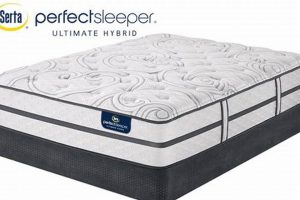
Guidance tailored for individuals who primarily sleep on their side, focusing on the selection of a sleeping surface optimized for spinal alignment and pressure relief. These suggestions often consider factors such as mattress firmness, material composition, and construction techniques that cater to the specific biomechanical needs of side sleepers.
Choosing an appropriate sleep surface for this sleeping position is critical for mitigating pressure points on the shoulders and hips, preventing discomfort, and promoting proper musculoskeletal health. Historically, inadequate sleep surfaces have contributed to sleep disturbances and chronic pain in side sleepers. Selecting a suitable option is therefore an investment in long-term well-being.
The following sections will delve into the key considerations when choosing a sleep surface for this sleep position, including material types, firmness levels, and relevant features to facilitate a restful and supportive sleep experience.
Guidance for Side Sleeper Mattress Selection
The selection of a mattress profoundly impacts sleep quality and musculoskeletal health, especially for side sleepers. The following recommendations offer practical guidance for making an informed decision.
Tip 1: Prioritize Pressure Relief: A mattress should effectively alleviate pressure on the shoulders and hips, common pressure points for side sleepers. Materials like memory foam and latex are known for their pressure-relieving properties.
Tip 2: Evaluate Firmness: Medium to medium-firm mattresses are often suitable, providing a balance of support and cushioning. However, individual preferences and body weight should influence the final decision.
Tip 3: Consider Spinal Alignment: The mattress must support the spine in a neutral position. Proper alignment reduces the risk of back pain and promotes overall comfort during sleep.
Tip 4: Assess Material Composition: Different materials offer varying levels of support, pressure relief, and temperature regulation. Research the properties of memory foam, latex, innerspring, and hybrid mattresses to determine the most appropriate option.
Tip 5: Explore Zoned Support: Mattresses with zoned support offer targeted firmness levels to different areas of the body, providing enhanced support where needed and conforming to the body’s curves.
Tip 6: Investigate Edge Support: Adequate edge support prevents the feeling of rolling off the mattress and maximizes the usable sleep surface.
Tip 7: Trial Periods: Whenever possible, take advantage of trial periods to thoroughly evaluate a mattress before committing to a purchase. This allows for assessment of comfort and support over an extended period.
By adhering to these guidelines, individuals can make a more informed decision, ultimately leading to improved sleep quality and reduced risk of discomfort or pain.
The subsequent sections will discuss additional factors that contribute to overall sleep satisfaction and long-term mattress performance.
1. Pressure Relief

Pressure relief is a fundamental consideration within side sleeper mattress guidance, as it directly addresses the concentrated forces exerted on the shoulder and hip joints in this sleeping position. Inadequate pressure relief results in localized discomfort, restricted blood flow, and potential nerve compression, contributing to disrupted sleep cycles and the exacerbation of pre-existing musculoskeletal conditions. A mattress designed to mitigate these pressure points is essential for promoting comfortable and restorative sleep.
Memory foam, latex, and certain hybrid mattress constructions are frequently cited for their pressure-relieving properties. These materials conform to the body’s contours, distributing weight more evenly and minimizing localized stress. For instance, a side sleeper using a traditional innerspring mattress may experience significant pressure build-up in the shoulder, leading to pain and discomfort. Conversely, a memory foam mattress would cradle the shoulder, reducing pressure and promoting better circulation. Similarly, mattresses incorporating zoned support provide targeted pressure relief, enhancing support in areas requiring greater firmness while offering cushioning in pressure-sensitive regions.
The effectiveness of pressure relief directly impacts the perceived comfort and overall quality of sleep experienced by side sleepers. Choosing a mattress that prioritizes pressure relief is therefore a critical step in managing pain, improving sleep duration, and supporting long-term musculoskeletal health. The understanding of this connection between pressure relief and appropriate sleep surface selection allows individuals to make informed decisions that positively influence their well-being.
2. Spinal Alignment

Maintaining proper spinal alignment is paramount for side sleepers seeking optimal comfort and musculoskeletal health. The horizontal sleeping position necessitates a mattress that supports the natural curvature of the spine, preventing undue stress and promoting restorative rest. A poorly chosen mattress can lead to spinal misalignment, resulting in back pain, neck stiffness, and other related ailments.
- Contour and Support Balance
The mattress must strike a balance between conforming to the body’s contours and providing adequate support. Insufficient support allows the spine to sag, while excessive firmness prevents proper alignment with the head, neck, and spine. This equilibrium is crucial for minimizing pressure points and ensuring a neutral spinal posture. For instance, a lightweight side sleeper might find a medium-firm mattress ideal, while a heavier individual may require a firmer surface to prevent spinal curvature.
- Shoulder and Hip Accommodation
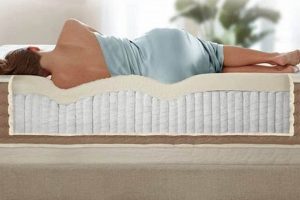
Side sleeping concentrates body weight on the shoulders and hips. A mattress that doesn’t adequately accommodate these pressure points forces the spine out of alignment. Features like zoned support or pressure-relieving materials, such as memory foam, can alleviate this issue by allowing these areas to sink in slightly while maintaining overall spinal support. Failure to address this can lead to chronic pain and discomfort.
- Mattress Height and Pillow Selection
The height of the mattress and the thickness of the pillow significantly influence spinal alignment for side sleepers. A mattress that is too low or a pillow that is too thin will cause the head to tilt downward, straining the neck and upper back. Conversely, a mattress that is too high or a pillow that is too thick will force the head upward, creating similar discomfort. A proper pillow fills the gap between the shoulder and the head, keeping the neck aligned with the spine.
- Long-Term Musculoskeletal Health
Consistent spinal misalignment during sleep can contribute to long-term musculoskeletal problems. Chronic back pain, sciatica, and even disc degeneration can be exacerbated by improper spinal support. Selecting a mattress that prioritizes spinal alignment is therefore not just about immediate comfort; it is an investment in long-term health and well-being, mitigating potential future complications.
The interconnectedness of these facets emphasizes the holistic approach required when considering sleep surface selection for side sleepers. Prioritizing a mattress that effectively balances contouring, support, and accommodation of pressure points, while factoring in appropriate mattress height and pillow selection, contributes significantly to maintaining proper spinal alignment and mitigating the risk of musculoskeletal issues.
3. Firmness Level

Firmness level constitutes a critical element within the framework of side sleeper mattress guidance, directly impacting spinal alignment and pressure point mitigation. The appropriateness of a mattress’s firmness is determined by a complex interplay of individual body weight, shoulder width, and personal comfort preferences. A mattress that is too firm fails to provide adequate contouring, leading to increased pressure on the shoulder and hip, resulting in discomfort and potential sleep disruption. Conversely, a mattress that is excessively soft allows the spine to sag, negating proper alignment and potentially exacerbating lower back pain. Therefore, the selection of an appropriate firmness level is not merely a matter of subjective preference but a biomechanical consideration.
For instance, a lighter individual, weighing less than 130 pounds, will likely experience optimal comfort and support on a softer mattress (rated between 3 and 5 on a scale of 1 to 10, where 1 is very soft and 10 is very firm). This allows the mattress to conform to their body contours without excessive resistance. A heavier individual, exceeding 200 pounds, typically requires a firmer mattress (rated between 6 and 8) to prevent spinal sagging and maintain proper alignment. A mattress labeled as “medium-firm” (around a 6) often represents a compromise suitable for individuals of average weight (between 130 and 200 pounds) or those with varying comfort preferences. However, these are general guidelines, and individual experimentation is recommended to ascertain the ideal firmness level. Mattress manufacturers often offer trial periods to facilitate this process.
In summary, the connection between firmness level and its influence on the quality of sleep for side sleepers underscores the importance of considering the individuals body mechanics and preferences. General recommendations serve as a starting point, but ultimately, a proper assessment and trial period is essential in determining the ideal firmness for optimized spinal alignment and pressure relief. The challenge lies in finding the equilibrium between sufficient support and adequate contouring, thereby promoting both comfort and musculoskeletal health. Addressing this balance represents a core component for a beneficial experience.
4. Material Composition

The composition of materials within a mattress significantly influences its suitability for side sleepers, creating a direct connection between material choice and the effectiveness of side sleeper mattress guidance. Different materials exhibit varying degrees of pressure relief, support, temperature regulation, and durability, all of which impact spinal alignment and overall sleep quality for individuals who primarily sleep on their side. Inadequate material selection can lead to increased pressure on the shoulders and hips, spinal misalignment, and discomfort, thereby negating the potential benefits of a mattress specifically intended for side sleepers.
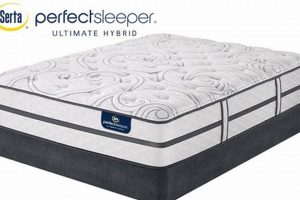
For example, memory foam, known for its viscoelastic properties, conforms closely to the body’s contours, distributing weight evenly and minimizing pressure points. Latex, derived from rubber trees, offers a resilient and responsive surface, providing both support and pressure relief. Innerspring mattresses, while traditionally offering firm support, may not provide adequate contouring for side sleepers unless combined with comfort layers of memory foam or latex. Hybrid mattresses combine the support of innersprings with the pressure relief of foam or latex, aiming to provide a balanced sleep experience. The specific arrangement and density of these materials further influence performance. A high-density memory foam will typically offer more support than a low-density foam, while the type of coil system in an innerspring mattress will affect its overall firmness and responsiveness. Furthermore, the presence of cooling technologies, such as gel-infused foam or breathable fabrics, impacts temperature regulation, another crucial factor for sleep comfort. Failure to account for these material properties can result in discomfort and sleep disturbances.
In conclusion, the selection of appropriate materials represents a cornerstone of effective side sleeper mattress recommendations. The interplay between material properties and individual needs dictates the overall suitability of a mattress for this sleep position. A comprehensive understanding of the characteristics of various mattress materials is essential for making informed choices that promote spinal alignment, pressure relief, and a restful sleep experience. Disregarding the role of material composition undermines any attempt to address sleep-related challenges and maximize comfort for side sleepers.
5. Edge Support

Edge support, a constructional feature of mattresses, is particularly pertinent to side sleeper mattress recommendations. Its presence or absence directly influences the usable surface area and overall stability of the sleep surface, potentially affecting sleep quality and comfort.
- Expanded Sleep Surface
Strong edge support maximizes the available sleeping area, preventing the sensation of rolling off the mattress when positioned near the periphery. Side sleepers, who often utilize the full width of the mattress to accommodate arm positioning, benefit from this expanded space. A lack of edge support compresses the mattress edge under body weight, creating an unstable and constricted sleep environment.
- Ease of Entry and Exit
Firm edge support facilitates easier ingress and egress from the bed, a consideration particularly relevant for individuals with mobility limitations or joint pain. Side sleepers often push off the edge of the mattress when getting out of bed; inadequate support necessitates greater physical exertion and can increase the risk of falls.
- Enhanced Structural Integrity
Robust edge support reinforces the mattress’s overall structural integrity, preventing premature sagging and maintaining its shape over time. Side sleepers, who concentrate their weight on specific areas of the mattress, can contribute to uneven wear if edge support is lacking, shortening the mattress’s lifespan.
- Reduced Motion Transfer
Effective edge support can minimize motion transfer across the mattress surface. This is especially beneficial for couples where one partner is a side sleeper. By isolating movement, edge support helps prevent disturbances to the other partner’s sleep cycle.
The features inherent within effective edge support directly affect the suitability of a mattress for side sleepers. By maximizing sleep surface, easing mobility, reinforcing structural integrity, and reducing motion transfer, robust edge support significantly contributes to improved sleep quality and overall satisfaction. Therefore, it represents a critical element in determining whether a given mattress aligns with recommendations tailored for those who favor the side sleeping position.
6. Zoned Support
Zoned support is a design feature integrated into certain mattresses to provide differentiated levels of firmness across various sections. Its implementation directly addresses the biomechanical needs of side sleepers, influencing the quality of spinal alignment and pressure relief.
- Spinal Alignment Enhancement
Zoned support aims to maintain the natural curvature of the spine by offering firmer support in the lumbar region and softer support in the shoulder and hip areas. This minimizes spinal distortion, potentially reducing back pain and promoting more restful sleep. For instance, a mattress with enhanced lumbar support prevents the spine from sagging, while softer shoulder and hip zones accommodate these pressure points, facilitating a more neutral spinal position.
- Targeted Pressure Relief
Side sleeping concentrates pressure on the shoulders and hips. Mattresses with zoned support often incorporate softer materials or construction techniques in these areas to alleviate pressure and improve circulation. A mattress lacking zoned support may result in increased pressure buildup, leading to discomfort and potential nerve impingement. Conversely, a mattress designed with targeted pressure relief in the shoulder region enables better blood flow and reduces the likelihood of numbness or tingling in the arm.
- Accommodation of Body Weight Distribution
Zoned support recognizes that different areas of the body exert varying levels of pressure on the mattress. By varying the firmness levels, these mattresses can better accommodate these differences, providing optimal support and comfort. For example, a heavier individual may benefit from a mattress with firmer support in the core area to prevent excessive sinking, while a lighter individual may prefer a more uniform level of firmness. The goal is to distribute body weight evenly, reducing stress on specific joints and muscles.
- Customization of Sleep Experience
The incorporation of zoned support allows for a more customized sleep experience, tailoring the mattress’s response to individual needs. This is especially relevant for side sleepers, whose comfort is highly dependent on proper spinal alignment and pressure relief. While not a universal solution, zoned support can provide a more refined and targeted approach to addressing the specific challenges associated with side sleeping compared to mattresses with uniform firmness levels.
The effectiveness of zoned support is contingent upon individual body type, weight distribution, and sleeping habits. While zoned support has the potential to enhance comfort and promote proper spinal alignment for side sleepers, its benefits are not guaranteed, and a thorough evaluation of individual needs and preferences remains essential when selecting a mattress.
Frequently Asked Questions
The following addresses common inquiries regarding the selection of mattresses optimized for side sleepers. The information presented aims to clarify prevalent concerns and misconceptions.
Question 1: What firmness level is generally recommended for side sleepers?
A medium to medium-firm mattress is often suitable, offering a balance of support and cushioning. However, individual body weight and personal preference should influence the final decision. Lighter individuals may prefer a softer mattress, while heavier individuals may require a firmer one.
Question 2: Are memory foam mattresses ideal for side sleepers?
Memory foam can be a suitable material due to its pressure-relieving properties, which conform to the body’s contours. However, it’s crucial to consider the density and construction of the memory foam, as well as potential heat retention. Latex and hybrid mattresses also provide viable alternatives.
Question 3: How important is spinal alignment for side sleepers?
Maintaining proper spinal alignment is essential for preventing back pain and promoting restful sleep. The mattress should support the natural curvature of the spine and prevent it from sagging or becoming misaligned.
Question 4: What role does edge support play in side sleeper mattress selection?
Adequate edge support prevents the sensation of rolling off the mattress and maximizes the usable sleep surface. This feature is particularly beneficial for side sleepers who tend to utilize the entire width of the bed.
Question 5: Are zoned support mattresses advantageous for side sleepers?
Zoned support mattresses offer targeted firmness levels to different areas of the body, providing enhanced support where needed and conforming to the body’s curves. This can be beneficial for maintaining spinal alignment and relieving pressure on the shoulders and hips.
Question 6: How can one determine if a mattress is suitable for side sleeping before making a purchase?
Whenever possible, take advantage of trial periods offered by mattress retailers. This allows for thorough evaluation of comfort and support over an extended period, ensuring the mattress meets individual needs.
In summary, several factors influence the suitability of a mattress for side sleepers. Firmness, material composition, spinal alignment, edge support, zoned support, and trial periods are all critical aspects to consider during the selection process.
The following section provides a concluding summary encompassing the key findings presented in this discourse.
Conclusion
This discourse has explored the various facets underpinning side sleeper mattress recommendations, emphasizing critical considerations for optimized sleep. The selection process necessitates careful evaluation of firmness, material composition, spinal alignment, edge support, and zoned support. Effective implementation of these recommendations depends on individual body type, weight distribution, and personal preferences, ultimately influencing sleep quality and musculoskeletal health.
The pursuit of optimal sleep through informed mattress selection is an investment in long-term well-being. Continued research and technological advancements within the sleep industry hold the potential to further refine existing recommendations, offering increasingly tailored solutions for the unique needs of side sleepers. Individuals are encouraged to leverage the knowledge gained and proactively engage in the mattress selection process to enhance their sleep quality.