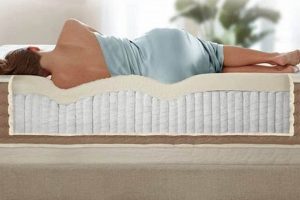
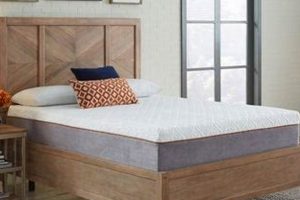
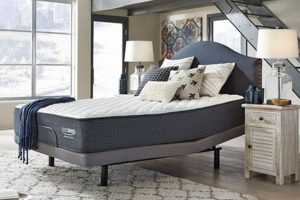
A supporting structure designed to accommodate a specific type of air-adjustable bed system, sized to correspond with standard queen mattress dimensions. These systems often require frames capable of handling the weight and dimensions of the air chambers and associated components. For example, a platform bed with adequate center support can effectively house such a system.
Proper support is crucial for maximizing the lifespan and performance of the adjustable bed. Selecting a compatible frame ensures the air chambers are evenly supported, preventing potential damage and maintaining consistent comfort levels. Historically, traditional bed frames were not always suitable, leading to the development of frames specifically engineered to meet the unique requirements of these systems.
The subsequent sections will explore various frame styles, essential considerations for selection, potential compatibility issues, and best practices for assembly and maintenance, ensuring long-term enjoyment of the adjustable sleep system.
Tips for Selecting a Compatible Support Structure
Choosing the appropriate support is crucial for optimal performance and longevity. Consider the following guidelines to ensure compatibility and proper function.
Tip 1: Measure Interior Dimensions Accurately: Prior to purchase, verify the interior dimensions of the frame to ensure it precisely accommodates the air-adjustable system. Inaccurate measurements can lead to instability and improper fit.
Tip 2: Prioritize Center Support: Select a frame featuring robust center support, either through a solid platform or a system of slats with a central support beam. This is essential for evenly distributing weight and preventing sagging.
Tip 3: Evaluate Weight Capacity: Confirm the weight capacity of the frame exceeds the combined weight of the air-adjustable components and intended occupants. Exceeding the weight limit can compromise the structural integrity of the frame.
Tip 4: Inspect Slat Spacing: If opting for a slat system, ensure the spacing between slats is minimal, ideally no more than a few inches. Wide gaps can cause uneven support and potential damage to the system’s air chambers.
Tip 5: Verify Headboard and Footboard Compatibility: If intending to use a headboard or footboard, confirm compatibility with the chosen frame. Attachment mechanisms and overall dimensions must be compatible for secure installation.
Tip 6: Consider Frame Height: Evaluate the desired height of the bed. Taller frames may require a step stool for access, while lower frames can simplify getting in and out of bed.
Tip 7: Assess Material Quality: Opt for frames constructed from durable materials such as solid wood or reinforced steel. Inferior materials are more prone to breakage and instability over time.
Adhering to these guidelines will facilitate the selection of a suitable support, optimizing comfort, performance, and durability. The following section will address potential compatibility issues and troubleshooting steps.
1. Size Conformance

Size conformance represents a critical determinant in the successful integration of a Sleep Number queen mattress with a supporting frame. Discrepancies in dimensions, even minor ones, can precipitate a cascade of adverse effects. A frame that is too small will constrict the mattress, potentially damaging the air chambers and compromising the intended comfort and support. Conversely, a frame that is too large allows for excessive movement, diminishing stability and potentially leading to premature wear and tear. The proper dimensions ensure the mattress receives uniform support across its entire surface, maximizing its lifespan and the quality of sleep it provides. For example, a frame designed for a standard queen mattress might not adequately accommodate the specific dimensions of a Sleep Number queen, which often includes additional space for the internal components and air hoses. Precise size conformance directly contributes to the intended functionality and user experience.
Furthermore, ensuring appropriate size conformance simplifies installation and maintenance. A properly sized frame minimizes the need for forceful adjustments or modifications, reducing the risk of damage to both the mattress and the frame during setup. It also allows for easier access to the air chambers and hoses for adjustments or repairs, streamlining maintenance procedures. In scenarios where the frame is intended to be used with specific bedding accessories, such as fitted sheets or mattress protectors, accurate size conformance ensures these items fit properly and function as intended, preventing slippage or bunching that could detract from comfort and hygiene.
In conclusion, size conformance is not merely a matter of aesthetics or convenience; it is a fundamental prerequisite for optimizing the performance, longevity, and overall user experience associated with a Sleep Number queen mattress and its corresponding frame. Addressing potential dimensional discrepancies prior to purchase and installation is paramount to avoiding costly repairs, ensuring proper support, and maintaining the integrity of the entire sleep system. The investment in verifying size conformance yields significant returns in terms of comfort, durability, and ease of use.
2. Structural Integrity
Structural integrity is a paramount consideration when selecting a frame. The inherent design of air-adjustable systems requires a robust and durable foundation capable of withstanding significant weight and pressure over extended periods. Failure to address this can lead to premature frame failure, compromised support, and potential damage to the air-adjustable mattress itself.
- Material Composition and Weight Capacity
The materials used in the construction of the frame, such as solid wood, reinforced steel, or engineered composites, directly influence its ability to support the combined weight of the mattress and its occupants. A frame constructed from low-quality materials with an insufficient weight capacity is prone to sagging, warping, or even complete collapse. For instance, a frame utilizing thin, hollow metal tubing may prove inadequate compared to one employing thick, solid wood beams.
- Joint Reinforcement and Construction Techniques
The manner in which the various components of the frame are joined together is equally critical. Weak or poorly executed joints represent potential failure points, particularly under the stresses imposed by the weight distribution of an air-adjustable system. Dovetail joints, mortise and tenon joints, and reinforced metal brackets are examples of construction techniques that enhance the overall structural integrity of the frame.
- Center Support Systems
Air-adjustable systems necessitate robust center support to prevent sagging and ensure even weight distribution across the entire mattress surface. This is typically achieved through a solid platform or a system of closely spaced slats supported by a central support beam that runs the length of the frame. Inadequate center support can result in uneven inflation of the air chambers, leading to discomfort and potential damage to the mattress.
- Long-Term Durability and Resistance to Wear
The ability of the frame to maintain its structural integrity over time is essential for ensuring the continued performance and longevity of the sleep system. Frames constructed from materials that are resistant to moisture, rot, and insect infestation are less likely to degrade over time, providing a more stable and reliable foundation for the mattress. Regular inspection and maintenance can further extend the lifespan of the frame.
In conclusion, selecting a frame that prioritizes structural integrity is not merely a matter of aesthetics or convenience; it is a fundamental prerequisite for maximizing the performance, longevity, and overall value of an air-adjustable sleep system. A well-constructed and properly supported frame provides a stable and reliable foundation, ensuring years of comfortable and restful sleep.
3. Slat Spacing

Slat spacing is a crucial element influencing the performance and lifespan of a supporting a sleep number queen mattress. The distance between individual slats directly impacts the level of support provided to the air chambers, influencing comfort and potentially affecting the structural integrity of the mattress over time.
- Impact on Air Chamber Support
Excessive slat spacing can lead to uneven support for the air chambers within the mattress. The chambers may sag or deform between the slats, compromising the intended pressure distribution and potentially causing discomfort. This is particularly relevant for air-adjustable systems, where maintaining consistent pressure within the chambers is essential for proper support. For example, a sleep number queen mattress placed on a frame with slats spaced more than a few inches apart may exhibit noticeable dips or soft spots, negating the benefits of individual adjustability.
- Potential for Mattress Damage
Wide gaps between slats can create stress points on the mattress, increasing the risk of damage to the air chambers or internal components. Over time, repeated flexing and pressure on these unsupported areas can lead to wear and tear, potentially shortening the lifespan of the mattress. Consider the scenario where a sleeper consistently applies weight to a specific area of the mattress that lacks adequate support due to slat spacing; this localized pressure can lead to premature failure of the air chamber in that region.
- Influence on Sleep Quality
Inadequate support due to excessive slat spacing can directly affect sleep quality. Uneven weight distribution and sagging can disrupt spinal alignment, leading to discomfort and potentially exacerbating existing back pain or other musculoskeletal issues. A sleep number queen mattress is designed to provide customized support, but this functionality is compromised if the underlying support system is inadequate. The result is a less restful and restorative sleep experience.
- Recommendations for Optimal Spacing
To ensure adequate support and prevent potential damage, it is generally recommended that slat spacing be limited to a few inches. For a sleep number queen mattress, a maximum spacing of 2-3 inches is often considered ideal. In cases where wider spacing is unavoidable, adding a solid platform or supplemental support between the slats and the mattress can help mitigate the negative effects. Prioritizing frames with closely spaced slats or incorporating additional support measures is a prudent investment in the longevity and performance of the sleep system.
The relationship between slat spacing and the support structure is essential. The compatibility between the mattress and slat support can make sure optimum sleep quality and increased lifespan. Therefore, choosing bed frames for sleep number queen mattress, slat spacing must be prioritized.
4. Center Support
Center support is a critical determinant in the performance and longevity of a frame designed to accommodate a Sleep Number queen mattress. The unique construction of air-adjustable mattresses, with their independent air chambers, necessitates a robust and evenly distributed support system to prevent sagging and ensure proper functionality.
- Weight Distribution and Sag Prevention
The primary role of center support is to evenly distribute the weight of the mattress and occupants, preventing sagging in the middle. Without adequate center support, the air chambers in the mattress can become unevenly compressed, leading to discomfort and potentially damaging the mattress. For example, a platform with insufficient central bracing may exhibit a noticeable dip in the middle over time, negating the benefits of the adjustable air chambers.
- Platform Stability and Structural Integrity
Center support contributes significantly to the overall stability and structural integrity of the frame. It reinforces the frame against stress and strain, particularly under heavy loads. Adequate central support prevents the frame from warping or breaking, thereby extending its lifespan and ensuring the safety of the occupants. A frame lacking appropriate reinforcement is more susceptible to damage, particularly with the concentrated weight of a Sleep Number system.
- Compatibility with Air Chamber Functionality
Proper center support ensures that the air chambers within the Sleep Number mattress can function as intended. Even distribution of weight allows the air chambers to inflate and deflate evenly, providing customized support to different areas of the body. Conversely, inadequate center support can restrict or distort the air chambers, hindering their ability to provide individualized comfort. Without the support of the frame, the air distribution is not even.
- Types of Center Support Systems
Various types of center support systems are available, including solid platforms, closely spaced slats with a central support beam, and adjustable support structures. The optimal type of support depends on the specific design and weight capacity requirements of the frame and the Sleep Number mattress. For example, a solid platform provides the most uniform support, while a slat system with a central beam offers a balance of support and ventilation. Frames made with adjustable supports are better as the wear and tear is distributed among the beam.
The integration of robust center support is essential for optimizing the performance, longevity, and overall value of a frame designed for a Sleep Number queen mattress. Careful consideration of the type and quality of center support is a crucial step in ensuring a comfortable and supportive sleep environment. Failure to address center support can result in poor quality sleep and wear and tear for both of the frame and mattress.
5. Headboard Attachment

Headboard attachment, in the context of a frame designed for a Sleep Number queen mattress, represents a critical intersection of aesthetics, functionality, and structural compatibility. A frame’s capacity to securely accommodate a headboard directly influences its adaptability to individual preferences and interior design schemes. Incompatibility can lead to instability, requiring modifications or limiting aesthetic options. For instance, a Sleep Number queen mattress system, often thicker than traditional innerspring mattresses, may necessitate a frame with adjustable headboard mounting brackets to ensure proper alignment and secure attachment. The absence of compatible attachment points can render a desired headboard unusable, impacting the overall bedroom design.
The integration of a headboard extends beyond mere visual appeal. A properly attached headboard provides structural reinforcement to the frame, enhancing stability and minimizing movement. It also serves as a barrier, preventing pillows from falling behind the bed and contributing to a more comfortable sleeping environment. Consider a scenario where a frame lacks robust headboard attachment points; the resulting instability can translate into squeaking or wobbling, disrupting sleep. Furthermore, the attachment mechanism itself must be carefully considered. Bolt-on systems, for example, generally offer greater security and weight-bearing capacity compared to hook-on systems, making them a preferred choice for heavier or more elaborate headboards.
In conclusion, headboard attachment is not merely an ancillary feature but an integral aspect of a bed frame’s design and functionality, particularly when intended for use with a Sleep Number queen mattress. Prioritizing frames with versatile and robust attachment options ensures compatibility with a wide range of headboard styles, enhances structural stability, and contributes to a more comfortable and aesthetically pleasing sleep environment. Overlooking this aspect can result in functional limitations and aesthetic compromises, ultimately detracting from the overall user experience.
Frequently Asked Questions
The following questions address common inquiries regarding the selection and compatibility of bed frames for Sleep Number queen mattresses.
Question 1: Is a specialized required to properly support a Sleep Number queen mattress?
While a frame specifically marketed is not always mandatory, certain design elements are crucial. Adequate center support, appropriate slat spacing, and sufficient weight capacity are essential to ensure proper support and prevent damage to the air chambers.
Question 2: What type of center support recommended for a Sleep Number queen?
A solid platform provides the most uniform support. However, closely spaced slats (no more than a few inches apart) with a central support beam also offer adequate support. The chosen support should be capable of bearing the combined weight of the mattress and occupants.
Question 3: How important is slat spacing supporting this type of mattress?
Slat spacing is critical. Excessive spacing (greater than a few inches) can lead to uneven support, sagging, and potential damage to the air chambers. Narrow slat spacing ensures uniform weight distribution and minimizes stress points.
Question 4: Can a standard headboard be attached, and what considerations are necessary?
Compatibility varies depending on the frame design. Frames with pre-drilled attachment points or adjustable brackets offer the most flexibility. Ensure the headboard’s mounting system aligns with the frame’s attachment points and that the frame can support the headboard’s weight.
Question 5: Will using an incompatible support void the warranty of mattress?
Consult the Sleep Number warranty documentation. Improper support can, in some instances, void the warranty if it is determined that the frame contributed to damage of the air chambers or other internal components.
Question 6: What is the recommended weight capacity for a frame intended for a Sleep Number queen mattress?
The recommended weight capacity depends on the specific model and the combined weight of the occupants. Consult the Sleep Number specifications for your particular mattress and add the anticipated weight of all users to determine the minimum acceptable weight capacity.
Selecting a compatible and appropriately designed frame is vital for maximizing the performance, longevity, and warranty coverage of a Sleep Number queen mattress.
The following section will explore best practices for assembly and maintenance.
Conclusion
The preceding discussion has underscored the critical relationship between a “bed frame to fit sleep number queen mattress” and the performance, longevity, and user satisfaction associated with the adjustable sleep system. Precise dimensional compatibility, robust structural integrity, appropriate slat spacing, comprehensive center support, and versatile headboard attachment capabilities represent indispensable characteristics for optimal functionality. Deviations from these standards can compromise the integrity of the air chambers, diminish comfort, and potentially invalidate warranty coverage.
Therefore, careful consideration of these factors is paramount. Prudent selection, based on informed assessment of individual needs and meticulous evaluation of available frame options, constitutes a sound investment in sleep quality and the long-term preservation of the Sleep Number queen mattress. Future advancements in frame design may further optimize compatibility, but adherence to the principles outlined herein remains essential for maximizing the benefits of this sleep technology.