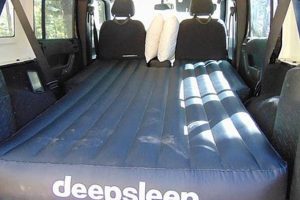
A portable in-vehicle bedding solution transforms the back seat or cargo area of an automobile into a comfortable sleeping space. This inflatable or foldable structure provides a flat, cushioned surface, enabling rest and relaxation within a vehicle. This equipment enhances travel experiences during road trips or camping excursions.
Such vehicular accommodations address the needs of travelers seeking convenience and cost-effectiveness. They offer an alternative to traditional lodging, reducing expenses and providing flexibility in travel itineraries. Historically, improvised solutions like blankets and makeshift cushions were used, but dedicated products offer enhanced comfort and support.
The subsequent sections will delve into the different types available, factors to consider when selecting one, and provide practical tips for optimal usage within various vehicle models. An overview of maintenance procedures and a comparison against alternative sleeping arrangements will also be included.
Tips for Optimal Use
Proper utilization can significantly enhance comfort and longevity of the equipment. Attention to detail during setup and maintenance is crucial for maximizing its benefits.
Tip 1: Select the Correct Size: Measure the available space within the vehicle before purchasing. An improperly sized unit can compromise comfort and safety.
Tip 2: Ensure Proper Inflation: Over-inflation can lead to damage, particularly in fluctuating temperatures. Follow the manufacturer’s guidelines for optimal pressure.
Tip 3: Use a Protective Layer: Place a sheet or thin blanket between the mattress and the vehicle’s interior to protect both surfaces from wear and tear.
Tip 4: Maintain Cleanliness: Regularly wipe down the surface with a damp cloth to prevent the accumulation of dirt and debris. Follow specific cleaning instructions for stain removal.
Tip 5: Secure with Straps if Available: If the product includes straps, utilize them to secure the mattress to the vehicle’s seats or anchor points to prevent shifting during use.
Tip 6: Avoid Sharp Objects: Ensure the area is clear of sharp objects that could puncture the material. Inspect the surrounding area before and after each use.
Tip 7: Store Properly When Not in Use: Deflate and fold or roll the unit according to the manufacturer’s instructions. Store it in a dry, cool place away from direct sunlight.
Adhering to these guidelines will promote both comfort and the lifespan of the product, maximizing its value.
The concluding section will provide a comparative analysis of similar portable bedding options available for vehicular use and a final summary of the points discussed.
1. Comfort
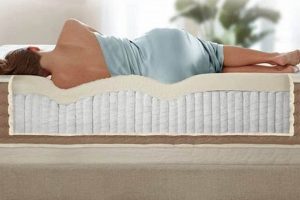
Comfort is a primary determinant of the utility and desirability of vehicular bedding solutions. A “car sleeping mattress” aims to replicate, to the greatest extent possible, the restfulness associated with stationary sleeping arrangements. The efficacy with which it achieves this directly impacts user satisfaction and the likelihood of continued use. For example, inadequate support can lead to musculoskeletal discomfort, negating the intended benefit of providing a sleeping surface. Conversely, well-designed products that conform to body contours and distribute weight evenly contribute to improved sleep quality during travel.
The materials used and the construction techniques employed significantly influence the comfort levels offered. Inflatable models with adjustable firmness allow for personalized support, catering to individual preferences. Foam-based mattresses, conversely, offer consistent support but may lack adjustability. Real-world scenarios underscore the importance of selecting a product tailored to specific needs; a back sleeper, for instance, will require a different level of support than a side sleeper. Practical applications include selecting thicker mattresses to address uneven vehicle surfaces or integrating features such as built-in pillows for enhanced neck support.
In summation, comfort is not merely a desirable attribute but a foundational requirement for successful vehicular bedding. The absence of adequate comfort renders the product ineffective, regardless of other features such as portability or durability. The challenge lies in balancing comfort with practical considerations such as space limitations and ease of storage. A comprehensive understanding of individual comfort preferences, coupled with informed product selection, is essential for maximizing the benefits of a “car sleeping mattress”.
2. Portability

Portability constitutes a crucial attribute of a vehicular sleeping solution, influencing its practicality and user appeal. The ease with which a “car sleeping mattress” can be transported and stored directly affects its utility for travelers with limited space and those seeking spontaneous rest stops.
- Weight and Dimensions
Weight and packed dimensions are primary determinants of portability. A lightweight and compact design simplifies transportation and storage, particularly in smaller vehicles where space is at a premium. For instance, an inflatable model, when deflated and folded, occupies significantly less volume than a foam-based alternative. This characteristic is particularly important for individuals who prioritize minimalist packing or frequently transition between driving and sleeping.
- Ease of Inflation/Deflation and Folding
The process of inflation, deflation, and folding impacts the speed and convenience of setting up and packing away the mattress. Intricate folding patterns or slow inflation/deflation mechanisms can diminish the perceived portability, even if the packed dimensions are small. A design that allows for rapid deployment and stowing enhances the user experience, especially in time-sensitive situations such as roadside emergencies or impromptu rest breaks.
- Carrying Case and Storage Solutions
The inclusion of a dedicated carrying case contributes to portability by providing a means of consolidating and protecting the “car sleeping mattress” during transport. A well-designed case may feature handles, straps, or compartments for accessories, further enhancing convenience. Absence of a carrying case increases the risk of damage during handling and necessitates alternative storage methods, potentially compromising vehicle space.
- Material Composition
The composition of materials used will impact the overall weight and how well the mattress is packed. Some materials that are more comfortable may make the mattress heavy and difficult to fold.
The cumulative effect of these facets defines the overall portability of a “car sleeping mattress”. A product excelling in these aspects seamlessly integrates into the travel experience, providing a readily available and unobtrusive sleeping solution. Failure to prioritize portability can render an otherwise functional mattress impractical for many users, diminishing its value proposition.
3. Durability
Durability is a critical factor in the long-term value and usability of a “car sleeping mattress.” The inherent conditions of vehicular use, including temperature fluctuations, potential exposure to moisture, and repeated compression and decompression, place significant stress on the materials and construction. Consequently, a lack of durability can lead to premature wear, tears, and eventual failure, rendering the product unusable and negating the initial investment. For example, an inflatable mattress constructed from thin, low-grade PVC is highly susceptible to punctures from sharp objects within the vehicle or abrasion against rough interior surfaces. Similarly, a foam mattress made with low-density foam may quickly lose its shape and support, resulting in discomfort and inadequate sleep quality. High-quality materials and robust construction are therefore essential for withstanding the rigors of vehicular use and ensuring a reasonable lifespan.
The materials employed in the manufacturing process directly influence durability. Reinforced fabrics, such as ripstop nylon or heavy-duty polyester, offer increased resistance to tears and abrasions compared to standard fabrics. High-density foams retain their shape and support for a longer period than low-density alternatives. Furthermore, the method of construction, including seam welding or reinforced stitching, plays a crucial role in preventing separation and failure points. Practical applications of this understanding include selecting mattresses with waterproof or water-resistant coatings to protect against spills and moisture damage, and choosing models with puncture-resistant materials for use in environments with potential hazards. Selecting a model designed for industrial use will offer much better durability but may affect comfort or ease of use.
In summary, the durability of a “car sleeping mattress” is not merely a desirable feature, but a fundamental requirement for ensuring its long-term utility and value. Compromises in material quality or construction can lead to premature failure and negate the intended benefits. By prioritizing durability, consumers can make informed purchasing decisions, maximizing the lifespan of their investment and ensuring reliable performance in the challenging environment of vehicular use. Understanding the specific factors that contribute to durabilitymaterial selection, construction methods, and resistance to environmental stressorsempowers consumers to choose products that meet their needs and withstand the test of time.
4. Vehicle Compatibility

Vehicle compatibility is a paramount consideration when selecting a “car sleeping mattress”. The diverse interior dimensions and seat configurations across vehicle models necessitate careful matching to ensure proper fit and functionality. An ill-fitting mattress can compromise comfort, restrict movement, and potentially create safety hazards. The cause-and-effect relationship is straightforward: inaccurate measurements or a lack of consideration for vehicle-specific contours results in a suboptimal or unusable product. Vehicle compatibility directly influences user experience, affecting sleep quality and overall satisfaction. For instance, a mattress designed for a full-size SUV will likely be unsuitable for a compact sedan, leading to an awkward and uncomfortable sleeping arrangement.
Real-world examples highlight the practical significance of vehicle compatibility. Online reviews frequently cite instances of mattresses being either too wide, too long, or improperly shaped for the intended vehicle. This leads to issues such as obstructed access to doors, interference with seatbelts, and uneven weight distribution. Manufacturers address this concern by offering a range of sizes and designs, often including vehicle compatibility charts to guide consumers. Some products even feature adjustable sections or inflatable elements to accommodate slight variations in vehicle interiors. Furthermore, dedicated models exist for specific vehicle types, such as minivans or pickup trucks, accounting for their unique spatial characteristics.
In summary, the importance of vehicle compatibility cannot be overstated. It is a fundamental aspect of “car sleeping mattress” selection that directly impacts comfort, safety, and usability. Addressing this concern requires accurate measurements, careful consideration of vehicle-specific features, and informed product selection. By prioritizing vehicle compatibility, consumers can ensure a seamless and enjoyable in-vehicle sleeping experience. Failure to do so risks investing in a product that is ultimately impractical or even dangerous.
5. Ease of Setup

Ease of setup is a critical determinant of the practical utility and user satisfaction associated with a “car sleeping mattress”. The convenience with which the mattress can be deployed and readied for use directly impacts its suitability for spontaneous travel, emergency situations, and individuals with limited physical capabilities.
- Inflation/Deflation Mechanisms
The method of inflation and deflation significantly impacts setup ease. Mattresses equipped with integrated electric pumps or quick-release valves streamline the process, minimizing physical exertion and setup time. Conversely, models requiring manual inflation via hand or foot pumps introduce greater complexity and effort. The efficiency of the inflation/deflation mechanism directly correlates with the likelihood of consistent and convenient utilization.
- Folding and Unfolding Design
The design of the mattress’s folding and unfolding mechanism dictates the complexity and time required for setup. Simple, intuitive designs that require minimal manipulation enhance ease of use, while those with intricate folding patterns can be cumbersome and time-consuming. User-friendly designs facilitate quick deployment, particularly in adverse weather conditions or when time is limited.
- Attachment and Securing Systems
Many “car sleeping mattresses” incorporate attachment systems, such as straps or buckles, to secure the mattress within the vehicle. The ease with which these systems can be engaged and disengaged contributes to the overall setup experience. Systems that are difficult to manipulate or require precise alignment can detract from convenience, particularly in cramped vehicle interiors.
- Clarity of Instructions
The presence of clear and concise setup instructions significantly influences the ease of use, especially for first-time users. Well-illustrated diagrams and step-by-step guidance minimize confusion and ensure proper deployment. Ambiguous or incomplete instructions can lead to frustration and improper setup, compromising comfort and safety.
These facets collectively define the ease of setup for a “car sleeping mattress.” A product that excels in these areas offers a seamless and convenient user experience, encouraging frequent and hassle-free utilization. Prioritizing ease of setup enhances the practical value of a vehicular bedding solution, making it an accessible and readily available resource for rest and relaxation during travel.
6. Storage

The storage requirements of a “car sleeping mattress” are inextricably linked to its practicality and overall utility. A bulky or unwieldy product, difficult to stow when not in use, presents a significant impediment to its adoption, especially in space-constrained vehicle environments. Inadequate storage considerations diminish the convenience and accessibility that define the value proposition. The physical dimensions of the deflated or folded mattress directly impact its suitability for various vehicle sizes and travel styles. A mattress that consumes excessive cargo space undermines the functionality of the vehicle, restricting its capacity for luggage or other essential items.
Real-world examples illustrate the practical implications of storage considerations. A full-size inflatable mattress, while offering ample sleeping space when deployed, may occupy the entire trunk of a compact sedan when deflated and folded. This scenario renders the mattress impractical for extended trips requiring substantial cargo capacity. Conversely, a cleverly designed folding mattress that collapses into a small, manageable package allows for seamless integration into the travel itinerary without compromising storage space. Practical applications include prioritizing mattresses with integrated carrying cases or compression straps to minimize storage volume, and selecting models that can be easily stowed under seats or in overhead compartments.
In summary, storage is not merely a secondary consideration, but an integral aspect of the “car sleeping mattress” experience. The ease with which the mattress can be stored directly influences its convenience, accessibility, and overall practicality. By prioritizing storage efficiency, consumers can make informed purchasing decisions, ensuring that their vehicular bedding solution complements, rather than compromises, the functionality of their vehicle. Addressing storage concerns effectively enhances the value proposition of a “car sleeping mattress”, transforming it from a potential burden into a convenient and readily available asset.
7. Material

The selection of materials in a “car sleeping mattress” dictates multiple performance characteristics, influencing comfort, durability, and overall user satisfaction. The chosen material directly affects the sleeping experience, determining factors such as thermal regulation, surface feel, and the degree of support provided. Cause and effect are readily apparent; a porous, breathable fabric promotes airflow and minimizes heat retention, while a dense, non-breathable material can lead to overheating and discomfort. Material composition also impacts the product’s resilience to wear and tear, exposure to moisture, and the potential for allergens. The material is a core component of a “car sleeping mattress,” functioning as the primary interface between the user and the vehicle environment.
Real-life examples underscore the practical significance of material choice. A “car sleeping mattress” constructed with a PVC base may be susceptible to punctures and tears, particularly when exposed to sharp objects or rough surfaces within the vehicle. Conversely, a product utilizing high-denier nylon or reinforced polyester offers greater resistance to damage and a longer lifespan. Similarly, a memory foam mattress with an open-cell structure provides enhanced breathability compared to a closed-cell variant, mitigating heat buildup during sleep. Practical applications involve selecting materials that are easy to clean and maintain, minimizing the accumulation of dirt, stains, and odors. Waterproof or water-resistant coatings are also beneficial in preventing moisture damage and facilitating easy cleanup after spills.
In summary, the relationship between material and the overall performance of a “car sleeping mattress” is undeniable. Thoughtful material selection is crucial for optimizing comfort, durability, and hygiene. Challenges exist in balancing these competing requirements, as materials that excel in one area may be deficient in another. Linking this understanding to the broader theme of vehicular comfort, it becomes evident that material choice is a cornerstone of creating a restful and enjoyable in-vehicle sleeping environment. Careful consideration of material properties and their impact on the user experience empowers consumers to make informed purchasing decisions and maximize the value of their investment.
Frequently Asked Questions
The following addresses commonly raised queries concerning vehicular bedding solutions, providing clarity and addressing misconceptions associated with these products.
Question 1: What types of vehicles are compatible with a “car sleeping mattress”?
Compatibility varies based on the specific dimensions and seat configurations of the vehicle. While some models are designed for universal fit, others are tailored to specific vehicle types, such as sedans, SUVs, or minivans. Prior measurement of the available space is recommended to ensure accurate fit.
Question 2: How is a “car sleeping mattress” cleaned and maintained?
Cleaning procedures depend on the materials used in the mattress construction. Most models can be cleaned with a damp cloth and mild detergent. Waterproof or water-resistant versions are easier to maintain. Thorough drying after cleaning is essential to prevent mold and mildew growth.
Question 3: What level of comfort can be expected from a “car sleeping mattress”?
Comfort levels vary significantly depending on factors such as mattress thickness, material composition, and support structure. Inflatable models often allow for adjustable firmness. Selecting a mattress with adequate cushioning and support is crucial for minimizing discomfort during prolonged use.
Question 4: Are “car sleeping mattress” options safe for all occupants, including children and pets?
Safety considerations are paramount. The mattress should not obstruct access to seatbelts or impede the deployment of airbags. Securing the mattress properly within the vehicle is crucial to prevent shifting during travel. Supervision is necessary when children or pets are using the mattress.
Question 5: How durable is a typical “car sleeping mattress,” and what factors affect its lifespan?
Durability is influenced by material quality, construction techniques, and usage patterns. Exposure to extreme temperatures, sharp objects, and excessive weight can reduce the lifespan. Mattresses constructed from reinforced materials and featuring robust seams tend to exhibit greater durability.
Question 6: What are the alternatives to using a “car sleeping mattress” for in-vehicle rest?
Alternatives include traditional camping mattresses, sleeping bags, or simply reclining the vehicle seats. However, these options may offer less comfort and support compared to dedicated “car sleeping mattress” products designed specifically for vehicular use.
Proper research, careful selection, and adherence to safety guidelines are essential for maximizing the benefits and minimizing the risks associated with using a “car sleeping mattress”.
The following section summarizes the points covered within this document, reinforcing the key considerations for those seeking an in-vehicle bedding solution.
Conclusion
This document has systematically explored the characteristics of the vehicular bedding solution. Factors such as comfort, portability, durability, vehicle compatibility, ease of setup, storage considerations, and material composition have been individually examined. The practical implications of these features have been highlighted through real-world examples, emphasizing the significance of informed decision-making when selecting a “car sleeping mattress”.
The effective utilization of in-vehicle rest solutions requires careful consideration of individual needs and vehicle specifications. Proper assessment and informed purchasing choices are essential for maximizing both comfort and safety during travel. Prioritizing thorough research and adherence to safety guidelines will enable individuals to derive the full benefit from a “car sleeping mattress,” ensuring a more comfortable and convenient travel experience.