The discussion centers on the comparative analysis of two common bed sizes: the standard king and its variant, the split king. The former consists of a single, large mattress, while the latter is composed of two separate mattresses, each the size of a twin extra-long, placed side-by-side.
Understanding the distinctions between these sleeping arrangements is paramount for optimizing sleep quality and catering to individual preferences. The implications extend to factors like motion isolation, adjustability, and ease of handling. Historically, the availability of different bed sizes has responded to evolving needs for comfort and space in the domestic environment.
The following will delve into the specific characteristics of each option, examining their dimensions, compatibility with adjustable bed frames, and suitability for various sleeping arrangements and individual needs, facilitating a more informed decision for prospective buyers.
Guidance for Optimal Selection
This section provides focused advice to assist in the selection of the appropriate mattress type, considering individual requirements and sleep preferences.
Tip 1: Assess Individual Sleep Needs: Consider differences in sleep schedules, preferred sleeping positions, and body weight when deciding between a single or dual mattress system. A standard format may suffice for individuals with similar needs. Disparate needs might necessitate the alternative.
Tip 2: Evaluate Motion Transfer Sensitivity: If one sleeper is easily disturbed by movement, the divided format offers enhanced motion isolation, minimizing disruptions throughout the night.
Tip 3: Consider Adjustable Bed Frame Compatibility: The divided version is inherently compatible with adjustable bed frames, allowing independent elevation of each side. The standard option requires careful frame selection to ensure proper support and functionality.
Tip 4: Measure Bedroom Dimensions: Ensure the selected bed size fits comfortably within the available space, leaving adequate room for movement and other furniture. Precise measurements are essential for preventing overcrowding.
Tip 5: Determine Budgetary Constraints: The divided system often entails higher initial costs due to the requirement for two separate mattresses and associated bedding. Factor this cost into the decision-making process.
Tip 6: Account for Long-Term Use: Consider how needs may evolve over time. Factors such as changes in health, relationship status, or living situation may influence the optimal mattress choice.
Applying these tips enables a more informed decision, aligning the mattress selection with individual needs and optimizing the overall sleep experience.
The subsequent section will address frequently asked questions regarding the care and maintenance of each mattress type.
1. Dimensions

Dimensionality constitutes a primary differentiating factor between the standard and split variants. Understanding the precise measurements of each option is critical for assessing suitability within a given space and for accommodating individual sleeping arrangements.
- Overall Size
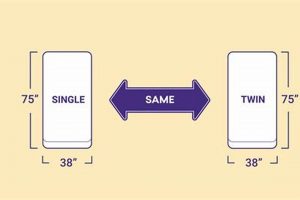
A standard configuration typically measures 76 inches in width and 80 inches in length. A split configuration maintains the same total dimensions but divides the width into two equal segments of 38 inches each, mirroring the size of a twin extra-long mattress. This division impacts logistics, handling, and compatibility with bed frames.
- Room Compatibility
The overall footprint necessitates adequate bedroom space. A standard configuration requires a larger, unobstructed area for maneuvering and placement. The divided version offers greater flexibility in navigating tight spaces during installation or relocation due to its smaller individual components.
- Bed Frame Considerations
Specific bed frames are designed to accommodate each configuration. A standard setup requires a single, unified frame providing consistent support across the entire surface. The divided system necessitates either two separate twin extra-long frames or a specialized frame designed for a split setup, capable of supporting two independent mattresses.
- Weight Distribution
The concentration of weight differs between the two configurations. A standard construction distributes weight evenly across a single surface, while the split version concentrates weight in two distinct areas. This difference may influence the choice of support structure and its ability to withstand localized pressure.
The interplay of these dimensional facets ultimately dictates the practicality of each configuration. Consideration must be given to the available space, ease of handling, and compatibility with existing or planned bed frames to ensure optimal functionality and comfort.
2. Motion Isolation
Motion isolation, the capacity to minimize the transfer of movement across a sleep surface, represents a pivotal consideration in evaluating mattress configurations. Its relevance is heightened when assessing the suitability of standard versus split arrangements, directly influencing sleep quality for couples or individuals sharing a bed.
- Definition and Mechanism
Motion isolation refers to the ability of a mattress to absorb and dampen movement, preventing it from propagating across the entire surface. This is typically achieved through the mattress’s internal construction, employing materials such as memory foam or individually encased coils that limit the transmission of vibrations. The effectiveness of this mechanism is particularly relevant when one individual shifts positions during sleep, potentially disturbing a partner.
- Standard King: Challenges in Motion Isolation
In a standard king mattress, a single continuous surface may transmit movement more readily. If one sleeper tosses and turns, the resulting vibrations can extend across the mattress, potentially waking or disturbing the other sleeper. The degree of motion transfer depends on the mattress’s construction, with older innerspring models typically exhibiting higher levels of motion transmission compared to modern foam or hybrid designs.
- Split King: Enhanced Motion Isolation
A split king configuration, comprising two separate mattresses, inherently provides superior motion isolation. The physical separation between the two sleeping surfaces effectively eliminates the transfer of movement from one side to the other. This design is particularly beneficial for couples with significantly different sleep schedules or those prone to restless sleep patterns.
- Material Impact and Considerations
While the split configuration generally offers better motion isolation, the specific materials used in each mattress component still play a crucial role. Mattresses constructed with high-density memory foam or individually wrapped coils will further enhance motion isolation compared to those with traditional innerspring systems, regardless of the overall bed configuration. The choice of materials should complement the structural design to achieve optimal motion isolation performance.
The relative effectiveness of motion isolation in standard configurations versus split arrangements directly impacts sleep quality and partner disturbance. While material selection mitigates motion transfer in the standard form, the inherent separation of the split design provides a more robust solution for minimizing sleep disruption. The ideal choice depends on the specific needs and sleep habits of the individuals sharing the bed.
3. Adjustable Bases

Adjustable bases, foundations designed to articulate and elevate sections of a mattress, significantly influence the functionality and appeal of mattress configurations. Their integration presents a clear divergence in capabilities between standard and split formations. A standard design’s application with an adjustable base requires uniform movement across the entire surface. Conversely, a split construction allows for independent adjustment of each side, catering to individualized comfort preferences. For instance, one individual might prefer to elevate their head and legs for reading or alleviating back pain, while their partner maintains a flat sleeping position. The absence of this independent adjustability in a standard king setup limits personalization.
The implications extend beyond mere convenience. Medical conditions, such as sleep apnea or acid reflux, may necessitate specific sleeping angles for symptom management. Adjustable bases facilitate these positions, providing therapeutic benefits. The practicality of this feature is maximized when coupled with a divided setup, as individuals can independently optimize their sleep posture without affecting their partner. A standard construction requires compromise, potentially diminishing the therapeutic efficacy for one or both individuals. This limitation highlights the fundamental advantage of the split configuration in accommodating diverse physiological needs.
In summary, the utility of adjustable bases is inextricably linked to mattress configuration. While functional with both standard and split systems, the divided construction unlocks the full potential of independent adjustability, catering to individual preferences and therapeutic requirements. This capability underscores a key differentiator, positioning the split system as the superior choice for couples seeking personalized comfort and enhanced functionality from their sleep setup. The subsequent section explores further implications and considerations in selecting between these options.
4. Individual Needs

The selection of a king or split configuration is intrinsically tied to individual needs and preferences. The objective is to align the sleep environment with specific requirements, thereby optimizing rest and well-being. The following considerations highlight the key facets of individual needs in the context of selecting between these two mattress configurations.
- Sleep Style and Preferences
Individual sleep styles, encompassing preferred sleeping positions (side, back, stomach) and firmness preferences (soft, medium, firm), significantly impact the choice between configurations. Individuals with vastly different firmness preferences may benefit from a split setup, allowing each sleeper to select a mattress tailored to their specific needs. A standard construction necessitates compromise, potentially sacrificing optimal comfort for one partner.
- Health Considerations
Certain health conditions may dictate specific sleep requirements. Individuals with back pain, sleep apnea, or acid reflux often require elevated head or leg positions for symptom relief. A split configuration, when combined with adjustable bases, facilitates independent elevation, providing personalized therapeutic support. A standard setup limits this individualization, potentially compromising symptom management.
- Partner Disturbance and Sensitivity
Sensitivity to movement during sleep varies significantly among individuals. Those easily disturbed by a partner’s tossing and turning may find a split construction more conducive to uninterrupted rest. The separation inherent in a divided setup minimizes motion transfer, reducing the likelihood of sleep disruption. A standard configuration may amplify the impact of partner movement, especially for light sleepers.
- Physical Limitations and Accessibility
Physical limitations or mobility challenges can influence the choice of configuration. Individuals with difficulty getting in and out of bed may find a split system more manageable due to the lower height of individual mattresses compared to the combined height of a standard setup on a high frame. Furthermore, moving and handling smaller mattresses during cleaning or relocation may be easier for those with physical limitations.
These facets underscore the critical role of individual needs in determining the optimal mattress configuration. Considerations such as sleep style, health conditions, partner disturbance, and physical limitations should inform the decision-making process, ensuring a sleep environment that promotes comfort, health, and overall well-being. A thorough assessment of these needs is paramount in selecting between a standard and split construction.
5. Cost Analysis
Evaluating the financial implications is a crucial step in the selection process. The initial purchase price, long-term maintenance expenses, and potential replacement costs must be considered to determine the most economically sound choice.
- Initial Investment
The upfront expense for a split configuration typically exceeds that of a standard version. This disparity arises from the need for two separate mattresses, each comparable in price to a high-quality twin extra-long model. Furthermore, specialized bedding, such as fitted sheets designed for split systems, may contribute to the higher initial expenditure. Conversely, a standard configuration involves a single mattress purchase, potentially lowering the immediate financial burden.
- Bedding and Accessories
Bedding costs present another layer of economic differentiation. A standard format utilizes standard accessories, such as sheets, comforters, and mattress protectors. Split configurations, however, often necessitate specialized bedding items, designed to fit the individual mattresses. This translates to a potentially higher ongoing expense for maintaining appropriate bedding. Moreover, adjustable bases, often paired with split setups, represent an additional investment that must be factored into the overall financial equation.
- Longevity and Replacement
The lifespan of each configuration influences long-term costs. Assuming comparable construction and material quality, the individual mattresses in a split configuration may experience less overall wear and tear due to the distribution of weight and reduced motion transfer. However, the need to replace two separate mattresses in the event of failure or degradation increases the likelihood of future expenses. A standard design necessitates a single, potentially less frequent, replacement cycle.
- Transportation and Handling
The logistical aspects of transportation and handling also impact the overall cost. The smaller individual components of the split setup may facilitate easier maneuverability and installation, potentially reducing delivery fees or the need for professional assistance. Conversely, the larger size and weight of a standard format may necessitate specialized equipment and personnel, incurring additional expenses. These logistical considerations should be factored into the overall financial assessment.
The economic implications of choosing between a standard and split configuration extend beyond the initial purchase price. Factors such as bedding costs, longevity, and logistical considerations contribute to the overall financial equation. A thorough cost analysis, encompassing these multifaceted elements, is essential for making a financially informed decision that aligns with budgetary constraints and long-term needs.
6. Bedding Options

The selection of bedding is intrinsically linked to the choice between a standard and split arrangement. The physical characteristics of each configuration necessitate distinct bedding solutions, influencing both cost and convenience. A standard bed benefits from widely available, mass-produced bedding, resulting in competitive pricing and ease of acquisition. In contrast, a split formation requires specialized fitted sheets and occasionally mattress protectors designed to accommodate two separate mattresses. The scarcity of these items often translates to higher prices and limited availability.
The practical significance of understanding this connection lies in budgeting and convenience. For instance, an individual initially drawn to the perceived flexibility of a divided sleeping surface may be surprised by the recurring expense of specialty bedding. Consider a couple transitioning from a standard to a split format; their existing bed linens are rendered incompatible, forcing a complete replacement. This underscores the importance of factoring bedding costs into the initial decision-making process. Moreover, the limited variety of available patterns and materials for specialized sheets can restrict aesthetic choices, a factor often overlooked during the initial deliberation.
In conclusion, the compatibility of bedding represents a significant, yet often underestimated, factor in assessing the viability of each option. Standard dimensions provide simplicity and affordability regarding bedding, while the alternative demands specialized solutions that increase expenses and may limit aesthetic options. Recognition of this interplay between bedding availability and bed configuration is essential for making a well-informed decision that balances comfort, cost, and convenience.
7. Room Size

The dimensions of a bedroom directly influence the suitability of both standard and split configurations. A room’s square footage dictates whether a specific configuration can be accommodated without compromising movement, aesthetics, or functionality. Attempting to fit an oversized bed into a limited space can create a cramped environment, impeding navigation and detracting from the overall comfort of the room. Conversely, placing a smaller bed in a vast space may appear disproportionate, resulting in a visually unappealing outcome. Real-life examples include master bedrooms in older homes, often constructed with smaller dimensions than contemporary designs. In such cases, a standard configuration may overwhelm the space, whereas the split system, though possessing the same total surface area, may offer greater flexibility in maneuvering and placement due to its modular nature. The practical significance of understanding this relationship is in preventing miscalculations that lead to dissatisfaction and potential financial losses associated with returns or exchanges.
Furthermore, the placement of other furniture elements, such as dressers, nightstands, and seating areas, must be considered in conjunction with the bed size. The bed should complement, not dominate, the room’s layout. A poorly planned arrangement can obstruct walkways, impede access to closets, and create an overall sense of disorganization. For example, a standard version placed against a wall may restrict access to a window or impede the opening of closet doors. The divided version, with its two smaller mattresses, can potentially be arranged in a more versatile manner to accommodate existing furniture and architectural features. This adaptability becomes particularly relevant in apartments or condominiums with space constraints, where maximizing functionality is paramount.
In summary, room size is a critical determinant in selecting the appropriate configuration. The physical dimensions of the space dictate not only whether a bed can be accommodated but also how it integrates with other furniture and architectural elements. Overlooking this fundamental aspect can lead to logistical challenges, aesthetic imbalances, and diminished overall comfort. Prioritizing careful measurement and spatial planning ensures the selected configuration complements the room’s characteristics, optimizing functionality and visual appeal.
Frequently Asked Questions
This section addresses common inquiries and clarifies key considerations regarding the selection between a standard and split system. The information provided aims to facilitate informed decision-making, ensuring optimal sleep quality and satisfaction.
Question 1: Are standard and split versions interchangeable on any bed frame?
No, interchangeability is limited. A standard version requires a single, unified frame. A split setup necessitates either two twin extra-long frames or a specialized frame designed for dual support.
Question 2: Does a split configuration negate the need for a high-quality mattress protector?
Absolutely not. A mattress protector remains essential for safeguarding against spills, stains, and allergens, irrespective of the bed’s configuration.
Question 3: Is a higher price always indicative of superior quality in either configuration?
Not necessarily. While price often correlates with material quality and construction techniques, other factors, such as brand recognition and marketing, influence pricing. Thorough research and comparison are recommended.
Question 4: Can a standard size be readily converted into a split setup?
Generally, no. Conversion typically requires cutting the existing mattress, voiding warranties and potentially compromising structural integrity. Purchasing a dedicated split system is advised.
Question 5: Does motion isolation solely depend on the mattress configuration?
No, motion isolation is influenced by both configuration and materials. Mattresses constructed with memory foam or individually encased coils exhibit superior motion isolation compared to traditional innerspring designs, regardless of whether they are standard or split.
Question 6: Are specialized sheets always required for a split setup?
Fitted sheets designed specifically for twin extra-long mattresses are necessary. However, flat sheets and comforters of size may be compatible, depending on individual preferences and the overall aesthetic.
In summary, the selection between a standard and split format necessitates careful consideration of various factors, ranging from frame compatibility to bedding requirements. A thorough understanding of these nuances ensures a decision that aligns with individual needs and preferences.
The following section provides a concise summary of the benefits and drawbacks of each option, facilitating a clear and decisive choice.
King vs Split King Mattress
This discussion has explored the critical distinctions between the standard and split iterations, focusing on dimensions, motion isolation, adjustable base compatibility, individual needs, cost implications, bedding options, and room size considerations. The analysis reveals that each configuration possesses unique advantages and disadvantages, rendering one inherently superior. The optimal choice is contingent upon specific requirements and priorities.
The selection of a king vs split king mattress represents a significant investment in sleep quality and overall well-being. Careful consideration of the factors outlined herein will empower individuals to make an informed decision, aligning their sleeping environment with their specific needs and preferences. Further research and consultation with sleep professionals are encouraged to ensure optimal satisfaction with the chosen mattress configuration.