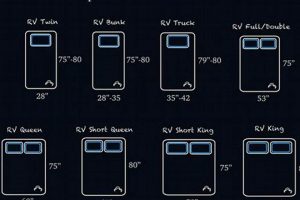
The dimensions of a residential queen mattress typically measure 60 inches in width and 80 inches in length. However, recreational vehicle (RV) queen mattresses frequently deviate from these standard dimensions to accommodate the confined spaces and varied layouts within RVs. These mattresses, while still designated as “queen,” can vary in length and width, often being shorter or narrower than their residential counterparts. For instance, a common RV queen mattress might measure 60 inches wide but only 75 inches long.
Precise knowledge of the mattress’s size is crucial for selecting appropriate bedding, ensuring a comfortable fit within the RV’s sleeping area, and avoiding unnecessary space constraints. Historically, RV manufacturers have employed diverse mattress sizes to optimize interior design and maximize available living space. Understanding the precise measurements allows owners to replace or upgrade their mattress with one that perfectly complements the existing framework, leading to enhanced sleep quality and efficient use of the RV’s interior.
This article will now examine specific variations in RV mattress sizes, the process of accurately measuring an existing RV mattress, and key considerations when purchasing a replacement, including material types and construction techniques suitable for the RV environment.
Tips on RV Queen Size Mattress Measurements
When selecting or replacing an RV queen mattress, accuracy in measurement is paramount. The following tips ensure that the correct size is identified and a suitable replacement is chosen.
Tip 1: Accurately Measure the Existing Mattress: Before purchasing a new mattress, measure the length and width of the existing one. This provides a baseline for determining the appropriate replacement size. Measure along the center of the mattress, accounting for any irregularities or curves.
Tip 2: Consult the RV Manufacturer’s Specifications: Review the RVs original documentation or contact the manufacturer to confirm the recommended mattress dimensions. This information can be especially helpful if the original mattress has been discarded or altered.
Tip 3: Consider the Bed Frame Dimensions: Measure the interior dimensions of the bed frame or platform within the RV. Ensure that the chosen mattress will fit snugly within the frame without excessive gaps or overhang.
Tip 4: Account for Obstructions: Check for any obstructions around the bed frame, such as wheel wells, cabinets, or structural supports. These may limit the size of the mattress that can be accommodated.
Tip 5: Prioritize Comfort and Support: While size is critical, consider factors such as mattress firmness, material, and thickness. A comfortable mattress is essential for quality sleep, especially when traveling.
Tip 6: Note Mattress Thickness: RVs often have height restrictions. Ensure the mattress thickness does not interfere with overhead storage or create difficulties getting in and out of bed.
Tip 7: Confirm Return Policies: Before making a purchase, clarify the retailer’s return policy in case the mattress does not fit or meet expectations. Some retailers may offer trial periods or exchanges for different sizes.
Accurate mattress dimensions are critical for optimizing space utilization and comfort within an RV. By following these guidelines, it is possible to ensure a precise fit and enhance the sleeping experience while traveling.
The following sections will explore various mattress materials and construction techniques suitable for RV applications, providing further insight into selecting an optimal RV queen size mattress.
1. Width Variations

Width variations in RV queen mattresses represent a significant deviation from standard residential sizes and are a primary concern when considering “rv queen size mattress measurements.” These variations directly impact the fit within the RV’s sleeping area and influence overall comfort.
- Standard Queen Deviation
While a typical residential queen mattress measures 60 inches in width, RV queen mattresses may be narrower to accommodate limited space within the RV. This reduction in width can range from a few inches to significantly impacting the sleeping surface and potentially reducing comfort, especially for couples.
- Impact on Bedding Compatibility
Altered widths necessitate the use of specialized bedding. Standard queen-sized sheets and blankets designed for 60-inch wide mattresses may not fit snugly on narrower RV queen mattresses, leading to discomfort or improper fit. Therefore, RV owners need to seek out bedding specifically designed for these variations.
- Customization and Aftermarket Options
The need to adapt to non-standard dimensions has spurred the development of aftermarket RV mattresses and custom bedding solutions. Manufacturers offer mattresses in a variety of widths, allowing RV owners to select a mattress that closely matches their RV’s dimensions. Custom bedding services can further tailor sheets and blankets to ensure a precise fit.
- Spatial Optimization Considerations
Width variations are often a direct result of spatial optimization within the RV’s design. RV manufacturers prioritize efficient use of available space, sometimes at the expense of standard mattress dimensions. Understanding these trade-offs is crucial for RV owners seeking to balance comfort with spatial efficiency.
In conclusion, width variations within RV queen mattresses demonstrate a crucial aspect of “rv queen size mattress measurements.” These alterations, while aimed at optimizing space, require careful consideration of bedding compatibility, comfort levels, and the availability of customized solutions. Awareness of these factors is vital for a satisfactory sleeping experience within the constraints of an RV.
2. Length Shortfalls
Length shortfalls constitute a critical aspect of “rv queen size mattress measurements,” diverging from standard residential queen dimensions to accommodate spatial constraints within recreational vehicles. The consequence of these reduced lengths directly impacts user comfort and necessitates careful consideration during mattress selection. A standard residential queen mattress measures 80 inches in length. However, RV queen mattresses frequently exhibit shorter dimensions, sometimes as little as 72 or 75 inches, to fit within the often-compact sleeping areas of RVs. This reduction, though seemingly minor, can be significant, particularly for taller individuals, leading to discomfort and impaired sleep quality. The primary cause of these length shortfalls is the design imperative to maximize usable living space within the limited confines of an RV. Wheel wells, storage compartments, and other structural elements often intrude upon the available sleeping area, forcing manufacturers to reduce mattress length.
The practical significance of understanding length shortfalls is paramount when replacing an RV mattress. Failure to account for these dimensional differences can result in a mattress that does not properly fit the designated space, leading to wasted space or requiring modification of the RV’s interior. For example, a 6’2″ individual might find a standard 72″ RV queen mattress insufficient, leading to compromised legroom and a disrupted sleep cycle. In such cases, exploring custom mattress options or carefully selecting a slightly longer model, even if it necessitates minor alterations to the bed frame, becomes essential. The challenge for RV owners is balancing the need for a comfortable sleeping surface with the constraints imposed by the RV’s design.
In summary, length shortfalls represent a key challenge within “rv queen size mattress measurements.” Recognizing the prevalence and implications of these dimensional deviations is crucial for making informed decisions when selecting or replacing an RV mattress. Understanding the cause of these shortfalls and carefully measuring the available space allows owners to prioritize comfort and optimize the use of space within their recreational vehicle. Ignoring this aspect can lead to discomfort, wasted space, and a compromised travel experience.
3. Thickness Limitations

Thickness limitations constitute a critical, and often overlooked, aspect of “rv queen size mattress measurements.” The vertical dimension of a mattress, while seemingly straightforward, significantly impacts both comfort and functionality within the confined spaces of a recreational vehicle.
- Overhead Clearance
RV interiors are characterized by limited vertical space. A mattress exceeding a certain thickness can impede movement within the sleeping area, restrict access to overhead storage compartments, and create a cramped atmosphere. The distance between the mattress surface and the ceiling or cabinetry above is a primary constraint on mattress thickness. Failure to consider this clearance can lead to discomfort and a sense of confinement.
- Bed Frame Integration
RV bed frames are often designed with specific mattress thickness parameters in mind. A mattress that is too thick may not properly integrate with the bed frame, potentially causing instability or preventing the bed from functioning as intended. For example, some RV beds incorporate a hinged design to allow for under-bed storage; an overly thick mattress can obstruct this feature.
- Weight Distribution
Excessive mattress thickness can contribute to increased overall weight. Given the strict weight limitations imposed on RVs, every additional pound impacts fuel efficiency and payload capacity. A thicker mattress, while potentially offering enhanced comfort, can quickly escalate weight concerns, necessitating careful consideration of material composition and construction techniques.
- Accessibility and Entry/Exit
The thickness of an RV mattress directly influences the height of the sleeping surface, impacting ease of access and egress. An excessively thick mattress can make it difficult to get into and out of bed, particularly for individuals with mobility issues. The combined height of the bed frame and mattress must be carefully evaluated to ensure comfortable and safe accessibility.
These thickness limitations, in conjunction with length and width considerations, underscore the complexity of “rv queen size mattress measurements.” A comprehensive understanding of these dimensional constraints is essential for selecting a mattress that maximizes comfort, functionality, and safety within the unique environment of a recreational vehicle.
4. Corner Radius

The term “corner radius,” in the context of “rv queen size mattress measurements,” refers to the curvature of the mattress corners, as opposed to a sharp, 90-degree angle. While standard rectangular mattresses possess right-angled corners, certain RV mattress configurations incorporate rounded or beveled corners. These modifications are primarily dictated by the RV’s interior design, particularly the bed frame or surrounding cabinetry. The presence of a specific corner radius becomes a critical measurement when replacing or upgrading an existing RV mattress. A mismatch between the mattress corner shape and the bed frame can result in an ill-fitting mattress, leading to gaps, discomfort, and compromised structural support. For instance, Airstream trailers frequently employ mattresses with rounded corners to conform to the curvature of the trailer’s walls.
Accurately determining the corner radius necessitates precise measurement techniques. While a flexible measuring tape can provide a rough estimate, specialized tools like radius gauges offer greater accuracy. The absence of a standardized corner radius across different RV manufacturers and models further emphasizes the importance of individual measurement. Failure to accurately assess the corner radius can lead to the purchase of a mattress that does not properly fill the available space, diminishing sleep quality and potentially creating safety hazards. The impact of an incorrectly sized corner radius extends beyond mere aesthetics; it affects the overall structural integrity of the sleeping arrangement and the long-term durability of the mattress.
In summary, the corner radius represents a subtle yet significant dimension within the broader scope of “rv queen size mattress measurements.” Recognizing the presence and accurately measuring the curvature of the mattress corners is essential for ensuring a proper fit, maximizing comfort, and maintaining the structural integrity of the RV’s sleeping area. Neglecting this detail can result in a compromised sleeping experience and potentially costly replacement efforts.
5. Frame Compatibility
Frame compatibility, within the context of “rv queen size mattress measurements,” signifies the degree to which a mattress conforms to the dimensions and structural requirements of the bed frame within a recreational vehicle. An incompatible mattress, regardless of perceived comfort or material quality, renders the sleeping arrangement functionally deficient. The bed frame serves as the foundational support for the mattress; therefore, discrepancies in size or shape between the two components can lead to inadequate support, uneven weight distribution, and premature mattress degradation. For instance, if a mattress exceeds the frame’s dimensions, it can overhang the edges, creating pressure points and ultimately compromising the mattress’s structural integrity. Conversely, a mattress too small for the frame allows excessive movement, increasing the risk of slippage and discomfort during sleep. This incompatibility directly affects the longevity of both the mattress and the bed frame, as undue stress is placed upon both.
The importance of frame compatibility extends beyond mere dimensional matching. The structural design of the frame, including the presence and spacing of support slats or the presence of a solid platform, dictates the type of mattress that can be effectively utilized. A memory foam mattress, for example, requires a solid or closely spaced support system to prevent sagging and maintain its intended shape. Using such a mattress on a frame with widely spaced slats will result in diminished support and a significantly reduced lifespan for the mattress. Similarly, the presence of a lip or retaining edge on the frame necessitates precise mattress dimensions to ensure a secure fit and prevent lateral movement. Incorrect “rv queen size mattress measurements” in relation to frame design can lead to instability, creating potential safety hazards within the confines of a moving recreational vehicle.
In conclusion, frame compatibility constitutes a crucial component of “rv queen size mattress measurements.” It encompasses not only the overall dimensions of the mattress but also its interaction with the structural elements of the bed frame. Ensuring a proper match between mattress and frame is paramount for maximizing comfort, extending the lifespan of both components, and maintaining a safe and functional sleeping environment within the recreational vehicle. Neglecting this aspect can lead to compromised sleep quality, accelerated wear and tear, and potential safety risks, underscoring the practical significance of a comprehensive understanding of “rv queen size mattress measurements.”
6. Weight Considerations

Weight considerations are intrinsically linked to RV queen mattress dimensions, representing a critical factor in recreational vehicle operation and safety. The mass of a mattress directly impacts the overall weight of the RV, thereby influencing fuel efficiency, handling characteristics, and adherence to weight restrictions. The following points elaborate on the specific facets of this relationship.
- Impact on Fuel Efficiency
An increase in the mattress’s weight contributes directly to the total weight of the RV. Higher overall weight necessitates greater engine output to maintain speed, resulting in increased fuel consumption. Choosing lighter mattress materials or smaller “rv queen size mattress measurements” can mitigate this effect.
- Effects on Handling and Stability
Excessive weight, particularly when concentrated in a specific area of the RV, can negatively affect handling and stability. A heavier mattress, especially if coupled with other heavy items, may alter the vehicle’s center of gravity, making it more susceptible to sway and instability during turns or in windy conditions. This is especially true for RVs with smaller wheelbases.
- Adherence to Weight Restrictions
RVs are subject to strict weight restrictions, including Gross Vehicle Weight Rating (GVWR) and axle weight ratings. Exceeding these limits can compromise safety and result in legal penalties. The weight of the mattress must be factored into the overall weight calculation to ensure compliance. Opting for a lighter mattress allows for greater flexibility in carrying other essential items.
- Material Composition
Different mattress materials have varying densities and therefore contribute differently to the overall weight. Traditional innerspring mattresses tend to be heavier than memory foam or latex mattresses of the same dimensions. Hybrid mattresses, which combine elements of both, represent a middle ground. Careful consideration of material composition is crucial when balancing comfort with weight concerns.
In summary, the interrelation between “Weight Considerations” and “rv queen size mattress measurements” is a critical element in ensuring safe and efficient RV operation. Understanding the impact of mattress weight on fuel economy, handling stability, and adherence to weight restrictions allows RV owners to make informed decisions that prioritize both comfort and practicality. Choosing lighter materials and carefully considering dimensions can significantly reduce the burden of “rv queen size mattress measurements” on the RV’s overall weight profile.
7. Storage Constraints

The term “Storage Constraints,” when considered in conjunction with “rv queen size mattress measurements,” highlights the spatial limitations inherent in recreational vehicle design. The need to maximize living area within a confined footprint dictates that every component, including the mattress, must adhere to strict size and configuration parameters. This introduces a set of challenges and considerations unique to the RV environment.
- Foldability and Articulation
Many RV designs incorporate multi-functional furniture, such as beds that convert into seating areas. This necessitates mattresses that can be folded, rolled, or otherwise articulated for storage or reconfiguration. These features impact the internal construction and material selection of the mattress, often favoring lighter, more flexible materials over traditional innerspring designs. The trade-off between storage convenience and sleeping comfort is a primary consideration.
- Under-Bed Storage Access
The area beneath the bed is often utilized for storage in RVs. The height and weight of the mattress directly affect the ease with which this storage space can be accessed. An excessively thick or heavy mattress can impede lifting mechanisms or require significant effort to maneuver, diminishing the practicality of the under-bed storage area. Dimensions and weight must be optimized to balance sleeping comfort with storage accessibility.
- Mattress Storage During Transit
In certain RV configurations, such as pop-up campers or those with convertible dinettes, the mattress must be stored separately during transit. This necessitates a mattress that can be easily transported and secured to prevent damage or shifting during travel. The size and weight of the mattress are critical factors in determining its manageability during storage and transport.
- Impact on Overall Layout
The size and configuration of the mattress directly influence the overall layout and functionality of the RV’s interior. A larger mattress may necessitate a reduction in seating area or require compromises in other storage spaces. Balancing the desire for a comfortable sleeping surface with the need for ample storage and living space is a fundamental design consideration in RVs. Understanding the interplay between “rv queen size mattress measurements” and available storage space is key to maximizing the utility of the vehicle’s interior.
These storage constraints underscore the importance of carefully considering “rv queen size mattress measurements” in the context of the RV’s overall design. Optimizing mattress dimensions and construction to accommodate storage needs is crucial for maximizing space utilization and enhancing the functionality of the recreational vehicle.
Frequently Asked Questions Regarding RV Queen Size Mattress Measurements
The following questions address common inquiries and misconceptions surrounding the dimensions and specifications of RV queen mattresses.
Question 1: What is the standard size of an RV queen mattress, and how does it differ from a residential queen?
The dimensions of an RV queen mattress frequently deviate from those of a standard residential queen. While a typical residential queen measures 60 inches wide by 80 inches long, RV queen mattresses often exhibit reduced lengths, commonly measuring 75 inches or even 72 inches, to accommodate the limited space within recreational vehicles.
Question 2: How critical is precise measurement when selecting a replacement RV queen mattress?
Precise measurement is of paramount importance. RV interiors are often designed with minimal tolerances. An incorrectly sized mattress can lead to an improper fit, compromised comfort, and potential damage to the bed frame or surrounding structures. Accurate measurement is essential for ensuring a suitable replacement.
Question 3: Do all RV queen mattresses adhere to a uniform set of dimensions?
No, uniformity in RV queen mattress dimensions cannot be assumed. Variations exist across different RV manufacturers and models. It is imperative to verify the specific dimensions of the existing mattress or consult the RV’s manufacturer specifications to determine the appropriate size.
Question 4: What factors, beyond length and width, should be considered when evaluating RV queen mattress measurements?
In addition to length and width, mattress thickness, corner radius (if applicable), and weight are significant factors. Thickness affects headroom and storage space, corner radius ensures proper fit within the bed frame, and weight influences fuel efficiency and handling characteristics of the RV.
Question 5: Are custom-sized RV queen mattresses readily available?
While not as common as standard sizes, custom-sized RV queen mattresses can be obtained from specialized mattress manufacturers or retailers. These options provide greater flexibility in accommodating unique bed frame dimensions or spatial constraints within the RV.
Question 6: Where can one reliably obtain accurate information regarding RV queen mattress measurements for a specific RV model?
The most reliable source of information is the RV manufacturer’s documentation or the manufacturer directly. Online forums and RV enthusiast communities can also provide valuable insights, but these sources should be cross-referenced with official specifications whenever possible.
These FAQs emphasize the nuanced considerations surrounding RV queen mattress dimensions. Accurate measurement and a thorough understanding of the RV’s spatial constraints are essential for selecting a suitable and comfortable sleeping solution.
The subsequent section will delve into the various mattress materials commonly used in RV applications and their relative advantages and disadvantages.
Conclusion
This exploration has underscored the critical importance of understanding “rv queen size mattress measurements.” Deviations from standard residential dimensions, necessitated by the spatial constraints of recreational vehicles, demand meticulous attention to detail during mattress selection and replacement. Factors such as length, width, thickness, corner radius, frame compatibility, weight, and storage constraints all contribute to the complexity of this decision-making process. The potential consequences of neglecting these considerations range from compromised comfort and reduced functionality to safety hazards and accelerated wear and tear.
Therefore, RV owners are strongly encouraged to prioritize accurate measurement and thorough research before committing to a mattress purchase. Consulting manufacturer specifications, seeking expert advice, and carefully evaluating individual needs and spatial limitations are essential steps. Investing time and effort in these preparatory measures will ultimately result in a more comfortable, functional, and safe sleeping environment within the recreational vehicle, thereby enhancing the overall travel experience.
![Best Queen Size Adjustable Mattress [Deals] | Organic & Natural Mattress Buyer’s Guide: Non-Toxic Sleep Solutions](https://mattressworldpa.com/wp-content/uploads/2025/07/th-2362-300x200.jpg "Best Queen Size Adjustable Mattress [Deals] Organic & Natural Mattress Buyer’s Guide: Non-Toxic Sleep Solutions")

![RV Comfort: Custom Size Mattress for RVs [Guide] | Organic & Natural Mattress Buyer’s Guide: Non-Toxic Sleep Solutions](https://mattressworldpa.com/wp-content/uploads/2025/07/th-2359-300x200.jpg "RV Comfort: Custom Size Mattress for RVs [Guide] Organic & Natural Mattress Buyer’s Guide: Non-Toxic Sleep Solutions")