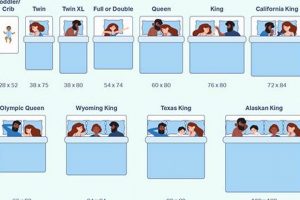
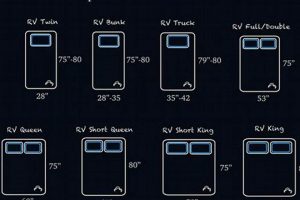
The dimensions of bed linens designed to cover a mattress vary significantly. These measurements are crucial for ensuring a proper fit and comfortable sleeping experience. For example, a twin mattress requires smaller linens than a king-size mattress, reflecting the differences in their surface areas.
Selecting correctly sized linens contributes to sleep hygiene by preventing bunching, slipping, or excessive overhang. Historically, bedding was often custom-made to fit specific mattresses. Standardized sizes emerged with mass production, simplifying the purchasing process and offering greater convenience. The benefits extend to ease of maintenance, as correctly fitting linens are easier to launder and store.
A discussion of standard dimensions follows, detailing the measurements associated with common bed formats. This will be followed by an exploration of relevant considerations when selecting appropriately sized linens, including mattress depth and material composition.
Selection Guidance
The following recommendations are designed to assist in the informed selection of appropriate bedding based on dimensional compatibility.
Tip 1: Measure Mattress Dimensions. Accurately determine the length, width, and depth of the mattress prior to purchase. These measurements are essential for ensuring proper fit and avoiding issues such as slippage or inadequate coverage.
Tip 2: Account for Mattress Depth. Deep-pocket varieties are required for thicker mattresses, including those with pillow tops or mattress toppers. Standard pockets may not adequately cover these mattress types.
Tip 3: Consider Fabric Shrinkage. Natural fibers, such as cotton, are prone to shrinkage after washing. Opt for pre-shrunk materials or select a slightly larger dimension to accommodate potential reduction in size.
Tip 4: Evaluate Corner Construction. Fitted varieties with reinforced corners and elastic edging provide a secure and stable fit, minimizing movement during sleep.
Tip 5: Check Thread Count and Material. While thread count can indicate quality, material composition is equally important. Choose materials based on personal preference for breathability, durability, and texture.
Tip 6: Read Product Specifications Carefully. Prior to purchase, meticulously review the product details, including dimensions, material composition, and care instructions. Discrepancies between advertised and actual measurements should be addressed with the vendor.
Proper selection based on accurate measurements and material considerations contributes to both comfort and longevity, maximizing the investment in bedding.
The concluding section will summarize the importance of informed purchasing decisions and offer additional resources for further research.
1. Twin

The designation “Twin: 39″ x 75″” represents a standard mattress dimension within the broader category of bed sizes. It dictates the corresponding linen dimensions required for a proper fit, impacting both comfort and the functional lifespan of bedding.
- Standard Size Designation
This measurement defines the width and length, respectively, of a standard twin mattress. Its significance lies in providing a uniform reference point for manufacturers and consumers. For instance, a “Twin: 39″ x 75″” mattress necessitates a fitted sheet with comparable or slightly larger dimensions to ensure complete coverage and prevent slippage.
- Target Demographic
Twin-sized mattresses are commonly utilized in children’s rooms, dormitories, and single-occupancy spaces due to their compact footprint. As such, the corresponding linen offerings are often designed with considerations for durability and affordability. Examples include lower thread count fabrics and simplified construction methods.
- Linen Availability
Due to its prevalence, “Twin: 39″ x 75″” linens are widely available across various retailers and price points. This accessibility simplifies the purchasing process for consumers. However, quality and material composition can vary significantly, necessitating careful evaluation of product specifications.
- Dimensional Considerations
While the stated dimensions represent the standard, slight variations can occur between mattress manufacturers. Additionally, mattress depth must be factored into fitted sheet selection. A mattress with a significant depth may require a deep-pocket fitted sheet to adequately accommodate its dimensions.
In conclusion, the “Twin: 39″ x 75″” designation serves as a fundamental parameter within the mattress and bedding industry. Its understanding facilitates informed purchasing decisions, ensuring optimal fit and performance of related linen products. While seemingly straightforward, factors such as mattress depth and material shrinkage must be considered for complete accuracy.
2. Twin XL

The designation “Twin XL: 39″ x 80″” represents a specific standard within the broader categorization of mattress sheet sizes. This dimensional specification dictates the required measurements for linens intended for use with Twin XL mattresses. The 5-inch difference in length between a standard Twin and a Twin XL directly impacts linen selection; standard Twin linens will not adequately fit a Twin XL mattress, leading to potential slippage and discomfort. In college dormitories, for example, Twin XL mattresses are commonly provided, necessitating the use of appropriately sized linens. This ensures students can equip their beds with fitted sheets and other bedding that meet the precise dimensions of their assigned mattresses.
The cause and effect relationship between the “Twin XL: 39″ x 80″” mattress size and corresponding linen requirements is straightforward: the specified dimensions mandate the use of similarly sized linens to guarantee proper coverage and functionality. The importance of this correspondence is evident in consumer purchasing decisions; selecting the wrong dimensions leads to ill-fitting linens, requiring returns or replacements. Consequently, retailers and manufacturers emphasize clear labeling and size charts to aid consumers in identifying the correct mattress sheet sizes for their specific needs. The prevalence of online shopping has further necessitated detailed product specifications to mitigate size-related errors.
In summary, “Twin XL: 39″ x 80″” represents a defined parameter within mattress sheet sizes, directly influencing consumer choices and retail practices. The understanding of this specific dimension and its implications for linen selection is vital for ensuring both comfort and practicality. Challenges remain in standardizing manufacturing tolerances and accurately conveying size information to consumers, but the fundamental connection between mattress dimensions and linen requirements remains paramount.
3. Full

The designation “Full: 54″ x 75″” represents a significant dimension within the spectrum of mattress sheet sizes, often selected for its balance between space efficiency and accommodation. Its relevance stems from its suitability for single adults or smaller spaces where a larger bed would be impractical. The following points detail specific considerations pertaining to this dimension.
- Standardization and Availability
The “Full: 54″ x 75″” size is widely standardized across mattress and bedding manufacturers, ensuring broad availability of fitted sheets, flat sheets, and comforters. This standardization simplifies the purchasing process for consumers, as compatible linens are readily accessible through various retail channels. The uniformity also facilitates consistent manufacturing processes, reducing production costs and ultimately benefiting consumers.
- Dimensional Accuracy and Tolerances
While “Full: 54″ x 75″” serves as the nominal dimension, actual measurements may exhibit slight variations due to manufacturing tolerances. Consumers should be aware of this potential variability and consider it when selecting fitted sheets. Elasticized edges and deep pockets in fitted sheets can help accommodate minor dimensional discrepancies, ensuring a secure and comfortable fit on the mattress.
- Sleeping Capacity and Comfort Considerations
The “Full: 54″ x 75″” size is typically suitable for a single sleeper, providing adequate space for movement and comfort. While it can accommodate two adults, the reduced width compared to Queen or King sizes may result in a less comfortable sleeping arrangement, particularly for individuals who prefer more personal space. This limitation should be considered when evaluating whether a Full-size bed meets specific needs.
- Impact on Room Layout and Furniture Selection
The “Full: 54″ x 75″” mattress size influences room layout and furniture selection, particularly in smaller bedrooms or apartments. Its dimensions necessitate careful planning to ensure sufficient space for movement around the bed and placement of other essential furniture items. Compared to larger mattress sizes, the Full-size bed offers greater flexibility in room arrangement, making it a practical choice for space-constrained environments.
These considerations surrounding the “Full: 54″ x 75″” designation emphasize the importance of accurate measurements and informed purchasing decisions within the context of mattress sheet sizes. Proper selection ensures optimal comfort, longevity of bedding, and efficient utilization of available space. The Full-size bed remains a versatile option for various sleeping arrangements, provided its limitations are acknowledged and addressed accordingly.
4. Queen
The designation “Queen: 60″ x 80″” constitutes a pivotal element within the domain of “mattress sheet sizes.” Its widespread adoption as a standard mattress dimension directly influences the manufacturing, distribution, and consumer purchasing patterns of related bedding products. A misinterpretation of this dimension precipitates a direct effect: the acquisition of ill-fitting linens. For example, purchasing “Full”-sized linens for a “Queen” mattress results in inadequate coverage, leading to discomfort and premature wear of both the linens and the mattress itself. Understanding “Queen: 60″ x 80″” is therefore paramount for ensuring optimal compatibility between the mattress and its corresponding linens.
The practical significance of recognizing the “Queen: 60″ x 80″” dimension extends beyond mere aesthetic considerations. Properly fitted linens contribute to sleep hygiene by minimizing movement and bunching during sleep. This reduces disruptions and promotes a more restful sleep cycle. Furthermore, correctly sized fitted sheets protect the mattress from stains, allergens, and general wear, extending its lifespan. Hotels, for instance, rely on precise “Queen: 60″ x 80″” linen specifications to maintain hygiene standards and ensure guest satisfaction. Bulk purchasing of appropriately sized linens allows for efficient inventory management and cost control.
In summary, the “Queen: 60″ x 80″” designation is not merely a numerical value; it represents a critical parameter within the broader framework of “mattress sheet sizes.” Its understanding is essential for consumers, manufacturers, and retailers alike. Challenges remain in maintaining consistent dimensional accuracy across different manufacturers and accounting for variations in mattress depth. However, the fundamental connection between mattress dimensions and linen requirements underscores the continued importance of this knowledge. Disregarding this connection leads to tangible consequences, affecting sleep quality, bedding longevity, and overall economic efficiency within the bedding industry.
5. King
The designation “King: 76″ x 80″” represents a significant standard within the classification of mattress sheet sizes. Its increased surface area, relative to smaller mattress dimensions, necessitates precise consideration when selecting appropriately sized linens. Improper matching leads to functional deficiencies and compromises user comfort.
- Dimensional Specificity and Standardization
The “King: 76″ x 80″” standard dictates that linens must possess corresponding dimensions to ensure complete coverage. Standardization facilitates mass production and consumer accessibility, yet slight variations across manufacturers necessitate verification of actual dimensions prior to purchase. Failure to adhere to dimensional accuracy results in fitted sheets that either do not adequately stretch to cover the mattress corners or are excessively loose, leading to slippage during use.
- Fabric Consumption and Material Costs
The substantial surface area of a “King: 76″ x 80″” mattress directly correlates with increased fabric consumption during linen manufacturing. This increased material requirement translates to higher production costs, which are often reflected in retail pricing. Consumers should anticipate a price differential between “King”-sized linens and those designed for smaller mattresses, such as “Queen” or “Full”.
- Weight and Handling Considerations
Due to their larger dimensions, “King: 76″ x 80″” linens possess a greater mass compared to smaller sizes. This increased weight complicates laundering processes, particularly in residential settings. Commercial laundries frequently employ specialized equipment to manage the bulk and weight associated with “King”-sized linens, mitigating the risk of damage or incomplete cleaning.
- Storage Requirements and Space Optimization
The expanded dimensions of “King: 76″ x 80″” linens necessitate more substantial storage space. Linen closets or drawers must be adequately sized to accommodate folded “King”-sized sheets and comforters without excessive compression, which can lead to wrinkling and reduced lifespan. Space optimization strategies, such as vacuum sealing, may be employed to mitigate storage constraints.
The aforementioned aspects highlight the intricate relationship between the “King: 76″ x 80″” dimension and various practical considerations within the framework of mattress sheet sizes. Precise adherence to dimensional specifications, awareness of material costs, understanding of handling complexities, and thoughtful space management are all crucial for maximizing the functionality and longevity of bedding products intended for use with “King”-sized mattresses. Further research into thread count, fabric type, and construction methods complements the dimensional understanding necessary for informed purchasing decisions.
6. Cal King

The designation “Cal King: 72″ x 84″” represents a specific dimension within the standardized range of mattress sheet sizes. Its unique proportions, narrower width and greater length relative to a standard King, necessitate careful consideration to ensure appropriate linen selection and optimal sleep comfort. The following details expand on this relationship.
- Dimensional Uniqueness and Linen Compatibility
The “Cal King: 72″ x 84″” mattress requires linens specifically designed for its dimensions. Standard King linens, measuring 76″ x 80″, will exhibit excess width and insufficient length, resulting in a loose fit and potential discomfort. Purchasing linens labeled explicitly as “Cal King” is essential for achieving proper coverage and minimizing slippage. This dimensional specificity underscores the importance of accurate labeling and consumer awareness within the mattress sheet sizes market.
- Target Demographic and Geographic Distribution
The “Cal King: 72″ x 84″” mattress is frequently favored by taller individuals seeking additional legroom and is particularly prevalent in western regions of the United States. This geographic distribution influences the availability and variety of “Cal King”-sized linens in specific markets. Retailers operating in areas with a higher concentration of “Cal King” mattresses are more likely to stock a wider selection of compatible bedding options.
- Material Usage and Cost Implications
The elongated dimensions of “Cal King” linens necessitate increased material usage during manufacturing, directly impacting production costs. Fabric consumption is greater compared to standard King linens due to the additional length required. This translates to a higher retail price point for “Cal King” linens, reflecting the increased material input. Consumers should anticipate this cost differential when selecting bedding for a “Cal King” mattress.
- Frame Compatibility and Aesthetic Considerations
The “Cal King: 72″ x 84″” mattress requires a bed frame specifically designed to accommodate its unique proportions. Using a standard King frame can result in inadequate support and potential damage to the mattress. Furthermore, the elongated shape of a “Cal King” bed influences room layout and aesthetic considerations. Careful planning is required to ensure the bed complements the overall design of the bedroom and provides adequate space for movement.
The “Cal King: 72″ x 84″” dimension, therefore, represents a distinct segment within the broader category of mattress sheet sizes. Its unique characteristics necessitate specialized linen selection, influence market dynamics, and impact both cost and design considerations. Understanding these nuances is crucial for ensuring optimal sleep comfort and maximizing the longevity of both the mattress and its corresponding linens.
7. Pocket Depth

Pocket depth, a critical specification within the realm of “mattress sheet sizes,” denotes the vertical dimension of a fitted sheet’s corner, dictating its capacity to fully encompass the mattress. Inadequate pocket depth results in improper fit, compromised comfort, and accelerated wear.
- Standard vs. Deep Pocket Designation
Mattress sheet manufacturers typically offer both standard and deep pocket options. Standard pockets generally accommodate mattresses up to 12 inches in depth, whereas deep pockets are designed for mattresses ranging from 13 to 18 inches. Mattresses exceeding 18 inches in depth necessitate extra deep pocket sheets or specialized bedding solutions. This distinction is essential for ensuring proper sheet fit and preventing slippage during use.
- Impact of Mattress Toppers and Pillow Tops
The addition of mattress toppers or pillow tops significantly increases the overall depth of the mattress, thereby impacting the required pocket depth of fitted sheets. Consumers must account for the added height when selecting sheets to avoid undersized bedding. Failure to do so can lead to strained seams and reduced sheet lifespan, as well as a compromised sleeping surface.
- Measurement Accuracy and Manufacturer Variations
While pocket depth is typically specified in inches, slight variations may occur between manufacturers. Precise measurement of the mattress depth is crucial prior to sheet purchase to mitigate discrepancies. Consumers should also consider potential shrinkage of natural fibers after washing, opting for slightly larger pocket depths to accommodate such changes.
- Construction Techniques and Corner Design
The construction techniques employed in fitted sheet manufacturing directly influence the effectiveness of pocket depth. Reinforced corners and elasticized edges contribute to a secure fit, preventing the sheet from detaching from the mattress during movement. Deeper pockets often incorporate additional fabric panels or gussets to accommodate thicker mattresses without compromising sheet integrity.
The connection between pocket depth and overall “mattress sheet sizes” lies in its contribution to a holistic fit. While length and width define the horizontal coverage, pocket depth ensures vertical containment. Accurate consideration of pocket depth, therefore, represents a crucial element in the informed selection of bedding products, impacting both comfort and durability.
Frequently Asked Questions
This section addresses common inquiries and misconceptions concerning the dimensions and selection of bedding to ensure optimal fit and comfort.
Question 1: What constitutes the appropriate method for determining the necessary dimensions for fitted sheets?
Accurate measurement of mattress length, width, and depth is paramount. Mattress depth, in particular, dictates the required pocket depth of fitted sheets. Consult manufacturer specifications for precise dimensions, as slight variations may exist.
Question 2: How does mattress depth influence sheet selection?
Mattresses with significant depth, including those incorporating pillow tops or toppers, necessitate deep-pocket fitted sheets. Standard-pocket sheets lack the capacity to adequately cover thicker mattresses, leading to slippage and reduced comfort.
Question 3: What potential consequences arise from utilizing incorrectly sized sheets?
The use of undersized sheets results in strained seams, compromised elastic, and potential tearing. Oversized sheets, conversely, bunch and wrinkle, diminishing sleep quality and aesthetic appeal.
Question 4: Are there dimensional variations among manufacturers for ostensibly standardized sheet sizes?
While industry standards exist, minor dimensional discrepancies may occur between manufacturers. Scrutinize product specifications and customer reviews to ascertain dimensional accuracy prior to purchase.
Question 5: How does fabric type impact the optimal dimensions for mattress sheets?
Natural fibers, such as cotton, are susceptible to shrinkage after laundering. Account for potential shrinkage by selecting sheets with slightly larger dimensions or opting for pre-shrunk materials.
Question 6: What is the role of corner construction in fitted sheet performance?
Reinforced corners and robust elastic edging enhance the secure fit of fitted sheets, minimizing movement and preventing detachment from the mattress. Prioritize sheets with durable corner construction for enhanced longevity.
Accurate assessment of mattress dimensions and careful consideration of material properties are crucial for selecting appropriately sized bedding. Such diligence ensures optimal comfort, extended sheet lifespan, and a more restful sleep experience.
The following section presents a concise summary of key considerations to reinforce informed decision-making regarding mattress sheet sizes.
Conclusion
The preceding analysis underscores the critical importance of precise dimensional understanding within the realm of mattress sheet sizes. Accurate measurement and informed selection are paramount for ensuring optimal fit, longevity, and sleep quality. Failure to adhere to these principles results in compromised comfort, accelerated wear, and potential economic inefficiencies.
Continued adherence to standardized sizing conventions and ongoing consumer education are essential for maintaining order and functionality within the bedding industry. Future research should focus on mitigating manufacturing tolerances and developing innovative materials that minimize shrinkage and enhance durability, further optimizing the consumer experience and promoting sustainable practices.
![Best Queen Size Adjustable Mattress [Deals] | Organic & Natural Mattress Buyer’s Guide: Non-Toxic Sleep Solutions](https://mattressworldpa.com/wp-content/uploads/2025/07/th-2362-300x200.jpg "Best Queen Size Adjustable Mattress [Deals] Organic & Natural Mattress Buyer’s Guide: Non-Toxic Sleep Solutions")
![RV Comfort: Custom Size Mattress for RVs [Guide] | Organic & Natural Mattress Buyer’s Guide: Non-Toxic Sleep Solutions](https://mattressworldpa.com/wp-content/uploads/2025/07/th-2359-300x200.jpg "RV Comfort: Custom Size Mattress for RVs [Guide] Organic & Natural Mattress Buyer’s Guide: Non-Toxic Sleep Solutions")