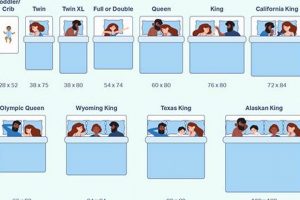
![[Guide] What Size Mattress Do I Need? Find Your Fit!](data:image/svg+xml;base64,PHN2ZyB4bWxucz0iaHR0cDovL3d3dy53My5vcmcvMjAwMC9zdmciIHdpZHRoPSI0NzQiIGhlaWdodD0iODMiIHZpZXdCb3g9IjAgMCA0NzQgODMiPjxyZWN0IHdpZHRoPSIxMDAlIiBoZWlnaHQ9IjEwMCUiIHN0eWxlPSJmaWxsOiNjZmQ0ZGI7ZmlsbC1vcGFjaXR5OiAwLjE7Ii8+PC9zdmc+ "[Guide] What Size Mattress Do I Need? Find Your Fit! Organic & Natural Mattress Buyer’s Guide: Non-Toxic Sleep Solutions")
The term refers to the standard dimensions available for a bed’s supporting structure upon which one sleeps. Examples include Twin, Full, Queen, King, and California King, each offering distinct surface areas suitable for varying individual or shared occupancy and room sizes.
Understanding the measurements is crucial for selecting appropriate bedding, ensuring comfortable sleep, and optimizing bedroom space. Historically, sizes evolved to accommodate changes in average human height and evolving preferences for personal space and shared sleeping arrangements.
The following sections will delve into the specific dimensions of each option, their ideal use cases, and factors to consider when determining the optimal fit for individual needs and room layouts. This will provide a clear guide for navigating the array of choices available.
Considerations for Mattress Dimension Selection
Selecting the correct dimensions for a mattress is paramount for achieving optimal sleep quality and efficient space utilization. The following recommendations address key factors in the decision-making process.
Tip 1: Evaluate Occupancy Requirements: Determine whether the mattress will accommodate a single individual, a couple, or multiple sleepers. Single sleepers may find a Twin or Full suitable, while couples generally require a Queen or King to ensure sufficient personal space.
Tip 2: Measure Room Dimensions Accurately: Prior to purchase, meticulously measure the intended bedroom space. Allow adequate clearance around the bed for movement and placement of other furniture items. A King mattress, while spacious, may overwhelm a smaller room.
Tip 3: Assess Individual Sleeper Height: Taller individuals should consider the length of the mattress to ensure full body support. A Twin XL or California King offers extended length compared to standard sizes.
Tip 4: Account for Sleeping Style: Individuals who tend to move frequently during sleep require more surface area. A larger mattress can accommodate active sleepers and minimize partner disturbance.
Tip 5: Factor in Budgetary Constraints: Larger mattresses generally correspond to higher price points. Establish a budget beforehand and explore options within the desired price range while prioritizing necessary features.
Tip 6: Consider Bed Frame Compatibility: Ensure that the selected mattress is compatible with the existing or planned bed frame. Incompatible sizes may result in inadequate support or structural instability.
Tip 7: Research Mattress Types and Firmness: Different mattress types (e.g., memory foam, innerspring, hybrid) offer varying levels of support and comfort. Research and test different firmness levels to determine the most suitable option for individual preferences and sleep posture.
By carefully considering these factors, individuals can make informed decisions regarding mattress dimension selection, promoting restful sleep and maximizing the functionality of their sleeping environment.
The subsequent sections will explore the various types of mattress materials and constructions, further aiding in the comprehensive selection process.
1. Twin Dimensions

Twin dimensions represent a foundational category within the broader spectrum of mattress sizes. Understanding Twin measurements is crucial for individuals seeking compact and space-efficient sleeping solutions. Their relevance stems from their adaptability to smaller rooms and suitability for single sleepers.
- Standard Measurement Specifications
Twin mattresses typically measure approximately 38 inches in width and 75 inches in length. These fixed dimensions dictate the available sleeping surface, directly impacting comfort levels for individuals of varying heights and body types. Deviation from these dimensions is uncommon in standard Twin offerings.
- Applications in Residential Spaces
Twin dimensions frequently find application in children’s bedrooms, guest rooms, and smaller apartments where maximizing floor space is paramount. Bunk beds, for example, often utilize Twin mattresses due to their space-saving properties. The integration of Twin mattresses contributes to efficient room layouts and optimized living environments.
- Relationship to Bedding Accessibility
Due to their widespread use, bedding and accessories designed for Twin mattresses are readily available. This ease of access streamlines the purchasing process and reduces the likelihood of compatibility issues. Standardized dimensions facilitate seamless integration with various bed frames and bedroom furnishings.
- Considerations for Adult Sleepers
While primarily associated with children and adolescents, Twin dimensions may also accommodate adult sleepers who prioritize space conservation. However, taller adults may find the standard length restrictive, necessitating the consideration of a Twin XL mattress, an extended variant offering additional legroom.
The characteristics of Twin dimensions, therefore, contribute significantly to the diversity within the “what size mattress” category. Their compact nature and established standards offer a viable solution for specific needs, highlighting the importance of considering individual requirements and spatial constraints when selecting a mattress dimension.
2. Full dimensions

Full dimensions constitute a significant category within the broader classification of “what size mattress,” representing a transitional option between smaller Twin and larger Queen sizes. Understanding Full measurements is crucial for individuals seeking a versatile sleeping surface adaptable to varying occupancy needs and room configurations.
- Standard Measurement Specifications
Full mattresses, also known as Double mattresses, typically measure approximately 54 inches in width and 75 inches in length. These dimensions offer a more expansive sleeping surface compared to Twin mattresses, accommodating single adults with greater comfort or providing sufficient space for occasional shared occupancy.
- Applications in Residential Spaces
Full dimensions frequently find application in guest rooms, smaller apartments, and children’s bedrooms where space constraints limit the feasibility of larger mattress sizes. They provide a practical balance between space efficiency and sleeping comfort, making them suitable for a range of residential settings. The dimensions also cater for growing children, providing space as they mature.
- Considerations for Shared Occupancy
While capable of accommodating two adults, Full dimensions may result in a reduced sense of personal space compared to larger Queen or King mattresses. Couples should carefully evaluate their individual space requirements and sleeping habits before opting for a Full mattress for long-term shared occupancy. This consideration extends to sleep quality and overall comfort.
- Relationship to Bedding Availability and Pricing
Bedding and accessories designed for Full mattresses are widely available, offering a range of style and pricing options. The standardized dimensions facilitate easy selection and compatibility, simplifying the purchasing process. Pricing is generally moderate compared to larger mattress sizes, providing a cost-effective solution for those seeking a balance between size and affordability.
The characteristics of Full dimensions, therefore, contribute significantly to the diverse selection within the “what size mattress” category. Their versatility and established standards offer a viable solution for specific occupancy needs and spatial constraints, highlighting the importance of considering individual requirements when selecting a mattress dimension. They are a midpoint between practicality and space.
3. Queen dimensions

Queen dimensions represent a core element within the category of “what size mattress.” These dimensions, typically measuring 60 inches in width and 80 inches in length, hold significance due to their widespread adoption as a versatile solution for both single sleepers seeking ample space and couples desiring a comfortable sleeping arrangement. The prevalence of Queen mattresses directly influences the availability of associated bedding and bedroom furniture. As a result, the selection of a Queen mattress can streamline the process of furnishing a bedroom, as standardized dimensions facilitate compatibility with various bed frames, sheets, and comforters. Failure to understand these dimensions prior to purchase can lead to compatibility issues and unnecessary expenses related to returns or alterations.
The importance of Queen dimensions extends to the real estate and hospitality industries. Real estate listings often specify whether bedrooms can accommodate a Queen mattress, indicating the room’s suitability for a broad range of potential occupants. Hotels frequently utilize Queen mattresses as a standard offering, catering to both solo travelers and couples. This standardization simplifies inventory management and ensures consistent guest experiences. Furthermore, the physical size of a Queen mattress directly impacts considerations for moving and storage. Its larger dimensions necessitate careful planning for transportation and may require specialized equipment or services, representing logistical challenges.
In summary, Queen dimensions are integral to comprehending “what size mattress,” influencing not only sleeping comfort but also logistical and economic considerations. The standardized nature of these dimensions simplifies many aspects of furnishing and managing a sleeping space, making the Queen size a practical and widely applicable choice. However, its physical size can present challenges related to space constraints and relocation logistics. Therefore, careful evaluation of individual needs and spatial limitations remains crucial before selecting a Queen mattress.
4. King dimensions
King dimensions, a significant consideration within the broader topic of “what size mattress,” denote one of the largest standard mattress sizes available. Their measurements influence factors ranging from sleeping comfort to bedroom layout, making them a relevant subject for comprehensive analysis.
- Measurement Specifications and Spatial Requirements
Standard King mattresses typically measure 76 inches in width and 80 inches in length. These substantial dimensions necessitate larger bedrooms to accommodate the mattress and allow for comfortable movement within the space. For master bedrooms exceeding minimum square footage, King mattresses enhance both sleep quality and aesthetic appeal.
- Suitability for Couples and Co-Sleeping Arrangements
King dimensions are particularly well-suited for couples who value personal space during sleep. The additional width compared to a Queen mattress allows for greater freedom of movement and reduces partner disturbance. Families practicing co-sleeping with infants or young children may also benefit from the expansive surface area provided by a King mattress.
- Considerations for Bedding and Accessory Selection
Due to their size, bedding and accessories for King mattresses generally incur higher costs compared to smaller sizes. The increased fabric requirements for sheets, comforters, and bed frames contribute to the elevated price point. Careful budgeting and comparison shopping are advisable when furnishing a bed with King dimensions.
- Divisibility into Split King Configurations
Certain manufacturers offer Split King mattresses, which consist of two separate Twin XL mattresses placed side-by-side. This configuration allows couples to customize their individual sleeping surfaces, accommodating differing firmness preferences or utilizing adjustable bed frames. The Split King option enhances versatility within the King dimensions category.
In conclusion, King dimensions represent a significant category within the realm of “what size mattress” due to their substantial size, suitability for couples, and influence on bedding and accessory costs. Understanding these factors enables informed decision-making when selecting a mattress that aligns with individual needs and spatial constraints. These aspects directly contribute to a consumer’s ability to optimize sleeping arrangements and maximize sleep quality within a specific bedroom environment.
5. Cal King dimensions

California King (Cal King) dimensions constitute a distinct and relevant subset within the broader category of “what size mattress.” These dimensions, typically 72 inches in width and 84 inches in length, represent a specific alternative to the standard King size, prioritizing length over width. The understanding of Cal King dimensions is critical because selecting the incorrect size can lead to discomfort, inadequate support, and ultimately, compromised sleep quality. For instance, taller individuals, often exceeding six feet in height, may find the added length of a Cal King mattress essential to prevent their feet from hanging off the edge, a common complaint with shorter mattress sizes. Conversely, individuals of average height may not benefit significantly from the extra length and may prefer the added width of a standard King. Therefore, the availability of Cal King dimensions expands the selection of mattress sizes, allowing consumers to tailor their choice to individual physical needs.
The selection of Cal King dimensions also influences practical considerations beyond sleep comfort. Bedding availability is a direct consequence of the prevalence of Cal King mattresses. Although widely available, Cal King bedding may not be as readily accessible or as varied in design compared to standard King options. This difference can impact aesthetic choices and price points. Furthermore, room dimensions play a critical role in determining the suitability of a Cal King mattress. Its elongated shape necessitates a longer bedroom space, potentially limiting furniture placement and overall room design. Selecting a Cal King mattress without accurately measuring the available space can result in an overcrowded or dysfunctional bedroom layout. An example is a bedroom where a Cal King bed blocks closet access or pathways, reducing usability and comfort.
In summary, Cal King dimensions are an essential component of “what size mattress,” offering a unique set of benefits and challenges. While the added length provides superior comfort for taller individuals, the reduced width and potential limitations in bedding availability must be carefully considered. The decision to choose a Cal King should be based on a thorough evaluation of individual height, room dimensions, and bedding preferences, ensuring a comfortable and functional sleep environment. Failing to account for these factors can negate the intended benefits and lead to suboptimal sleeping arrangements.
6. Thickness Variance

Thickness variance, referring to the vertical dimension of a mattress, significantly influences the overall comfort and suitability within the context of “what size mattress.” This dimension is not standardized and varies based on construction materials and intended use. Ignoring thickness variance can lead to incompatibility with existing bed frames and bedding, impacting both aesthetics and functionality.
- Impact on Bed Frame Compatibility
Mattress thickness directly affects bed frame compatibility. A bed frame designed for a thinner mattress may not adequately support a thicker model, potentially leading to instability or damage. Conversely, a frame designed for a thick mattress may leave a significant gap when paired with a thinner mattress, affecting aesthetic appeal. Consideration of mattress thickness is thus essential when selecting both the mattress and bed frame.
- Influence on Sleep Height and Accessibility
Thickness variance affects the overall height of the sleeping surface. A thicker mattress raises the bed height, potentially making it more difficult for individuals with mobility limitations to get in and out of bed. Conversely, a thinner mattress may result in a sleeping surface that is too low to the ground, causing discomfort or strain. These accessibility considerations are particularly relevant for elderly individuals or those with physical disabilities.
- Correlation with Material Composition and Support
Thickness variance often correlates with the types and quantities of materials used in mattress construction. Thicker mattresses may contain multiple layers of foam, springs, or other materials designed to provide enhanced support and pressure relief. However, increased thickness does not always guarantee superior comfort; material quality and construction techniques also play a significant role. A thinner, high-density foam mattress may offer better support than a thicker, low-density foam model.
- Effects on Bedding Fit and Appearance
Mattress thickness influences the fit and appearance of bedding. Standard sheet sets are typically designed to accommodate mattresses within a specific thickness range. Using sheets intended for a thinner mattress on a thicker model may result in inadequate coverage or strain on the fabric. Similarly, using sheets designed for a thicker mattress on a thinner model may result in excess fabric and a loose, unkempt appearance. Appropriate sheet selection is therefore dependent on accurate assessment of mattress thickness.
The aforementioned facets underscore the integral connection between thickness variance and the broader decision-making process surrounding “what size mattress.” By carefully considering the implications of thickness variance in relation to bed frame compatibility, sleep height, material composition, and bedding fit, individuals can optimize their sleeping arrangements for enhanced comfort and functionality. Disregarding these factors may lead to unforeseen challenges and ultimately compromise the quality of the sleeping experience.
7. Weight capacity

Weight capacity, an often-overlooked attribute of mattresses, directly correlates with the “what size mattress” selection process. The structural integrity and long-term performance of a mattress are intrinsically linked to its ability to support a specified weight. Exceeding this limit can lead to premature degradation, compromised support, and ultimately, a reduction in sleep quality.
- Relationship to Mattress Size and Construction
Smaller mattresses, such as Twin or Full sizes, typically possess lower weight capacities than larger Queen, King, or California King models. This difference stems from the reduced surface area and potentially less robust internal support structures. The construction materials, including coil gauge, foam density, and frame reinforcement, dictate the weight-bearing capability of each mattress size. Hybrid and innerspring mattresses, for example, may have different weight capacities compared to all-foam models of the same size.
- Impact of Shared Occupancy and Body Weight Distribution
For mattresses intended for shared occupancy, the combined weight of all sleepers must remain within the manufacturer’s specified limit. Uneven weight distribution, common in couples with significant weight disparities, can place undue stress on localized areas of the mattress, accelerating wear and potentially compromising support. In such cases, selecting a larger mattress size with a higher weight capacity may be advisable to ensure even distribution and prevent premature failure.
- Influence on Mattress Longevity and Warranty Validity
Consistently exceeding a mattress’s weight capacity can invalidate the manufacturer’s warranty and significantly shorten its lifespan. The internal components, designed to withstand a specific load, may degrade more rapidly under excessive stress, leading to sagging, indentations, and a loss of overall support. Adhering to the specified weight limits is crucial for preserving mattress integrity and maximizing its useful life.
- Considerations for Individuals with Higher Body Mass
Individuals with higher body mass should prioritize weight capacity when selecting a mattress. Specialized models designed for heavier individuals often feature reinforced support systems, higher-density foams, and more durable construction materials to provide adequate support and prevent premature sagging. Selecting an appropriately sized mattress with sufficient weight capacity is essential for ensuring both comfort and long-term durability.
In summation, weight capacity serves as a critical parameter in the “what size mattress” decision. It’s directly correlated with mattress dimensions, construction, intended occupancy, and expected lifespan. Neglecting to consider weight capacity can lead to compromised sleep quality, accelerated mattress degradation, and potential warranty invalidation, highlighting the importance of careful evaluation and selection. Thus, the selection should align with individual and shared occupancy requirements. The goal is to ensure prolonged support and lasting comfort.
Frequently Asked Questions
The following addresses common inquiries regarding mattress dimensions, providing clarity on selection considerations and technical specifications.
Question 1: What are the standard dimensions for a Twin XL mattress, and how do they differ from a standard Twin?
A Twin XL mattress measures approximately 38 inches wide and 80 inches long, offering an additional five inches in length compared to a standard Twin, which measures 38 inches by 75 inches. The extended length accommodates taller individuals.
Question 2: Is a Full mattress suitable for two adults?
While a Full mattress can accommodate two adults, it provides limited personal space. Each sleeper has only 27 inches of width, less than that of a Twin. For couples seeking greater comfort, a Queen or King mattress is generally recommended.
Question 3: How does the dimensions of a California King mattress compare to a standard King?
A California King mattress measures 72 inches wide and 84 inches long, while a standard King measures 76 inches wide and 80 inches long. The California King prioritizes length, making it suitable for taller individuals, whereas the standard King offers greater width.
Question 4: What is the typical thickness range for mattresses, and how does thickness affect support?
Mattress thickness varies widely, typically ranging from 8 to 14 inches or more. Thickness can influence support, with thicker mattresses often incorporating multiple layers of support materials. However, material quality and construction are more significant determinants of support than thickness alone.
Question 5: How does weight capacity relate to mattress size and intended occupancy?
Weight capacity is directly related to mattress size and intended occupancy. Larger mattresses generally have higher weight capacities to accommodate multiple sleepers. Exceeding the stated weight capacity can compromise support and reduce mattress lifespan.
Question 6: Are there specialized mattress sizes available beyond the standard Twin, Full, Queen, and King?
Yes, specialized sizes exist, including Split King (two Twin XL mattresses), Olympic Queen (wider than a standard Queen), and various custom sizes designed for specific bed frames or applications. Availability may vary depending on the manufacturer.
In summary, selecting the appropriate mattress dimensions necessitates consideration of individual needs, spatial constraints, and technical specifications. Understanding these factors is crucial for optimizing sleep quality and ensuring long-term satisfaction.
The following section will explore the importance of mattress materials.
Concluding Remarks
The preceding discussion has elucidated the complexities inherent in determining “what size mattress” best suits individual needs. The exploration has spanned standard dimensions, occupancy considerations, spatial constraints, material properties, and weight capacity implications. The presented information underscores the importance of methodical evaluation prior to purchase, mitigating the risk of suboptimal sleep experiences and unnecessary financial expenditure.
As sleeping arrangements continue to evolve, informed decision-making regarding mattress dimensions remains paramount. It is incumbent upon consumers to leverage available resources, accurately assess personal requirements, and prioritize long-term comfort and support. The ultimate selection dictates not only immediate sleep quality but also contributes to overall physical well-being and sustained health outcomes. Further research is encouraged to account for advancements in sleep technology and the expanding array of available options, ensuring a purchase that meets individual expectations and fosters restful slumber.
![Best Queen Size Adjustable Mattress [Deals] | Organic & Natural Mattress Buyer’s Guide: Non-Toxic Sleep Solutions](https://mattressworldpa.com/wp-content/uploads/2025/07/th-2362-300x200.jpg "Best Queen Size Adjustable Mattress [Deals] Organic & Natural Mattress Buyer’s Guide: Non-Toxic Sleep Solutions")

![RV Comfort: Custom Size Mattress for RVs [Guide] | Organic & Natural Mattress Buyer’s Guide: Non-Toxic Sleep Solutions](https://mattressworldpa.com/wp-content/uploads/2025/07/th-2359-300x200.jpg "RV Comfort: Custom Size Mattress for RVs [Guide] Organic & Natural Mattress Buyer’s Guide: Non-Toxic Sleep Solutions")