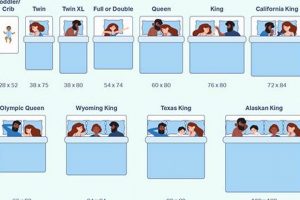
A double, also known as a full-size, sleeping surface typically measures 54 inches in width and 75 inches in length. This sizing offers a moderate sleeping area, suitable for single adults or, in some cases, couples who prefer a smaller bed frame. Consider a standard bed frame as a common example where this bed size is often used.
Choosing a double-size bed presents advantages in rooms where space is a constraint, providing more floor area than larger sizes like queen or king. Historically, it represented a step up from a single bed, offering more room for a single sleeper to stretch out comfortably. This is very important for growing children in their teenage years.
The subsequent sections will delve into the practical implications of opting for a double-size bed, including considerations for room dimensions, suitability for different sleepers, and the availability of bedding options.
These guidelines offer crucial advice for anyone considering a double-size bed, ensuring an informed and satisfactory decision.
Tip 1: Room Measurement is Paramount: Precisely measure the intended bedroom space before purchase. A double bed, while compact, still requires adequate room for movement and other furniture.
Tip 2: Sleeper Compatibility Assessment: Assess the suitability of a double bed for the intended user(s). While adequate for a single sleeper, couples might find it restrictive, affecting sleep quality.
Tip 3: Bedding Availability Verification: Confirm that bedding, such as sheets, comforters, and mattress protectors, are readily available in the specified dimensions. Limited selection can be inconvenient and costly.
Tip 4: Frame Selection Considerations: Evaluate the available bed frame options compatible with the size specifications. Consider factors such as storage capabilities, headboard style, and overall aesthetic.
Tip 5: Mattress Type Matching: Determine the preferred mattress type (e.g., memory foam, innerspring, hybrid) based on individual sleep preferences and physical needs, ensuring it aligns with the bed’s dimensions.
Tip 6: Height Considerations: Factor in the combined height of the bed frame and mattress to ensure ease of access. Excessive height can pose challenges for some individuals.
Tip 7: Budget Establishment: Set a realistic budget encompassing the mattress, frame, and bedding. Quality and durability should be prioritized within the allocated financial parameters.
Tip 8: Long-Term Needs Anticipation: Consider potential future changes in sleeping arrangements. A double bed may become unsuitable if a partner or pet is introduced into the sleeping environment.
Adhering to these points empowers individuals to make well-informed choices, minimizing post-purchase regret and maximizing sleep satisfaction.
The following sections will address common queries and misconceptions associated with double beds and compare them with other standard sleeping surface dimensions.
1. Dimensions (54" x 75")

The specification “Dimensions (54″ x 75″)” functions as the defining characteristic of a double, or full-size, in the context of the mattress size chart. Without these precise measurements, differentiation from other mattress sizes becomes impossible. As dimensions, they dictate the physical space occupied by this particular bed, directly influencing its suitability for various room sizes and sleeper needs. For example, a person referencing a bed size chart seeks to ascertain if a bed is suited for their small room or can be placed in a corner. If the length or breadth is greater, it makes the bed too large to be installed.
The dimensions’ importance extends beyond mere numerical representation. They impact the level of comfort afforded to sleepers; inadequate width may hinder restful sleep for restless individuals, while insufficient length could prove uncomfortable for taller persons. Practical application is evident in retail settings, where knowing these exact measurements allows sales personnel to accurately guide customers in selecting appropriate mattresses and corresponding bed frames and bedding. It also affects bedsheet and bedding options because the dimensions of the mattress are necessary to ensure correct product selection, for example, bedsheets or mattress covers.
In summary, the precise dimensions of 54″ x 75″ are not merely numbers but essential descriptors that define the double mattress size. They are the cornerstone for informed decision-making concerning space optimization, sleeper comfort, and the selection of compatible accessories. Erroneous data pertaining to these dimensions would render the mattress size chart effectively useless, causing potential purchase dissatisfaction and practical challenges.
2. Space efficiency

The relationship between “Space efficiency” and the “mattress size chart double” is fundamental, particularly in urban dwelling environments where room dimensions are often constrained. The suitability of a double bed is directly linked to its ability to provide adequate sleeping space without unduly compromising available floor area.
- Footprint Optimization
The inherent advantage of a double bed lies in its reduced footprint compared to larger sizes such as queen or king. This allows it to fit comfortably in bedrooms where larger beds would dominate the available space, rendering other furniture placement difficult or impossible. For example, apartments or smaller homes often benefit from the space efficiency afforded by a double bed, allowing for the inclusion of desks, dressers, or seating areas.
- Usable Area Maximization
Beyond its physical dimensions, a double bed’s space efficiency also affects the usable area within a room. This extends to the ability to navigate around the bed comfortably, open doors and drawers without obstruction, and maintain an overall sense of spaciousness. A double bed allows for the strategic arrangement of other room elements, enhancing functionality without sacrificing aesthetic appeal.
- Versatility in Layout
The compactness of a double bed facilitates greater versatility in room layout and design. It can be positioned against a wall, in a corner, or centrally within the room without overwhelming the visual or physical space. This adaptability is particularly valuable in smaller bedrooms or multi-purpose rooms, where flexibility in furniture placement is essential.
- Storage Integration
The space beneath a double bed can be effectively utilized for storage purposes. Under-bed storage containers or bed frames with built-in drawers can provide additional storage space for clothing, linens, or other items, further enhancing the space efficiency of the room. This integration of storage solutions minimizes clutter and maximizes the functionality of the available area.
Ultimately, the space efficiency provided by a double bed, as dictated by mattress size charts, represents a crucial consideration for individuals seeking to optimize their living environments. It balances the need for comfortable sleeping space with the practical demands of maintaining a functional and aesthetically pleasing room layout.
3. Single sleeper comfort

Single sleeper comfort, as it pertains to the double mattress size, is a critical consideration. While larger bed sizes exist, the double bed provides a balance between space utilization and individual sleeping comfort. Several factors contribute to this relationship, influencing the overall sleeping experience.
- Adequate Space for Movement
The double bed’s dimensions (54″ x 75″) allow a single sleeper ample room to move and change positions throughout the night. Restrictive sleeping surfaces can disrupt sleep cycles and contribute to discomfort. The double size offers a buffer zone, preventing the feeling of confinement often associated with smaller single beds. For instance, an individual who tends to sprawl or rotate during sleep will find the double bed accommodating.
- Reduced Partner Disturbance
Although designed primarily for single occupants, the double bed implicitly addresses the potential for partner disturbance. By definition, it eliminates the issue of shared sleeping space and the associated movements, noises, and temperature variations that can disrupt sleep. This is especially relevant for individuals who are easily awakened or require a consistently undisturbed sleep environment.
- Enhanced Perceived Spaciousness
The double bed offers a perceived sense of spaciousness that can contribute to psychological comfort. A larger sleeping surface can create a feeling of luxury and relaxation, enhancing the overall sleep experience. This psychological impact is particularly relevant for individuals who value a sense of personal space and freedom, even when sleeping alone.
- Suitability for Varying Body Sizes
The dimensions of a double bed accommodate a broader range of body sizes compared to a twin or single bed. While a taller or larger individual might find a twin bed constricting, the double bed provides sufficient length and width to ensure comfort. This is particularly important for individuals who exceed average height or weight, ensuring that their extremities do not extend beyond the mattress edges.
These factors collectively contribute to the overall level of single sleeper comfort provided by the double bed. Its size offers a practical balance between space efficiency and individual needs, making it a viable option for those seeking a comfortable and undisturbed night’s sleep.
4. Cost-effectiveness
The relationship between cost-effectiveness and the double mattress size is a primary driver in consumer purchasing decisions. A double mattress generally represents a lower financial investment than queen or king-size options due to the reduced material requirements in its construction. This lower initial cost subsequently affects the price points of accompanying bed frames and bedding accessories. For example, a consumer operating on a budget may find that a double mattress and related accessories fit comfortably within their financial constraints, where a larger-sized bed would be prohibitively expensive. This makes it a popular choice for single individuals setting up their first apartments or for guest rooms where frequent use isn’t anticipated.
Furthermore, cost-effectiveness extends beyond the initial purchase. Double beds consume less space, potentially reducing heating or cooling costs in smaller rooms. The standard dimensions of a double bed translate to a more economical use of living space. This can influence long-term financial planning, particularly in rental situations where apartment size directly correlates with monthly expenses. Additionally, the replacement cost of bedding is generally lower for a double bed compared to larger sizes, contributing to ongoing savings. A student setting up their dorm room, for example, is more likely to opt for a double bed for its practicality and economical bedding replacements.
In summary, the cost-effectiveness associated with double mattresses has practical implications for budget-conscious consumers. The lower initial purchase price, coupled with reduced operating costs, makes it a financially sensible option for various living situations. The balance of affordability and reasonable sleeping space makes it a practical and popular choice despite the availability of larger, more luxurious options. Understanding this relationship is vital for making informed purchasing decisions that align with individual financial circumstances and long-term economic goals.
5. Bedding Availability

The connection between “Bedding Availability” and the dimensions of a double mattress, specified within a standard size chart, represents a crucial factor influencing purchasing decisions. Ready accessibility of appropriately sized bedding directly affects the immediate usability and overall satisfaction associated with this particular mattress type. Without suitable bedding, the practical benefits of selecting this specific bed size are significantly diminished. For example, a consumer might prefer a more spacious sleeping area, but would opt for a double bed precisely because of the ubiquitous availability of bedding in that size.
The standardized dimensions ensure that sheets, comforters, mattress protectors, and other bedding items manufactured to fit a double bed will, in fact, conform to the mattress. This conformity prevents issues such as ill-fitting sheets that bunch up or tear, or comforters that are too small to adequately cover the sleeping surface. Furthermore, a broad selection of bedding styles, materials, and price points becomes available due to the prevalence of the double mattress size. The consumer benefits from cost competitiveness between brands, an expansive selection that allows for matching bedding items to specific aesthetic preferences, and readily available sale opportunities. A retailer focusing on a limited mattress size catalog will invariably offer double bed as one of their mainstay products.
In summation, the assurance of readily available and compatible bedding constitutes a significant component of the practical value associated with the double mattress size. This component’s absence negates many of the perceived advantages, influencing a consumers decision to opt for a different mattress, even at a higher cost. The interconnectedness between bedding availability and standardized mattress dimensions promotes consumer confidence, ensuring a functional and aesthetically pleasing sleeping environment.
6. Frame compatibility
The term “Frame compatibility” represents a critical consideration when addressing the “mattress size chart double.” A double-size mattress possesses fixed dimensions; therefore, the selection of an appropriate bed frame necessitates adherence to these specifications. Failure to ensure compatibility can lead to instability, inadequate support, and premature mattress degradation.
- Standardization of Dimensions
Bed frame manufacturers adhere to standardized dimensions for double-size beds. These standards, typically 54 inches in width and 75 inches in length, ensure that a mattress appropriately fits within the frame’s confines. Deviation from these dimensions by either the mattress or the frame compromises structural integrity and sleeper comfort. For example, attempting to place a mattress exceeding these dimensions into a frame of similar size will result in overhang and uneven weight distribution, potentially damaging the frame structure and resulting in a high risk of falling.
- Support System Alignment
Frames designed for double-size mattresses incorporate support systems such as slats, springs, or solid platforms. Proper alignment between the mattress and these support elements is paramount. Mismatched support can lead to sagging, uneven wear, and reduced lifespan of the mattress. For example, a frame with inadequately spaced slats may cause certain areas of the mattress to compress prematurely, resulting in discomfort and the need for earlier replacement.
- Headboard and Footboard Integration
Many bed frames include headboards and footboards as integral design components. Compatibility with a double-size mattress ensures that these elements are appropriately positioned relative to the sleeping surface. Ill-fitting headboards can create an uncomfortable sleeping environment, while mismatched footboards may restrict movement and contribute to a feeling of confinement. An instance of an ill-fitting headboard would be where a portion of the headboard digs into the sleeper’s neck, causing discomfort.
- Weight Capacity Compliance
Bed frames are engineered to support specific weight limits, which must be considered in relation to the combined weight of the mattress and the sleeper(s). Exceeding the frame’s weight capacity can lead to structural failure, posing a safety risk. Therefore, confirming that the chosen frame is rated to accommodate the intended load is essential. Weight capacity is often overlooked, with individuals focused solely on the dimensions of the bed.
These facets highlight the importance of ensuring meticulous “Frame compatibility” with mattresses specified on a “mattress size chart double.” The consequences of neglecting these considerations range from compromised comfort to potential structural failure and personal injury. Thus, verifying the precise dimensions and weight capacity of both the mattress and frame prior to purchase is essential.
Frequently Asked Questions about Double-Size Mattresses
The following addresses common inquiries pertaining to double-size mattresses, providing clarity on dimensions, suitability, and practical considerations.
Question 1: What are the precise dimensions of a double-size mattress?
A double mattress measures 54 inches in width and 75 inches in length. These dimensions are standardized across most manufacturers, but slight variations of up to an inch may occur.
Question 2: Is a double mattress suitable for couples?
While a double mattress can accommodate two adults, it may prove restrictive for couples who prefer ample personal space. Consider a queen or king-size mattress for enhanced comfort.
Question 3: What type of bed frame is compatible with a double mattress?
Most standard bed frames designed for double-size mattresses are compatible. Verify the frame’s dimensions and weight capacity to ensure it adequately supports the mattress and intended occupants.
Question 4: Are double mattresses readily available?
Double mattresses are widely available from various retailers, both online and in physical stores. The extensive selection offers a range of options to suit diverse budgets and preferences.
Question 5: How does a double mattress compare to a twin mattress?
A double mattress is significantly wider than a twin mattress, providing more space for a single sleeper. A twin mattress is generally preferred where space is a premium, such as children’s bedrooms or dorm rooms.
Question 6: What are the common misconceptions about double mattresses?
A frequent misconception is that a double mattress is suitable for all couples. While it can accommodate two individuals, the limited space may lead to discomfort or disrupted sleep, particularly for restless sleepers.
Understanding these facets of double mattresses equips consumers to make informed decisions aligned with their individual requirements.
The subsequent section will discuss alternatives to double-size mattresses and offer insights into choosing the most suitable sleeping surface for various needs.
Conclusion
The preceding analysis has illuminated the multifaceted aspects of the “mattress size chart double,” detailing its dimensions, suitability for various sleeping arrangements, and practical implications for consumers. The key considerations of space efficiency, single sleeper comfort, cost-effectiveness, bedding availability, and frame compatibility were explored, emphasizing the interconnectedness of these elements in ensuring a satisfactory sleep experience. A thorough understanding of these factors is paramount for informed decision-making during mattress selection.
The value of precise information concerning the double mattress size extends beyond mere product specifications; it empowers consumers to optimize their living spaces, enhance their sleep quality, and make fiscally responsible choices. Further research into individual sleep needs and available mattress technologies remains crucial for maximizing sleep satisfaction, as the double size represents only one option within a broader spectrum of sleeping solutions.
![Best Queen Size Adjustable Mattress [Deals] | Organic & Natural Mattress Buyer’s Guide: Non-Toxic Sleep Solutions](https://mattressworldpa.com/wp-content/uploads/2025/07/th-2362-300x200.jpg "Best Queen Size Adjustable Mattress [Deals] Organic & Natural Mattress Buyer’s Guide: Non-Toxic Sleep Solutions")

![RV Comfort: Custom Size Mattress for RVs [Guide] | Organic & Natural Mattress Buyer’s Guide: Non-Toxic Sleep Solutions](https://mattressworldpa.com/wp-content/uploads/2025/07/th-2359-300x200.jpg "RV Comfort: Custom Size Mattress for RVs [Guide] Organic & Natural Mattress Buyer’s Guide: Non-Toxic Sleep Solutions")