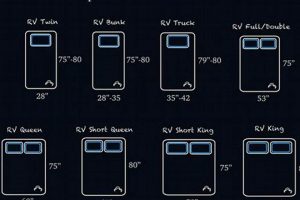
A bed designed to fit within the confines of a recreational vehicle that measures approximately 60 inches wide and 80 inches long, providing sleeping accommodations for two adults. These mattresses are often constructed with considerations for weight, space efficiency, and durability to withstand the rigors of travel. An example would be a memory foam or innerspring unit specifically manufactured to conform to the unique dimensions of an RV bedroom.
The integration of appropriately sized bedding into a mobile living space is crucial for comfort and restorative rest during travel. Adequate sleep contributes to enhanced cognitive function, improved mood, and overall physical well-being. Historically, RV manufacturers have faced challenges balancing sleeping comfort with spatial constraints, resulting in the development of specialized bedding solutions to maximize usability. This has led to innovations in materials and construction techniques optimized for the RV lifestyle.
The following sections will delve into the variety of materials, construction methods, and considerations when selecting bedding for a trailer, including aspects of comfort, support, and longevity. Examination of different core materials, cover fabrics, and factors affecting the purchase decision will be presented, enabling informed choices when equipping a mobile dwelling.
Selection Tips for RV Bedding
Considerations when choosing bedding designed for recreational vehicles are multifaceted, requiring a balance between comfort, durability, and spatial efficiency.
Tip 1: Prioritize Accurate Measurement: Confirm the exact dimensions of the sleeping platform within the trailer before purchase. Deviations from standard dimensions are common in RVs; precise measurements ensure proper fit and prevent unnecessary modifications.
Tip 2: Evaluate Core Material: Different core materials offer varying levels of support and comfort. Memory foam conforms to the body, while innerspring provides firmer support. Hybrid models combine the benefits of both.
Tip 3: Consider Weight: Excessive weight impacts fuel efficiency and towing capacity. Opt for lighter materials without compromising durability or comfort. Density of foam and gauge of coils affect weight; consider these factors.
Tip 4: Assess Ventilation: Adequate airflow prevents moisture buildup and regulates temperature. Breathable materials such as open-cell foam or natural fibers promote ventilation and enhance sleeping comfort, especially in humid environments.
Tip 5: Review Cover Fabric: The cover material contributes to both comfort and durability. Durable fabrics withstand wear and tear from travel, while soft, breathable fabrics enhance sleeping comfort. Stain-resistant properties are also advantageous.
Tip 6: Investigate Compression Ratings: For foam units, compression ratings indicate firmness and support. Higher ratings offer greater support for heavier individuals, while lower ratings provide a softer feel. Select a rating that aligns with individual preferences and physical needs.
Tip 7: Examine Edge Support: Edge support prevents roll-off and enhances usable sleeping surface. Reinforced edges provide stability and prevent sagging over time, particularly important for couples.
Careful evaluation of these factors ensures the selection of bedding that meets the specific needs of mobile living, promoting restful sleep and enhancing the overall travel experience.
The concluding section will summarize key considerations and offer resources for further research and purchase assistance.
1. Precise Dimensions

The correlation between precise dimensions and RV bedding is critical. Unlike standard residential bedding, recreational vehicle mattresses, particularly those in the “queen size” category, frequently require non-standard measurements to accommodate the specific floor plans and structural limitations inherent in mobile living spaces. Failure to account for precise dimensions results in ill-fitting mattresses, leading to compromised comfort and inefficient use of space. For example, a “queen size trailer mattress” marketed with standard dimensions may overhang, block access to storage compartments, or create obstructions within the RV. This necessitates careful measurement of the intended sleeping platform before purchase, verifying that the product’s stated dimensions align with the available space.
Accurate dimensional assessment extends beyond length and width. Mattress thickness also plays a role, impacting headroom and the functionality of overhead storage. Furthermore, the presence of curved walls or wheel well intrusions often mandates custom mattress designs to maximize usable sleeping surface. An undersized mattress creates gaps, reducing support and comfort, while an oversized unit may require cutting or trimming, potentially voiding warranties and compromising structural integrity. The impact extends to related bedding items like sheets and mattress protectors; ill-fitting mattresses render standard-sized accessories unusable, necessitating specialized RV-specific products.
In summary, precise dimensions represent a foundational consideration when selecting bedding for RVs. Disregarding this aspect leads to practical problems, including space inefficiency, reduced comfort, and potential damage to both the mattress and the RV interior. Therefore, meticulously measuring the available space and confirming the mattress’s dimensions are critical steps to ensuring a satisfactory and functional sleeping arrangement within a recreational vehicle. This diligence prevents unnecessary expenses and contributes to a more enjoyable travel experience.
2. Material Composition

The selection of materials significantly impacts the performance, comfort, and longevity of a “queen size trailer mattress.” Material choices determine factors such as weight, breathability, support, and resistance to moisture, all crucial considerations for RV use.
- Foam Density and Type
Foam density, measured in pounds per cubic foot, directly correlates with the support and durability of the mattress. Higher density foams offer greater resistance to compression and provide superior long-term support, particularly important for “queen size” models intended for two occupants. Memory foam, known for its conforming properties, distributes weight and reduces pressure points. Latex foam, derived from natural or synthetic rubber, offers a balance of support and resilience with enhanced breathability. The selection of foam type and density should align with desired comfort level and expected usage.
- Innerspring Coil Gauge and Configuration
For innerspring mattresses, coil gauge, measured in millimeters, determines the firmness and support provided. Lower gauge coils are thicker and provide firmer support, while higher gauge coils are thinner and offer a softer feel. Coil configuration, such as Bonnell, offset, or pocketed coils, affects motion isolation and overall support distribution. Pocketed coils, where each coil is individually wrapped, minimize motion transfer, an advantage for couples sharing a “queen size trailer mattress” in the confined space of an RV.
- Cover Fabric Properties
The cover fabric influences breathability, moisture wicking, and overall comfort. Materials such as cotton, polyester blends, or specialized performance fabrics impact temperature regulation and resistance to allergens. Breathable fabrics promote airflow, preventing moisture buildup and maintaining a comfortable sleeping environment. Antimicrobial treatments can inhibit the growth of bacteria and mold, essential in the potentially humid environment of a trailer.
- Flame Retardant Compliance
All mattresses sold in the United States must meet federal flammability standards. The materials used to achieve flame retardancy can impact comfort and potentially release volatile organic compounds (VOCs). Alternatives to traditional chemical flame retardants, such as silica or wool barriers, offer compliance with reduced VOC emissions. Ensuring compliance with safety standards without compromising comfort is a critical consideration when selecting any mattress, especially for enclosed environments like RVs.
The interplay between these material components determines the overall suitability of a “queen size trailer mattress” for the demands of recreational vehicle travel. Consideration of foam density, coil gauge, cover fabric properties, and flame retardant compliance ensures a balance of comfort, support, durability, and safety for the occupants.
3. Support System

The support system of a “queen size trailer mattress” is fundamentally responsible for distributing weight, maintaining spinal alignment, and providing overall sleep comfort. The selection of an appropriate support system directly impacts the user’s physical well-being and the longevity of the mattress itself. Inadequate support can lead to pressure points, back pain, and disrupted sleep patterns, negating the intended restorative function of the mattress. Conversely, a well-designed support system evenly distributes weight, reducing pressure on specific areas and promoting proper spinal alignment, essential for a restful night’s sleep in the often-confined space of a recreational vehicle. The choice between innerspring, foam, or hybrid support systems dictates the firmness, responsiveness, and motion isolation characteristics of the mattress. For instance, an innerspring system, with its network of interconnected coils, offers a traditional level of support, but may transfer motion readily. In contrast, a memory foam system conforms to the body, providing localized support and reducing motion transfer, but may retain heat. Hybrid systems attempt to combine the benefits of both, offering a balance of support, comfort, and temperature regulation.
The practical implications of understanding the support system are significant for RV owners. A properly chosen system enhances sleep quality, directly impacting alertness and well-being during travel. Furthermore, an appropriate support system extends the life of the mattress by preventing premature sagging and deformation. Consider the example of a couple sharing a “queen size trailer mattress.” A support system with poor motion isolation would disrupt sleep due to one partner’s movements. Investing in a system with individually wrapped coils or a high-density foam core minimizes motion transfer, ensuring undisturbed sleep for both individuals. The effectiveness of the support system is also influenced by the user’s weight and sleeping position. Heavier individuals require firmer support to prevent excessive sinking, while side sleepers may benefit from a system that allows for pressure relief in the shoulders and hips. Therefore, understanding these interdependencies is crucial for making an informed purchase decision.
In summary, the support system is a critical component of a “queen size trailer mattress,” directly influencing comfort, spinal alignment, and mattress longevity. Selecting the appropriate system requires careful consideration of factors such as weight distribution, motion isolation, and individual sleeping preferences. Ignoring the importance of the support system can lead to discomfort, disrupted sleep, and premature mattress failure, ultimately detracting from the travel experience. Therefore, a thorough understanding of support system options is essential for RV owners seeking a restful and supportive sleeping environment.
4. Weight Optimization
Weight optimization is an integral design parameter in the context of a “queen size trailer mattress” due to its direct impact on fuel efficiency and overall towing safety. The implementation of lightweight materials and construction techniques within the mattress reduces the total gross vehicle weight, a critical factor influencing the trailer’s maneuverability and the towing vehicle’s performance. An excessively heavy mattress contributes to increased fuel consumption, diminished braking effectiveness, and potential strain on the towing vehicle’s suspension system. For example, a “queen size trailer mattress” constructed with high-density foam and heavy-gauge innersprings may provide superior comfort, but it also adds significant weight, potentially exceeding the trailer’s weight capacity or compromising safe towing practices. Therefore, prioritizing weight optimization during the selection process mitigates these risks and ensures adherence to safe towing regulations.
Strategies for weight optimization in “queen size trailer mattress” design include the utilization of lightweight foam alternatives, such as open-cell foams or hybrid materials that incorporate air channels for ventilation and reduced density. Furthermore, the elimination of unnecessary layers or components can contribute to overall weight reduction without sacrificing comfort or support. In innerspring models, the use of thinner-gauge coils and strategically placed reinforcement zones can minimize weight while maintaining structural integrity. Real-world examples of successful weight optimization involve manufacturers replacing traditional cotton covers with lightweight, breathable synthetic fabrics and employing advanced foam molding techniques to reduce material waste. The practical significance of understanding these optimization techniques lies in the ability to select a mattress that provides adequate comfort and support while remaining within acceptable weight parameters for the trailer and towing vehicle.
In conclusion, weight optimization is a critical consideration when selecting a “queen size trailer mattress,” directly affecting fuel efficiency, towing safety, and overall vehicle performance. By prioritizing lightweight materials and construction techniques, RV owners can minimize the negative impacts of excessive weight and ensure a safer, more economical travel experience. Challenges remain in balancing weight reduction with comfort and durability, but ongoing innovations in materials science and manufacturing processes continue to improve the feasibility of achieving optimal weight in RV bedding solutions. This understanding links directly to the broader theme of responsible RV ownership, emphasizing the importance of making informed decisions that prioritize safety and sustainability.
5. Durability Standards

Durability standards are a paramount consideration in the context of a “queen size trailer mattress” due to the unique conditions inherent in recreational vehicle travel. These standards dictate the longevity, resilience, and overall performance of the mattress, influencing user satisfaction and long-term cost-effectiveness.
- Resistance to Compression and Deformation
The ability of a “queen size trailer mattress” to withstand repeated compression and deformation is critical, given the frequency of use and potential for uneven weight distribution within a mobile environment. Mattresses conforming to stringent durability standards exhibit minimal sagging, indentations, or loss of support over time. For instance, a high-density foam mattress certified under industry durability protocols will maintain its shape and support characteristics even after prolonged use, preventing discomfort and ensuring consistent sleep quality. This resistance to deformation directly correlates with the quality of materials used and the manufacturing processes employed.
- Fabric Abrasion Resistance
The fabric encasing a “queen size trailer mattress” is subject to abrasion from friction against bedding, walls, and other surfaces within the RV. Durability standards address this concern by specifying minimum requirements for fabric abrasion resistance, typically measured in terms of cycles on a standardized testing machine. A fabric with a higher abrasion resistance rating demonstrates greater resilience to wear and tear, preventing premature fraying, tearing, or pilling. RV mattresses conforming to elevated abrasion resistance standards maintain their aesthetic appeal and structural integrity, even under demanding usage conditions.
- Moisture and Mold Resistance
Recreational vehicles are often exposed to varying levels of humidity and temperature fluctuations, creating an environment conducive to moisture accumulation and mold growth. Durability standards for “queen size trailer mattress” address this challenge by incorporating moisture-resistant materials and antimicrobial treatments. Mattresses meeting these standards inhibit the absorption of moisture and prevent the proliferation of mold, mildew, and bacteria. For example, mattresses with breathable fabrics and open-cell foam structures promote air circulation, reducing moisture buildup and mitigating the risk of microbial growth. Adherence to these standards is crucial for maintaining hygiene and preventing respiratory issues among RV occupants.
- Seam Strength and Construction Integrity
The seams and overall construction of a “queen size trailer mattress” are subject to stress from movement, weight distribution, and general use. Durability standards dictate minimum requirements for seam strength and construction integrity, ensuring that the mattress can withstand these forces without tearing, splitting, or unraveling. Mattresses constructed with reinforced seams, durable stitching, and robust internal components exhibit greater resistance to damage and maintain their structural integrity over time. This is particularly important for “queen size” models, which support a larger surface area and are more prone to stress-related failures.
The interplay between these durability facets ultimately determines the long-term performance and value of a “queen size trailer mattress.” While initial purchase price may be a primary consideration, investing in a mattress that adheres to rigorous durability standards translates into reduced replacement costs, enhanced comfort, and improved safety over the lifespan of the product. Choosing a mattress verified by independent testing and certification bodies provides assurance that it will withstand the demanding conditions of RV travel.
Frequently Asked Questions About Queen Size Trailer Mattresses
The following addresses common inquiries regarding bedding intended for recreational vehicles, specifically focusing on the queen size trailer mattress designation. These answers aim to provide clarity and inform decision-making.
Question 1: What distinguishes a “queen size trailer mattress” from a standard queen mattress?
While both are nominally 60 inches wide and 80 inches long, dimensions of a queen size trailer mattress often deviate to accommodate specific RV floor plans. Corner rounding, reduced thickness, and non-standard shapes are common adaptations. Material construction frequently emphasizes weight reduction, potentially impacting comfort levels compared to residential mattresses.
Question 2: Is it possible to use standard queen-sized sheets on a “queen size trailer mattress?”
The feasibility depends on the specific dimensions of the “queen size trailer mattress.” Standard queen sheets may fit mattresses with conventional dimensions, but modifications or custom-fitted sheets are necessary for mattresses with non-standard shapes or reduced thicknesses. Excess fabric can create bunching, compromising comfort.
Question 3: What factors affect the lifespan of a “queen size trailer mattress?”
The lifespan of a “queen size trailer mattress” is influenced by factors including material quality, frequency of use, weight load, humidity exposure, and maintenance practices. Higher-density foams and durable fabrics generally extend lifespan. Proper ventilation and use of a mattress protector mitigate moisture-related damage.
Question 4: Are specialized cleaning procedures required for a “queen size trailer mattress?”
Specific cleaning procedures depend on the mattress material. Generally, vacuuming to remove dust and debris is recommended. Spot cleaning with mild detergent and water is suitable for minor stains. Professional cleaning is advised for significant stains or odors. Avoid harsh chemicals, which may damage the mattress.
Question 5: What are the common core materials used in a “queen size trailer mattress?”
Common core materials include memory foam, latex foam, innerspring coils, and hybrid combinations. Memory foam conforms to the body, providing pressure relief. Latex offers resilience and breathability. Innerspring provides traditional support. Hybrid models combine the benefits of different materials.
Question 6: Is it possible to customize the firmness of a “queen size trailer mattress?”
Firmness customization is limited. Some manufacturers offer mattresses with adjustable air chambers or removable foam layers, allowing for minor firmness adjustments. However, extensive customization typically requires custom manufacturing.
In summary, the selection and maintenance of a bedding solution requires understanding its specific attributes and limitations.
The next section will present a glossary of common terms associated with bedding for RVs.
Queen Size Trailer Mattress
This exploration has elucidated the multifaceted considerations surrounding the selection and implementation of a queen size trailer mattress. From dimensional constraints and material composition to support systems, weight optimization, and durability standards, the article has underscored the critical balance between comfort, functionality, and safety within the context of mobile living. The distinction between standard residential mattresses and those specifically designed for recreational vehicles necessitates careful evaluation to ensure optimal performance and longevity.
The successful integration of a queen size trailer mattress into an RV represents more than a mere furnishing; it signifies a commitment to restorative rest and enhanced well-being during travel. As RV designs evolve and consumer expectations increase, ongoing innovation in mattress technology will undoubtedly drive further advancements in comfort, support, and durability. Prioritizing informed decision-making, based on a comprehensive understanding of the factors presented, empowers RV owners to create a sleep environment that supports a safer, more enjoyable travel experience.
![Best Queen Size Adjustable Mattress [Deals] | Organic & Natural Mattress Buyer’s Guide: Non-Toxic Sleep Solutions](https://mattressworldpa.com/wp-content/uploads/2025/07/th-2362-300x200.jpg "Best Queen Size Adjustable Mattress [Deals] Organic & Natural Mattress Buyer’s Guide: Non-Toxic Sleep Solutions")
![RV Comfort: Custom Size Mattress for RVs [Guide] | Organic & Natural Mattress Buyer’s Guide: Non-Toxic Sleep Solutions](https://mattressworldpa.com/wp-content/uploads/2025/07/th-2359-300x200.jpg "RV Comfort: Custom Size Mattress for RVs [Guide] Organic & Natural Mattress Buyer’s Guide: Non-Toxic Sleep Solutions")