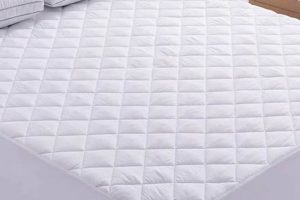
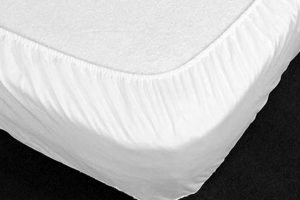
The process of removing moisture from a mattress cover after washing is essential for maintaining its cleanliness and prolonging its lifespan. Improper drying can lead to the growth of mold and mildew, compromising the protector’s ability to safeguard the underlying mattress. For instance, leaving a damp cover folded in a laundry basket can foster an environment conducive to bacterial proliferation.
Proper moisture removal is crucial not only for hygiene but also for preserving the integrity of the protector’s materials. Certain materials, such as waterproof membranes, can be damaged by excessive heat or prolonged dampness. Furthermore, a thoroughly dried cover ensures a comfortable sleeping surface and prevents unpleasant odors. Historically, methods for drying involved simple air drying, but modern appliances offer quicker and more controlled options.
The following sections will outline various methods for moisture extraction, including machine drying and air drying, while addressing specific considerations for different cover materials and constructions to ensure optimal results and longevity of the mattress shield.
Drying Strategies for Mattress Covers
This section provides essential guidance on effectively drying a mattress cover to maintain hygiene and prolong its lifespan. Adherence to these strategies will ensure optimal results.
Tip 1: Always consult the care label. The manufacturer’s instructions provide specific guidance regarding acceptable drying methods, temperature settings, and potential restrictions. Deviation from these instructions may damage the cover.
Tip 2: If machine drying is permitted, use a low heat setting. High heat can compromise the waterproof or water-resistant properties of the cover’s membrane. A low heat setting minimizes the risk of damage.
Tip 3: Avoid over-drying. Prolonged exposure to heat, even on a low setting, can shrink or warp the cover. Check the cover frequently during the drying cycle to prevent excessive drying.
Tip 4: For air drying, choose a well-ventilated area. Adequate airflow facilitates rapid moisture evaporation and reduces the likelihood of mold or mildew growth. Direct sunlight, while effective, can fade colored covers.
Tip 5: Ensure the cover is completely dry before re-installing it on the mattress. Residual moisture can create a breeding ground for bacteria and compromise the integrity of the mattress.
Tip 6: If using a clothesline, position the cover to maximize airflow. Secure the cover with clothespins to prevent it from falling and ensure even drying.
Tip 7: Consider using dryer balls to improve airflow and reduce drying time. Dryer balls help to separate the cover’s layers, promoting more efficient moisture evaporation.
Proper drying practices are critical for preserving the quality and functionality of the mattress cover. Following these tips will help ensure a clean, comfortable, and healthy sleeping environment.
The concluding section will summarize the key points and offer final recommendations for maintaining a clean and hygienic mattress protector.
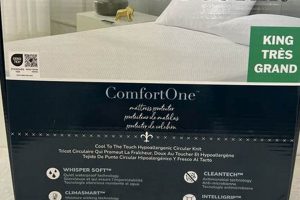
1. Care Label

The care label on a mattress protector serves as the primary source of information regarding approved methods for its care, including drying. Neglecting the instructions provided can result in damage to the protector, voiding any warranties and compromising its intended function.
- Material Composition
The label typically specifies the materials used in the protector’s construction. Different materials, such as cotton, polyester, or polyurethane membranes, react differently to heat and drying methods. Understanding the material composition allows for selecting the most appropriate drying technique to prevent shrinkage, melting, or degradation of the protective layer.
- Recommended Drying Method
The care label often explicitly states whether machine drying is permitted. If allowed, it may specify temperature settings (e.g., tumble dry low) to avoid damaging the waterproof or water-resistant properties. Alternatively, the label may indicate that air drying is the only recommended method, particularly for protectors with delicate membranes.
- Temperature Restrictions
The label will likely highlight maximum temperature limits for machine drying. Exceeding these limits can cause irreversible damage, such as warping, shrinking, or delamination of the protector’s layers. Adhering to the temperature guidelines is crucial for maintaining the protector’s structural integrity and performance.
- Specific Warnings
Some care labels include specific warnings, such as “Do not iron” or “Do not dry clean.” These instructions are essential for avoiding methods that could compromise the functionality of the protector. Ignoring these warnings can lead to permanent damage and render the protector ineffective.
Ultimately, the information provided on the care label is paramount for achieving optimal drying results without compromising the mattress protector’s structural integrity or protective capabilities. Compliance with these instructions is crucial for ensuring the protector remains an effective barrier against spills and allergens, thus extending the life of the underlying mattress.
2. Low Heat
The utilization of low heat is a crucial element in the appropriate moisture removal strategy for a mattress protector. The application of excessive heat can degrade materials, thereby reducing the protector’s effectiveness and longevity. Employing low heat settings mitigates these risks.
- Preservation of Waterproof Membranes
Many mattress protectors incorporate waterproof or water-resistant membranes, often composed of polyurethane or similar materials. These membranes are susceptible to damage when exposed to high temperatures. Excessive heat can cause the membrane to melt, delaminate, or develop cracks, compromising its ability to prevent liquids from penetrating the mattress. Low heat drying helps maintain the integrity of these essential protective layers.
- Prevention of Fabric Shrinkage
Textiles used in mattress protectors, particularly natural fibers like cotton, are prone to shrinkage when subjected to high heat during drying. Shrinkage can alter the protector’s dimensions, making it difficult to fit properly on the mattress. A poorly fitting protector may shift or bunch up, reducing its comfort and effectiveness. Low heat settings minimize the risk of fabric shrinkage, ensuring a consistent fit.
- Reduced Risk of Seam Damage
The seams of a mattress protector are often reinforced with stitching or binding to enhance durability. High heat can weaken these seams, causing them to unravel or break. Damaged seams compromise the structural integrity of the protector, potentially leading to tears or separation of layers. Low heat drying reduces stress on the seams, extending the protector’s overall lifespan.
- Minimizing Chemical Degradation
Some mattress protectors are treated with chemicals to enhance their stain-resistant or antimicrobial properties. High heat can accelerate the degradation of these chemical treatments, diminishing their effectiveness over time. By using low heat for drying, the longevity of these beneficial treatments can be maximized, prolonging the protector’s performance.
The aforementioned facets underscore the significance of low heat application in the drying process. Adherence to this practice safeguards the protector’s constituent materials, maintains structural integrity, and preserves specialized treatments, thus maximizing its lifespan and protective capabilities.
3. Avoid Over-drying

The practice of avoiding over-drying is a critical consideration within the broader context of appropriate moisture removal for mattress protectors. Prolonged exposure to heat, even at low settings, can negatively impact the protector’s physical properties and intended functionality.
- Compromised Material Elasticity
Over-drying can diminish the elasticity of the fabrics used in mattress protectors. Elasticity allows the protector to conform to the mattress and maintain a snug fit. When over-dried, fibers can become brittle and lose their ability to stretch, potentially leading to tears or a diminished ability to properly protect the mattress. A protector that has lost elasticity may also shift and wrinkle during use, reducing its effectiveness.
- Increased Risk of Material Degradation
Prolonged heat exposure accelerates the degradation process of both natural and synthetic materials. While low heat is generally recommended, even this can cause damage if applied for an extended period. Polymers within the protector’s construction can break down, leading to a reduction in its protective capabilities and overall lifespan. This degradation may not always be immediately visible, but it can weaken the material and make it more susceptible to tears and liquid penetration.
- Potential for Shrinkage
While using low heat settings is intended to minimize shrinkage, over-drying can still contribute to this issue, particularly with natural fibers like cotton. Excessive heat causes the fibers to contract more than intended, resulting in a smaller size that may no longer properly fit the mattress. A shrunk protector can leave portions of the mattress exposed, increasing the risk of stains and damage. The degree of shrinkage is often irreversible and can render the protector unusable.
- Accelerated Wear and Tear
The combination of heat and friction during the drying process, when prolonged, can accelerate general wear and tear. This is especially pertinent for protectors that are frequently washed and dried. Over-drying contributes to a faster breakdown of the material, resulting in a reduced lifespan and the need for more frequent replacements. Regular cycles of washing and over-drying contribute significantly to the overall deterioration of the protector, diminishing its value and increasing the cost of ownership.
These facets demonstrate that diligent monitoring and the avoidance of prolonged drying cycles are essential components of proper moisture removal for mattress protectors. By recognizing the potential consequences of over-drying, individuals can implement practices that preserve the protector’s integrity and extend its useful life, thereby safeguarding the underlying mattress effectively.
4. Ventilation

Adequate ventilation is a critical factor in the effective drying of mattress protectors. It directly impacts the rate of moisture evaporation, thereby influencing the overall hygiene and longevity of the protector.
- Accelerated Moisture Evaporation
Ventilation facilitates the rapid removal of moisture from the protector’s fibers. Moving air carries away water molecules, promoting faster drying times and reducing the risk of prolonged dampness. Without sufficient airflow, moisture remains trapped within the fabric, creating an environment conducive to microbial growth. For instance, air drying a protector indoors with open windows yields faster results than in a closed, stagnant room.
- Prevention of Mold and Mildew Growth
Moisture retention fosters the proliferation of mold and mildew, both of which can damage the protector and pose health risks. Good ventilation inhibits the growth of these organisms by reducing humidity and preventing the accumulation of moisture in the fabric. A well-ventilated drying environment, such as an outdoor clothesline on a breezy day, effectively minimizes the risk of mold and mildew formation compared to a humid, enclosed space.
- Reduced Odor Retention
Stagnant air allows odors to linger within the fabric of the protector. Ventilation helps to dissipate these odors by continuously replacing the air surrounding the material. Effective airflow carries away volatile organic compounds (VOCs) and other odor-causing substances, leaving the protector smelling fresh and clean. Airing a protector outdoors on a breezy day significantly reduces odor retention compared to drying it indoors without adequate ventilation.
- Maintaining Material Integrity
Prolonged dampness can weaken fabric fibers and compromise the protector’s structural integrity. Ventilation promotes even drying, minimizing localized areas of moisture concentration that can contribute to degradation. By ensuring consistent airflow, ventilation helps to preserve the protector’s strength, elasticity, and overall durability. Air drying with adequate airflow, compared to tightly folding a damp protector, helps maintain the material’s condition.
These aspects highlight the integral role of ventilation in the drying process. Incorporating strategies that enhance airflow, such as utilizing fans or drying the protector outdoors in a well-ventilated area, contributes significantly to its overall hygiene, longevity, and performance.
5. Complete Dryness
Attaining complete dryness in a mattress protector following washing is not merely a superficial objective but a fundamental prerequisite for maintaining hygiene, preserving material integrity, and ensuring optimal functionality. Failure to achieve complete dryness creates conditions conducive to various detrimental effects.
- Prevention of Microbial Proliferation
Residual moisture within the fabric matrix of a mattress protector provides an ideal breeding ground for bacteria, fungi, and other microorganisms. These organisms thrive in humid environments and can lead to unpleasant odors, staining, and, more significantly, potential health risks. For instance, mold spores can trigger allergic reactions and respiratory problems, while bacteria can contribute to skin irritation. Ensuring complete dryness eliminates this favorable environment, significantly reducing the risk of microbial growth.
- Maintenance of Waterproofing Integrity
Many mattress protectors feature waterproof or water-resistant membranes designed to shield the underlying mattress from spills and accidents. Persistent moisture can compromise the effectiveness of these membranes over time. For example, prolonged exposure to dampness can weaken the adhesive bonds that hold the membrane in place, leading to delamination or the development of pinholes. Complete dryness helps preserve the membrane’s structural integrity and ensures it continues to provide reliable protection.
- Mitigation of Unpleasant Odors
Even if microbial growth is not immediately apparent, residual moisture can trap and amplify existing odors, such as sweat, body oils, or pet dander. These odors can become ingrained in the fabric and difficult to remove, even with subsequent washing. Complete dryness allows the protector to air out completely, preventing the build-up of unpleasant smells and maintaining a fresh, clean scent.
- Preservation of Material Strength and Longevity
Prolonged exposure to moisture can weaken the fibers of the mattress protector, reducing its overall strength and durability. Dampness can cause fibers to break down more quickly, leading to tears, fraying, and a shorter lifespan. Complete dryness helps preserve the integrity of the material, ensuring the protector can withstand repeated washing and use without compromising its protective capabilities.
The aforementioned facets underscore the critical importance of achieving complete dryness when addressing “how to dry mattress protector”. A comprehensive understanding of these interdependencies is paramount for ensuring the long-term performance, hygiene, and overall value of the protector.
6. Proper Positioning

The disposition of a mattress protector during the drying process, termed ‘proper positioning,’ directly influences drying efficiency and overall outcome. Incorrect positioning impedes airflow, leading to uneven drying, prolonged moisture retention, and potential microbial growth. Conversely, optimized positioning maximizes exposure to air, facilitating rapid and uniform moisture evaporation. For instance, draping a protector flat on a clothesline allows for superior air circulation compared to bunching it up in a laundry basket. This difference in air exposure has a causal effect on the time required for complete drying and the likelihood of developing musty odors.
The significance of proper positioning extends beyond simple convenience. Certain mattress protectors incorporate multiple layers or specialized materials designed for specific functionalities. When a protector is incorrectly positioned, these layers may remain compressed, hindering the release of trapped moisture. Consider a quilted protector with a waterproof backing; if the quilted side is facing down on a flat surface, air circulation is restricted, and the backing remains damp. Proper positioning in such cases involves ensuring both sides are exposed to adequate airflow. This understanding has practical significance in preventing premature degradation of the waterproofing layer and extending the life of the protector.
In conclusion, proper positioning is not merely a supplemental step but an integral component of effective drying practices. Challenges may arise in limited space environments, necessitating creative solutions such as utilizing folding drying racks or suspending the protector from multiple points to maximize surface area exposure. Adherence to optimal positioning techniques, along with careful consideration of material composition and environmental factors, ensures the complete and hygienic drying of mattress protectors, thereby contributing to a clean and healthy sleep environment.
Frequently Asked Questions
The following addresses common inquiries regarding efficient and appropriate mattress protector drying techniques. Accurate adherence to these guidelines ensures optimal performance and longevity of the product.
Question 1: Can a mattress protector be dried in a conventional clothes dryer?
The suitability of machine drying depends on the material composition of the protector. The care label should be consulted for specific instructions. If machine drying is permitted, a low heat setting is generally recommended to prevent damage to the waterproof membrane or fabric.
Question 2: What is the optimal air-drying environment for a mattress protector?
An environment with adequate ventilation and low humidity is ideal. Outdoor drying on a clothesline in a shaded area is preferable. Indoor drying should occur in a well-ventilated room, potentially utilizing a fan to increase air circulation.
Question 3: How can shrinkage of a mattress protector be minimized during drying?
Shrinkage can be minimized by adhering to the care label instructions regarding drying temperatures and methods. Avoid high heat settings during machine drying and refrain from over-drying. Air drying is often the gentlest option to prevent dimensional changes.
Question 4: How long does it typically take for a mattress protector to dry completely?
Drying time varies based on material, environmental conditions, and drying method. Machine drying on low heat may take 30-60 minutes. Air drying can take several hours or even overnight, depending on humidity and airflow.
Question 5: What are the indicators of an inadequately dried mattress protector?
Indicators include a damp or clammy feel, musty odors, or visible condensation. Additionally, weight that is noticeably heavier than when dry suggests retained moisture.
Question 6: Is it necessary to dry clean a mattress protector?
Dry cleaning is generally not recommended for most mattress protectors, as the harsh chemicals can damage the waterproof membrane or other specialized features. Washing according to the care label instructions is typically sufficient.
Proper drying practices are essential for preserving the integrity and hygiene of the mattress protector. Consulting the care label and adhering to recommended techniques will ensure optimal results.
The following section will provide a concluding summary of the essential information presented in this article.
How to Dry Mattress Protector
This article has explored the critical aspects of proper moisture extraction from mattress protectors. Key points include adherence to the care label, cautious use of low-heat machine drying, emphasis on thorough air drying with adequate ventilation, and avoidance of over-drying to maintain material integrity. Attention to these details directly influences the lifespan and protective capabilities of the mattress shield.
The diligent application of the techniques outlined herein is paramount for safeguarding not only the mattress protector itself but also the underlying mattress from damage and contamination. Implementing these protocols contributes to a healthier sleep environment and represents a responsible investment in the longevity of bedding components. Future advancements in textile technology may offer alternative drying solutions; however, the fundamental principles of gentle handling and complete moisture removal will remain essential for effective maintenance.