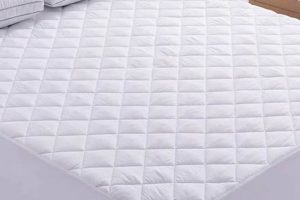
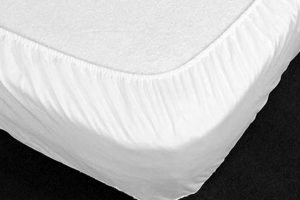
A high-quality encasement designed to shield a sleep surface from microscopic organisms and allergens is essential for maintaining a healthy sleep environment. These specially constructed barriers prevent dust mites from colonizing within the mattress and reduce exposure to their allergenic waste. An effective barrier is characterized by tightly woven fabric with small pore sizes that prevent mite penetration.
The implementation of such protective measures offers numerous advantages. Individuals with allergies or asthma may experience a significant reduction in symptoms due to minimized allergen exposure. Furthermore, these barriers contribute to extending the lifespan of the mattress by safeguarding it from stains, spills, and general wear and tear. Historically, the development of these protective products stems from a growing awareness of indoor air quality and its impact on human health.
Therefore, the ensuing discussion will focus on the key features, materials, and selection criteria to consider when choosing an effective barrier. The properties of different fabrics and construction methods will be examined, along with an overview of certification standards and maintenance requirements.
Optimizing Protection Against Dust Mites
The following recommendations are intended to provide guidance in selecting and maintaining an effective defense against dust mite allergens within the sleeping environment.
Tip 1: Fabric Density Assessment: Examine the thread count and weave of the encasement. Tightly woven fabrics with a thread count exceeding 250 are typically more effective at preventing dust mite penetration.
Tip 2: Pore Size Evaluation: Consider the pore size of the fabric. An optimal pore size is less than 10 microns, effectively blocking dust mites and their allergenic particles.
Tip 3: Material Composition Review: Research different materials, such as microfiber, polyester, or cotton blends. Certain materials exhibit superior barrier properties and breathability, enhancing overall comfort.
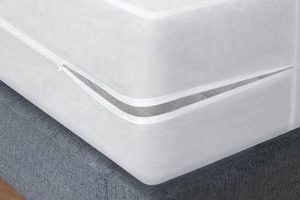
Tip 4: Zipper Security Examination: Ensure the encasement features a high-quality, tightly sealed zipper. This prevents mites from entering or escaping through the zipper closure.
Tip 5: Allergen Barrier Testing Verification: Look for certifications from independent laboratories, such as the Asthma and Allergy Foundation of America (AAFA). These certifications validate the product’s effectiveness in blocking allergens.
Tip 6: Regular Cleaning Implementation: Wash the encasement every 1-2 months in hot water (above 130F or 54C) to eliminate dust mites and allergens. Ensure the encasement is completely dry before reapplying it to the mattress.
Tip 7: Mattress and Pillow Encasement Integration: To achieve comprehensive protection, encase both the mattress and pillows. This minimizes potential allergen reservoirs in the bedding.
Implementing these strategies can significantly reduce dust mite allergen exposure and promote a healthier sleep environment, especially for individuals susceptible to allergies or asthma.
The succeeding section will explore specific product features and brands known for their efficacy in dust mite allergen control.
1. Fabric pore size

Fabric pore size is a critical determinant of a mattress encasement’s efficacy as a barrier against dust mites and their allergenic byproducts. The dimensions of these microscopic openings within the fabric directly influence its ability to prevent mite penetration and allergen passage.
- Barrier Efficacy
The primary role of a mattress encasement is to create a physical barrier. Pore size directly correlates with the ability to block dust mites, which typically range in size from 200 to 300 microns. Pores significantly smaller than this prevent mite entry and colonization within the mattress. Failure to achieve an adequate pore size negates the encasement’s protective function.
- Allergen Containment
Dust mite allergens, primarily Der p 1 and Der f 1, are much smaller than the mites themselves, often ranging from 1 to 10 microns. Therefore, even if mites are blocked, a larger pore size permits allergens to pass through the fabric, reaching the sleeper. Effective encasements must therefore have pore sizes below this range to minimize allergen exposure.
- Measurement and Standards
Pore size is typically measured in microns or nanometers, and its efficacy is assessed through laboratory testing. Certifications from organizations such as the Asthma and Allergy Foundation of America (AAFA) often require specific pore size standards to be met. Adherence to these standards ensures a certain level of proven protection.
- Material and Weave Influence
The type of material and the weave pattern significantly impact pore size. Tightly woven fabrics, such as microfiber or tightly woven polyester, generally exhibit smaller pore sizes compared to looser weaves like knit cotton. The manufacturing process and finishing treatments also contribute to the final pore size achieved.
In summary, fabric pore size is a fundamental attribute of a high-quality mattress encasement. A smaller pore size directly translates to enhanced barrier protection against both dust mites and their allergenic particles, contributing significantly to a healthier sleep environment for allergy sufferers. Selecting an encasement with a verified small pore size is therefore a crucial factor in minimizing allergen exposure.
2. Zippered enclosure quality
The integrity of a zippered enclosure significantly influences a mattress encasement’s effectiveness in mitigating dust mite allergen exposure. A compromised zipper can negate the protective benefits of otherwise high-quality materials and construction.
- Seal Integrity and Mite Migration
A tightly sealed zipper prevents dust mites from entering or exiting the encasement. Gaps or loose teeth permit mite migration, compromising the barrier. Examples include tightly woven fabric flaps covering the zipper to eliminate weak points, and auto-locking zippers preventing accidental opening. A failure in this area renders the encasement ineffective.
- Durability and Longevity
The zipper must withstand repeated use and washing without failing. Inferior zippers are prone to breakage or separation, reducing the lifespan of the encasement. High-quality zippers, such as those constructed from durable nylon or featuring reinforced stitching, contribute to the long-term performance of the product. The opposite, cheap zippers, will fail after a few washes.
- Allergen Permeability
Even with a tightly closed zipper, some designs may allow allergen particles to pass through. Zippers with larger teeth or loosely woven fabric surrounding the zipper are more susceptible to allergen leakage. Optimal designs incorporate a fine-toothed zipper with a tightly sealed fabric covering to minimize allergen permeability. Look for encasements that cover the zipper completely so it is effective.
- Ease of Use and Maintenance
While a tight seal is critical, the zipper must also be easy to operate. Stiff or difficult-to-close zippers discourage regular washing and maintenance, impacting long-term allergen control. Designs featuring smooth-gliding zippers and robust pull tabs encourage proper usage and care, promoting a consistent protective environment.
In summary, the quality of the zippered enclosure is a non-negotiable feature of a dust mite mattress encasement. A secure, durable, and allergen-resistant zipper is essential for maintaining a continuous barrier against dust mites and their allergenic particles. Prioritizing this aspect ensures the encasement effectively contributes to a healthier sleep environment, reinforcing that a “best dust mite mattress protector” is not just about the fabric itself, but the entire construction.
3. Material allergen barrier
The material composition of a mattress encasement is intrinsically linked to its effectiveness as a dust mite barrier. Material choice directly influences pore size, breathability, durability, and ultimately, the degree of allergen protection afforded. The relationship is causative: specific materials, due to their inherent properties and weave structures, either facilitate or impede the passage of dust mites and their associated allergens. An effective “best dust mite mattress protector” invariably relies on materials engineered to minimize allergen permeability. For instance, tightly woven microfibers, often constructed from polyester or nylon blends, demonstrate a higher barrier efficiency compared to loosely woven cotton fabrics. The tighter weave physically restricts the passage of dust mites and larger allergen particles.
Consider the practical scenario of an individual with severe dust mite allergies. If their mattress is encased in a protector made of standard cotton, the relatively large pore size allows both dust mites and allergens to penetrate. This results in continued exposure, exacerbating allergic symptoms. Conversely, if the mattress is encased in a protector made of tightly woven polyester microfiber, allergen exposure is significantly reduced, leading to a noticeable improvement in symptoms. This underscores the importance of material selection. Furthermore, certain materials may undergo specialized treatments to enhance their barrier properties, such as coatings designed to further reduce pore size without compromising breathability. The selection of appropriate materials directly dictates the effectiveness of the mattress protector.
In conclusion, the material allergen barrier constitutes a fundamental component of any “best dust mite mattress protector”. Effective materials provide a physical impediment to dust mites and their allergens, contributing to a healthier sleep environment. The challenge lies in balancing barrier efficacy with breathability and comfort, necessitating careful consideration of material properties and manufacturing techniques. Understanding the critical role of the material allergen barrier allows for informed consumer choices, ultimately optimizing allergen control in the bedroom and contributing to improved respiratory health.
4. Third-party certifications

Third-party certifications serve as independent verification of a dust mite mattress protector’s performance claims. These certifications, awarded by reputable organizations, indicate that the product has undergone rigorous testing and meets specific standards for allergen impermeability, fabric quality, and overall effectiveness. The absence of such certification casts doubt on a product’s ability to function as a “best dust mite mattress protector.” For example, the Asthma and Allergy Foundation of America (AAFA) certification signifies that a protector has been tested and proven to reduce allergen exposure. This validation provides consumers with confidence in the product’s ability to alleviate allergy symptoms, and the ability of the manufacturer to meet the claim.
The practical significance of third-party certifications extends beyond mere marketing claims. These certifications often involve independent laboratory testing to determine pore size, fabric breathability, and resistance to dust mite penetration. A certified protector must demonstrate that it can effectively block dust mites and their allergenic particles from passing through the fabric, thus reducing allergen levels in the sleeping environment. A consumer selecting a mattress protector lacking certification relies solely on the manufacturer’s assertions, potentially leading to ineffective allergen control. Products that are certified are tested regularly to ensure they are still meeting the claim.
In summary, third-party certifications are critical for identifying a “best dust mite mattress protector.” They provide objective evidence of a product’s efficacy, ensuring that consumers can make informed decisions based on verified performance rather than unsubstantiated claims. Prioritizing certified products is essential for individuals seeking reliable allergen control and a healthier sleep environment. Conversely, ignoring certifications can lead to the purchase of substandard products that fail to deliver the promised benefits, and put you and your family at risk.
5. Ease of Cleaning
The practicality of a mattress protector hinges significantly on its ease of cleaning. Frequent and proper cleaning is crucial for maintaining the encasement’s barrier properties and minimizing allergen accumulation, making it a key attribute of any effective dust mite mattress protector.
- Washability and Allergen Removal
A mattress protector’s ability to withstand regular machine washing is paramount. Hot water (above 130F or 54C) is necessary to kill dust mites and denature allergenic proteins. Protectors that cannot withstand these temperatures or frequent wash cycles compromise long-term allergen control. An impractical protector will quickly become a source of allergens rather than a shield against them.
- Drying Requirements and Convenience
The drying process is as important as washing. Protectors that require extended drying times or specialized drying methods are less likely to be cleaned regularly. Ideally, a protector should be machine-dryable on a medium or low heat setting to prevent damage to the fabric and maintain its protective properties. Complicated drying requirements discourage frequent cleaning.
- Material Durability and Cleaning Impact
The chosen material must maintain its integrity after repeated washings. Shrinkage, seam damage, or loss of barrier properties after cleaning render the protector ineffective. Durable materials, such as tightly woven polyester or microfiber blends, are better suited to withstand frequent cleaning without compromising performance. Material degradation reduces the protector’s lifespan and protective capabilities.
- Stain Resistance and Maintenance
An effective protector should also resist staining and be easy to spot-clean between washings. Stain resistance minimizes the need for harsh cleaning agents that could damage the fabric or reduce its allergen barrier properties. Easy spot-cleaning encourages regular maintenance, contributing to a cleaner sleep environment.
In summary, ease of cleaning is an indispensable characteristic of any “best dust mite mattress protector.” The ability to wash and dry the protector effectively, without compromising its durability or allergen barrier properties, ensures long-term performance and a consistently clean sleep environment. A protector that is difficult to clean is simply not practical for sustained allergen control.
Frequently Asked Questions
The following addresses common inquiries regarding mattress protectors designed to mitigate dust mite allergen exposure.
Question 1: How frequently should a dust mite mattress protector be washed?
It is recommended to launder the mattress protector every 6-8 weeks. Individuals with severe allergies may benefit from more frequent washing, perhaps every 2-4 weeks. Always adhere to the manufacturer’s specific washing instructions.
Question 2: Will a dust mite mattress protector eliminate dust mites entirely?
While a high-quality protector significantly reduces dust mite populations within the mattress, complete elimination is unlikely. The protector acts as a barrier, preventing mites from colonizing the mattress core and reducing allergen exposure.
Question 3: Can a dust mite mattress protector be used on any type of mattress?
Yes, protectors are designed to fit a variety of mattress types, including innerspring, memory foam, and latex mattresses. Ensure the protector’s dimensions match the mattress size for a proper fit.
Question 4: Are all mattress protectors equally effective against dust mites?
No, efficacy varies significantly depending on material, pore size, and construction. Protectors with tightly woven fabrics and small pore sizes offer superior protection compared to those with looser weaves.
Question 5: What is the optimal water temperature for washing a dust mite mattress protector?
Hot water, ideally above 130F (54C), is recommended to kill dust mites and denature allergens. Always check the care label to ensure the protector can withstand high temperatures.
Question 6: Does a dust mite mattress protector require additional bedding protection?
While a mattress protector provides a primary barrier, using additional allergen-impermeable encasements on pillows and regular laundering of bedding further minimizes allergen exposure.
Prioritizing these actions leads to a notable reduction in dust mite allergen exposure and promotes a healthier sleep environment.This concludes the FAQ section.
The subsequent section provides practical steps for choosing the most appropriate mattress protector.
Concluding Remarks
The preceding discussion has elucidated the multifaceted nature of selecting an optimal barrier against dust mites. The material composition, pore size, zippered enclosure quality, third-party certifications, and ease of cleaning each contribute to the overall effectiveness of a mattress encasement. A deficiency in any of these areas compromises the encasement’s ability to mitigate allergen exposure and promote a healthier sleep environment. Thus, a comprehensive assessment of these factors is paramount.
The pursuit of a sleep environment demonstrably free from dust mite allergens necessitates informed decision-making and diligent maintenance practices. Sustained attention to these principles will yield significant benefits for individuals seeking relief from allergy symptoms and a demonstrably improved quality of life. The selection of a “best dust mite mattress protector” is therefore not merely a purchase, but an investment in long-term respiratory health and well-being. Future innovations in material science and manufacturing techniques hold the potential to further enhance the efficacy and accessibility of these protective measures.