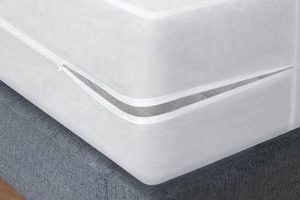
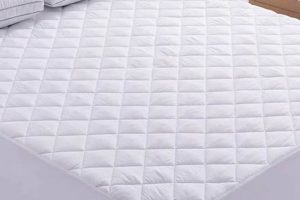
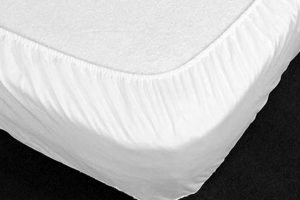
A bedding encasement designed to shield a standard single-sized bed covering from fluids, allergens, and pests, featuring a full perimeter closure, represents a significant advance in sleep hygiene. As an example, this protective layer completely surrounds the mattress, securing with a zip, to provide 360-degree defense.
The importance of using such a product lies in its ability to prolong the lifespan of the core bedding. Its benefits extend to improving indoor air quality by creating a barrier against dust mites and other allergens that accumulate within the mattress fibers over time. Historically, less effective methods such as fitted sheets were used to prevent mattress damage, but these offered minimal protection against deeper infiltration or pest intrusion.
The following sections will delve into the specific materials used in their construction, the key features to consider when making a purchase, proper care and maintenance procedures, and an overview of the market availability for these encasements.
Selecting and Maintaining a Twin Mattress Encasement
Proper selection and maintenance of a twin mattress protector with a zippered closure are critical to ensuring its effectiveness and longevity. The following tips offer guidance on maximizing the benefits of this bedding accessory.
Tip 1: Material Consideration: Prioritize protectors constructed from hypoallergenic and breathable materials. Polyurethane laminates or tightly woven microfiber fabrics offer optimal protection against liquids and allergens while promoting airflow. Avoid vinyl-based protectors, as they may retain heat and lack breathability.
Tip 2: Zipper Quality Assessment: Inspect the zipper mechanism before purchase. A durable, rust-resistant zipper with a secure locking feature is essential to prevent accidental openings and maintain complete encasement. Reinforcements around the zipper area enhance durability.
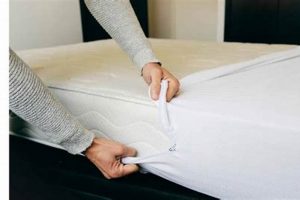
Tip 3: Size and Fit Verification: Confirm the dimensions of the mattress prior to purchasing the encasement. A snug, accurate fit is necessary to prevent shifting and ensure complete protection. Deep pocket protectors may be required for thicker mattresses.
Tip 4: Allergen Barrier Evaluation: Look for protectors specifically labeled as allergen-proof. These products feature tightly woven fabrics with pore sizes small enough to block dust mites, pet dander, and other common allergens. Certification from reputable organizations may indicate verified effectiveness.
Tip 5: Waterproofing Technologies: Evaluate the type of waterproofing used in the protector. Waterproof laminates should be breathable and non-toxic. Protectors that rely solely on chemical treatments may lose their effectiveness after repeated washings.
Tip 6: Regular Cleaning Schedule: Follow the manufacturer’s instructions for laundering. Frequent washing is recommended to remove accumulated allergens and maintain hygiene. Avoid harsh detergents or bleach, as these may damage the protective layers.
Tip 7: Inspection for Damage: Periodically inspect the protector for rips, tears, or zipper malfunctions. Promptly repair or replace damaged protectors to prevent compromised protection. A small tear can negate the effectiveness of the entire encasement.
Consistent adherence to these guidelines will maximize the lifespan and protective capabilities of a twin mattress encasement, ensuring a cleaner and healthier sleep environment. Selecting the appropriate product and implementing diligent maintenance procedures are key to safeguarding the mattress and promoting overall well-being.
The subsequent sections of this article will focus on common issues related to using mattress protectors and strategies for resolving them.
1. Waterproof Barrier

A critical function of a twin mattress protector with a zippered closure lies in its provision of a waterproof barrier. This barrier serves as a primary defense mechanism against liquid intrusion into the mattress core. Liquid spills, accidental bedwetting, or even perspiration can permeate unprotected mattresses, fostering mold growth and bacterial proliferation. The resulting damage compromises mattress integrity and sanitation, potentially leading to unpleasant odors and health hazards. The implementation of a waterproof barrier effectively mitigates these risks.
The efficacy of the waterproof barrier is dependent on the materials and construction techniques employed. Common materials include polyurethane laminates and tightly woven synthetic fabrics treated with water-resistant coatings. These materials must demonstrate both impermeability to liquids and breathability to prevent moisture accumulation within the mattress protector itself. A poorly constructed or damaged barrier can lead to localized saturation, negating the intended protective function. For example, a ripped seam or compromised zipper area on the mattress protector allows liquid to seep through, rendering the waterproof element ineffective. Regular inspection and maintenance are therefore critical to ensure the barrier’s continued performance.
In summary, the waterproof barrier represents a cornerstone of a twin mattress protector’s utility. Its effectiveness is directly correlated with material quality, construction integrity, and diligent maintenance. Failure to maintain the barrier’s impermeability compromises the protector’s ability to safeguard the mattress, potentially leading to costly damage and hygiene concerns.
2. Allergen Resistance
The efficacy of a zippered twin mattress protector is significantly enhanced by its capacity to resist allergens. Dust mites, pet dander, mold spores, and pollen commonly infiltrate mattresses, triggering allergic reactions and respiratory distress in sensitive individuals. These microscopic irritants thrive within the porous environment of mattress fibers, creating a reservoir of allergens that regular cleaning methods often fail to eliminate. A protector engineered with inherent allergen resistance acts as a physical barrier, preventing these particles from penetrating the mattress core.
The effectiveness of allergen resistance is directly linked to the protector’s material composition and construction. Tightly woven fabrics with small pore sizes, often utilizing microfiber or specialized synthetic blends, impede the passage of allergens. Specifically, encasements certified under standards like the Asthma and Allergy Foundation of America (AAFA) demonstrate validated allergen barrier performance. Consider, for example, a child with asthma whose nighttime symptoms are exacerbated by dust mite allergens. Employing a zippered twin mattress protector with proven allergen resistance can demonstrably reduce exposure and improve sleep quality. Failure to address this issue can lead to persistent allergic symptoms and necessitate ongoing medical intervention.
In conclusion, allergen resistance constitutes an integral attribute of a twin mattress protector with a zippered closure. Its capacity to mitigate allergen exposure directly contributes to improved sleep quality and overall respiratory health. The selection of a protector with verified allergen resistance certifications is crucial for individuals seeking to minimize allergic triggers within the sleep environment.
3. Complete Encasement

Complete encasement defines a crucial attribute of a twin mattress protector with a zippered closure. It signifies that the protector fully surrounds the mattress, encompassing all six sides, thereby creating a sealed barrier. This thorough coverage is essential for maximum protection against liquids, allergens, and pests. A failure to fully encase the mattress compromises the protector’s effectiveness, leaving vulnerable areas exposed to potential contaminants. For instance, a protector that only covers the top and sides, leaving the bottom exposed, allows dust mites to colonize the unprotected area, negating the benefits of the partial barrier.
The zippered closure is integral to achieving complete encasement. A durable, properly functioning zipper ensures a secure seal, preventing any gaps or openings through which liquids or pests could penetrate. The zipper’s placement and construction are therefore critical design considerations. Zippers located along the bottom edge, reinforced with fabric flaps, provide a more robust seal than those placed on the top or sides. Imagine a scenario where a child spills juice on the bed. A fully encased protector with a secure zipper will prevent the juice from reaching the mattress, while a poorly designed or damaged zipper could lead to seepage, requiring extensive cleaning or mattress replacement. The importance of complete encasement extends beyond spill protection, safeguarding against bed bugs, which can only be effectively prevented from infesting a mattress through complete and sealed encasement.
In summary, complete encasement is not merely a feature of a twin mattress protector with a zippered closure, but rather a fundamental requirement for its optimal performance. The presence of a secure, reliable zipper is paramount in ensuring the integrity of this encasement. While challenges exist in maintaining the zipper’s functionality and ensuring a proper fit for various mattress depths, the benefits of complete protection outweigh these considerations. A thorough understanding of the connection between complete encasement and zippered protectors enables informed purchasing decisions, ultimately contributing to a cleaner, healthier sleep environment.
4. Secure Zipper

The secure zipper constitutes a critical component of a twin mattress protector with a zippered closure. Its functionality directly impacts the protector’s ability to provide complete and reliable mattress encasement. A compromised zipper undermines the entire protective function, rendering the encasement vulnerable to liquid spills, allergen infiltration, and pest intrusion. For instance, a zipper that easily separates or lacks a robust locking mechanism creates gaps through which bed bugs can enter and colonize the mattress, negating the protector’s intended purpose. The secure zipper, therefore, is not merely an accessory but an indispensable element ensuring the protector’s effectiveness.
The practical significance of a secure zipper extends beyond simple closure. Its design must withstand repeated use and laundering cycles without degradation. Materials such as rust-resistant metals or durable polymers are often employed to ensure longevity. Furthermore, features like reinforced stitching around the zipper track and a fabric flap covering the zipper teeth provide added protection and prevent snagging on bedding. The choice of zipper type, such as a self-repairing zipper or one with a secure locking pull, further enhances its reliability. A real-world example would be a college student relying on a twin mattress protector in a dorm environment. The high volume of use and potential for accidental spills necessitates a secure and durable zipper to maintain a hygienic sleep surface throughout the academic year.
In summary, the secure zipper is inextricably linked to the overall performance of a twin mattress protector with a zippered closure. Its presence ensures complete mattress encasement, providing a robust defense against a variety of threats. While seemingly a minor detail, the zipper’s quality and design have a profound impact on the protector’s longevity and effectiveness, ultimately contributing to a cleaner, healthier, and more pest-free sleep environment. The challenge lies in consistently manufacturing and selecting protectors with zippers that meet stringent durability and security standards.
5. Breathable Fabric
Breathable fabric, when incorporated into a twin mattress protector with a zippered closure, directly influences user comfort and the long-term integrity of the mattress itself. The primary function of breathable fabric in this context is to facilitate air circulation, mitigating moisture accumulation and preventing overheating during sleep. This is achieved through the fabric’s inherent properties, such as its weave structure and fiber composition, which allow for the passage of air and water vapor. Non-breathable materials, conversely, trap moisture, leading to discomfort and potentially fostering the growth of mold and bacteria within the mattress. For example, a protector made of impermeable plastic would prevent airflow, resulting in a hot and humid sleep environment, especially during warmer months.
The implementation of breathable fabrics also contributes to the overall longevity of the mattress. By allowing moisture to evaporate, the protector minimizes the risk of internal mattress damage caused by prolonged dampness. This is particularly significant considering that mattresses are difficult to clean and are susceptible to degradation from accumulated moisture. Materials like cotton, bamboo, or specialized synthetic microfibers are often employed for their breathability and moisture-wicking capabilities. In a healthcare setting, for instance, a twin mattress protector with a zippered closure made of breathable, waterproof fabric is crucial for maintaining patient hygiene and preventing the spread of infection, while also ensuring patient comfort.
In conclusion, breathable fabric is an essential component of a twin mattress protector with a zippered closure, directly affecting both sleep comfort and mattress preservation. The careful selection of breathable materials is therefore paramount when purchasing such a product. While challenges exist in balancing breathability with waterproofing and allergen protection, the long-term benefits of improved comfort and mattress longevity make breathable fabric a non-negotiable feature. Its proper implementation enhances the value and functionality of the mattress protector, contributing to a healthier and more comfortable sleep environment.
6. Easy Maintenance
Easy maintenance is a pivotal attribute of a twin mattress protector with a zippered closure, directly impacting its practicality and long-term utility. The design and materials employed should facilitate simple and effective cleaning procedures, ensuring hygiene and prolonging the protector’s lifespan.
- Machine Washability
The capacity to withstand machine washing cycles is paramount. A twin mattress protector with a zippered closure should be constructed from materials that maintain their integrity and protective qualities after repeated washings. For instance, protectors that shrink excessively or delaminate after washing render their protective functions compromised. Protectors labeled as “machine washable” typically undergo testing to ensure durability under standard washing conditions.
- Quick Drying Properties
Materials that dry rapidly after washing contribute significantly to easy maintenance. Prolonged drying times can lead to mold or mildew growth, especially in humid environments. Quick-drying fabrics minimize this risk, allowing for faster re-application of the protector onto the mattress. For example, a protector made from a blend of polyester and cotton will generally dry faster than one made solely from cotton.
- Stain Resistance
The inherent stain resistance of the protector’s material simplifies spot cleaning and reduces the frequency of full washing cycles. Fabrics treated with stain-resistant finishes repel liquids and prevent them from deeply penetrating the material fibers. This reduces the likelihood of permanent stains that can compromise the protector’s appearance and hygiene. A protector with a polyurethane laminate, for example, is typically more stain-resistant than one made from untreated cotton.
- Zipper Durability
Easy maintenance extends to the zippered closure mechanism. A durable, rust-resistant zipper is essential for withstanding repeated opening and closing during washing and handling. A zipper that breaks or becomes difficult to operate compromises the protector’s encasement function and adds complexity to the maintenance process. Protectors with reinforced stitching around the zipper are generally more durable and easier to maintain.
The facets of machine washability, quick drying properties, stain resistance, and zipper durability collectively define the ease of maintenance offered by a twin mattress protector with a zippered closure. Selection of a protector incorporating these features enhances convenience and ensures the longevity of both the protector and the mattress it safeguards.
Frequently Asked Questions
The following questions address common concerns regarding the use and selection of twin mattress protectors with zippered closures. Answers are provided to offer clarity and facilitate informed decision-making.
Question 1: What is the lifespan of a twin mattress protector with a zippered closure?
The lifespan of a twin mattress protector with a zippered closure is contingent upon several factors, including material quality, usage frequency, and maintenance practices. Generally, a well-maintained protector constructed from durable materials can last between three to five years. Regular washing and prompt attention to damages can extend this lifespan.
Question 2: Are all twin mattress protectors with zippered closures waterproof?
Not all twin mattress protectors with zippered closures are inherently waterproof. Waterproofing capabilities depend on the specific materials and construction techniques employed. Protectors utilizing polyurethane laminates or tightly woven synthetic fabrics with waterproof coatings offer water resistance. Product descriptions should be carefully reviewed to confirm waterproofing characteristics.
Question 3: How frequently should a twin mattress protector with a zippered closure be washed?
A twin mattress protector with a zippered closure should ideally be washed every one to two months. More frequent washing may be necessary for individuals with allergies or in cases of spills or accidents. Manufacturer instructions should always be consulted to determine the appropriate washing procedure and frequency.
Question 4: Can a twin mattress protector with a zippered closure eliminate bed bugs?
A twin mattress protector with a zippered closure can aid in the prevention and management of bed bug infestations. The complete encasement provided by the protector prevents bed bugs from accessing and infesting the mattress. However, the protector alone cannot eliminate existing bed bug infestations; professional pest control services are typically required.
Question 5: What features should be prioritized when selecting a twin mattress protector with a zippered closure for allergy sufferers?
When selecting a twin mattress protector with a zippered closure for allergy sufferers, prioritize protectors labeled as hypoallergenic and certified by reputable organizations such as the Asthma and Allergy Foundation of America (AAFA). Look for tightly woven fabrics with small pore sizes designed to block dust mites and other allergens.
Question 6: Can a heated blanket be used in conjunction with a twin mattress protector with a zippered closure?
The compatibility of a heated blanket with a twin mattress protector with a zippered closure depends on the materials of both products. Consult the manufacturer’s instructions for both the protector and the heated blanket to ensure safe usage and prevent overheating or damage. Breathable protectors are generally preferred when used with heated blankets.
In summary, twin mattress protectors with zippered closures offer valuable protection against liquids, allergens, and pests. Careful selection, proper maintenance, and adherence to manufacturer instructions are essential to maximizing the benefits and lifespan of the protector.
The following section will address some of the challenges associated with using these mattress protectors.
Twin Mattress Protector Zippered
This exposition has explored the attributes and importance of the twin mattress protector zippered encasement. Key aspects reviewed encompass the provision of waterproof and allergen-resistant barriers, the significance of complete encasement and a secure zipper, the value of breathable fabric for comfort and mattress preservation, and the crucial role of easy maintenance in prolonging product lifespan. The analysis of frequently asked questions provided further clarification on practical applications and limitations.
The informed selection and diligent upkeep of a twin mattress protector zippered remain essential for safeguarding mattress integrity, promoting hygienic sleep conditions, and optimizing long-term investment. Continued research and development in material science and manufacturing techniques are anticipated to further enhance the effectiveness and user experience of these protective encasements, solidifying their role in maintaining a healthy sleep environment.