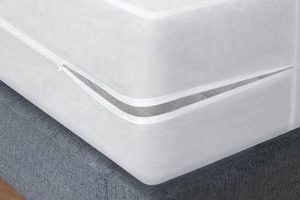
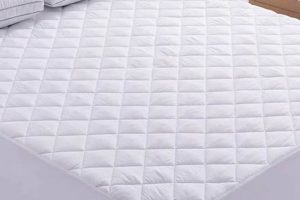
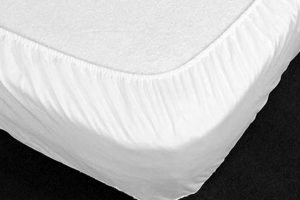
Encasements designed to shield mattresses from infestation and allergens commonly incorporate a zipper closure for a secure fit. These barriers, typically constructed from tightly woven fabrics or laminated materials, aim to create an impermeable layer around the mattress. A compromised mattress can quickly become a haven for unwanted pests.
The use of such mattress covers provides a proactive defense against potential problems. By completely enclosing the mattress, these protectors restrict access and prevent these pests from establishing colonies within the bedding. This approach can reduce the need for costly and disruptive treatments and can help maintain a healthier sleep environment. Historically, protecting bedding from contaminants has been a concern, with evolving solutions developed over time to address specific challenges.
The following sections will delve into the specific features of effective mattress encasements, examine the materials commonly used in their construction, and outline strategies for proper selection and maintenance to ensure optimal performance and longevity.
Protective Mattress Encasement Usage Guidelines
These guidelines detail essential practices for utilizing mattress encasements to mitigate infestation and allergen concerns. Proper application and maintenance are critical for optimal performance.
Tip 1: Select Appropriately Sized Encasements: Ensure the encasement precisely matches the mattress dimensions (length, width, and depth). An ill-fitting encasement compromises its protective capabilities, leaving vulnerable areas exposed.
Tip 2: Thoroughly Inspect the Mattress Before Encasement: Prior to installation, meticulously examine the mattress for any signs of existing infestation. Address any issues before encasing to avoid trapping pests within the protector.
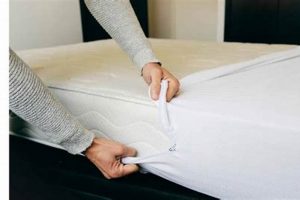
Tip 3: Employ Correct Installation Procedures: Carefully follow the manufacturer’s instructions for installing the encasement. Pay particular attention to securely closing the zipper and ensuring a tight seal around the entire mattress.
Tip 4: Regularly Inspect the Encasement for Damage: Periodically examine the encasement for tears, punctures, or zipper malfunctions. Promptly repair or replace damaged encasements to maintain continuous protection.
Tip 5: Practice Proper Encasement Maintenance: Clean the encasement surface regularly according to the manufacturer’s recommendations. This practice removes allergens and potential food sources, preventing pest attraction.
Tip 6: Consider Additional Protective Measures: Complement encasement usage with other preventative strategies, such as regularly vacuuming the surrounding area and using appropriate pest control measures, if necessary.
Tip 7: Choose Quality Materials: Opt for encasements constructed from tightly woven fabrics or laminated materials specifically designed to prevent pest penetration. Certifications and laboratory testing can indicate product effectiveness.
Adhering to these guidelines maximizes the effectiveness of protective mattress encasements in safeguarding against infestation and allergen exposure, contributing to a healthier sleep environment.
The subsequent sections will provide further information on specific encasement materials, selection criteria, and advanced preventative techniques.
1. Impermeable Barrier
The concept of an impermeable barrier is fundamental to the effectiveness of protective mattress encasements in controlling pests. This feature acts as the primary defense, preventing ingress and egress, and is directly linked to the success of these products.
- Material Density and Weave
The density and weave of the fabric used in the encasement directly determine its impermeability. Tightly woven fabrics, such as those with small pore sizes, prevent pests from penetrating the material. Examples include tightly woven polyester or microfiber fabrics. The implication is that a loose weave or easily penetrable material renders the encasement ineffective.
- Lamination and Coatings
Some encasements incorporate lamination or coatings to enhance their barrier properties. Polyurethane laminates, for instance, create a waterproof and pest-proof layer. However, these coatings must be durable and resistant to wear and tear. If the lamination delaminates, the barrier is compromised, and infestation can occur.
- Seam Construction
Even with impermeable materials, improperly constructed seams can create vulnerabilities. Seams should be tightly stitched and potentially taped or bound to prevent pests from entering through these weak points. Poor seam construction negates the benefits of the impermeable material, creating access points for pests.
- Zipper Design and Seal
The zipper itself is a potential point of failure for the impermeable barrier. Specialized zippers with tight closures and fabric flaps covering the zipper teeth are necessary to prevent pests from squeezing through. A poorly designed or damaged zipper compromises the entire encasement’s protective capability.
These facets collectively underscore the importance of an impermeable barrier in relation to protective mattress encasements. The effectiveness of the encasement depends not only on the material’s inherent properties but also on its construction, seam integrity, and zipper design. Any weakness in these areas can compromise the barrier and allow pests to penetrate, rendering the encasement ineffective.
2. Zippered Closure

The integrity of the zippered closure in protective mattress encasements is paramount to their effectiveness in mitigating problems. The closure serves as the final barrier, ensuring complete encapsulation of the mattress. Its design and functionality directly impact the encasement’s ability to prevent infestations and maintain a barrier against allergens.
- Zipper Type and Construction
The type of zipper utilized significantly affects the security of the closure. Finer-toothed zippers, particularly those with tightly interlocking elements, offer greater resistance to penetration. Furthermore, reinforced zipper tape and robust construction enhance the overall durability and longevity of the closure. The implication is that a poorly constructed zipper with large teeth presents a potential entry point.
- Zipper Flap or Guard
Many protective encasements incorporate a fabric flap or guard that covers the zipper. This feature serves two primary purposes: it provides an additional layer of protection against pests attempting to bypass the zipper teeth, and it prevents direct contact between the zipper and the skin, enhancing comfort. The absence of a zipper flap increases the risk of compromise.
- Closure Security and Locking Mechanisms
Some encasements feature locking mechanisms or zipper pulls that can be secured to prevent accidental opening. These mechanisms add an extra layer of security, particularly in environments where tampering or accidental unzipping is a concern. The lack of a locking mechanism can lead to unintentional exposure of the mattress.
- Durability and Longevity
The durability of the zippered closure is crucial for the long-term effectiveness of the encasement. Frequent use and laundering can stress the zipper, potentially leading to damage or failure. High-quality zippers, designed to withstand repeated use and laundering, are essential for maintaining the integrity of the barrier over time. Deterioration of the zipper compromises the entire protective function.
In conclusion, the zippered closure represents a critical component of protective mattress encasements, demanding careful consideration in terms of design, construction, and durability. A compromised zipper undermines the entire protective function, rendering the encasement ineffective in preventing infestation and allergen exposure. Attention to these details is essential for ensuring the long-term performance and reliability of these products.
3. Material Durability

Material durability is a critical factor in the effectiveness of zippered mattress protectors in preventing and controlling bed bug infestations. The protector’s ability to withstand wear, tear, and repeated cleaning directly impacts its long-term protective capabilities. Compromised material integrity can negate the intended function, creating vulnerabilities for bed bug entry and harborage.
- Abrasion Resistance
The fabric of the mattress protector must resist abrasion from regular use, movement against the mattress, and laundering. Fabrics with low abrasion resistance will degrade over time, creating small tears or worn patches that can provide entry points for bed bugs. For example, a protector made of a thin, loosely woven material may quickly develop holes along seams or edges, allowing bed bugs access to the mattress interior.
- Tear Strength
Tear strength refers to the material’s ability to resist tearing when subjected to stress. Protectors with low tear strength are susceptible to damage from accidental snags, pulls, or sharp objects. A tear in the fabric, even a small one, can compromise the barrier and allow bed bugs to enter and establish themselves within the mattress. Materials like tightly woven polyester or laminated fabrics offer superior tear strength.
- Water Resistance and Washability
While not directly related to bed bug penetration, water resistance and washability are crucial for maintaining the cleanliness and integrity of the protector. Liquids can damage the material over time, weakening its structure and making it more susceptible to tearing. Furthermore, regular washing is necessary to remove allergens and potential food sources that might attract bed bugs. Durable materials that can withstand frequent laundering without shrinking or losing their protective properties are essential.
- Seam Strength
The seams of the mattress protector are often the weakest points, particularly if the stitching is not strong or the thread is low quality. Durable materials must be paired with robust seam construction to prevent separation or unraveling. Reinforced seams and the use of high-strength thread are crucial for maintaining the integrity of the protector’s barrier. A failure at the seams creates a direct pathway for bed bugs to access the mattress.
The various facets of material durability are interconnected in their contribution to the overall effectiveness of zippered mattress protectors. A protector may have a highly impermeable fabric, but if the seams are weak or the material is prone to tearing, its protective function is significantly diminished. Selecting a mattress protector made from durable, high-quality materials and with robust construction is therefore essential for long-term protection against bed bug infestations.
4. Complete Encasement
Complete encasement is a defining characteristic of effective zippered mattress protectors designed to mitigate infestations. This refers to the protector’s ability to fully enclose the mattress on all six sides, creating a sealed barrier. The absence of complete encasement negates the potential benefits of the zippered mattress protector, rendering it vulnerable to pest intrusion. For example, if the protector leaves any portion of the mattress exposedsuch as the area around the zipper or the cornersthese areas become potential entry points for pests. This complete sealing also prevents any existing bugs from escaping the mattress, and also prevent dead bug fragments from escaping and triggering allergies.
The practical application of complete encasement is evident in the selection process. When purchasing a zippered mattress protector, careful attention must be paid to the product’s design and construction. Seams must be securely sealed, and the zipper closure must incorporate a flap or other mechanism to prevent pests from bypassing the zipper teeth. Furthermore, the protector must be properly sized to ensure a snug fit around the entire mattress. A real-world example would be a situation where a homeowner purchases an undersized protector, leaving gaps along the edges. Despite the zippered closure, pests can easily enter through these gaps, rendering the protector ineffective. Therefore, complete encasement is directly linked to successful infestation control.
In summary, complete encasement represents a non-negotiable aspect of zippered mattress protectors intended for pest mitigation. The challenges associated with achieving complete encasement highlight the importance of rigorous product testing and careful consumer selection. By understanding the relationship between complete encasement and the overall effectiveness of the mattress protector, individuals can make informed decisions and implement more effective strategies for managing potential infestations.
5. Regular Inspection
The effectiveness of zippered mattress protectors in preventing and containing bed bug infestations is directly contingent upon regular inspection. The protector itself serves as a passive barrier; its sustained efficacy is determined by proactive monitoring. Failure to conduct routine examinations can negate the protector’s intended function, allowing undetected infestations to proliferate. Consider a scenario where a small puncture occurs in the protector’s fabric. Without regular inspection, this breach may go unnoticed, providing an entry point for bed bugs to colonize within the mattress. The protector, designed to isolate and prevent, then inadvertently facilitates the spread of the infestation.
The practical application of regular inspection involves a systematic assessment of the protector’s integrity. This includes visually examining the fabric for tears, punctures, or seam separation. Particular attention should be paid to areas susceptible to wear and tear, such as corners and edges. The zipper should be inspected for proper closure and any signs of damage. Moreover, the surrounding areas, including the bed frame and nearby furniture, should also be checked for evidence of bed bug activity. For instance, discovering fecal stains or shed skins near the bed frame necessitates a thorough examination of the protector itself. Early detection allows for timely intervention, such as repairing minor damage or replacing the protector entirely, thus preventing a full-blown infestation.
In conclusion, regular inspection represents a critical component of any strategy employing zippered mattress protectors for bed bug control. It transforms a passive barrier into an active defense mechanism. The challenge lies in establishing a consistent inspection routine and educating individuals on what to look for. However, the benefits of early detection and prevention far outweigh the effort required, ensuring the continued efficacy of the protector and safeguarding the sleep environment. This understanding directly links regular inspection to the long-term success of using zippered mattress protectors for bed bug management.
6. Size Specificity
Size specificity constitutes a critical element in the effectiveness of zippered mattress protectors for preventing and managing bed bug infestations. A properly sized protector ensures complete encasement, which is essential to isolating existing infestations or preventing new ones from establishing themselves within the mattress. A mismatch between the mattress dimensions and the protector size compromises the integrity of the barrier, rendering the protector largely ineffective. For instance, a protector that is too small will not fully enclose the mattress, leaving areas exposed to bed bug entry. Conversely, an oversized protector may not fit snugly, creating folds and gaps that provide harborage for bed bugs and allow them to bypass the protective barrier.
The practical implications of size specificity are evident in product selection and installation. Consumers must accurately measure their mattresses (length, width, and depth) and select a protector that corresponds precisely to these dimensions. Manufacturers typically provide size charts to guide this process. However, variations in mattress dimensions even within standard sizes can occur, necessitating careful attention to detail. During installation, the protector must be stretched evenly over the mattress to ensure a snug and wrinkle-free fit. Any excess material should be tucked securely to prevent gaps or folds. A common error is to assume that a “queen” size protector will fit all queen-sized mattresses; however, differences in mattress depth can significantly impact the fit. This underscores the importance of measuring mattress depth and selecting a protector accordingly.
In summary, size specificity is not merely a matter of convenience; it is a fundamental requirement for zippered mattress protectors to function as intended in bed bug prevention and management. The challenges lie in accurately measuring mattresses and selecting appropriately sized protectors. However, the consequences of neglecting size specificity can be significant, potentially leading to continued or new infestations. Therefore, careful attention to size specificity is essential for maximizing the effectiveness of zippered mattress protectors and ensuring a healthy sleep environment.
Frequently Asked Questions
The following addresses common inquiries regarding zippered mattress protectors in relation to bed bug prevention and control.
Question 1: What is the primary function of a zippered mattress protector in the context of bed bug control?
The principal function is to create an impenetrable barrier, preventing bed bugs from infesting the mattress or escaping from an already infested mattress. This reduces harborage and facilitates easier treatment.
Question 2: How does one select a zippered mattress protector effective against bed bugs?
Selection criteria include a tightly woven fabric with small pore size, durable zipper closure with a locking mechanism or flap, and proper sizing to ensure complete encasement. Certifications from independent testing agencies can provide assurance of effectiveness.
Question 3: Can a zippered mattress protector eliminate an existing bed bug infestation?
A protector alone cannot eliminate an infestation. Its primary role is to contain an existing infestation within the mattress or prevent a new one from occurring. Comprehensive treatment strategies are required for eradication.
Question 4: How often should a zippered mattress protector be inspected for damage?
Regular inspection is recommended, ideally during routine bedding changes. Examine the fabric, seams, and zipper for any signs of tears, punctures, or separation. Prompt repair or replacement is essential to maintain the barrier.
Question 5: Are all zippered mattress protectors equally effective against bed bugs?
No. The effectiveness varies based on material quality, construction, and design. Protectors with loosely woven fabrics, compromised zippers, or improper sizing offer inadequate protection.
Question 6: What is the recommended maintenance for a zippered mattress protector used for bed bug control?
Periodic washing according to the manufacturer’s instructions is recommended. Vacuuming the surface of the protector can also help remove allergens and debris. Avoid using harsh chemicals that could damage the fabric or zipper.
Key takeaways include the necessity of selecting high-quality protectors, implementing regular inspection and maintenance, and understanding that protectors are part of a broader control strategy.
The subsequent section will explore advanced strategies for integrating zippered mattress protectors into comprehensive pest management plans.
Conclusion
This exploration of “zippered mattress protector bed bugs” has underscored the significance of quality construction, diligent maintenance, and informed selection in achieving effective protection. The integrity of the barrier, secured by a robust zipper and durable materials, hinges on regular inspection and appropriate sizing. Moreover, it has been established that the protector is not a solitary solution, but rather an integral component of a comprehensive strategy.
The information presented serves to empower individuals and professionals alike in making informed decisions regarding pest management. Continued vigilance and adherence to recommended practices will maximize the efficacy of these protective measures, safeguarding against potential problems and promoting a healthier environment. The commitment to these principles represents an investment in long-term well-being and responsible pest control.