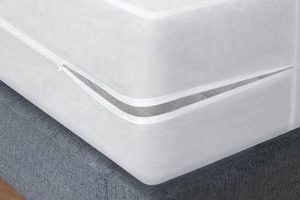
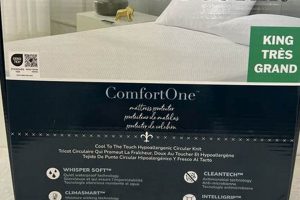
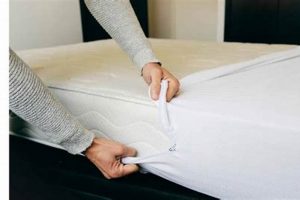
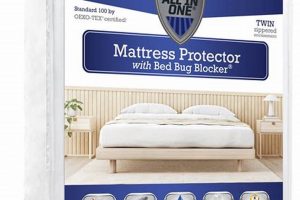
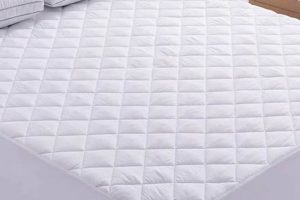
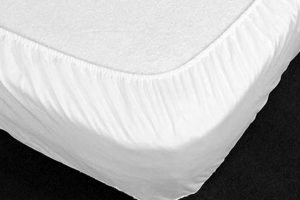
A durable encasement designed to shield a mattress from liquids, allergens, and pests. Typically constructed from a waterproof material like vinyl or polyethylene, it fully encloses the mattress and is secured with a zip closure. This type of bedding accessory is commonly used in households with young children, individuals managing allergies, or in settings requiring enhanced hygiene such as hospitals or dormitories.
The primary function of this protective covering is to extend the lifespan of the mattress by preventing damage from spills, stains, and dust mites. Its impermeable nature creates a barrier against allergens, offering relief to sensitive individuals. Furthermore, it can act as a preventative measure against bed bug infestations. The advent of these coverings reflects an increased awareness of hygiene and the desire to maintain a clean and healthy sleep environment.
The subsequent sections will delve into specific features, materials, and selection criteria for optimal mattress protection. The information presented will provide guidance in choosing the right product to meet individual needs and preferences, ensuring both comfort and prolonged mattress durability.
Tips for Selecting and Using a Mattress Protector
Implementing these strategies will maximize the effectiveness and longevity of a mattress encasement.
Tip 1: Verify Material Composition: Assess the specific plastic composition. Opt for protectors that are phthalate-free and constructed from non-toxic materials to minimize potential health risks. Research independent certifications for assurance of material safety.
Tip 2: Ensure a Secure Zipper Closure: A robust zipper is crucial. Examine the zipper for quality construction and a tight seal. A properly functioning zipper prevents ingress of allergens and pests.
Tip 3: Measure Mattress Dimensions Accurately: Precise measurements are essential to ensure a snug and secure fit. Overly loose protectors may bunch or shift, reducing their effectiveness, while protectors that are too tight may be difficult to install and could potentially damage the mattress.
Tip 4: Prioritize Waterproof Functionality: The core purpose is protection against liquids. Conduct a small-scale water test in an inconspicuous area post-installation to confirm waterproofing effectiveness.
Tip 5: Implement Regular Cleaning Protocols: Follow manufacturer cleaning instructions diligently. Regular washing prevents the buildup of allergens and maintains a sanitary sleep environment. Avoid harsh chemicals that could degrade the plastic material.
Tip 6: Consider Breathability Factors: Some options offer enhanced breathability. Evaluate individual needs and climate considerations to choose a protector that minimizes heat retention while maintaining its protective qualities.
Tip 7: Inspect for Damage Routinely: Periodically examine the protector for tears, punctures, or zipper malfunctions. Promptly repair or replace damaged protectors to maintain their protective barrier.
Adhering to these guidelines ensures the investment in a mattress protector yields optimal benefits in terms of hygiene, mattress longevity, and overall sleep quality.
The concluding sections will present information on maintenance, common issues, and environmental considerations related to mattress protectors.
1. Waterproof
The waterproof characteristic is a fundamental aspect of a mattress encasement, directly influencing its protective capabilities and overall value. The impermeable nature of the material safeguards the mattress from a range of potential hazards, thereby extending its lifespan and maintaining its hygiene.
- Liquid Damage Prevention
Waterproof mattress protectors prevent liquid penetration from spills, accidents, or bodily fluids. This barrier inhibits the development of mold, mildew, and unpleasant odors within the mattress core. In healthcare settings, this function is critical for maintaining sanitary conditions.
- Stain Resistance
The waterproof layer acts as a shield against stains. Preventing stains preserves the aesthetic appearance of the mattress. This is especially pertinent in residential environments where spills and accidents are common.
- Allergen Control
By preventing moisture accumulation, waterproof protectors indirectly control allergen levels. Dust mites thrive in humid environments; restricting moisture ingress reduces their population within the mattress. This benefits individuals with allergies or asthma.
- Material Integrity
Consistent exposure to moisture can degrade mattress materials over time. A waterproof barrier minimizes material breakdown, maintaining the mattress’s structural integrity and extending its usable life. This translates to long-term cost savings.
These facets highlight the importance of the waterproof feature in safeguarding a mattress against various damaging elements. The ability of the plastic zippered mattress protector to effectively prevent moisture penetration is a key determinant of its overall performance and utility in maintaining a clean and hygienic sleep environment.
2. Allergen Barrier
The functionality of a mattress protector as an allergen barrier is a critical attribute directly affecting indoor air quality and the well-being of sensitive individuals. The encasement acts as a physical shield, preventing allergens like dust mites, pet dander, and pollen from penetrating the mattress. This barrier is crucial because mattresses, composed of absorbent materials, can become reservoirs for these allergenic particles. The zippered closure provides a complete seal, isolating the mattress from the external environment. The absence of such protection allows allergens to accumulate, potentially exacerbating allergic reactions and respiratory issues during sleep.
A mattress protector’s effectiveness as an allergen barrier depends on its material composition and construction. Tightly woven fabrics with small pore sizes inhibit the passage of allergens. Vinyl and polyurethane, common waterproof materials, also function as effective barriers. In practical terms, individuals with asthma or allergies often experience a noticeable reduction in symptoms upon using a mattress protector with robust allergen-blocking capabilities. The protector must be regularly cleaned to remove allergens accumulated on its surface, ensuring continued effectiveness.
The intersection of “allergen barrier” and “plastic zippered mattress protector” is fundamental in creating a healthier sleep environment. While the protector itself does not eliminate allergens, it prevents them from entering the mattress core, facilitating easier allergen management. This attribute is particularly significant in environments where allergen control is a priority, such as homes with children or individuals with respiratory sensitivities. Selecting a protector specifically designed and tested for allergen blocking capabilities is essential for maximizing its benefits.
3. Bed Bug Proof
A mattress protector labeled “bed bug proof” serves as a critical barrier against infestation, functioning as a preventative measure and a containment strategy. These protectors, typically constructed from plastic or tightly woven fabrics with a zip closure, encase the mattress entirely, preventing bed bugs from accessing harborage sites within the mattress core. The effectiveness hinges on the material’s impermeability and the zipper’s secure seal. In the absence of such protection, mattresses provide ideal breeding grounds for bed bugs, leading to persistent infestations that are costly and difficult to eradicate. A bed bug-proof protector effectively isolates the mattress, preventing new infestations and trapping existing bed bugs within, eventually leading to their demise due to lack of access to a blood meal.
The practical significance of understanding the bed bug-proof characteristic is evident in various real-world scenarios. In multi-unit dwellings, such as apartments or hotels, bed bug infestations can spread rapidly through shared walls and ventilation systems. A mattress protector acts as a crucial line of defense, preventing the spread of bed bugs from one unit to another. Furthermore, individuals purchasing used mattresses are at heightened risk of introducing bed bugs into their homes; a bed bug-proof protector offers a proactive safeguard. Regular inspection of the protector for tears or zipper malfunctions is essential to maintain its effectiveness. Improper installation or damage compromises the integrity of the barrier, negating its bed bug-proof capabilities. The choice of material also impacts effectiveness; protectors made from thin, easily punctured plastic offer inadequate protection compared to those constructed from thicker, more durable materials.
In summary, the bed bug-proof functionality of a plastic zippered mattress protector is a significant factor in preventing and managing bed bug infestations. The protector acts as a physical barrier, isolating the mattress and disrupting the bed bugs’ life cycle. However, it is important to acknowledge that a mattress protector is only one component of a comprehensive bed bug control strategy. Prevention and early detection, coupled with professional pest control services when necessary, are crucial for effective bed bug management. The durable construction, secure zipper closure, and regular maintenance of the protector are vital to ensure its continued effectiveness as a barrier against bed bugs.
4. Full Encasement
Full encasement is a defining characteristic of a specific type of mattress protector. It describes the complete enclosure of the mattress on all six sides, achieved through a zippered closure. This design differentiates it from mattress pads or fitted sheets that cover only the top surface. The purpose of full encasement is to provide comprehensive protection against liquids, allergens, and pests, creating a barrier that isolates the mattress from external contaminants. In the context of a “plastic zippered mattress protector,” the full encasement feature is essential, as it leverages the waterproof properties of the plastic material to prevent penetration of spills, bodily fluids, and other potentially damaging substances into the mattress core. Without full encasement, the protective benefits of the plastic material would be significantly diminished, leaving vulnerable areas exposed.
The practical implications of full encasement are evident in diverse scenarios. Consider a household with young children prone to bedwetting. A fully encased plastic mattress protector prevents urine from soaking into the mattress, preserving its hygiene and preventing the growth of mold or bacteria. Similarly, individuals with allergies benefit from full encasement, as it creates a barrier against dust mites and other allergens that accumulate within mattresses. In healthcare facilities, full encasement is critical for infection control, preventing the spread of pathogens from patient to patient. The zippered closure plays a crucial role in maintaining the integrity of the encasement, ensuring that the mattress remains fully sealed. A damaged or improperly sealed zipper compromises the effectiveness of the protector, allowing contaminants to penetrate.
In conclusion, full encasement is an indispensable component of a plastic zippered mattress protector, providing complete and comprehensive protection against a range of potential hazards. Its effectiveness hinges on the integrity of the plastic material and the secure closure provided by the zipper. While full encasement offers significant benefits, it is important to note that regular cleaning and maintenance of the protector are necessary to ensure its continued performance. Challenges may include selecting a protector with a durable zipper and ensuring a proper fit to prevent tearing or damage. Nevertheless, the advantages of full encasement in terms of mattress protection and hygiene make it a valuable investment for individuals seeking to prolong the lifespan and maintain the cleanliness of their mattresses.
5. Durable Material

The selection of durable materials is paramount in the efficacy and longevity of any “plastic zippered mattress protector.” The protector’s capacity to withstand wear, tear, and potential damage is directly correlated to the inherent strength and resilience of the constituent materials.
- Tear Resistance
Tear resistance is a critical attribute, indicating the material’s ability to resist punctures and tears from everyday use or accidental damage. A protector lacking sufficient tear resistance is prone to developing breaches, compromising its ability to provide a waterproof or allergen-proof barrier. For example, a protector used in a household with pets might be subject to clawing, necessitating a high degree of tear resistance.
- Abrasion Resistance
Abrasion resistance signifies the material’s capacity to withstand friction and rubbing without significant degradation. This is particularly important for protectors used on mattresses that experience frequent use or movement. Low abrasion resistance can lead to thinning of the material over time, reducing its waterproof and allergen-blocking properties. Protectors used in hospitals or hotels, where mattresses undergo heavy use, require high abrasion resistance.
- Seam Strength
Seam strength refers to the integrity of the joins and seals within the protector. Even if the material itself is durable, weak seams can be points of failure, allowing liquids, allergens, or pests to penetrate. The seams surrounding the zipper are especially critical, as they are subject to considerable stress during zipping and unzipping. Properly reinforced seams are essential for maintaining the protector’s overall effectiveness. Double-stitched or reinforced seams demonstrate attention to detail, indicating a commitment to durable construction.
- Resistance to Degradation
Resistance to degradation encompasses the material’s ability to withstand the effects of environmental factors such as UV exposure, temperature fluctuations, and chemical exposure. Over time, exposure to these factors can cause the material to become brittle, discolored, or weakened, reducing its protective capabilities. A protector used in a sunny room, or one that is frequently cleaned with harsh chemicals, should be constructed from materials that are resistant to degradation. Polyurethane and vinyl, when formulated with stabilizers, offer enhanced resistance to degradation compared to less durable plastics.
In summation, the choice of durable material is a crucial determinant of a “plastic zippered mattress protector’s” performance and lifespan. The attributes of tear resistance, abrasion resistance, seam strength, and resistance to degradation collectively define the protector’s ability to withstand the rigors of everyday use and maintain its protective qualities over time. Investing in a protector constructed from high-quality, durable materials is a prudent decision that ensures long-term mattress protection and hygiene.
6. Zipper Security

Zipper security, in the context of a plastic zippered mattress protector, is a crucial design element impacting its overall effectiveness. A compromised zipper undermines the protector’s ability to fully encase and safeguard the mattress, negating many of its intended benefits. The zipper functions as the primary seal, maintaining a barrier against liquids, allergens, and pests.
- Material Composition and Durability
The material used in the zipper construction directly influences its longevity and resistance to damage. Plastic zippers, while common due to their cost-effectiveness, are more susceptible to breakage and tooth separation compared to metal alternatives. A robust metal zipper, typically constructed from steel or brass, offers increased durability and resistance to wear and tear. The slider mechanism should also be constructed from a durable material and designed for smooth, consistent operation. Inferior materials can lead to zipper failure, compromising the integrity of the mattress encasement.
- Closure Mechanism and Tightness
The closure mechanism of the zipper must provide a tight and secure seal to prevent the ingress of liquids, allergens, and bed bugs. Gaps or loose closures create vulnerabilities that undermine the protector’s intended function. Some zippers feature additional flaps or fabric overlaps to further enhance the seal’s integrity. The tightness of the closure is critical for preventing the passage of even microscopic allergens, such as dust mites, ensuring a hygienic sleep environment.
- Design and Placement
The design and placement of the zipper can impact its security and ease of use. A zipper that extends along multiple sides of the protector facilitates easier installation and removal. However, longer zippers are inherently more prone to damage. The placement of the zipper should also minimize stress points that could lead to separation or breakage. Reinforced stitching around the zipper area can provide added support and prevent tearing of the surrounding material. Recessed zipper designs can further protect the zipper from accidental damage.
- Inspection and Maintenance
Regular inspection of the zipper is essential for identifying potential issues before they compromise the protector’s integrity. Look for signs of tooth damage, slider malfunction, or fabric tearing around the zipper area. Lubricating the zipper with a silicone-based lubricant can help maintain smooth operation and prevent corrosion. Promptly addressing any issues, such as replacing a damaged slider or repairing torn fabric, is crucial for preserving the effectiveness of the mattress protector.
In conclusion, zipper security is an integral aspect of a plastic zippered mattress protector. The selection of durable materials, a tight closure mechanism, thoughtful design and placement, and diligent inspection and maintenance are all critical factors in ensuring the zipper’s functionality and the protector’s overall effectiveness. A compromised zipper renders the protector ineffective, negating its intended benefits of safeguarding the mattress against liquids, allergens, and pests.
7. Easy Clean

The “easy clean” characteristic is a critical functional advantage derived from the material properties of a “plastic zippered mattress protector.” The non-porous nature of the plastic, typically vinyl or polyethylene, inherently resists the absorption of liquids and stains. This contrasts sharply with traditional mattress fabrics, which readily absorb spills, creating breeding grounds for bacteria and allergens. The ease of cleaning a plastic protector stems directly from this impermeability; spills and stains remain on the surface, allowing for quick and efficient removal with a simple wipe-down using a damp cloth or mild cleaning solution. This feature is particularly significant in households with children, pets, or individuals prone to incontinence, where spills are more frequent. Failure to maintain cleanliness can lead to odor buildup, bacterial growth, and premature degradation of the protector itself.
The practical significance of “easy clean” extends beyond mere convenience. In healthcare settings, where hygiene is paramount, the ability to rapidly disinfect a mattress protector between patients is crucial for preventing the spread of infection. Standard cleaning protocols often involve the use of diluted bleach solutions or other disinfectants, which can be safely applied to most plastic protectors without damaging the material. Similarly, in hospitality environments, the quick turnaround time required between guests necessitates efficient cleaning procedures. A mattress protector that requires extensive cleaning or specialized cleaning agents would significantly increase labor costs and reduce the availability of rooms. The “easy clean” property also contributes to the longevity of the protector; regular cleaning prevents the accumulation of dirt and grime, extending its usable lifespan and maximizing the initial investment.
In summary, the “easy clean” attribute of a “plastic zippered mattress protector” is a direct consequence of its material composition, providing a significant advantage in terms of hygiene, efficiency, and cost-effectiveness. While the plastic material offers inherent resistance to staining and absorption, challenges may arise from the selection of inappropriate cleaning agents or the neglect of regular maintenance. However, the overall benefit of simplified cleaning protocols makes this feature a valuable asset in a variety of settings, contributing to a cleaner, healthier, and more sustainable sleep environment. The connection between the plastic material, the zippered enclosure, and the ease of cleaning is fundamental to the functionality and appeal of this type of mattress protector.
Frequently Asked Questions
This section addresses common inquiries regarding the functionality, care, and selection of plastic zippered mattress protectors. The information provided aims to clarify misunderstandings and offer practical guidance.
Question 1: What is the expected lifespan of a plastic zippered mattress protector?
The lifespan varies depending on the material quality, usage intensity, and maintenance practices. Higher-grade materials and consistent cleaning contribute to extended durability, often lasting several years. However, visible wear, tears, or zipper malfunctions necessitate replacement.
Question 2: Are all plastic zippered mattress protectors waterproof?
While the plastic material inherently offers some water resistance, true waterproof performance depends on the specific construction and membrane technology. Verify product specifications to confirm waterproofing claims. Seams and zippers remain potential points of water entry if not adequately sealed.
Question 3: How frequently should a plastic zippered mattress protector be cleaned?
Routine cleaning is recommended every one to two months, or immediately following spills or accidents. Wipe down the surface with a damp cloth and mild detergent. Deep cleaning via machine washing should adhere to manufacturer instructions to prevent material damage.
Question 4: Can a plastic zippered mattress protector effectively prevent bed bug infestations?
The protector creates a physical barrier, preventing bed bugs from colonizing the mattress core. However, it must be properly installed, undamaged, and feature a tightly sealed zipper to be effective. The protector only contains the infestation, and does not eliminate existing bed bugs in the surrounding environment.
Question 5: Does a plastic zippered mattress protector impact mattress breathability?
Plastic materials can reduce air circulation, potentially causing heat retention. Protectors incorporating breathable membranes or ventilated designs mitigate this effect. Individuals sensitive to temperature changes during sleep should consider these features.
Question 6: Are there environmental concerns associated with plastic zippered mattress protectors?
Traditional plastic materials pose environmental challenges due to their non-biodegradable nature. Opting for protectors made from recycled plastics or exploring alternative materials with lower environmental impact represents a more sustainable choice.
These answers provide foundational knowledge for making informed decisions regarding plastic zippered mattress protectors. Prioritizing quality, proper maintenance, and awareness of environmental considerations contributes to optimal product performance and longevity.
The subsequent section will detail common problems encountered with mattress protectors and offer troubleshooting strategies.
Conclusion
This exploration has elucidated the multifaceted characteristics of the plastic zippered mattress protector, emphasizing its role as a barrier against liquids, allergens, and pests. The discussion highlighted the significance of material durability, zipper security, and ease of cleaning in ensuring optimal performance. Understanding these factors empowers informed decision-making when selecting a product that meets specific needs.
Effective implementation and consistent maintenance are crucial for realizing the full potential of the plastic zippered mattress protector. Recognizing its limitations, particularly regarding breathability and environmental impact, encourages responsible usage and exploration of sustainable alternatives. A continuing focus on product innovation and consumer education will further enhance the value and utility of this protective bedding accessory.