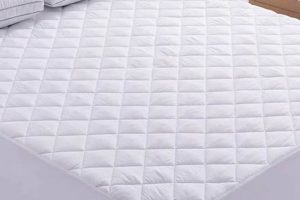
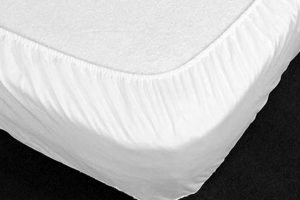
A fitted covering designed to shield a mattress from liquids, stains, and allergens enhances its longevity and hygiene. This protective layer typically features a waterproof or water-resistant membrane bonded to a fabric surface, creating a barrier against spills and reducing the potential for dust mite and bacteria accumulation within the mattress core. An exemplar product uses a tightly woven knit fabric laminated to a polyurethane film, effectively blocking moisture while maintaining breathability for comfortable sleep.
The utilization of such a barrier offers several advantages. It safeguards a significant investment from damage, extending the useful life of the underlying sleep surface. The reduction of allergens contributes to improved indoor air quality and potentially alleviates allergy symptoms for sensitive individuals. Furthermore, maintaining a cleaner sleep environment promotes better overall health and well-being. Historically, these protective layers were often basic vinyl sheets; modern iterations incorporate advanced materials and construction techniques to offer superior performance and comfort.
The following sections will delve into the specific features, materials, and performance characteristics to consider when selecting the optimal mattress defense. These aspects are crucial to optimizing the investment on bed.
Essential Guidelines for Shielding Your Bed
Proper usage and maintenance of a mattress encasement is crucial for maximizing its protective capabilities and lifespan. Adherence to the following guidelines will ensure optimal performance and longevity.
Tip 1: Select the Correct Size. The encasement must precisely match the dimensions of the mattress to ensure a snug fit and prevent slippage. Consult the manufacturer’s specifications for accurate sizing information.
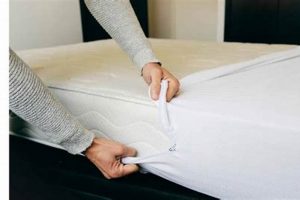
Tip 2: Follow Installation Instructions. Carefully adhere to the manufacturer’s recommended installation procedure. Improper installation can compromise the protective barrier and reduce its effectiveness.
Tip 3: Launder Regularly. Periodic laundering, as indicated by the manufacturer, is essential for removing accumulated dust, allergens, and perspiration. This practice maintains hygiene and prolongs the encasement’s lifespan.
Tip 4: Use Mild Detergents. Employ mild, hypoallergenic detergents when laundering. Harsh chemicals can damage the protective membrane and reduce its water-resistant or waterproof properties.
Tip 5: Avoid High Heat. Tumble dry on a low heat setting or air dry to prevent shrinkage or damage to the protective layer. High heat can compromise the integrity of the materials.
Tip 6: Promptly Address Spills. Immediately blot any spills with a clean, absorbent cloth. This prevents liquids from penetrating the encasement and reaching the mattress.
Tip 7: Inspect Regularly for Damage. Routinely inspect the encasement for tears, punctures, or other signs of damage. Address any issues promptly to maintain its protective integrity.
By following these guidelines, one can effectively safeguard a mattress from potential damage, extend its lifespan, and maintain a hygienic sleep environment.
The final portion of this article will cover other important aspects such as cost and warranty implications.
1. Water Resistance

Water resistance, in the context of a mattress encasement, denotes the ability of the material to impede the penetration of liquids, preventing them from reaching the underlying mattress. This characteristic is paramount because mattresses, once saturated, are challenging to clean and disinfect, creating environments conducive to mold growth and bacterial proliferation. In an uncontrolled scenario, for instance, a beverage spill on a mattress lacking a water-resistant layer could result in permanent staining and a compromised sleep surface.
The water-resistant attribute is often achieved through the application of specialized coatings or laminates to the encasement fabric. These treatments create a barrier that repels liquids while, ideally, maintaining breathability to avoid trapping moisture vapor from the body. The efficacy of water resistance can vary significantly depending on the materials used and the construction techniques employed. For example, a tightly woven fabric treated with a durable water repellent (DWR) finish will offer a certain level of protection, whereas a membrane layer laminated to the fabric will provide a more robust waterproof barrier. In testing scenarios, materials used for this specific attribute are often required to undergo tests such as hydrostatic pressure tests to check the resistance of the attribute.
Ultimately, the water resistance of a mattress encasement is critical for preserving the mattress’s integrity, extending its lifespan, and promoting a cleaner, more hygienic sleep environment. While no encasement offers absolute invulnerability to all types of liquid exposure, a high degree of water resistance significantly mitigates the risk of damage and contamination. This quality is often critical for infants and adults.
2. Allergen Barrier

A mattress encasement’s effectiveness as an allergen barrier directly impacts its ability to mitigate allergic reactions and respiratory issues during sleep. Mattresses, by nature, accumulate dust mites, pet dander, mold spores, and other allergens over time. These allergens, if left unchecked, can migrate through the mattress fibers and into the sleep environment, triggering allergic responses in susceptible individuals. The design and material composition of a mattress encasement, therefore, are critical in preventing allergen accumulation and migration. Consider, for example, an individual with a dust mite allergy. Without an effective encasement, dust mites within the mattress will trigger nighttime coughing, sneezing, and potentially exacerbate asthma symptoms. A tightly woven encasement, in contrast, physically blocks dust mites from colonizing the mattress and prevents existing allergens from escaping.
The performance of an allergen barrier is determined by the pore size of the fabric used in the encasement. Allergen particles, such as dust mite feces, range in size from 1 to 10 micrometers. To function effectively, the encasement fabric must have a pore size smaller than the smallest allergen particle. Encapsulation also helps. Materials like microfibers or tightly woven polyester fabrics are frequently employed due to their inherent ability to minimize pore size. Real-world applications extend beyond individual households. Healthcare facilities and hotels also rely on encasements with robust allergen barriers to maintain a hygienic sleep environment for patients and guests with allergies or sensitivities.
In summary, the “allergen barrier” attribute of a mattress encasement is crucial for individuals seeking relief from allergy symptoms and improved indoor air quality. The encasement acts as a physical shield, preventing allergens from accumulating within the mattress and migrating into the sleep environment. Choosing an encasement with a proven allergen barrier is a proactive measure for mitigating allergy triggers and promoting restful sleep. The challenge lies in identifying products with verifiable testing data regarding pore size and allergen impermeability, ensuring the chosen encasement provides genuine protection.
3. Breathability
Breathability, referring to the capacity of a material to permit the passage of air and moisture vapor, is a critical attribute when evaluating a mattress encasement. Encasements, designed to safeguard mattresses from liquids, allergens, and other contaminants, can inadvertently trap heat and humidity if constructed from non-breathable materials. The lack of breathability can lead to discomfort, disrupted sleep patterns, and even promote the growth of mold and mildew within the mattress core. A non-breathable encasement, for instance, might cause a sleeper to experience night sweats, creating an unhygienic and uncomfortable sleep environment. Thus, breathability is not merely a comfort factor but a key element in maintaining a healthy and sanitary sleep surface. The effectiveness of a protector depends largely on the attribute.
The breathability of a mattress encasement is typically determined by the type of fabric and the construction method employed. Natural fibers, such as cotton or bamboo, tend to exhibit superior breathability compared to synthetic materials like vinyl or polyurethane. However, even within the realm of synthetic fabrics, advancements in material science have yielded breathable laminates and membranes that allow moisture vapor to escape while preventing liquid penetration. Consider the difference between a basic vinyl encasement and one constructed from a technical knit fabric laminated with a breathable waterproof membrane. The former, while offering excellent protection against liquids, provides minimal breathability, potentially resulting in heat buildup. The latter, however, balances protection with breathability, promoting a more comfortable and dry sleep environment.
In summary, breathability is an indispensable characteristic of an effective mattress encasement. It mitigates the risk of overheating, moisture accumulation, and subsequent microbial growth, thereby contributing to a healthier and more comfortable sleep experience. The selection of an encasement should prioritize breathability alongside other protective features, ensuring a balanced approach to mattress hygiene and sleep quality. The implications extend beyond personal comfort, influencing the long-term durability of the mattress itself and promoting a more sanitary sleep environment.
4. Proper Fit

The concept of “proper fit” is paramount to the functionality and effectiveness of a mattress encasement. An ill-fitting encasement compromises its protective capabilities and diminishes its overall utility, rendering it potentially ineffective against spills, allergens, and other threats to mattress integrity. Thus, careful consideration of dimensions and adherence to installation guidelines are critical.
- Dimensional Accuracy
Precise measurement of the mattress dimensionslength, width, and depthis fundamental. An undersized encasement will be difficult, if not impossible, to install, potentially leading to tearing or damage. Conversely, an oversized encasement will result in excess fabric, creating wrinkles and folds that compromise the barrier function and detract from comfort. The encasement must conform snugly to the mattress without undue stress on the seams or materials.
- Elasticized Perimeter
A well-designed encasement typically incorporates an elasticized perimeter or fitted sheet-style construction. This elastic element ensures a secure and snug fit around the mattress edges, preventing slippage or movement during use. Insufficient elasticity will lead to a loose fit, allowing gaps for liquids or allergens to penetrate. The elastic should maintain its tension over time, even after repeated washing, to guarantee consistent performance.
- Zippered Enclosure (if applicable)
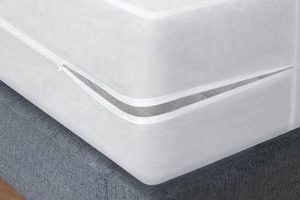
Some encasements feature a zippered closure system, completely encasing the mattress. In these cases, the zipper must be robust and properly sized to ensure a secure and complete seal. A faulty or improperly fitted zipper can leave vulnerable openings, negating the benefits of a full encasement design. The zipper should be easy to operate and constructed from durable materials to withstand repeated use.
- Compatibility with Mattress Type
Different mattress typessuch as memory foam, innerspring, or hybrid modelsmay have slightly varying dimensions or profiles. The encasement must be compatible with the specific mattress type to ensure a proper fit. An encasement designed for a standard innerspring mattress, for example, may not fit correctly on a thicker memory foam mattress. Consider the mattress depth and any unique features, such as pillow tops or reinforced edges, when selecting an encasement.
The success of safeguarding a mattress is directly linked to the “proper fit” of the encasement. A poorly fitted encasement not only diminishes its protective capabilities but also undermines its comfort and longevity. Selecting an encasement that matches the mattress dimensions, incorporates appropriate elasticization or closure mechanisms, and is compatible with the mattress type is essential for maximizing its benefits.
5. Easy Cleaning
The characteristic of “easy cleaning” is intrinsically linked to the value proposition of any mattress encasement, including a “helix mattress protector.” The purpose of the protective layer is to shield the underlying mattress from contaminants; inevitably, the encasement itself will require cleaning. If the cleaning process is cumbersome or impractical, the utility of the encasement is significantly diminished. For instance, if an encasement requires specialized cleaning agents or professional laundering after a minor spill, the cost and inconvenience negate many of its benefits. The ease with which the encasement can be cleaned directly influences user compliance with regular maintenance, affecting the hygiene and longevity of both the encasement and the mattress it protects. A product line that emphasized minimal cleaning demands such as the ability to clean using common home based products might find great success and appeal to an audience who values minimal disturbance to daily tasks.
Consider the materials used in construction. Encasements made from machine-washable and dryer-safe fabrics offer a distinct advantage. These materials allow for convenient cleaning using standard household appliances, saving time and expense. Conversely, encasements requiring hand-washing or specialized detergents present a practical barrier to routine cleaning, increasing the likelihood of contaminant buildup and potentially compromising the integrity of the mattress over time. Furthermore, the design should minimize features that trap dirt or moisture. Smooth, non-porous surfaces that are easily wiped clean are preferable to textured surfaces that accumulate debris. The presence of complex seams or intricate designs can also complicate the cleaning process, making thorough removal of stains or allergens more difficult.
In conclusion, “easy cleaning” is not merely a desirable feature but a fundamental requirement for an effective mattress encasement. It directly impacts the frequency of cleaning, the long-term hygiene of the sleep environment, and the overall user satisfaction. Prioritizing encasements designed for effortless maintenance is a pragmatic approach to ensuring both the protection and longevity of the mattress. Failure to consider this aspect can result in increased cleaning costs, compromised hygiene, and a diminished return on the investment in mattress protection.
6. Durability

Durability, concerning a mattress encasement, directly relates to its capacity to withstand wear, tear, and degradation over an extended period of use. An encasement’s longevity determines its capacity to consistently perform its protective function, safeguarding the mattress from spills, allergens, and other contaminants. Inadequate durability undermines the financial investment in both the encasement and the mattress it is intended to protect.
- Material Composition
The inherent properties of the materials used significantly impact durability. High-quality, tightly woven fabrics, such as polyester blends or laminated materials, generally exhibit greater resistance to abrasion, punctures, and tears compared to thinner, loosely woven fabrics. For example, a protector constructed from a dense knit fabric with reinforced seams will withstand more frequent washing and daily wear than one made from a lower-grade material.
- Construction Quality
The method of construction influences the encasement’s ability to endure stress and strain. Reinforced seams, robust zippers (if present), and careful attention to detail in manufacturing contribute to overall durability. An encasement with poorly stitched seams is prone to unraveling or tearing, especially after repeated laundering. Similarly, a flimsy zipper can easily break, compromising the encasement’s ability to fully enclose the mattress.
- Resistance to Degradation
Prolonged exposure to moisture, sunlight, and cleaning agents can degrade certain materials, reducing their protective properties and lifespan. UV resistance is crucial if the mattress is exposed to direct sunlight. Resistance to common household cleaners is vital for maintaining hygiene without compromising the encasement’s integrity. A protector that quickly deteriorates when exposed to normal washing cycles offers limited long-term value.
- Abrasion Resistance
Constant friction from bedding, movement during sleep, and regular laundering can cause abrasion, wearing down the encasement fabric over time. Materials with high abrasion resistance are less susceptible to this type of damage, maintaining their protective barrier for a longer period. Consider a scenario where an individual frequently shifts position during sleep. A less durable encasement might develop thin spots or holes in areas subject to high friction, compromising its protective function.
The interplay of these facets underscores the importance of durability in the selection of an encasement. While initial cost is a factor, prioritizing a product with robust materials, quality construction, and resistance to degradation ensures a longer lifespan and sustained protection for the mattress. Neglecting durability can result in premature failure of the encasement, necessitating frequent replacements and ultimately diminishing the overall value proposition.
7. Warranty
A warranty, in the context of a mattress encasement such as a “helix mattress protector,” represents a manufacturer’s assurance regarding the product’s quality and durability. It provides a degree of financial protection to the consumer in the event of defects or premature failure, establishing a tangible connection between the manufacturer’s confidence in the product and the consumer’s peace of mind. The warranty terms outline the specific conditions under which the manufacturer will provide repair, replacement, or refund, contingent upon adherence to stated guidelines. These guidelines often involve proper use, maintenance, and limitations on commercial applications.
- Scope of Coverage
The scope defines the specific defects or failures covered by the warranty. Typical coverage may include manufacturing defects in materials or workmanship, such as seam failures, zipper malfunctions, or delamination of waterproof membranes. However, warranties often exclude damage resulting from misuse, abuse, or normal wear and tear. For instance, a warranty may not cover damage from intentional cuts or burns, but it should address issues arising from inherent flaws in the product’s construction. A warranty may only be valid if it has been used under normal usage.
- Duration of Coverage
The warranty duration specifies the period during which the coverage remains in effect, generally expressed in years from the date of purchase. Longer warranty periods often indicate greater confidence in the product’s longevity. However, the value of a warranty diminishes if the product’s expected lifespan significantly exceeds the warranty period. A five-year warranty on a product expected to last only three years offers little practical benefit. Conversely, a one-year warranty on a product intended for long-term use may signal concerns about its durability.
- Claim Procedures
Warranty claim procedures outline the steps a consumer must take to initiate a claim for coverage. These procedures typically involve contacting the manufacturer or authorized retailer, providing proof of purchase, and describing the nature of the defect or failure. Failure to follow the prescribed procedures may invalidate the warranty claim. For example, a consumer who attempts to repair a damaged encasement without prior authorization from the manufacturer may void the warranty coverage.
- Limitations and Exclusions
Warranties invariably include limitations and exclusions that restrict the scope of coverage. These limitations may specify conditions under which the warranty is voided, such as the use of unauthorized cleaning agents, exposure to extreme temperatures, or alterations to the product. Exclusions may specifically exclude certain types of damage, such as those caused by pets, pests, or environmental factors. Understanding these limitations and exclusions is crucial for setting realistic expectations regarding the warranty’s applicability.
These combined elements of scope, duration, claim procedures, limitations, and exclusions determine the true value of a “helix mattress protector” warranty. Before purchase, prospective buyers should carefully review the warranty terms to ascertain the extent of coverage and the conditions under which it applies. A comprehensive understanding of these elements enables informed decision-making and mitigates potential disputes in the event of a product defect or failure.
Frequently Asked Questions
This section addresses common inquiries regarding mattress encasements, specifically focusing on aspects related to the “helix mattress protector.” Information provided aims to clarify functional properties and maintenance considerations.
Question 1: What distinguishes a “helix mattress protector” from a standard mattress pad?
A “helix mattress protector” typically offers a higher degree of protection compared to a standard mattress pad. Protectors are designed to create a barrier against liquids, allergens, and dust mites, whereas pads primarily offer cushioning and some degree of stain resistance. The level of protection is different for these products.
Question 2: How often should a “helix mattress protector” be laundered?
Laundering frequency depends on usage and manufacturer recommendations. As a general guideline, the “helix mattress protector” should be washed every one to two months, or more frequently if spills or accidents occur. Follow the instructions on how to properly wash it to not cause damage to the material.
Question 3: Will a “helix mattress protector” alter the feel of the mattress?
Some alteration in the feel of the mattress is possible, depending on the materials and construction of the “helix mattress protector.” Thinner, more breathable protectors generally have a minimal impact on mattress feel, while thicker, more robust protectors may provide a slightly firmer or more cushioned surface. However, these changes aren’t always noticeable.
Question 4: Is a “helix mattress protector” necessary for a new mattress?
Using a “helix mattress protector” is advisable for a new mattress. It safeguards the mattress from stains, spills, and allergens, extending its lifespan and maintaining its warranty. A protector can prevent damage and protect against allergies.
Question 5: Can a “helix mattress protector” eliminate existing dust mite infestations?
A “helix mattress protector” cannot eliminate existing dust mite infestations. However, it can prevent new dust mites from colonizing the mattress and minimize the escape of existing allergens. A protector helps to manage allergy triggers.
Question 6: How does one determine the correct size “helix mattress protector” for a mattress?
The size of the “helix mattress protector” must match the dimensions of the mattress. Consult the mattress label or manufacturer specifications to determine the length, width, and depth. A proper fit ensures optimal protection. Size is always important, use measuring tape to make sure.
The information given in the FAQ provides a basic understanding of the product. For specific product details consult the product description and information.
The next step of this document focuses on cleaning instructions and best usage practices.
Conclusion
The preceding exploration detailed the diverse aspects of the helix mattress protector. The document examined vital qualities like water resistance, allergen barriers, breathability, fit, cleanability, durability, and warranty implications. Each element contributes to the overall effectiveness of safeguarding a mattress and ensuring a hygienic sleep environment. The intent was to deliver informative information to aid decision-making.
Ultimately, the selection of a mattress protector represents a calculated investment in the longevity and cleanliness of a sleep surface. Continued advancements in material science and manufacturing techniques will likely yield enhanced protective capabilities and improved comfort. Individuals are encouraged to diligently assess their specific needs and priorities when choosing a mattress protector, as this decision has ramifications for both health and financial well-being.