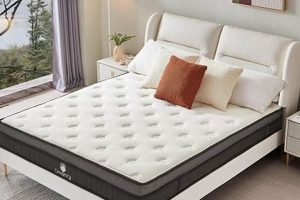
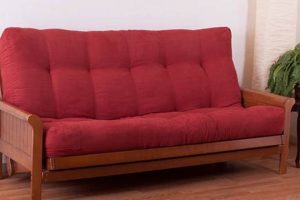
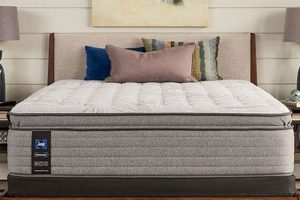
A bed designed to fit within the space constraints of a recreational vehicle (RV) and sized to accommodate one or two sleepers is a crucial component of comfortable RV living. Measuring approximately 54 inches wide and 75 inches long, this sleeping platform provides a balance between comfort and space efficiency. These are often constructed of foam, innerspring, or hybrid materials to provide support and pressure relief during sleep, similar to residential bedding.
The importance of a correctly sized and comfortable bed inside a mobile home cannot be overstated. It directly impacts the quality of rest and, consequently, the overall travel experience. An adequate sleeping arrangement minimizes discomfort during transit and allows for proper rest while stationary. The development of this niche product has paralleled the growth of the RV industry, with manufacturers continually refining designs to maximize comfort in limited spaces. Advancements in materials science have also led to improved durability and support in these compact designs.
The subsequent sections will delve into the types available, factors to consider when selecting one, installation, maintenance, and common alternatives within the RV market. These topics will offer a comprehensive understanding for potential buyers and current RV owners seeking to improve their sleeping arrangements.
Guidance on RV Full Size Mattress Selection
Selecting an appropriate sleeping surface for a recreational vehicle requires careful consideration of space, comfort, and durability. The following guidelines provide essential insights for making an informed purchasing decision.
Tip 1: Measure Available Space Accurately: Prior to purchase, precisely measure the dimensions of the designated sleeping area within the RV. This ensures compatibility and prevents the acquisition of a mattress that is either too large or too small.
Tip 2: Consider Mattress Material: Foam, innerspring, and hybrid constructions offer varying levels of support and comfort. Foam options, such as memory foam or latex, often conform to the body, while innerspring types provide firmer support. Hybrid models combine the features of both.
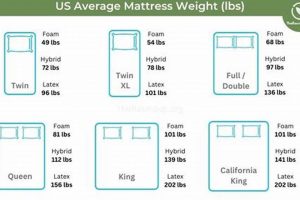
Tip 3: Evaluate Thickness and Weight: In the limited confines of an RV, thickness affects headroom and storage space. A thinner profile maximizes vertical space, while weight impacts fuel efficiency and overall vehicle load. Prioritize a balance between comfort and practicality.
Tip 4: Research Durability and Longevity: RV mattresses endure frequent use and potential movement. Invest in materials and construction methods known for their resilience to ensure long-term performance and prevent premature sagging or deterioration.
Tip 5: Assess Firmness and Support: Firmness is a subjective preference, but adequate support is critical for spinal alignment and preventing back pain. Test various firmness levels or consult reviews to determine the optimal level for individual needs.
Tip 6: Prioritize Breathability: RV environments can be prone to temperature fluctuations and humidity. Opt for materials with good breathability to regulate temperature and minimize moisture retention, enhancing sleep comfort.
Tip 7: Investigate Warranty and Return Policies: Before finalizing the purchase, carefully review the warranty terms and return policies. This provides recourse in the event of defects or dissatisfaction with the product’s performance.
Applying these guidelines enables the selection of a product that meets the specific requirements of RV travel, promoting restful sleep and enhanced travel experiences.
The following sections will explore installation best practices and maintenance routines to maximize the lifespan and comfort of the selected product.
1. Dimensions

The dimensions of an RV full-size mattress are inextricably linked to its functionality and suitability within the confined space of a recreational vehicle. Standard measurements for this type of mattress are approximately 54 inches in width and 75 inches in length. Deviations from these dimensions, even by a small margin, can render the mattress unusable, either by exceeding the available space or leaving significant gaps that compromise comfort and safety. For instance, if the designated sleeping platform is only 52 inches wide, a standard 54-inch wide mattress will not fit, requiring either a custom-sized alternative or modification of the existing structure. Conversely, a mattress significantly smaller than the available space may shift during transit, creating a potential safety hazard and reducing usable floor area.
The impact of dimension extends beyond simple fit. The thickness, or height, of the mattress influences headroom and storage space above the sleeping area. A thicker mattress may offer greater comfort but can reduce vertical clearance, especially in RVs with lower ceilings. This can lead to discomfort when sitting or moving around in the sleeping area. Furthermore, the weight of the mattress, directly related to its dimensions and materials, affects the overall weight distribution within the RV. An excessively heavy mattress can contribute to increased fuel consumption and potentially compromise the vehicle’s handling characteristics, especially when combined with other cargo.
Therefore, accurate measurement of the available space and a thorough understanding of the relationship between dimensions, comfort, and RV limitations are essential. Disregarding these factors can result in a costly and inconvenient mistake. Careful planning and attention to detail when selecting a mattress, considering the RV’s specific requirements, ultimately contribute to a more comfortable and safe travel experience. The next element to consider would be the type of Material for the RV full size mattress.
2. Thickness

The thickness of an RV full size mattress profoundly influences both comfort and practicality within the confined space of a recreational vehicle. Mattress thickness directly affects headroom, overall weight, and ease of movement, making it a crucial consideration for RV owners.
- Headroom Constraints
Increased mattress thickness inherently reduces available headroom within the RV, particularly in models with lower ceilings. A thicker mattress may provide enhanced cushioning but can compromise the ability to sit upright comfortably in bed or navigate the sleeping area with ease. For example, a 12-inch thick mattress may be suitable for a taller RV, while a slimmer 6-inch profile may be preferable in a compact camper van to preserve headroom.
- Weight Implications
Mattress thickness typically correlates with increased material volume, leading to greater overall weight. This added weight impacts the RV’s fuel efficiency and load capacity. Exceeding the vehicle’s weight limits can compromise handling and safety. For instance, a latex mattress, often thicker and denser than foam alternatives, can add significant weight, necessitating careful consideration of the RV’s weight rating.
- Storage Accessibility
Mattress thickness can either facilitate or hinder access to under-bed storage compartments, a common feature in many RV designs. A thicker mattress may partially obstruct access, requiring more effort to lift or remove the mattress to reach stored items. Conversely, a thinner mattress may allow easier access but could compromise sleeping comfort.
- Overall Comfort and Support
While a thicker mattress isn’t always better, it often allows for more complex layering of materials, potentially enhancing comfort and support. Thicker mattresses may incorporate multiple foam layers, including memory foam, for pressure relief and improved spinal alignment. However, advancements in material technology allow thinner mattresses to offer comparable support with optimized material density and design.
In conclusion, the optimal thickness of an RV full size mattress represents a delicate balance between comfort, practicality, and the specific limitations of the recreational vehicle. RV owners must carefully assess their individual needs, the RV’s dimensions, and weight restrictions to select a mattress that maximizes both sleeping comfort and overall functionality. The considerations presented here highlight the multi-faceted role thickness plays in the RV sleeping environment.
3. Material

The selection of material directly impacts the performance and suitability of an RV full size mattress. Material choices influence comfort, support, durability, weight, and thermal properties, all critical factors within the constrained environment of a recreational vehicle. For example, a mattress core of high-density memory foam provides superior pressure relief and conforms to the body, reducing discomfort during sleep. However, memory foam can retain heat, potentially causing discomfort in warmer climates. Conversely, an innerspring mattress offers better breathability and cooler sleep, but may lack the conforming support of memory foam, leading to pressure points and discomfort, especially during transit over uneven roads. A hybrid mattress attempts to balance these attributes, combining the support of innersprings with the comfort of foam layers. The cover material also plays a significant role; breathable fabrics like cotton or bamboo promote airflow and minimize moisture buildup, enhancing sleep comfort and hygiene.
Material selection also affects the weight and durability of the RV full size mattress. Lightweight materials are preferred to minimize fuel consumption and avoid exceeding the RV’s weight capacity. For instance, a latex mattress, known for its durability and comfort, can be significantly heavier than a comparable polyurethane foam mattress. The construction method also influences durability; reinforced seams, high-quality stitching, and durable cover fabrics extend the lifespan of the mattress, withstanding the rigors of travel and frequent use. Mattresses intended for frequent use should employ materials resistant to compression and deformation to maintain their support and shape over time. The chemical composition of the materials is important as well, to ensure that no toxic materials like fiberglass is present in the mattress.
Ultimately, choosing appropriate materials for an RV full size mattress requires a careful evaluation of trade-offs. There is no single “best” material; the ideal choice depends on the individuals preferences, the climate in which the RV will be used, and the RV’s weight and space limitations. Ignoring these material considerations can result in a mattress that is uncomfortable, too heavy, or prone to premature wear, negatively impacting the overall RV travel experience. Careful research and consideration of the intended use case are essential for selecting a mattress that provides lasting comfort and support while meeting the practical constraints of RV travel.
4. Support

Support, in the context of an RV full-size mattress, is a critical attribute dictating the mattress’s ability to maintain spinal alignment and distribute weight evenly. Adequate support mitigates pressure points, reduces discomfort, and promotes restful sleep, particularly crucial in the mobile environment of a recreational vehicle.
- Core Construction and Firmness
The internal construction of the mattress, whether innerspring, foam, or hybrid, directly determines its support characteristics. Innerspring mattresses provide a firmer, more resilient support due to the interconnected coils, while foam mattresses, particularly those made of high-density memory foam or latex, offer contouring support that conforms to the body’s shape. Firmness levels, ranging from plush to extra firm, further modulate the degree of support. A mattress that is too soft may lack sufficient support, leading to spinal misalignment, while a mattress that is too firm may create pressure points and discomfort.
- Zoning and Targeted Support
Advanced mattress designs often incorporate zoned support systems, where different sections of the mattress are engineered to provide varying levels of support based on the body’s specific needs. For example, the central third of the mattress, which supports the lumbar region, may be reinforced to prevent sagging and maintain spinal alignment. Similarly, the shoulder and hip areas may feature softer zones to alleviate pressure points. This targeted support optimizes comfort and reduces the risk of back pain, particularly during extended periods of travel.
- Edge Support and Stability
Edge support refers to the firmness and stability of the mattress perimeter. Adequate edge support prevents the edges of the mattress from collapsing under weight, providing a stable sleeping surface and facilitating getting in and out of bed. This is particularly important in RVs, where space is limited, and occupants may rely on the edges of the mattress for support while moving around the sleeping area. Weak edge support can lead to a feeling of instability and increase the risk of rolling off the mattress.
- Weight Distribution and Motion Isolation
A well-supported mattress effectively distributes weight across its surface, minimizing pressure points and promoting even spinal alignment. Furthermore, effective motion isolation prevents movement on one side of the mattress from disturbing the other, crucial for couples sharing a bed in the confined space of an RV. Materials like memory foam excel at motion isolation, absorbing and dampening movement to ensure undisturbed sleep for both occupants.
In summary, support is a multifaceted characteristic of an RV full-size mattress that encompasses core construction, zoning, edge stability, weight distribution, and motion isolation. The optimal level of support is subjective, dependent on individual preferences and sleeping habits. Careful consideration of these support-related factors is essential for selecting a mattress that promotes restful sleep and minimizes discomfort during RV travel.
5. Weight

The weight of an RV full-size mattress is a significant factor influencing a recreational vehicle’s overall performance and safety. It contributes directly to fuel consumption, handling characteristics, and adherence to weight restrictions, all critical considerations for RV owners. Therefore, careful consideration of mattress weight is essential when selecting a sleeping surface for an RV.
- Impact on Fuel Efficiency
Increased weight in an RV directly correlates with reduced fuel efficiency. A heavier mattress adds to the total load, requiring the engine to work harder and consume more fuel to maintain speed and navigate inclines. For example, replacing a lightweight foam mattress with a heavier latex or hybrid model can noticeably impact fuel economy, particularly on long journeys.
- Adherence to Weight Restrictions
Recreational vehicles have strict weight limits, including gross vehicle weight rating (GVWR) and axle weight ratings. Exceeding these limits can compromise safety, damage vehicle components, and potentially void warranties. A heavy mattress can contribute significantly to these limits, especially when combined with other cargo and passengers. Therefore, selecting a lighter mattress can provide more flexibility for carrying other essential items.
- Influence on Handling and Stability
The distribution of weight within an RV affects its handling and stability, particularly during turns and in windy conditions. A heavy mattress positioned high within the vehicle can raise the center of gravity, increasing the risk of swaying or instability. Lighter mattresses, or those constructed with lighter materials, contribute to a lower center of gravity, enhancing stability and control.
- Material Composition and Weight Trade-offs
Different mattress materials exhibit varying weight characteristics. Innerspring mattresses, while providing support, tend to be heavier than foam alternatives. Memory foam and latex mattresses offer conforming comfort but can also add significant weight. Lightweight foam options, such as polyurethane foam, offer a balance between comfort and weight, making them a popular choice for RVs. The mattress cover material and any additional padding also contribute to the overall weight.
In conclusion, the weight of an RV full-size mattress is not merely a matter of convenience but a crucial factor impacting fuel efficiency, safety, and overall RV performance. Selecting a mattress that balances comfort and support with minimal weight is essential for maximizing the benefits of RV travel and ensuring a safe and enjoyable journey. Neglecting to consider the weight can lead to compromised fuel economy, handling difficulties, and potential safety hazards. Weight should be considered an important detail to review as you look at “rv full size mattress”.
6. Durability

Durability is a paramount consideration for RV full-size mattresses due to the unique stresses imposed by mobile living. These mattresses are subjected to frequent movement, temperature fluctuations, and potential compression during storage, necessitating robust construction and resilient materials. The longevity and sustained performance of an RV mattress directly influence comfort, cost-effectiveness, and overall satisfaction.
- Material Resistance to Compression and Deformation
The capacity of mattress materials to resist compression and deformation under repeated use is critical. High-density foams, such as memory foam or latex, exhibit superior resistance to permanent indentations and sagging compared to lower-density alternatives. For instance, a high-density foam mattress can withstand years of use without significant loss of support, while a low-density mattress may develop uncomfortable depressions relatively quickly.
- Seam Strength and Stitching Quality
The seams and stitching are vulnerable points in any mattress construction. High-quality stitching and reinforced seams prevent premature tearing or separation of the mattress cover and internal layers. Poorly constructed seams can unravel under the stress of movement and use, leading to structural failure and reduced lifespan. For example, double-stitched seams with durable thread enhance the mattress’s ability to withstand the stresses of RV travel.
- Resistance to Environmental Factors
RV mattresses are exposed to varying environmental conditions, including temperature extremes and humidity. Materials that resist moisture absorption and temperature-induced degradation are essential for maintaining hygiene and preventing material breakdown. For instance, waterproof or water-resistant mattress covers protect against spills and moisture accumulation, while UV-resistant materials prevent fading and deterioration from prolonged sun exposure.
- Frame Integration and Structural Support
The integration of the mattress with the RV’s bed frame contributes significantly to its overall durability. A properly supported mattress frame prevents sagging and distributes weight evenly, reducing stress on the mattress materials. A weak or uneven frame can accelerate mattress wear and tear, leading to premature failure. For example, a sturdy platform bed frame with adequate support slats ensures that the mattress remains properly aligned and supported, extending its lifespan.
The facets of durability collectively determine the long-term performance of an RV full-size mattress. By prioritizing materials and construction techniques that enhance resistance to compression, environmental factors, and structural stress, RV owners can ensure a comfortable and cost-effective sleeping solution that withstands the rigors of mobile living. Furthermore, proactive maintenance, such as regular rotation and the use of protective covers, can further extend the lifespan of a durable RV mattress.
7. Breathability
Breathability, regarding RV full-size mattresses, denotes the degree to which air can circulate through the materials comprising the mattress. This characteristic significantly influences temperature regulation, moisture management, and overall sleep comfort within the often confined and thermally variable environment of a recreational vehicle.
- Material Composition and Airflow
The materials utilized in the mattress’s construction directly influence its breathability. Open-cell foam structures, such as latex or certain types of memory foam, allow for greater airflow compared to closed-cell foams. Similarly, natural fibers like cotton or wool in the mattress cover promote breathability, facilitating the evaporation of moisture and dissipating heat. For example, a mattress incorporating a layer of perforated latex foam paired with a cotton cover will exhibit enhanced breathability compared to a solid memory foam mattress with a synthetic cover.
- Moisture Management and Hygiene
Adequate breathability aids in moisture management by allowing perspiration to evaporate, preventing the build-up of humidity within the mattress. This reduces the risk of mold and mildew growth, contributing to a healthier sleep environment. Mattresses with poor breathability can trap moisture, creating a breeding ground for bacteria and leading to unpleasant odors. A breathable mattress cover, treated with antimicrobial agents, can further enhance hygiene.
- Temperature Regulation and Sleep Comfort
Breathability facilitates temperature regulation by allowing heat to dissipate away from the body. This is particularly crucial in RVs, where temperature fluctuations can be significant. A breathable mattress helps maintain a consistent and comfortable sleeping temperature, preventing overheating and promoting restful sleep. Mattresses with poor breathability can trap heat, leading to discomfort and disrupted sleep, especially during warmer months.
- Construction Techniques and Ventilation
Mattress construction techniques can enhance breathability. Incorporating ventilation channels or strategically placed air pockets within the mattress core promotes airflow and dissipates heat. The use of breathable adhesives and binding agents further minimizes restrictions to airflow. A mattress with a well-ventilated design allows for continuous air circulation, preventing the build-up of heat and moisture.
These facets of breathability underscore its importance in the context of RV full-size mattresses. Selecting a mattress with breathable materials and construction techniques can significantly improve sleep comfort, hygiene, and overall well-being during RV travel. Conversely, neglecting breathability can result in a hot, humid, and uncomfortable sleeping environment, negatively impacting the RV experience. The breathability also impacts the comfort which helps reduce motion.
Frequently Asked Questions
This section addresses common inquiries regarding RV full size mattresses, providing concise and informative answers to aid in the selection and maintenance process.
Question 1: What are the standard dimensions of an RV full size mattress?
Standard RV full size mattresses typically measure approximately 54 inches in width and 75 inches in length. However, variations may exist; precise measurement of the RV’s sleeping area is crucial before purchase.
Question 2: What types of materials are commonly used in RV full size mattresses?
Common materials include memory foam, latex, innerspring coils, and hybrid combinations. Material choice influences comfort, support, weight, and breathability. Each material offers distinct advantages and disadvantages.
Question 3: How does mattress weight affect RV performance?
Mattress weight impacts fuel efficiency, handling characteristics, and adherence to the RV’s weight restrictions. Lighter mattresses generally improve fuel economy and handling. Staying within the GVWR is critical for safety.
Question 4: How can one ensure proper mattress breathability in an RV?
Select mattresses constructed with breathable materials like open-cell foam, cotton, or bamboo. Consider models with ventilation channels to promote airflow and minimize moisture retention. This can prevent mold and discomfort.
Question 5: What factors contribute to the durability of an RV full size mattress?
Durability depends on material resistance to compression, the strength of seams and stitching, and resistance to environmental factors like temperature and humidity. High-quality construction and robust materials enhance longevity.
Question 6: Can a standard residential mattress be used in an RV?
While possible, standard residential mattresses may not be suitable due to size constraints, weight considerations, and a lack of durability for travel. RV-specific mattresses are designed to address these unique challenges. Always measure to ensure fit before purchase.
Understanding these key aspects is essential for making an informed decision about an RV full size mattress, ensuring a comfortable and safe travel experience.
The following section will delve into the maintenance of your “rv full size mattress”.
RV Full Size Mattress
This exploration has detailed the multifaceted considerations surrounding the selection and utilization of an RV full size mattress. Key factors include dimensions, material composition, support characteristics, weight implications, durability, and breathability. Each of these elements interacts to determine the overall comfort, longevity, and suitability of the mattress for mobile living. Understanding these factors is crucial for making an informed purchasing decision that aligns with individual needs and RV specifications.
The selection of an RV full size mattress represents a long-term investment in comfort and well-being during travel. Careful consideration of the information presented herein is encouraged to ensure a purchase that provides lasting value and enhances the overall RV experience. Prudent selection contributes to safer, more comfortable, and more enjoyable journeys.
![Best Simmons Full Mattress [Guide & Reviews] | Organic & Natural Mattress Buyer’s Guide: Non-Toxic Sleep Solutions](https://mattressworldpa.com/wp-content/uploads/2025/07/th-2917-300x200.jpg "Best Simmons Full Mattress [Guide & Reviews] Organic & Natural Mattress Buyer’s Guide: Non-Toxic Sleep Solutions")