A sleeping surface designed to fit the upper or lower frame of a bunk bed configuration accommodating a full-size, or double, bed. These mattresses are typically thinner than standard mattresses to comply with safety regulations related to bunk bed heights. For example, a child sleeping on the top bunk requires a mattress of specific dimensions to ensure the guardrails provide adequate protection.
Selecting the appropriate sleeping platform can significantly impact safety, comfort, and space utilization within a shared bedroom. Historical constraints of space often led to the adoption of tiered sleeping arrangements. Modern iterations prioritize both structural integrity and ergonomic design, contributing to enhanced sleep quality and minimized risk of injury.
The subsequent sections will delve into the various types of these mattresses, their associated safety considerations, and factors relevant to making an informed purchase.
Tips Regarding the Selection of a Full Size Bunk Bed Mattress
The following guidelines address key considerations when procuring a sleeping platform suitable for a full size bunk bed. Adhering to these recommendations contributes to a safe and comfortable sleeping environment.
Tip 1: Verify Height Restrictions. Bunk bed safety standards dictate maximum mattress thickness. Compliance with these standards ensures adequate guardrail height, mitigating the risk of falls. Measure the distance between the top of the mattress support and the top of the guardrail before purchase.
Tip 2: Prioritize Fire Retardancy. Mattresses must meet specific fire safety regulations. Confirm that the selected product has undergone testing and certification to applicable standards. Consider mattresses constructed with inherently fire-resistant materials like wool or treated cotton.
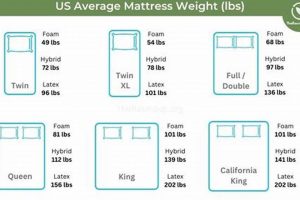
Tip 3: Assess Weight Capacity. Bunk beds, and consequently their mattresses, possess a maximum weight limit. Exceeding this limit can compromise structural integrity and increase the likelihood of collapse. Adhere strictly to the manufacturer’s stated weight capacity.
Tip 4: Evaluate Mattress Type. Options include innerspring, foam, and hybrid designs. Innerspring mattresses offer firm support, while foam mattresses conform to the body. Hybrids combine the features of both. The choice depends on individual preferences and sleeping habits.
Tip 5: Consider Mattress Density. For foam mattresses, higher density translates to increased durability and support. Lower-density foams may compress over time, reducing comfort and potentially impacting spinal alignment.
Tip 6: Inspect for Off-Gassing. Some foam mattresses emit volatile organic compounds (VOCs) during initial use. Opt for mattresses certified by independent organizations like CertiPUR-US, ensuring low VOC emissions.
Tip 7: Check Warranty Information. A comprehensive warranty indicates the manufacturer’s confidence in product quality and durability. Review warranty terms and conditions prior to purchase, noting coverage periods and exclusions.
Proper selection of a sleeping platform contributes directly to occupant safety, sleep quality, and the longevity of the bunk bed structure. Careful consideration of the factors outlined above mitigates potential risks and ensures a sound investment.
The subsequent section will address potential safety hazards to prevent accidents.
1. Dimensions

The term “full size bunk bed mattress” inherently incorporates specific dimensional parameters. These dimensions are not arbitrary; they are critical to the mattress’s functionality and safety within the bunk bed frame. Deviation from the established width and length measurements renders the mattress incompatible, leading to potential hazards. A mattress too small creates gaps, increasing the risk of entrapment or falls. Conversely, a mattress exceeding the designated area prevents proper installation, potentially compromising the structural integrity of the bunk bed.
The thickness of the mattress is an equally vital dimension, especially in bunk bed applications. Safety regulations typically stipulate maximum mattress thickness to ensure the guardrails retain sufficient height above the sleeping surface. Exceeding this thickness reduces the effectiveness of the guardrail, thereby elevating the risk of accidental falls. For example, a standard full-size mattress, typically exceeding 8 inches in thickness, may not be suitable for a bunk bed where the guardrail height is designed for a thinner profile. Choosing the wrong mattress can have direct safety impacts.
Therefore, precise adherence to dimensional specifications is paramount when selecting a full-size bunk bed mattress. This requirement underscores the interconnectedness of dimensions, safety, and functionality. Neglecting dimensional constraints undermines the purpose of the bunk bed’s design and introduces preventable risks, and potentially jeopardizes safety considerations.
2. Thickness

Thickness is a critical determinant in the selection of a full-size bunk bed mattress, directly influencing safety, comfort, and compliance with established regulations. The following facets explore the nuanced relationship between mattress thickness and bunk bed functionality.
- Guardrail Height and Fall Prevention
Bunk bed safety standards mandate a specific distance between the top of the mattress and the top of the guardrail. Excessive mattress thickness reduces this distance, compromising the guardrail’s ability to prevent falls. For instance, if a bunk bed is designed for a mattress no thicker than 6 inches, using an 8-inch mattress effectively lowers the guardrail height by two inches, potentially negating its protective function.
- Ladder Accessibility and Ease of Entry/Exit
The height of the mattress affects the ease with which individuals can access the upper bunk via the ladder. An overly thick mattress may position the sleeping surface too close to the top of the ladder, making entry and exit awkward or even dangerous. Conversely, a mattress that is too thin can increase the distance between the ladder rungs and the sleeping surface, requiring excessive reaching and increasing the risk of slips or falls.
- Mattress Support and Weight Distribution
While thickness is not the sole determinant of support, it often correlates with the overall support provided by the mattress. A thinner mattress may lack sufficient internal structure to adequately support the user’s weight, leading to discomfort, improper spinal alignment, and premature wear. For example, a thin foam mattress might compress significantly under the weight of an adult, negating its intended cushioning effect.
- Adherence to Regulatory Standards
Various regulatory bodies establish guidelines regarding bunk bed safety, including specifications for mattress thickness. Compliance with these standards is essential to ensure the product meets minimum safety requirements and reduces the risk of accidents. Purchasing a mattress that exceeds the maximum permissible thickness could render the bunk bed non-compliant, potentially exposing users to avoidable hazards.
The interplay between these facets highlights the importance of carefully considering thickness when selecting a full-size bunk bed mattress. Prioritizing adherence to safety guidelines, accessibility, support, and regulatory standards will result in a sleeping platform that is both safe and comfortable.
3. Material

The material composition of a full-size bunk bed mattress directly affects several crucial aspects of its performance, including safety, comfort, durability, and hygiene. The selection of appropriate materials is not merely an aesthetic consideration but a fundamental factor in ensuring the mattress effectively serves its purpose within the confined space and elevated structure of a bunk bed.
For instance, mattresses intended for bunk beds frequently incorporate fire-resistant materials such as treated cotton, wool, or specific synthetic fibers. This is due to the increased risk associated with upper-level bunks during a fire event. The enhanced fire resistance provides crucial extra time for occupants to evacuate safely. Similarly, the mattress’s core material, such as innerspring coils or foam, dictates the level of support and pressure relief offered. Inadequate support can lead to discomfort, poor spinal alignment, and potential long-term health issues, especially for adolescents whose skeletal systems are still developing. Material choices also influence the mattress’s breathability. Poor ventilation can trap heat and moisture, creating an environment conducive to bacterial and fungal growth, leading to unpleasant odors, allergies, and potential health concerns.
Ultimately, the material constitutes a cornerstone of the quality and safety of a full-size bunk bed mattress. Careful evaluation of the materials employed, considering fire resistance, support characteristics, and breathability, is essential for selecting a product that provides a safe, comfortable, and hygienic sleeping surface. Failure to prioritize material considerations can compromise the health and well-being of the bunk bed occupant, and increase risk factors.
4. Support
Adequate support is a cardinal attribute of a full-size bunk bed mattress, impacting the sleeper’s spinal alignment, pressure distribution, and overall comfort. A mattress failing to provide sufficient support can lead to discomfort, disturbed sleep patterns, and potential musculoskeletal issues. Therefore, understanding the elements contributing to adequate support in this specific context is paramount.
- Core Material and Density
The core material, whether innerspring, foam, or a hybrid construction, and its corresponding density are foundational to the level of support offered. High-density foams, for example, resist compression and provide a more consistent supportive surface compared to low-density alternatives. Similarly, the gauge and coil count of innerspring systems influence their ability to distribute weight evenly and prevent sagging. For instance, a high-density memory foam mattress conforms to the body’s contours, minimizing pressure points and maintaining spinal alignment during sleep.
- Edge Support and Stability
Edge support is particularly important in bunk beds due to the potential for rolling off the mattress, especially on the upper bunk. Reinforced edges prevent the mattress from collapsing under pressure near the perimeter, providing a stable sleeping surface and increasing usable space. Without adequate edge support, the sleeper may feel unstable or be more prone to falling out of bed. A mattress with firm edge reinforcement can mitigate these risks and enhance the overall feeling of security.
- Weight Distribution and Pressure Relief
An effective mattress distributes the sleeper’s weight evenly, minimizing pressure points that can cause discomfort and disrupt sleep. Inadequate weight distribution can lead to localized pressure buildup, particularly in areas like the hips and shoulders. Materials like memory foam and latex excel at conforming to the body’s shape, providing targeted pressure relief and promoting circulation. Proper weight distribution is essential for maintaining spinal alignment and achieving restful sleep on a bunk bed mattress.
- Compliance with Safety Standards
While “support” primarily concerns comfort and spinal alignment, it indirectly relates to safety standards. An overly soft or unsupportive mattress may cause a child to sink too deeply into the bed, potentially creating a suffocation hazard or making it difficult to move freely. Bunk bed mattresses must strike a balance between comfort and firmness to ensure the sleeper can easily adjust their position and avoid potential risks. Compliance with relevant safety standards regarding mattress firmness is therefore an implicit aspect of adequate support.
The multifaceted nature of support in the context of a full-size bunk bed mattress underscores its importance. Choosing a mattress with the appropriate core material, edge support, weight distribution properties, and adherence to safety standards is crucial for ensuring a safe, comfortable, and supportive sleeping environment. Neglecting any of these elements can compromise the sleeper’s well-being and the long-term usability of the bunk bed.
5. Safety
Safety is inextricably linked to the selection and utilization of a full size bunk bed mattress. The elevated position of the upper bunk introduces inherent risks not present in standard beds, making mattress selection a critical factor in mitigating potential injuries. A mattress that is too thick compromises the height of the guardrail, diminishing its capacity to prevent falls. The inverse correlation between mattress thickness and guardrail effectiveness necessitates strict adherence to manufacturer-specified dimensions. Failure to comply introduces an elevated risk of falls, potentially resulting in serious injury. For example, numerous documented cases involve children sustaining fractures and head trauma due to falls from bunk beds with inappropriately thick mattresses.
Beyond dimensional compliance, material composition also contributes significantly to safety. Mattresses must meet fire safety standards to provide occupants adequate time to evacuate in the event of a fire. The flammability of mattress materials directly influences the rate at which a fire spreads, and a non-compliant mattress increases the risk of smoke inhalation and burns. Furthermore, mattresses should be constructed from non-toxic materials to minimize exposure to harmful chemicals. For instance, some foam mattresses emit volatile organic compounds (VOCs), which can trigger respiratory issues. Certifications such as CertiPUR-US indicate that a mattress has been tested for and meets standards regarding VOC emissions, thereby reducing potential health hazards.
In summation, safety is not merely an ancillary consideration, but a fundamental component of a full size bunk bed mattress. Strict adherence to dimensional guidelines, material safety standards, and weight capacity restrictions is imperative for minimizing the risk of falls, fire-related injuries, and exposure to harmful chemicals. Understanding the inherent risks associated with bunk beds and prioritizing safety during mattress selection is essential for creating a secure sleeping environment. Ignoring these safety aspects places the occupants at undue risk.
6. Durability

The longevity of a full size bunk bed mattress, referred to as its durability, directly impacts its overall value and long-term safety. Selection of a mattress lacking inherent resilience leads to premature degradation, necessitating frequent replacement and increasing the risk of compromised structural integrity. For instance, a low-density foam mattress subjected to regular use may exhibit significant sagging within a year, undermining its ability to provide adequate support and potentially contributing to instability within the bunk bed frame.
Material composition, construction techniques, and intended usage patterns significantly influence a mattress’s durability. Mattresses constructed with high-density foams, reinforced innerspring systems, and durable fabrics demonstrate increased resistance to wear and tear. Conversely, mattresses utilizing low-quality materials or employing less robust construction methods are more susceptible to compression, tearing, and structural failure. A common example is the degradation of the mattress over time because of constant weight and pressure applied to the same spot from a sleeping child. The more robust build can handle this strain far longer, whereas the more flimsy build will quickly wear out and require constant replacement.
Ultimately, prioritizing durability in the selection process is a prudent investment that yields significant benefits. Selecting a robust and well-constructed full size bunk bed mattress minimizes the need for frequent replacements, ensuring long-term cost-effectiveness and maintaining a safe and supportive sleeping environment. Failure to consider durability exposes users to potential hazards associated with mattress degradation and compromises the financial viability of the bunk bed system as a whole. These factors combined make durability an important factor in the cost and safety of choosing a full size bunk bed mattress.
Frequently Asked Questions
The following questions address common inquiries and concerns related to the selection, use, and maintenance of sleeping platforms designed for full-size bunk beds. The information provided aims to clarify key aspects relevant to ensuring safety, comfort, and longevity.
Question 1: What is the recommended maximum thickness for a full size bunk bed mattress?
The maximum permissible thickness varies depending on the bunk bed’s design and safety certifications. Always consult the bunk bed manufacturer’s specifications. Typically, a thickness of 6-8 inches is considered the upper limit to maintain adequate guardrail height.
Question 2: Are specific fire-retardant properties mandated for these types of mattresses?
Yes, mattresses must comply with federal flammability standards, such as 16 CFR Part 1633. Verify that the selected mattress meets or exceeds these requirements to minimize fire hazards.
Question 3: Does the weight capacity of the mattress influence its suitability for a bunk bed?
Yes, the mattress must be capable of supporting the intended user’s weight without compromising its structural integrity or the bunk bed’s stability. Exceeding the weight limit poses a significant safety risk.
Question 4: What are the primary advantages of foam versus innerspring mattresses in this context?
Foam mattresses, particularly memory foam, offer enhanced pressure relief and contouring, while innerspring mattresses provide firmer support and better airflow. The optimal choice depends on individual preferences and sleeping habits.
Question 5: How can off-gassing from a newly purchased mattress be mitigated?
Select mattresses certified by independent organizations like CertiPUR-US, indicating low VOC emissions. Allow the mattress to air out in a well-ventilated space for several days before use to dissipate any residual odors.
Question 6: What factors should be considered when evaluating a mattress warranty?
Examine the warranty terms and conditions, including the duration of coverage, covered defects, and any exclusions. A comprehensive warranty indicates the manufacturer’s confidence in product quality and durability.
Selecting an appropriate full size bunk bed mattress necessitates careful consideration of these factors. Adherence to safety guidelines and informed decision-making contributes to a secure and comfortable sleeping environment.
The subsequent section will provide a guide to help our readers to purchase this mattress.
Conclusion
The preceding discussion has illuminated the critical factors involved in selecting a suitable full size bunk bed mattress. Considerations such as dimensional compliance, material composition, support characteristics, safety standards, and durability contribute significantly to the overall suitability and safety of the sleeping platform. Adherence to these guidelines mitigates potential hazards and promotes a comfortable and secure sleeping environment.
Informed decision-making regarding the purchase and maintenance of a full size bunk bed mattress is paramount. Prioritizing safety, quality, and adherence to established standards safeguards the well-being of users and ensures the long-term viability of the bunk bed system. A commitment to these principles fosters a responsible and informed approach to providing a safe and comfortable sleep experience.
![Best Simmons Full Mattress [Guide & Reviews] | Organic & Natural Mattress Buyer’s Guide: Non-Toxic Sleep Solutions](https://mattressworldpa.com/wp-content/uploads/2025/07/th-2917-300x200.jpg "Best Simmons Full Mattress [Guide & Reviews] Organic & Natural Mattress Buyer’s Guide: Non-Toxic Sleep Solutions")