The standard dimensions of a full-size mattress are approximately 54 inches wide and 75 inches long. This equates to 137 centimeters in width and 191 centimeters in length. A common application is for single sleepers who desire more space than a twin bed offers.
Its popularity stems from offering a comfortable sleeping area without consuming the floor space a queen or king-size mattress requires. Historically, this dimension became a popular choice as living spaces became smaller, providing a practical solution for accommodating a growing population in more compact homes and apartments. The rise in its usage reflects a balance between comfort and space efficiency.
Consequently, this discussion will delve into specific use cases, ideal room sizes, and considerations when selecting bedding and frames compatible with this particular mattress type. Further, alternatives and comparative analyses against other common mattress dimensions will be explored to provide a comprehensive understanding.
Tips Regarding Dimensions of a Full-Size Mattress
Considerations regarding appropriate usage and selection of full-size mattresses involve several key aspects to optimize comfort and space utilization.
Tip 1: Room Size Assessment: Prior to purchase, measure the intended bedroom. A full-size mattress, measuring approximately 54 inches by 75 inches, requires sufficient surrounding space for movement and furniture placement. Ensure at least two feet of clearance on each side of the bed.
Tip 2: Occupancy Evaluation: This mattress dimension is generally best suited for individual sleepers. While it can accommodate two adults, comfort levels may be compromised due to limited personal space. Consider a larger mattress if couples require ample space for movement during sleep.
Tip 3: Frame Compatibility Verification: Confirm that the bed frame is specifically designed to support a full-size mattress. Deviations in dimensions can lead to instability, premature wear, and reduced mattress lifespan. Consult manufacturer specifications before assembly.
Tip 4: Bedding Selection Accuracy: Purchase sheets, comforters, and other bedding components specifically labeled for full-size mattresses. Ill-fitting bedding can be aesthetically unappealing and contribute to discomfort during sleep.
Tip 5: Height Consideration: Consider the overall height of the mattress and frame combination. Low-profile frames may present accessibility challenges for individuals with mobility limitations. Conversely, excessively high beds may require the use of a step stool for safe entry and exit.
Tip 6: Weight Capacity Adherence: Verify the weight capacity of both the mattress and the supporting frame. Exceeding weight limits can compromise structural integrity and void warranties. Distribute weight evenly across the mattress surface to prevent localized wear.
Adhering to these recommendations facilitates informed decision-making, maximizing satisfaction and optimizing the longevity of the chosen mattress and related components.
Following these specific tips will aid in selecting the right product and ensuring it fits well and feels comfortable.
1. Width

The dimension of “Width: fifty-four inches” represents a fundamental component defining a full-size mattress. This specific measurement dictates the lateral space available for the sleeper and fundamentally influences the comfort level, particularly for individuals who prefer to spread out during sleep. A mattress failing to meet this standardized width will deviate from the established definition and impact compatibility with designed frames and bedding. For example, a width marginally less than fifty-four inches might still fit within a designated frame, but will result in an aesthetically unappealing gap and potential shifting of the mattress during use. Conversely, a width exceeding this specification will not properly fit.
The practical significance of understanding this width lies in its direct correlation to the mattress’s usability for different scenarios. For a single sleeper, fifty-four inches provides ample room, enabling comfortable sleep positions. For couples, however, this width is generally considered insufficient, potentially leading to restricted movement and discomfort throughout the night. The width also affects the choice of bedroom furniture; a smaller bedroom might benefit from the space-saving advantage this particular dimension offers compared to a queen or king-size mattress.
Consequently, the established width of fifty-four inches represents a critical parameter in assessing the suitability of a full-size mattress. Challenges arise when manufacturers deviate from these standard dimensions. Ensuring adherence to the established width guarantees compatibility with existing bedroom infrastructure and ensures the expected level of comfort. It is essential to verify dimensions before purchase to prevent issues and guarantee the best possible use of space and comfort within a bedroom.
2. Length

The dimensional specification of “Length: seventy-five inches” is integral to defining the “what’s the size of a full mattress”. This particular measurement determines the linear sleeping space available and influences the overall suitability of the mattress based on the sleeper’s height. A deviation from this standard length will compromise the intended functionality of the design. For example, a person taller than seventy-five inches will likely experience discomfort, as their feet may dangle off the edge, disrupting sleep patterns. Conversely, a significantly shorter length will provide inadequate support for proper spinal alignment, regardless of the sleeper’s height.
The relevance of understanding “Length: seventy-five inches” is directly tied to ergonomics and the physical well-being of the user. Proper mattress length is essential for ensuring adequate support for the entire body, mitigating pressure points, and promoting healthy sleep posture. Consider individuals experiencing back pain; a properly sized mattress, adhering to this length specification, is crucial in providing optimal spinal alignment and potentially alleviating discomfort. Moreover, the length influences bed frame selection, ensuring a snug and secure fit. An ill-fitting mattress can cause instability and accelerated wear.
In conclusion, the designated length of seventy-five inches represents a critical parameter in evaluating the “what’s the size of a full mattress”. The key insights are regarding ergnonomics and sleep quality. Ensuring adherence to established dimensions provides the best comfort and support. It’s crucial to verify length before purchasing, therefore reducing the probability of any length related discomfiture. Practical implications involve space planning within a bedroom and ensuring compatibility with bed frames and accessories.
3. Surface Area
The total sleeping surface of a full-size mattress, calculated at 4,050 square inches, is a direct consequence of its width and length measurements. This area dictates the amount of space available to the sleeper and is a key factor in determining overall comfort. Insufficient surface area can lead to restricted movement during sleep, causing discomfort and potentially affecting sleep quality. For example, if a sleeper tosses and turns frequently, a limited surface area will result in disrupted sleep due to constraints on movement.
The practical significance of understanding this surface area lies in its role as a comparative metric. It enables consumers to assess the relative space provided by a full-size mattress against alternatives such as twin, queen, or king sizes. In a smaller room, the 4,050 square inches offered by a full-size mattress may represent the optimal balance between sleeping space and room maneuverability. Furthermore, this metric can inform decisions regarding co-sleeping arrangements, where the available surface area directly impacts the comfort level for each individual sharing the bed. Example applications include smaller homes or college dormitories.
In summary, the surface area of 4,050 square inches is an essential dimensional attribute of a full-size mattress. Its relevance lies in its direct impact on sleeper comfort, its utility as a comparative metric against other mattress sizes, and its influence on space planning considerations. Deviations from these standard measurements can lead to dissatisfaction with the product. Therefore, understanding and verifying the specified surface area is crucial for making an informed purchasing decision.
4. Frame Compatibility

The relationship between frame compatibility and the dimensions is critical for ensuring proper support, stability, and longevity of the sleep system. Mismatched dimensions can lead to structural issues, reduced comfort, and voided warranties.
- Dimensional Precision
Full-size mattress frames are designed to accommodate mattresses measuring approximately 54 inches by 75 inches. Deviations from these measurements can result in a mattress that is either too loose, leading to shifting and instability, or too tight, causing deformation of the mattress and potential damage to the frame. For example, if a frame is designed for a 54-inch width, a 53-inch mattress will move, while a 55-inch mattress will not fit.
- Support Structure Alignment
The support structure of the frame, whether it consists of slats, a solid platform, or a box spring, must align with the mattress’s weight distribution. An improperly aligned support system can lead to uneven wear, sagging, and reduced comfort. Examples include frames with inadequate center support, which can cause the mattress to sag prematurely in the middle.
- Headboard and Footboard Integration
When a headboard and footboard are present, they should integrate seamlessly with the mattress dimensions. Gaps between the mattress and headboard/footboard can create aesthetic issues and potential safety hazards. For example, a large gap between the mattress and headboard can allow pillows to fall behind the bed, while an overhanging mattress can pose a tripping hazard.
- Weight Capacity Adherence
Frames are engineered to support specific weight limits. Exceeding these limits can compromise the frame’s structural integrity, leading to bending, breaking, or collapse. It is imperative to verify the frame’s weight capacity and ensure it adequately supports the combined weight of the mattress and occupants. An example is using a lightweight metal frame with a heavy memory foam mattress and two adults, potentially exceeding the frame’s load limit.
In summary, ensuring meticulous frame compatibility, aligning support structures, integrating headboards and footboards, and adhering to weight capacity is crucial for optimizing performance. Deviations from any of these factors will diminish the comfort, longevity, and safety features.
5. Height Variability

The dimensional characteristic “Height Variability” directly influences the overall profile and user experience. While length and width are standardized for full-size mattresses, height can differ considerably across models, impacting aesthetics, accessibility, and ergonomic considerations. Variations in this dimension stem from differences in internal construction, materials used, and intended design features.
- Construction Materials
The type and quantity of materials used in construction significantly affect the mattress’s height. Mattresses incorporating thick layers of memory foam, latex, or pillow tops tend to be taller than those with simpler innerspring designs. For example, a hybrid mattress with multiple layers of foam and coils may have a height exceeding 14 inches, while a basic innerspring mattress might measure only 8 inches. These material choices impact overall thickness.
- Foundation Type
The type of foundation used in conjunction with the mattress further affects its total height. Low-profile foundations add minimal height, while traditional box springs can contribute several inches. Combining a thick mattress with a high-profile foundation can result in an excessively tall bed, potentially posing accessibility challenges for some individuals. A platform bed, conversely, may eliminate the need for a separate foundation altogether, reducing the overall height.
- Ergonomic Implications
Mattress height influences ease of entry and exit from the bed, particularly for individuals with mobility limitations. A mattress that is too low may require excessive bending, while one that is too high can necessitate climbing. The ideal height allows the user to sit comfortably on the edge of the bed with their feet flat on the floor and their knees at a 90-degree angle. Consideration of bed height is especially important for elderly individuals or those with joint pain.
- Aesthetic Considerations
Height contributes significantly to the bed’s overall visual impact within the bedroom. A taller mattress can create a more luxurious and substantial appearance, while a lower-profile mattress may suit minimalist or modern design schemes. The visual harmony between the mattress, frame, and surrounding furniture should be considered when selecting mattress height.
In summary, height represents a crucial, yet variable, dimension that impacts aesthetic and ergonomic qualities. Selection should consider comfort. Disregard can lead to dissatisfaction or functional limitations, emphasizing the importance of careful assessment prior to purchase.
Frequently Asked Questions Regarding the Size of a Full Mattress
The following addresses common inquiries and misconceptions concerning the dimensional characteristics of a full-size mattress. Accuracy and precision are emphasized to provide a comprehensive understanding.
Question 1: Are there variations in the measurements across brands?
While standard dimensions for width and length are approximately 54 inches and 75 inches, respectively, minor deviations can occur across different manufacturers. Such variances, typically within a range of one to two inches, are attributed to manufacturing tolerances. Verifying exact dimensions prior to purchase is recommended.
Question 2: Is a “double” mattress the same as a “full” mattress?
The terms “double” and “full” are interchangeable and refer to the same mattress size, measuring approximately 54 inches by 75 inches.
Question 3: How does the weight affect its size?
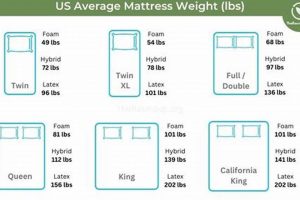
While the weight doesn’t alter the physical dimensions, it does influence the choice of frame and foundation. Heavier mattresses may require sturdier support systems to prevent sagging or damage. Dimensions of frame may have a tolerance for weight, for example.
Question 4: What room size is recommended?
A bedroom measuring at least 10 feet by 10 feet is generally recommended for accommodating a full-size mattress and essential furniture without overcrowding. Careful consideration of room dimensions is necessary to ensure comfort and functionality.
Question 5: How much sleeping space does it offer?
A full-size mattress provides approximately 4,050 square inches of sleeping surface. This area is generally adequate for individual sleepers but may prove insufficient for couples requiring ample personal space.
Question 6: Does height influence dimensions?
While mattress height does not affect the width or length dimensions, it significantly impacts the overall profile. Height variances are primarily determined by construction materials and design features. The height from the top of the mattress to the floor is considered, impacting accessibility.
Key Takeaways include precise verification, weight and size effects and impact on the room size.
Considerations regarding available space and the need for any related furniture are important considerations during the purchase.
Conclusion
This exploration of “what’s the size of a full mattress” has detailed the standardized dimensions of 54 inches in width and 75 inches in length. Further analysis included implications of surface area, frame compatibility considerations, and the influence of variable height. A comprehensive understanding of these dimensional characteristics is crucial for informed purchasing decisions and optimal utilization of space. Misunderstandings or inaccuracies in these measurements can lead to user dissatisfaction and functional limitations.
Therefore, a thorough verification of product specifications is advised prior to purchase. The potential for long-term comfort and satisfaction is directly correlated with adherence to established standards. Prudent evaluation of these specifications promotes the best possible outcome for consumers and their individual needs.

![Best Simmons Full Mattress [Guide & Reviews] | Organic & Natural Mattress Buyer’s Guide: Non-Toxic Sleep Solutions](https://mattressworldpa.com/wp-content/uploads/2025/07/th-2917-300x200.jpg "Best Simmons Full Mattress [Guide & Reviews] Organic & Natural Mattress Buyer’s Guide: Non-Toxic Sleep Solutions")