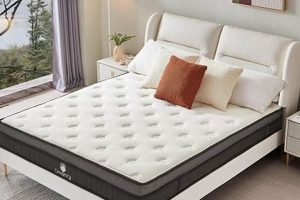
This bedding product is designed to conform to the body’s shape and evenly distribute weight, offering pressure relief. The construction incorporates a viscoelastic foam material infused with gel particles. A standard double-sized bed designed with these materials provides a balance between comfort and support for individuals or couples.
The incorporation of gel within the foam aims to regulate temperature, mitigating heat retention typically associated with memory foam. This feature contributes to a more comfortable sleeping environment. These beds have gained popularity due to their ability to alleviate pressure points, potentially reducing discomfort for those with joint pain or other physical ailments. They represent an evolution in sleep technology, building upon the foundational principles of viscoelastic foam developed for aerospace applications.
Understanding the construction and properties of this type of mattress is key to evaluating its suitability for individual needs and preferences. Factors such as density, thickness, and the specific type of gel infusion will influence the overall performance and longevity of the product. The following sections will delve into these aspects, providing a detailed overview of its characteristics, benefits, and potential considerations for prospective buyers.
Tips for Evaluating a Gel-Infused Memory Foam Double Mattress
Selecting the appropriate bed is an important decision with implications for sleep quality and physical well-being. The following tips offer guidance when considering a double-sized, gel-infused memory foam option.
Tip 1: Density Assessment. A higher density foam generally indicates greater durability and support. Examine the product specifications to ascertain the density, typically measured in pounds per cubic foot. A density of 4.0 pounds or higher is generally considered optimal for long-term use.
Tip 2: Gel Infusion Type. Different gel infusion methods exist. Particle gel infusion may offer more even temperature regulation compared to a gel swirl design. Research the type of gel used and its purported cooling properties.
Tip 3: Layer Composition Examination. Understand the layers beneath the memory foam. A supportive base layer of high-density foam is essential for preventing sagging and ensuring proper spinal alignment. Inquire about the composition and thickness of each layer.
Tip 4: Edge Support Evaluation. Inadequate edge support can lead to a feeling of roll-off and reduced usable sleep surface. Look for models with reinforced edges to provide stability and prevent compression over time.
Tip 5: Certification Verification. Look for certifications such as CertiPUR-US. These certifications ensure that the foam has been tested for harmful substances and meets specific standards for emissions, content, performance, and durability.
Tip 6: Trial Period Utilization. Many manufacturers offer a trial period. Take advantage of this opportunity to assess comfort and support over several weeks in a home environment. Understanding this policy can help ensure buyer satisfaction.
These tips provide a structured approach to evaluating double-sized, gel-infused memory foam products. Paying attention to density, gel type, layer composition, edge support, certifications, and trial periods can lead to a more informed purchase decision.
With a comprehensive understanding of these factors, the selection process becomes more streamlined, enabling the selection of a product that aligns with individual preferences and sleep needs. The subsequent sections will explore further aspects related to maintenance and long-term care.
1. Pressure Relief

Pressure relief is a primary consideration for individuals seeking a full gel memory foam mattress. The capacity of a mattress to alleviate pressure points directly impacts comfort and can influence sleep quality, especially for those with joint pain or other sensitivities.
- Conformability and Weight Distribution
The viscoelastic nature of memory foam allows it to conform to the body’s contours, distributing weight evenly across the surface. This reduces concentrated pressure on areas such as the hips, shoulders, and spine. Individuals experiencing back pain, for example, may find that the even weight distribution minimizes discomfort and promotes better spinal alignment during sleep.
- Impact on Circulation
Reduced pressure on specific areas of the body can improve circulation. Constant pressure, particularly on bony prominences, can restrict blood flow, leading to discomfort and potential numbness. A full gel memory foam mattress, by distributing weight more evenly, helps to maintain adequate circulation, potentially preventing these issues.
- Role of Gel Infusion
While the memory foam provides the conforming properties, the gel infusion can further enhance pressure relief by adding a layer of cushioning and support. The gel may also contribute to temperature regulation, preventing overheating which can exacerbate pressure-related discomfort.
- Density and Thickness Considerations
The density and thickness of the memory foam layer influence its capacity for pressure relief. Higher density foams generally offer greater support and may be more effective at distributing weight for heavier individuals. Thicker layers of memory foam can provide a more pronounced conforming effect, enhancing pressure relief for a wider range of body types.
The combined effect of conformability, improved circulation, gel infusion, and optimal density contributes to the pressure-relieving qualities of a full gel memory foam mattress. This characteristic is a key factor in its popularity and perceived benefits for enhanced sleep and reduced discomfort.
2. Temperature Regulation

Memory foam, by its nature, tends to retain heat due to its dense structure and reduced airflow. The inclusion of gel within the foam matrix of a full gel memory foam mattress is a deliberate attempt to mitigate this issue and enhance temperature regulation. The gel particles, often phase-change materials or simply denser substances, are designed to absorb and dissipate heat, thereby reducing the sleeping surface’s temperature. This cooling effect is particularly pertinent for individuals who tend to sleep hot or live in warmer climates. Failure to effectively regulate temperature can lead to discomfort, restlessness, and disrupted sleep patterns. The degree to which the gel infusion succeeds in its cooling purpose significantly affects the overall user experience.
Several factors influence the efficacy of temperature regulation in these products. The type of gel used, its concentration within the foam, and the mattress’s overall construction play crucial roles. Some manufacturers utilize open-cell memory foam in conjunction with gel infusions to further improve airflow and heat dissipation. A mattress with a tightly packed, closed-cell foam structure, even with gel, may not provide sufficient cooling. The presence of a breathable mattress cover and the use of appropriate bedding materials can also contribute to a more comfortable sleeping environment. For instance, cotton or bamboo sheets are generally preferred over synthetic materials that tend to trap heat.
Effective temperature regulation is a crucial aspect of a full gel memory foam mattress, influencing comfort and sleep quality. While the gel infusion aims to counteract the heat-retentive properties of memory foam, its effectiveness depends on various factors, including the type and concentration of gel, the foam’s structure, and the use of appropriate bedding. Understanding these factors allows consumers to make informed decisions when selecting a mattress that aligns with their individual needs and preferences. Inadequate attention to temperature regulation can negate the other potential benefits of a memory foam mattress, leading to dissatisfaction and compromised sleep.
3. Motion Isolation
Motion isolation, a significant characteristic of a full gel memory foam mattress, refers to the mattress’s capacity to absorb movement and prevent it from transferring across the sleeping surface. This attribute is particularly beneficial for couples or individuals who share a bed with restless sleepers. The viscoelastic nature of memory foam allows it to compress and conform to the body’s shape independently of other areas of the mattress. As a result, when one person moves or gets out of bed, the disturbance is localized, minimizing disruption to the other sleeper. This is achieved through the foam’s ability to dampen vibrations and absorb energy, preventing the propagation of movement across the mattress. A real-life example might involve a scenario where one partner frequently gets up during the night. With effective motion isolation, the other partner is less likely to be awakened or disturbed by these movements, leading to improved sleep quality.
The effectiveness of motion isolation is influenced by several factors, including the density of the memory foam, the thickness of the comfort layers, and the overall construction of the mattress. Higher-density foams tend to offer superior motion isolation compared to lower-density foams. The presence of a thick comfort layer of memory foam can further enhance this effect by providing a greater degree of cushioning and absorption. Some mattresses also incorporate specialized layers designed to specifically target motion transfer. Practical application of this understanding involves considering individual sleep habits and preferences. If motion isolation is a priority, potential buyers should examine mattress specifications and reviews to assess its performance in this area. The benefits of motion isolation extend beyond mere comfort. By minimizing sleep disturbances, it can contribute to better overall health and well-being, promoting more restful and restorative sleep.
In summary, motion isolation is a critical feature of a full gel memory foam mattress, offering a practical solution to sleep disturbances caused by movement. The effectiveness of this feature depends on the materials and construction of the mattress. The practical significance of this understanding lies in its ability to inform purchasing decisions, ensuring that individuals select a mattress that aligns with their specific needs and contributes to a more peaceful sleep environment. While motion isolation is a notable advantage, challenges may arise if other factors, such as temperature regulation or support, are not adequately addressed. Therefore, a comprehensive evaluation of all relevant characteristics is essential for optimal satisfaction.
4. Density & Support

The interplay between density and support is central to the performance and longevity of a full gel memory foam mattress. Density, measured in pounds per cubic foot (PCF), dictates the material’s mass and resistance to compression, directly influencing its ability to provide adequate support and maintain its structural integrity over time. The level of support offered, in turn, determines spinal alignment and minimizes pressure points, contributing to overall sleep comfort and musculoskeletal health. Understanding this relationship is paramount for selecting a mattress that meets individual needs and preferences.
- Core Density and Longevity
The density of the memory foam and the underlying support core significantly impacts the mattress’s lifespan. Higher density foams exhibit greater resistance to sagging and deformation, maintaining their supportive properties for a longer duration. For example, a mattress with a core density of 4.0 PCF or higher is generally considered more durable and capable of withstanding daily use without significant degradation. Conversely, lower density foams may exhibit premature sagging, leading to discomfort and reduced support over time. This impacts the overall value proposition of the mattress, as frequent replacements become necessary.
- Density and Weight Distribution
Density directly influences the mattress’s capacity to distribute weight evenly. Higher density foams provide a more uniform surface, preventing excessive sinking in specific areas and promoting better spinal alignment. Individuals with higher body weights require mattresses with greater density to ensure adequate support and prevent compression of the underlying layers. For instance, a person weighing over 200 pounds may find a low-density mattress inadequate, resulting in discomfort and potential back pain due to uneven weight distribution. Effective weight distribution minimizes pressure points, contributing to improved circulation and reduced discomfort.
- Layer Composition and Support Profile
The arrangement and density of different foam layers contribute to the overall support profile of the mattress. A typical full gel memory foam mattress consists of a comfort layer of gel-infused memory foam and a high-density support core. The comfort layer provides initial cushioning and pressure relief, while the support core offers structural stability and prevents excessive sinking. The relative thickness and density of each layer influence the firmness and support characteristics of the mattress. For instance, a mattress with a thicker, lower-density comfort layer may feel plush initially but lack adequate support for proper spinal alignment. Understanding the composition of these layers is essential for selecting a mattress that provides the desired balance of comfort and support.
- Gel Infusion and Support Enhancement
While primarily intended for temperature regulation, gel infusion can indirectly influence the support characteristics of a full gel memory foam mattress. The gel particles add mass to the foam, potentially increasing its density and resistance to compression. However, the primary benefit of gel infusion remains temperature regulation, with the support enhancement being a secondary effect. The type and concentration of gel used can impact the overall firmness and support of the mattress, with some gel formulations providing a slightly firmer feel. The effect on support varies based on the manufacturing process, and is dependent on other ingredients of the memory foam recipe.
The relationship between density and support is fundamental to the performance and longevity of full gel memory foam mattresses. High-density foams contribute to durability, effective weight distribution, and spinal alignment, while the arrangement and density of different layers determine the overall support profile. Gel infusion, while primarily focused on temperature regulation, can indirectly influence the firmness and support characteristics of the mattress. By understanding these facets, consumers can make informed decisions and select a mattress that provides optimal comfort, support, and long-term value.
5. Size & Dimensions

The specified dimensions of a full-size mattress directly influence its suitability for individual users and particular bedroom spaces. A standard full-size mattress measures approximately 54 inches in width and 75 inches in length. These dimensions determine the available sleeping surface and consequently, the comfort level for single sleepers or couples. A “full gel memory foam mattress” adheres to these standard dimensions, offering the conforming properties of memory foam and the temperature regulation of gel infusion within this defined space. Inadequate consideration of size can lead to discomfort, restricted movement during sleep, and inefficient utilization of bedroom space. For instance, a taller individual may find a full-size mattress too short, resulting in constrained legroom and compromised sleep quality. Similarly, a couple sharing a full-size mattress may experience limited space and increased sleep disturbance due to proximity.
Beyond individual comfort, the dimensions of this mattress also influence its compatibility with existing bedroom furniture and layouts. A full-size mattress requires an appropriately sized bed frame and bedding. In smaller bedrooms, a full-size mattress offers a reasonable compromise between sleeping space and floor area. However, in larger bedrooms, a larger mattress size, such as a queen or king, may be more appropriate to optimize comfort and visual balance. For example, placing a full-size bed in a spacious master bedroom may create a disproportionate appearance and underutilize the available space. Furthermore, the dimensions of the mattress impact the ease of maneuvering within the bedroom, especially in tight spaces. Therefore, careful measurement of the bedroom and consideration of furniture placement are essential when selecting the appropriate mattress size. The correlation between room dimensions and this product’s size enables better space use.
In summary, the size and dimensions of a full gel memory foam mattress are critical factors that directly influence comfort, compatibility with bedroom spaces, and overall sleep quality. Adherence to standard full-size dimensions provides a baseline for compatibility with existing bedding and bed frames. However, individual needs, room size, and furniture layout must be considered to ensure optimal selection. Failure to adequately consider these factors can result in discomfort, inefficient space utilization, and compromised sleep. The ability to assess the proper dimension requirements can contribute to a more satisfying rest.
6. Durability Factors
The longevity of a full gel memory foam mattress is dictated by several key durability factors. These factors determine the mattress’s ability to withstand daily use and maintain its supportive and comfortable properties over time. Material quality, construction techniques, and usage patterns are critical determinants of its lifespan. A compromised component in any of these areas can lead to premature degradation, reducing the mattress’s intended lifespan and negating its initial benefits. For example, low-density foam may exhibit sagging within a relatively short period, while substandard construction can result in seam failures or uneven wear. The interaction between these factors dictates the long-term value and overall satisfaction with the product. Mattress buyers prioritize longevity, making it an essential factor in purchase consideration.
Specific durability factors include foam density, gel infusion quality, cover material, and base support system. Higher density foams, particularly in the support core, resist compression and maintain their structure better than lower density alternatives. The type and distribution of gel infusion influence its ability to regulate temperature and maintain its integrity over extended use. A durable cover material protects the foam from damage and wear, extending the mattress’s lifespan. A robust base support system prevents sagging and provides a stable foundation. For instance, a mattress with a high-density foam core, a well-integrated gel infusion, a durable cover, and a reinforced edge support system is more likely to withstand years of use without significant degradation. Understanding the interrelation between these factors is crucial to making an informed choice, especially when considering the upfront investment associated with a memory foam mattress.
In summary, the durability of a full gel memory foam mattress is a composite measure determined by material quality, construction techniques, and usage conditions. Higher density foams, quality gel infusions, robust covers, and solid support systems contribute to enhanced longevity. Degradation can manifest as sagging, reduced support, or seam failures, leading to diminished comfort and overall dissatisfaction. While these mattresses offer comfort and support, careful consideration of durability factors during the selection process is essential to ensure long-term value and maximize the investment in a product designed for extended use. Failure to consider these factors can result in a premature purchase cycle.
7. Certifications

Certifications provide an objective assessment of a full gel memory foam mattress, verifying that it meets specific standards for content, emissions, performance, and durability. These certifications offer consumers assurance regarding the safety and quality of the product, addressing concerns about potentially harmful chemicals or manufacturing practices.
- CertiPUR-US Certification
CertiPUR-US certification indicates that the foam used in the mattress has been tested and found to be free of certain harmful chemicals, including ozone depleters, PBDE flame retardants, mercury, lead, and heavy metals. It also confirms that the foam has low VOC (Volatile Organic Compound) emissions for indoor air quality. For example, a mattress bearing this certification assures the consumer that the foam has been manufactured in an environmentally responsible manner and poses minimal risk to human health.
- OEKO-TEX Standard 100 Certification
OEKO-TEX Standard 100 certification focuses on the textile components of the mattress, such as the cover. This certification verifies that every component of the textile, including threads, linings, and accessories, has been tested for harmful substances and is harmless to human health. A mattress with an OEKO-TEX certified cover ensures that the materials in direct contact with the skin meet stringent safety standards, reducing the risk of allergic reactions or skin irritation.
- GREENGUARD Certification
GREENGUARD certification focuses on chemical emissions from the entire mattress, ensuring that it meets strict standards for low VOC emissions. This certification is particularly relevant for individuals with sensitivities to chemicals or those concerned about indoor air quality. A GREENGUARD certified full gel memory foam mattress has been tested and shown to release minimal levels of volatile organic compounds, contributing to a healthier indoor environment.
- Other Relevant Certifications
Other certifications, such as those related to organic materials (e.g., Global Organic Textile Standard – GOTS) or sustainable manufacturing practices, may also be relevant depending on the specific materials and construction of the mattress. These certifications provide additional assurance regarding the environmental impact and ethical sourcing of the materials used. A mattress bearing multiple certifications demonstrates a commitment to both product safety and environmental responsibility.
These certifications serve as valuable tools for consumers seeking a full gel memory foam mattress that aligns with their health and environmental concerns. While certifications do not guarantee every aspect of product quality, they provide an objective assessment of specific criteria, helping consumers make informed decisions and choose products that meet their individual needs and preferences.
Frequently Asked Questions
This section addresses common inquiries regarding the characteristics, performance, and suitability of a full gel memory foam mattress. The information presented aims to provide clarity and assist in informed decision-making.
Question 1: What is the expected lifespan of a full gel memory foam mattress?
The typical lifespan ranges from 7 to 10 years, contingent upon factors such as foam density, usage patterns, and maintenance practices. Higher-density foams and proper care generally extend the mattress’s usable life. Evidence of sagging or diminished support indicates the need for replacement.
Question 2: How does a full gel memory foam mattress address temperature regulation?
These mattresses incorporate gel particles within the foam structure to dissipate heat and enhance airflow. The effectiveness of temperature regulation varies based on the type and concentration of gel used. Open-cell foam structures further improve breathability, mitigating heat retention commonly associated with traditional memory foam.
Question 3: What is the recommended weight capacity for a full gel memory foam mattress?
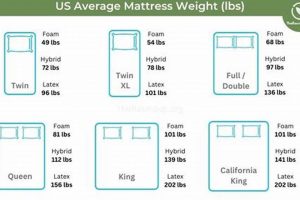
The weight capacity is dependent on the mattress’s construction and density. Most full-size mattresses accommodate a combined weight of up to 500 pounds. Exceeding this limit may accelerate wear and compromise support. Consult the manufacturer’s specifications for precise weight limits.
Question 4: What distinguishes a full gel memory foam mattress from a traditional memory foam mattress?
The primary distinction lies in the inclusion of gel particles designed to regulate temperature. Traditional memory foam tends to retain heat, while gel-infused options aim to dissipate heat and improve airflow. The presence of gel alters the firmness and overall feel of the sleeping surface to a degree.
Question 5: What type of bed frame is suitable for a full gel memory foam mattress?
A solid or slatted bed frame that provides adequate support across the entire mattress surface is recommended. Slats should be no more than a few inches apart to prevent sagging. Box springs may or may not be required, depending on the mattress manufacturer’s recommendations.
Question 6: What certifications are relevant when considering a full gel memory foam mattress?
CertiPUR-US certification ensures that the foam meets standards for low VOC emissions and absence of harmful chemicals. OEKO-TEX certification verifies the safety of textile components, such as the cover. GREENGUARD certification addresses chemical emissions and indoor air quality.
These responses provide clarity on key aspects of this product, including lifespan, temperature regulation, weight capacity, differentiation from traditional memory foam, frame compatibility, and relevant certifications. Understanding these factors can facilitate informed purchase decisions and optimize the user experience.
The subsequent section will delve into comparisons with other mattress types, offering a comprehensive perspective on their respective advantages and disadvantages.
Full Gel Memory Foam Mattress
This examination has illuminated the multifaceted nature of the full gel memory foam mattress. Its defining characteristics pressure relief, temperature regulation, motion isolation, and support are directly influenced by material density, construction, and certification standards. Understanding the interplay of these factors is paramount for evaluating its suitability in relation to individual needs and preferences. The selection process necessitates a thorough assessment of product specifications, certifications, and trial periods, ensuring a balance between comfort, support, and long-term durability.
Ultimately, the selection of a bedding product is a considered investment in personal well-being. The information presented serves as a foundation for informed decision-making, empowering prospective buyers to critically evaluate the merits of a full gel memory foam mattress and determine its alignment with their specific requirements. Further research into evolving materials and manufacturing techniques will continue to refine the qualities of this product, enhancing its potential to contribute to improved sleep and overall health.
![Best Simmons Full Mattress [Guide & Reviews] | Organic & Natural Mattress Buyer’s Guide: Non-Toxic Sleep Solutions](https://mattressworldpa.com/wp-content/uploads/2025/07/th-2917-300x200.jpg "Best Simmons Full Mattress [Guide & Reviews] Organic & Natural Mattress Buyer’s Guide: Non-Toxic Sleep Solutions")