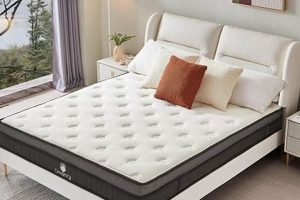
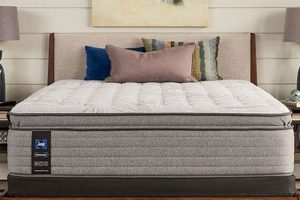
A raised sleeping platform designed to accommodate a standard-sized mattress below is a type of bed frame that maximizes vertical space. This configuration elevates the sleeping area, freeing up floor space for other furniture or activities. It effectively combines sleeping and living areas in a compact footprint.
This design offers several advantages, including optimizing space utilization, particularly in smaller rooms or apartments. Historically, elevated beds have been employed in spaces with limited square footage, such as dormitories or studio apartments. The benefits extend to creating distinct zones within a single room and providing enhanced storage possibilities beneath the bed frame.
The subsequent sections will delve into the specific design variations, safety considerations, assembly procedures, and ideal user profiles for structures that accommodate a standard mattress size. This will provide a detailed understanding of the practical aspects and potential applications of this space-saving furniture solution.
Considerations for Selecting a Loft Bed
Choosing a loft bed requires careful assessment to ensure suitability and safety within the intended environment. These guidelines provide essential factors to consider before purchase and assembly.
Tip 1: Ceiling Height Assessment: Measure the room’s ceiling height before purchasing. Adequate clearance above the mattress is crucial for comfortable sitting and movement. Insufficient headroom can lead to discomfort and potential safety hazards.
Tip 2: Weight Capacity Verification: Confirm the bed frame’s weight capacity. This includes the mattress weight and the weight of the intended occupant. Exceeding the stated weight limit can compromise structural integrity and pose a significant safety risk.
Tip 3: Ladder or Staircase Evaluation: Evaluate the ladder or staircase design for ease of use and safety. Consider the angle, tread depth, and handrail presence. A stable and easily navigable access point is paramount, particularly for younger users.
Tip 4: Guardrail Height and Stability: Ensure the guardrail height meets safety standards and provides adequate protection against falls. Verify the guardrail’s secure attachment to the bed frame to prevent accidental dislodgement.
Tip 5: Material Durability and Construction: Assess the materials used in the bed frame’s construction. Opt for durable materials like solid wood or steel for long-term stability and resilience. Examine the joints and connections for solid construction.
Tip 6: Mattress Compatibility: Confirm that a mattress of standard dimensions is appropriate for the frame. Note any limitations on mattress thickness to ensure the guardrail remains effective and prevents accidental falls.
Tip 7: Assembly Instructions and Support: Review the assembly instructions before purchase. Clear and comprehensive instructions are crucial for proper and safe assembly. Ensure customer support is available to address any questions or concerns during the assembly process.
Careful attention to these considerations will help ensure a safe and functional sleeping and living space. Selecting the appropriate structure requires a comprehensive evaluation of room dimensions, user needs, and safety features.
The following sections will explore specific models and address common challenges encountered during assembly and usage.
1. Space Optimization
The fundamental advantage of integrating a standard mattress size with a loft bed design resides in maximizing floor space within confined environments. The elevated sleeping platform effectively doubles the usable area of a room by freeing up the footprint typically occupied by a conventional bed frame. This vertical utilization enables diverse configurations for the newly available space beneath the bed, facilitating the inclusion of desks, seating areas, storage solutions, or even small walk-in closets.
Consider a studio apartment, where living, sleeping, and working areas often compete for limited square footage. By incorporating a loft bed, the resident can dedicate the space beneath the elevated bed to a functional workspace, complete with a desk, chair, and storage cabinets. Alternatively, in a child’s bedroom, the freed-up space can transform into a play area or a reading nook. This adaptive capability of a loft bed is particularly relevant in urban settings where real estate costs incentivize compact living spaces. The structural design, however, should adhere to safety standards ensuring the stability and load-bearing capacity of the unit.
In summary, the association between space optimization and a loft bed frame is a direct consequence of vertical space utilization. This design choice effectively addresses the challenges of limited floor space by creating versatile living areas within a single room. However, the success of this approach hinges on a sound structural design, strict adherence to safety protocols, and careful consideration of the user’s specific needs and environmental constraints.
2. Structural Integrity

Structural integrity is a paramount concern in the design and construction of a loft bed that accommodates a standard mattress. The elevated nature of this furniture necessitates a robust framework capable of supporting the weight of the mattress, the occupant, and any additional loads placed upon it. Failure to ensure adequate structural integrity can result in catastrophic collapse, leading to severe injuries. Therefore, material selection, joint design, and connection methods must be meticulously engineered to withstand anticipated stresses.
Consider, for example, a loft bed constructed from substandard materials or assembled with insufficient fasteners. The repeated stress of daily use could cause joints to weaken, leading to gradual deformation or sudden failure. Such incidents underscore the importance of using high-quality materials, such as solid hardwood or heavy-gauge steel, and implementing appropriate connection techniques, such as bolted joints with locking mechanisms. Additionally, weight distribution should be carefully considered in the design phase to minimize stress concentrations on specific areas of the structure. Building codes and industry standards often provide guidelines for safe load-bearing capacities and structural design requirements for elevated sleeping platforms.
In conclusion, the correlation between structural integrity and the safety and longevity of a loft bed designed for a standard mattress is undeniable. Prioritizing robust construction methods, employing durable materials, and adhering to established safety standards are crucial steps in mitigating the risk of structural failure. Neglecting these considerations can have severe consequences, highlighting the practical significance of understanding and implementing sound engineering principles in the design and construction of this type of furniture.
3. Ladder Stability

Ladder stability is a critical safety component in the design and use of a loft bed configured for a standard-sized mattress. The ladder provides the primary means of access to the elevated sleeping platform, and its stability directly impacts the user’s risk of falls and injuries. A properly designed and securely attached ladder is non-negotiable for safe operation of such a bed frame.
- Angle and Inclination
The angle of the ladder relative to the floor significantly affects its ease of use and stability. A steeper angle requires greater upper body strength and increases the risk of slipping. Conversely, a less steep angle may require more floor space, impacting the space-saving advantage of the loft bed. The optimal angle balances accessibility with minimal encroachment on the room’s footprint.
- Tread Design and Material
The design of the ladder treads is crucial for providing secure footing. Wide, flat treads with a non-slip surface minimize the risk of slippage and provide greater comfort during ascent and descent. Materials such as textured metal or non-slip rubber can enhance traction and improve overall safety. Avoid narrow or rounded treads that offer inadequate support.
- Attachment and Support Structure
The method of attachment and the overall support structure of the ladder are paramount to its stability. The ladder must be securely fastened to the bed frame using robust hardware and a design that prevents wobbling or shifting. Reinforcements, such as additional supports or braces, may be necessary to ensure the ladder can withstand the weight and movement of the user. A weak or improperly attached ladder poses a significant fall hazard.
- Handrail Integration
The presence of handrails or grab bars can significantly enhance ladder stability and user safety. Handrails provide an additional point of contact for balance and support, particularly during ascent and descent. They are especially beneficial for younger users or individuals with mobility limitations. Ergonomically designed handrails that are easy to grip and positioned at an appropriate height contribute to safer ladder usage.
In conclusion, the stability of the ladder is inextricably linked to the overall safety and functionality of a loft bed designed for a standard mattress. The design and construction of the ladder must prioritize secure attachment, ergonomic considerations, and the use of appropriate materials to minimize the risk of falls and ensure the safe and reliable accessibility of the elevated sleeping area.
4. Guardrail Safety

Guardrail safety is a paramount, non-negotiable aspect in the design and usage of a loft bed configured for a standard-sized mattress. The elevated sleeping platform introduces a significant risk of falls, and appropriately designed and installed guardrails serve as the primary preventative measure against such incidents. The absence or inadequacy of guardrails directly correlates with an increased probability of severe injuries, particularly during sleep or in moments of disorientation. Building codes and safety standards often specify minimum guardrail heights and structural requirements to mitigate this risk. Consider the potential consequences of a child rolling off a loft bed lacking adequate guardrails; the resulting injury could range from minor bruises to severe head trauma. Therefore, prioritizing guardrail safety is not merely a recommendation, but a critical necessity in ensuring user well-being.
The practical implementation of guardrail safety involves several key considerations. The height of the guardrail must be sufficient to prevent occupants from accidentally rolling over it during sleep. The spacing between the guardrail and the mattress should be minimized to prevent entrapment. Furthermore, the structural integrity of the guardrail is vital; it must be capable of withstanding significant force without collapsing or detaching from the bed frame. Regular inspection of guardrails is essential to identify and address any signs of wear, damage, or loosening of connections. Examples of best practices include using continuous, solid guardrails rather than spaced slats, employing robust attachment hardware, and routinely verifying the stability of the entire guardrail system. Addressing these points greatly diminishes the potential for accidents, and contributes to the overall safer environment.
In summary, the connection between guardrail safety and a loft bed for standard mattresses is a direct cause-and-effect relationship: inadequate guardrails lead to increased risk of falls and injuries. Prioritizing robust guardrail design, proper installation, and regular inspection is essential for mitigating these risks. Challenges in this area often involve balancing safety requirements with aesthetic considerations and cost constraints. However, compromising on guardrail safety to achieve a particular appearance or cost target is a dangerous trade-off. The practical significance of understanding and implementing effective guardrail measures cannot be overstated, as it directly protects users from potentially life-altering injuries.
5. Assembly Complexity

The assembly complexity inherent in a loft bed designed for a standard mattress profoundly influences user experience, safety, and the long-term integrity of the structure. The multifaceted nature of assembly procedures requires careful consideration, as errors can compromise the bed’s stability and increase the risk of accidents.
- Instruction Clarity and Completeness
The clarity and completeness of assembly instructions are paramount. Vague or incomplete instructions can lead to misinterpretation and incorrect assembly, potentially weakening structural connections. Illustrated diagrams, numbered parts, and sequential steps significantly reduce the likelihood of errors. Conversely, poorly written instructions lacking visual aids increase frustration and the probability of improper assembly, jeopardizing safety. An example includes failing to properly secure a ladder because the screw length isn’t clear and illustrated in the instruction
- Component Quantity and Identification
The number of individual components and the ease of their identification contribute significantly to assembly complexity. Loft beds often comprise numerous pieces, including frame members, support brackets, fasteners, and safety features. Clearly labeled and organized components streamline the assembly process and minimize confusion. A lack of clear identification can result in using the wrong parts in critical connections, weakening the overall structure.
- Tool Requirements and Accessibility
The types and accessibility of tools required for assembly impact the overall difficulty. Specialized tools or those not commonly found in households increase the barrier to successful assembly. The instructions should specify the necessary tools and, ideally, the manufacturer would provide essential hardware. Using improper tools or forcing connections due to tool limitations can damage components and compromise structural integrity.
- Physical Dexterity and Strength
Assembly complexity is also influenced by the physical dexterity and strength required to manipulate and connect components. Loft beds often involve lifting heavy parts, aligning components in awkward positions, and tightening fasteners with considerable force. Individuals with limited physical capabilities may encounter significant challenges, increasing the risk of injury or improperly assembled components. Moreover, those with limited physical capabilities can’t assemble this alone. It often require 2 people, making assembly process longer.
These facets underscore the direct relationship between assembly complexity and the overall viability of a loft bed designed for a standard mattress. Manufacturers should prioritize clear and comprehensive instructions, organized component packaging, minimal tool requirements, and designs that reduce the physical demands of assembly. Addressing these factors enhances user satisfaction, minimizes safety risks, and ultimately contributes to the long-term integrity and performance of the elevated bed structure. Furthermore, failing to take this factor into consideration can make your design and planning a disaster in the long run.
6. Mattress Compatibility

Mattress compatibility constitutes a critical design parameter in the context of a loft bed intended for a standard-sized mattress. The precise dimensions and weight characteristics of the mattress directly influence the safety, stability, and overall functionality of the elevated bed frame. Incompatibility between the mattress and the loft bed structure can result in hazardous gaps, inadequate support, and compromised guardrail effectiveness, significantly increasing the risk of falls and injuries. The consequences of neglecting mattress compatibility can range from minor discomfort to severe accidents, underscoring the importance of meticulous measurement and adherence to manufacturer specifications.
Consider, for instance, a scenario where a mattress exceeding the specified thickness is placed on a loft bed. This would reduce the effective height of the guardrail, potentially rendering it insufficient to prevent falls. Alternatively, a mattress that is too small may create dangerous gaps between the mattress and the bed frame, posing a risk of entrapment. The practical implications of these scenarios highlight the necessity of verifying that the mattress dimensions align precisely with the loft bed’s design parameters. This often involves consulting the manufacturer’s recommendations, measuring the interior dimensions of the bed frame, and selecting a mattress that meets the specified requirements. Furthermore, weight limitations must be considered to ensure that the mattress does not exceed the load-bearing capacity of the bed frame, as this could compromise its structural integrity. For example, a full size memory foam mattress can be significantly heavier than a traditional innerspring mattress, thus exceeding the weight limit.
In summary, the relationship between mattress compatibility and the functionality of a loft bed designed for a standard mattress is direct and consequential. Incompatible mattress can diminish or entirely negate the safety functions and design of the bed. The challenge involves balancing mattress selection with dimensional constraints and load-bearing considerations. Addressing these challenges requires careful attention to detail, adherence to manufacturer guidelines, and a clear understanding of the potential risks associated with incompatibility. As a practical concern, it is imperative to measure both the bed and mattress and compare the sizes to one another to make sure that the guardrail and the bed will work properly and be safe.
7. User Age Suitability

User age suitability is a crucial factor in determining the appropriateness of a loft bed designed for a standard mattress. The inherent design of a loft bed, with its elevated sleeping platform and reliance on a ladder or stairs for access, presents unique safety considerations that vary significantly based on the user’s age, physical development, and cognitive abilities. Careful consideration of age suitability is essential to mitigate the risks of falls and injuries, ensuring the safe and responsible use of this type of furniture.
- Young Children (Under 6 Years)
Loft beds are generally not recommended for children under the age of six. Young children lack the coordination, spatial awareness, and judgment necessary to safely navigate a ladder or stairs. The risk of falls from the elevated sleeping surface is significantly higher in this age group, potentially resulting in severe injuries. Furthermore, children under six may not fully comprehend the dangers associated with climbing or playing on a loft bed, increasing the likelihood of accidents. An example would be a 4 year old attempting to climb headfirst down the ladder. In this case, they would be far more likely to fall down headfirst.
- Older Children and Adolescents (6-18 Years)
While loft beds may be suitable for older children and adolescents, careful supervision and adherence to safety guidelines remain paramount. Children in this age group possess improved coordination and cognitive abilities compared to younger children, but they may still engage in risky behaviors, such as jumping or playing on the bed, which could lead to falls. Parents or guardians should emphasize the importance of safe ladder usage, discourage horseplay on the bed, and ensure that the guardrails are securely in place. This requires clear and comprehensive instructions.
- Young Adults (18-25 Years)
Young adults generally possess the physical capabilities and cognitive awareness necessary to safely use a loft bed designed for a standard mattress. However, factors such as sleepwalking, intoxication, or certain medical conditions can increase the risk of falls, even in this age group. Young adults should be mindful of these potential risks and take appropriate precautions, such as avoiding alcohol consumption before sleep and ensuring that the sleeping area is well-lit. For example, if a college student is using a loft bed and is sleep walking, the odds are high that the student will fall and injure themself.
- Older Adults (65+ Years)
Older adults may face unique challenges when using a loft bed, due to age-related decline in physical strength, balance, and coordination. Conditions such as arthritis, osteoporosis, or vision impairment can increase the risk of falls and injuries. Loft beds may not be suitable for older adults with mobility limitations or balance issues. However, if an older adult chooses to use a loft bed, modifications such as installing a sturdy staircase with handrails and ensuring adequate lighting may help to mitigate the risks. This may mean having larger steps with larger spacing.
In conclusion, the determination of user age suitability for a loft bed that accommodates a standard mattress necessitates a comprehensive assessment of the individual’s physical and cognitive capabilities, as well as an evaluation of potential risks. Prioritizing safety through appropriate age recommendations, parental supervision, and adherence to safety guidelines is essential to ensure the responsible and injury-free use of this type of furniture.
Frequently Asked Questions
The following section addresses common inquiries and concerns regarding loft beds designed for standard mattresses. The information provided aims to offer clarity and informed decision-making for prospective purchasers.
Question 1: What is the minimum recommended ceiling height for a room accommodating a loft bed with full size mattress?
The minimum recommended ceiling height is typically eight feet. This allows for adequate headroom above the mattress, enabling comfortable sitting and movement. Lower ceiling heights may result in restricted movement and a claustrophobic environment.
Question 2: What is the typical weight capacity of a loft bed designed for a full size mattress?
Weight capacities vary depending on the materials and construction. However, a typical loft bed should support at least 250 pounds, encompassing the mattress and occupant weight. Exceeding the weight limit compromises structural integrity.
Question 3: What are the key safety features to consider when selecting a loft bed with full size mattress?
Essential safety features include sturdy guardrails with adequate height, a stable ladder or staircase with non-slip treads, and a robust frame constructed from durable materials. Verification of compliance with safety standards is also advisable.
Question 4: Is a loft bed with full size mattress suitable for young children?
Loft beds are generally not recommended for children under the age of six. The risk of falls from the elevated sleeping surface is significantly higher in this age group. Supervised use may be considered for older children with appropriate safety measures.
Question 5: What type of mattress is most compatible with a loft bed designed for a full size mattress?
A mattress of standard dimensions and appropriate thickness is recommended. Exceeding the specified thickness reduces guardrail effectiveness. Memory foam or innerspring mattresses are commonly used, but weight considerations are essential.
Question 6: What are the common challenges encountered during the assembly of a loft bed with full size mattress?
Common assembly challenges include unclear instructions, missing hardware, and the requirement for specialized tools. Seeking assistance from another individual may be necessary due to the size and weight of components.
Careful consideration of these questions will contribute to a more informed decision-making process when selecting a loft bed that meets individual needs and safety requirements.
The subsequent section will discuss potential design variations and aesthetic considerations for integrating a loft bed into various room settings.
Conclusion
The preceding analysis has explored the multifaceted aspects of the loft bed with full size mattress, emphasizing design considerations, safety protocols, assembly complexities, and age suitability. The discussion underscores the importance of careful planning and informed decision-making when integrating this type of furniture into residential environments.
The responsible selection and installation of a loft bed for a full size mattress necessitate prioritizing safety, functionality, and user well-being. While the design offers space-saving advantages, it is imperative to weigh potential risks and ensure adherence to established safety standards. Continued innovation in design and materials may further enhance the safety and usability of loft beds in the future, but the responsibility for informed decision-making ultimately rests with the consumer.
![Best Simmons Full Mattress [Guide & Reviews] | Organic & Natural Mattress Buyer’s Guide: Non-Toxic Sleep Solutions](https://mattressworldpa.com/wp-content/uploads/2025/07/th-2917-300x200.jpg "Best Simmons Full Mattress [Guide & Reviews] Organic & Natural Mattress Buyer’s Guide: Non-Toxic Sleep Solutions")