These sleeping structures maximize vertical space, accommodating two sleepers within the footprint of a single bed. They are designed to hold a specific mattress dimension, offering a practical solution for shared rooms or areas with limited square footage. For instance, a bedroom with two children can benefit from this arrangement, freeing up floor space for other activities.
The advantages of such a configuration include space efficiency, cost-effectiveness compared to purchasing two individual beds, and potential appeal to children. Historically, tiered sleeping arrangements have been employed in environments where space is a premium, such as dormitories, ships, and military barracks, reflecting a continuous need for efficient spatial utilization. Their relevance persists in modern homes where optimizing available space remains a priority.
This article delves into various aspects of selecting the right model, safety considerations, structural integrity, appropriate mattress choices, and design aesthetics. Subsequent sections will provide detailed information on these topics, guiding readers in making informed decisions.
Tips on Selecting and Maintaining Full Size Bunk Beds
The following recommendations address key considerations for choosing and maintaining sleeping arrangements of this type, ensuring both safety and longevity.
Tip 1: Verify Compliance with Safety Standards: Ensure the product meets current safety regulations set forth by organizations such as the Consumer Product Safety Commission (CPSC). Compliance indicates the design has undergone rigorous testing for stability, entrapment hazards, and structural integrity.
Tip 2: Assess Weight Capacity: Review the manufacturer’s specified weight limit for both the upper and lower tiers. Exceeding the stated capacity can compromise the structural integrity of the frame, potentially leading to failure.
Tip 3: Prioritize Ladder/Stairway Security: The ladder or stairway should be securely attached to the frame, offering stable and reliable access to the upper bunk. Check for non-slip surfaces and adequate handrails to minimize the risk of falls.
Tip 4: Mattress Thickness Considerations: Adhere to the recommended mattress thickness to maintain sufficient guardrail height. A mattress that is too thick reduces the effectiveness of the guardrail, increasing the risk of occupants rolling out.
Tip 5: Conduct Regular Inspections: Routinely inspect the frame for loose bolts, cracked welds, or signs of stress. Address any issues promptly to prevent further deterioration and potential hazards.
Tip 6: Emphasize Proper Assembly: Follow the manufacturers assembly instructions meticulously. Incorrect assembly can significantly weaken the structure, negating its intended safety features.
Tip 7: Educate Occupants on Safe Use: Instruct users, particularly children, on the proper way to climb the ladder and to avoid jumping or roughhousing on the structure. Emphasizing responsible use minimizes the risk of accidents.
Adhering to these guidelines ensures a safer and more durable elevated sleeping environment, offering long-term benefits for users.
The subsequent sections will explore specific design options and aesthetic considerations for integrating these structures into diverse living spaces.
1. Space Optimization

The relationship between the configuration and efficient room utilization is direct and significant. These structures, designed to accommodate a full-size mattress, inherently address space constraints by vertically stacking sleeping surfaces. The primary effect is the liberation of floor area that would otherwise be occupied by two separate beds. A small bedroom, for example, can be transformed from cramped to functional, providing additional space for desks, storage, or play areas. This vertical arrangement is particularly crucial in urban dwellings or smaller homes where square footage is limited. The importance of optimizing space is not merely aesthetic; it directly impacts usability and comfort of a room.
Practical applications extend beyond residential settings. Dormitories, hostels, and even temporary housing facilities benefit significantly from this configuration. These arrangements allows more individuals to be accommodated within a given area, addressing housing needs efficiently. Furthermore, the enhanced floor space can improve traffic flow and reduce clutter, creating a more organized and livable environment. Consider a shared apartment where multiple occupants require individual sleeping spaces; using the tiered structure allows for communal living areas to remain functional and uncluttered.
In summary, space optimization is an intrinsic component of its overall value. The ability to consolidate sleeping areas vertically directly addresses the challenge of limited space, leading to increased functionality and improved living conditions. This understanding is critical for anyone seeking to maximize the utility of smaller rooms or shared living environments.
2. Structural Integrity

The capacity of these sleeping structures to withstand applied loads and maintain stability over time is paramount. Structural integrity directly affects safety, durability, and longevity, and must be thoroughly considered.
- Material Selection and Load-Bearing Capacity
The choice of materials, such as solid wood or steel, dictates the frame’s ability to bear weight. Solid hardwoods like maple or oak offer inherent strength but can be more costly. Steel frames provide robust support at a potentially lower price point. Exceeding the manufacturer’s specified weight limit can lead to catastrophic failure, emphasizing the need for adherence to guidelines.
- Joint Construction and Fastener Systems
The method of joining frame components is crucial. Mortise-and-tenon joints, dovetail joints, and secure bolting systems contribute to overall stability. Weakly constructed joints can loosen over time, creating instability and potential hazards. Regularly inspecting and tightening fasteners is essential for maintaining structural soundness.
- Guardrail Design and Height
Guardrails prevent falls from the upper tier. Their height and secure attachment to the frame are critical. Insufficient guardrail height or unstable mounting compromises occupant safety. Building codes and safety standards often dictate minimum guardrail height requirements.
- Ladder or Stairway Stability
The ladder or stairway must be rigidly attached to the frame to provide safe access. Insufficient support or loose connections can lead to falls. Wide, stable steps and handrails enhance usability and safety, especially for younger users.
These components collectively influence the stability and safety of the structure. Prioritizing robust materials, secure joinery, and adherence to safety standards ensures a long-lasting and reliable sleeping environment. Failure to address these elements can result in structural compromise and potential injury.
3. Safety Standards

Adherence to established safety standards is a non-negotiable aspect in the design, manufacture, and use of sleeping structures of this kind. These standards, often developed and enforced by regulatory bodies like the Consumer Product Safety Commission (CPSC), aim to mitigate foreseeable hazards associated with elevated sleeping arrangements. Failure to comply with these standards can lead to serious injuries, emphasizing their critical importance. For instance, CPSC standards mandate specific guardrail heights to prevent falls, and require that bunk beds undergo rigorous testing to ensure structural stability. Without such standards, the risk of entrapment, collapse, and other accidents increases significantly.
Real-world examples underscore the practical significance of safety standards. Recalls of products due to design flaws or manufacturing defects highlight the potential consequences of non-compliance. These recalls often result from failures in structural integrity, inadequate guardrail heights, or entrapment hazards. Furthermore, understanding and applying these standards extends beyond the manufacturer to include retailers and consumers. Retailers have a responsibility to ensure they are selling compliant products, while consumers must assemble and use the structures according to the manufacturer’s instructions.
In summary, safety standards are integral to ensuring the well-being of individuals using elevated sleeping configurations. These standards are not merely guidelines; they are essential requirements designed to prevent injury and promote safe usage. Manufacturers, retailers, and consumers all share a responsibility in upholding these standards to minimize risks associated with their use. The long-term safety and reliability of these structures hinge on the consistent application and enforcement of these established safety protocols.
4. Ladder Design

The configuration for accessing the upper tier is a critical element in overall safety and usability. Design considerations extend beyond mere functionality, encompassing ergonomic factors and structural integrity, thereby influencing the accessibility and risk associated with ascending and descending.
- Angle and Inclination
The angle of the ladder significantly impacts the ease and safety of climbing. Steeper angles require more upper body strength and increase the risk of falls, while shallower angles occupy more floor space. A balance between accessibility and space efficiency is essential, often achieved through a compromise that ensures a comfortable climbing angle without encroaching excessively into the room. Vertical ladders are space-saving but pose a greater challenge, especially for younger users.
- Step Dimensions and Spacing
The dimensions and spacing of the steps affect foot placement and stability. Narrow steps can be uncomfortable and less secure, while excessively wide steps can make climbing awkward. Consistent spacing between steps promotes a rhythmic climbing motion and reduces the likelihood of missteps. Uneven spacing introduces an element of unpredictability that can compromise safety.
- Material and Construction
The material and construction of the ladder contribute to its overall strength and durability. Steel ladders offer robust support but can be cold and slippery. Wooden ladders provide a warmer feel but may require more maintenance to prevent splintering or cracking. The method of attachment to the bed frame is crucial; secure bolting or welding ensures the ladder remains firmly in place, preventing detachment or collapse.
- Positioning and Accessibility
The position of the ladder relative to the bed and surrounding furniture affects its accessibility. A ladder placed too close to a wall or other obstruction can be difficult to use. The ladder should be positioned in a location that allows for a clear and unobstructed path to the upper bunk. Some models incorporate ladders that can be positioned on either side of the bed, providing greater flexibility in room arrangement.
These considerations collectively determine the suitability of the access mechanism. An optimally designed ladder enhances the usability of the elevated sleeping surface while minimizing the potential for accidents. The integration of these design elements directly impacts the overall safety and functionality of the complete sleeping structure.
5. Mattress Compatibility

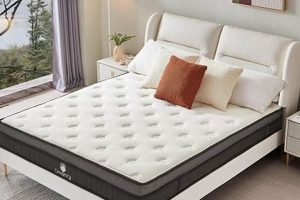
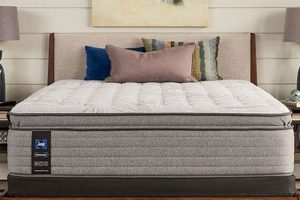
Mattress compatibility is a critical, often overlooked, aspect of selecting a sleeping structure designed for full-size mattresses. It impacts safety, comfort, and the longevity of both the bed frame and the mattress itself. Ensuring the correct fit prevents potential hazards and optimizes the intended functionality.
- Guardrail Height and Safety
The mattress thickness directly influences the effectiveness of the guardrail on the upper bunk. A mattress that is too thick reduces the guardrail’s height, increasing the risk of a fall. Conversely, a mattress that is too thin may create a gap between the mattress and the guardrail, posing an entrapment hazard. Maintaining the manufacturer-recommended mattress thickness is essential to upholding safety standards.
- Frame Support and Mattress Longevity
The bed frame’s support structure must be compatible with the mattress type. Some frames are designed for specific mattress types, such as innerspring or memory foam. Using an incompatible mattress can lead to uneven weight distribution, causing premature wear and tear on both the mattress and the frame. For example, a slatted frame with wide gaps may not adequately support a thin memory foam mattress, leading to sagging and reduced comfort.
- Weight Distribution and Stability
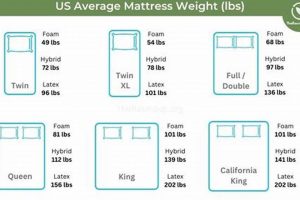
The combined weight of the mattress and the occupant must be within the specified weight capacity of the structure. Exceeding this limit can compromise the structural integrity of the frame, increasing the risk of collapse. Distributing weight evenly across the mattress is also important for maintaining stability. Uneven weight distribution can place undue stress on certain parts of the frame, leading to potential failure.
- Size Precision and Fit
Although designed for “full-size” mattresses, slight variations in mattress dimensions can affect the fit. A mattress that is too large may be difficult to install and could put stress on the frame. A mattress that is too small may shift during use, creating discomfort and potential safety hazards. Precise measurements and adherence to standard full-size dimensions are crucial for ensuring a secure and comfortable fit.
In summary, mattress compatibility is not merely a matter of convenience; it is a safety imperative. Careful consideration of mattress thickness, support structure, weight distribution, and size precision is essential for maximizing the safety, comfort, and longevity of the complete sleeping system. Neglecting these factors can compromise the structural integrity of the arrangement and increase the risk of injury.
6. Weight Capacity

Weight capacity is a critical safety parameter in the context of sleeping structures designed for full-size mattresses, directly influencing structural integrity and user safety. Understanding and adhering to stated weight limits is paramount in preventing potential accidents and ensuring the longevity of the furniture.
- Design and Material Limitations
The specified weight capacity is determined by the design and materials used in the construction. Solid wood frames may have different weight limits compared to metal frames. Exceeding these limits places undue stress on the frame, potentially leading to warping, cracking, or complete structural failure. For instance, a frame constructed from lower-grade materials may have a lower weight capacity than one made from high-strength steel. Ignoring these limitations can compromise the safety of the occupants.
- Static vs. Dynamic Loads
Weight capacity typically refers to static load, or the consistent weight exerted by the mattress and occupants at rest. However, dynamic loads, such as jumping or sudden movements, can significantly increase the stress on the frame. The structure must be able to withstand occasional dynamic loads without exceeding its maximum capacity. Continued exposure to excessive dynamic loads will accelerate wear and tear, reducing its lifespan and potentially leading to catastrophic failure.
- Distribution of Weight
The manner in which weight is distributed across the mattress affects the stress on the frame. Uneven weight distribution, such as concentrating weight in one area, can create localized stress points. Regularly rotating the mattress and advising occupants to avoid concentrated pressure points can help distribute weight more evenly. Consistent uneven weight distribution can weaken specific areas of the frame over time, increasing the risk of collapse.
- Impact on Safety Standards
Adherence to weight capacity guidelines is often a component of broader safety standards enforced by regulatory bodies. Exceeding these limits may void warranties and expose manufacturers and retailers to liability in the event of an accident. Consumers should verify that the model they select meets or exceeds applicable safety standards and that they fully understand and adhere to the manufacturers recommendations regarding weight limits.
These elements collectively underscore the importance of understanding and respecting weight capacity limitations. Failure to do so compromises the safety, durability, and longevity of elevated sleeping structures, placing occupants at risk. Compliance with stated weight limits is a fundamental responsibility for both manufacturers and consumers.
7. Assembly Precision

The accuracy and meticulousness employed during the construction of elevated sleeping structures designed for full-size mattresses directly correlate with the overall safety, stability, and longevity of the unit. Deviations from specified assembly protocols can compromise structural integrity and increase the risk of accidents.
- Component Alignment and Joint Integrity
Precise alignment of frame components is critical for ensuring uniform weight distribution and structural stability. Misalignment can place undue stress on specific joints, leading to premature wear or failure. Accurate assembly ensures that fasteners engage properly, maximizing the strength of the connections. For example, if the side rails are not perfectly aligned with the headboard and footboard, the entire frame can become unstable, increasing the risk of collapse under load.
- Fastener Selection and Torque Specifications
The selection of appropriate fasteners (screws, bolts, etc.) and adherence to torque specifications are crucial for secure connections. Using incorrect fasteners or failing to tighten them to the specified torque can result in loose joints and instability. Over-tightening fasteners can strip threads or damage the surrounding material, also weakening the connection. Manufacturers provide specific guidelines to ensure that fasteners provide optimal holding power without compromising material integrity.
- Ladder/Stairway Attachment Security
The secure attachment of the ladder or stairway to the main frame is paramount for user safety. Improper attachment can lead to instability, increasing the risk of falls during ascent or descent. Accurate assembly involves aligning the ladder/stairway components precisely with the designated mounting points and using appropriate fasteners to create a rigid connection. Periodic inspection of these connections is recommended to ensure ongoing stability.
- Guardrail Installation and Compliance
Correct installation of the guardrails is essential for preventing falls from the upper bunk. The guardrails must be securely attached to the frame, with no gaps or loose connections that could allow a child to slip through. Precise assembly ensures that the guardrails meet the required height and spacing specifications, as outlined in safety standards. Failure to properly install the guardrails can render them ineffective, significantly increasing the risk of injury.
In summary, meticulous attention to assembly details is a non-negotiable aspect of ensuring the safety and durability of elevated sleeping arrangements designed for full-size mattresses. Deviation from manufacturer’s instructions, even seemingly minor ones, can have significant consequences, compromising the structural integrity of the entire unit and placing users at risk. Diligent adherence to assembly protocols is a fundamental responsibility for those involved in constructing and using these structures.
Frequently Asked Questions
The following addresses prevalent inquiries regarding structural aspects of elevated sleeping configurations designed to accommodate full-size mattresses. These answers are intended to provide clarity on essential considerations for safety and long-term use.
Question 1: What is the recommended maximum weight capacity for sleeping structures of this type?
The recommended maximum weight capacity varies by manufacturer and model. It is imperative to consult the product specifications provided by the manufacturer before use. Exceeding the stated weight limit can compromise structural integrity and increase the risk of collapse.
Question 2: How often should the structure be inspected for loose bolts or other signs of wear?
The structure should be inspected at least every three months for loose bolts, cracked welds, or other signs of wear. More frequent inspections are advisable in high-use environments. Addressing any identified issues promptly can prevent further deterioration and potential hazards.
Question 3: What type of mattress is most suitable for use in these arrangements?
The suitability of a mattress depends on the frame design and manufacturer recommendations. However, mattresses should conform to the specified thickness range to maintain adequate guardrail height. Innerspring and foam mattresses are commonly used, but it’s important to verify compatibility with the frame’s support system.
Question 4: Are specific safety certifications required for these structures?
Compliance with safety standards established by organizations like the Consumer Product Safety Commission (CPSC) is crucial. Verification of certification indicates that the product has undergone testing for stability, entrapment hazards, and structural integrity.
Question 5: How does the ladder’s design impact user safety?
The ladder’s design affects ease of access and risk of falls. A securely attached ladder with adequately spaced and textured steps is essential. The ladder’s angle and positioning relative to the bed should also be considered to minimize potential hazards.
Question 6: What is the recommended mattress thickness to maintain sufficient guardrail height on the upper bunk?
The precise recommended thickness varies according to the design. Typically, manufacturers will specify a maximum thickness. Exceeding it will mean the guardrail will not be able to function properly to protect the sleeper from accidental falls.
These answers serve as a starting point for understanding crucial considerations. Consulting the manufacturer’s documentation and seeking professional advice is always recommended for specific applications.
The subsequent section explores design aesthetics and integration into various living spaces.
Conclusion
This exploration of bunk beds for full size mattress configurations has underscored the critical factors governing safety, structural integrity, and functional utility. The necessity of adhering to weight limits, prioritizing secure assembly, and ensuring mattress compatibility has been consistently emphasized. These elements are not merely suggestions but rather essential prerequisites for responsible ownership and use.
Ultimately, informed decision-making, based on a thorough understanding of these principles, is paramount. The responsible selection and maintenance of such structures are direct investments in the well-being of their users. Continued vigilance and adherence to established safety protocols remain crucial for maximizing the benefits and minimizing the potential risks associated with these space-saving sleeping solutions.
![Best Simmons Full Mattress [Guide & Reviews] | Organic & Natural Mattress Buyer’s Guide: Non-Toxic Sleep Solutions](https://mattressworldpa.com/wp-content/uploads/2025/07/th-2917-300x200.jpg "Best Simmons Full Mattress [Guide & Reviews] Organic & Natural Mattress Buyer’s Guide: Non-Toxic Sleep Solutions")