



The question of whether a smaller mattress is compatible with a larger bed frame arises frequently in home furnishing scenarios. Specifically, the inquiry centers on the dimensional differences between standard mattress sizes, such as a full and a queen, and the suitability of placing the former on a frame designed for the latter. A full mattress, typically measuring 54 inches wide and 75 inches long, is intended for a bed frame of corresponding dimensions. A queen mattress, in contrast, measures 60 inches wide and 80 inches long, indicating a substantial difference in surface area.
Understanding size discrepancies is essential because attempting to use a mattress on an inappropriately sized frame can lead to several issues. Structural instability is a primary concern, as the mattress may shift or slide due to the lack of adequate support. This can compromise sleep quality and potentially damage both the mattress and the frame over time. Furthermore, aesthetic considerations are relevant. A smaller mattress on a larger frame will leave a noticeable gap, which may detract from the overall appearance of the bedroom.
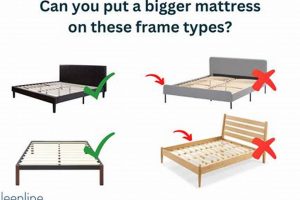
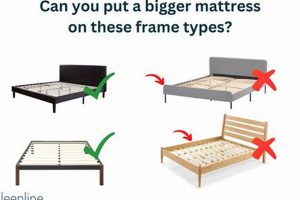
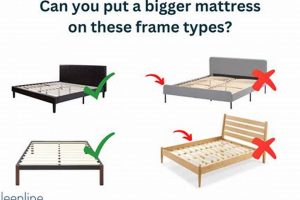
Consequently, various solutions are available to mitigate the dimensional mismatch. Options include employing filler materials to occupy the space around the mattress or considering alternative frame designs that accommodate multiple mattress sizes. Ultimately, the selection of an appropriate mattress and frame combination necessitates careful consideration of dimensions and potential modifications to ensure proper support and stability.
Considerations Regarding Mattress and Frame Compatibility
When assessing whether a smaller mattress can be used with a larger bed frame, several factors warrant careful evaluation to ensure proper support and stability.
Tip 1: Measure Dimensions Accurately: Verify the precise measurements of both the mattress and the frame. Differences, even minor ones, can impact overall stability.
Tip 2: Evaluate Support Structure: Assess the frame’s slat system. Wide gaps between slats can lead to sagging and uneven wear, particularly if the mattress does not fully cover the frame’s surface.
Tip 3: Consider Filler Materials: If a gap exists, explore using filler materials like foam inserts or custom-cut wood pieces to fill the space. Ensure the materials are firm and provide consistent support.
Tip 4: Address Aesthetic Concerns: Gaps between the mattress and frame can detract from the bed’s appearance. Utilize decorative elements, such as bed skirts or carefully positioned pillows, to conceal any visible gaps.
Tip 5: Prioritize Safety: Ensure the mattress does not easily shift or slide off the frame. Consider using a non-slip mattress pad to increase friction between the mattress and the frame’s surface.
Tip 6: Consult Manufacturer Guidelines: Review the manufacturer’s recommendations for both the mattress and the frame. Adhering to these guidelines can prevent damage and maintain warranty eligibility.
Tip 7: Seek Professional Advice: If unsure about compatibility, consult with a mattress or furniture professional. They can provide expert guidance based on the specific mattress and frame in question.
Adhering to these considerations enhances the likelihood of achieving a stable and aesthetically pleasing sleep environment, even when using a mattress smaller than the intended frame size.
By taking these precautions, the user can make an informed decision and minimize potential problems associated with dimensional discrepancies.
1. Dimensional Discrepancy

Dimensional discrepancy is a primary factor when evaluating the feasibility of using a full mattress on a queen frame. The difference in size between these two mattress types directly impacts the stability, support, and aesthetics of the bed setup.
- Standard Measurement Variance
A full mattress typically measures 54 inches wide by 75 inches long, whereas a queen mattress measures 60 inches wide by 80 inches long. This variance results in a 6-inch gap on each side of the mattress if a full-size mattress is placed on a queen-size frame. This difference directly influences the overall fit and potential for movement or instability.
- Impact on Support Structure
The queen frame’s support structure is designed to accommodate the dimensions of a queen mattress. Using a smaller mattress leaves areas of the support system exposed and unused, potentially leading to uneven weight distribution and premature wear. The absence of support beneath certain areas of the mattress can also compromise its structural integrity over time.
- Aesthetic Implications
The visual impact of a smaller mattress on a larger frame is considerable. The resulting gap between the mattress and the frame’s edges can create an unappealing aesthetic. This can be particularly noticeable in the bedroom’s overall design, detracting from a cohesive and finished look.
- Practical Modifications and Considerations
To mitigate the effects of dimensional discrepancy, solutions such as using filler materials or strategically placed pillows are often employed. However, these modifications require careful planning and execution to ensure they provide adequate support and do not create additional safety hazards. The effectiveness of these solutions varies based on the specific mattress and frame design.
The inherent dimensional differences between a full and a queen mattress necessitate careful evaluation when considering their interchangeability. Addressing the issues arising from these discrepancies is essential for ensuring a stable, supportive, and visually pleasing sleep environment. The successful integration of a smaller mattress on a larger frame depends on a clear understanding of these dimensional factors and the implementation of appropriate mitigation strategies.
2. Structural Instability

Structural instability emerges as a primary concern when assessing the compatibility of a full mattress with a queen-sized bed frame. The dimensional disparity between these two necessitates a thorough evaluation of the resulting support system and its impact on overall stability.
- Uneven Weight Distribution
The larger surface area of a queen frame compared to a full mattress results in uneven weight distribution. Areas of the frame designed to support a queen mattress lack direct contact with the smaller full mattress. This concentration of weight in specific areas can compromise the frame’s structural integrity over time, potentially leading to sagging or breakage.
- Compromised Edge Support
Edge support is crucial for preventing mattress roll-off and maintaining stability when individuals sit or sleep near the edges of the bed. A full mattress on a queen frame leaves significant portions of the frame’s edges unsupported. This lack of support can create a feeling of instability and increase the likelihood of the mattress shifting or sliding off the frame, thereby increasing risk of harm to the user.
- Increased Risk of Mattress Movement
A secure fit between the mattress and frame is essential for preventing unwanted movement. The dimensional mismatch inherent in using a full mattress on a queen frame increases the risk of the mattress sliding or shifting during use. This movement can be disruptive to sleep and exacerbate issues related to uneven weight distribution and edge support.
- Frame Stress and Longevity
The structural integrity of the bed frame is directly impacted by the compatibility of the mattress size. The concentrated stress caused by uneven weight distribution can accelerate wear and tear on the frame, potentially shortening its lifespan. Additionally, the lack of consistent support can lead to warping or bending of the frame over time, further compromising its structural stability.
The inherent structural instability associated with using a full mattress on a queen frame presents a multifaceted challenge that requires careful consideration. Mitigating the effects of uneven weight distribution, compromised edge support, increased risk of mattress movement, and potential frame stress is crucial for ensuring a safe, supportive, and durable sleep environment.
3. Support Compromised

When a full mattress is placed on a queen frame, the intended support structure is compromised. The frame, designed for a queen mattress’s dimensions (60 inches wide, 80 inches long), offers a support network that a smaller full mattress (54 inches wide, 75 inches long) cannot fully utilize. This dimensional mismatch results in areas of the frame lacking direct contact with the mattress, leading to uneven weight distribution and a potential for sagging. The compromise in support not only affects sleep quality but also impacts the long-term structural integrity of the mattress itself. For instance, if an individual consistently sleeps near the unsupported edge of a full mattress on a queen frame, that area is likely to degrade more rapidly due to the lack of adequate underlying support.
The effects of compromised support extend beyond the mattress. The bed frame, subjected to uneven pressure, may experience increased stress on specific points. Slats, for example, may bend or break more easily if they are not consistently supporting the mattress above. Furthermore, the aesthetic appearance of the bed is negatively affected. The visible gap between the mattress and the frame creates an unappealing visual, diminishing the bed’s overall presentation. This can be observed in various scenarios, from home bedrooms to staged settings where the improper fit detracts from the intended design.
In summary, “Support Compromised” is a critical consequence when a full mattress is used on a queen frame. The lack of adequate support leads to potential mattress degradation, frame damage, and aesthetic drawbacks. Addressing this issue requires careful consideration of the dimensional mismatch and the implementation of mitigation strategies to ensure both comfort and structural stability. Ignoring the compromised support can lead to a diminished sleep experience and premature deterioration of both the mattress and frame.
4. Aesthetic Impact
The aesthetic impact resulting from the dimensional incompatibility of a full mattress on a queen frame is a significant consideration in interior design. The visual outcome of this mismatch can detract from the overall appeal and cohesiveness of a bedroom setting. Evaluating this impact involves assessing several facets of the resulting appearance.
- Visual Gaps and Empty Space
The most immediately noticeable aesthetic consequence is the presence of significant gaps between the mattress and the frame. Since a full mattress is narrower and shorter than a queen, these gaps can create an unfinished or incomplete look. For example, a bed placed in a master bedroom designed with a modern aesthetic could appear out of place and detract from the intended sleek and minimalist design if such gaps are present.
- Disproportion and Balance
The disproportionate relationship between the smaller mattress and the larger frame can disrupt the visual balance of the room. The bed, often the focal point of a bedroom, can appear awkward or ill-fitting. In a room with carefully selected furniture and dcor, this imbalance can be particularly jarring. For instance, the use of a full mattress on a queen sleigh bed can diminish the grandeur and elegance typically associated with that style.
- Textural and Color Discrepancies
Filler materials used to compensate for the gaps can introduce textural and color discrepancies. If these materials do not seamlessly match the mattress and frame, they can become visually distracting elements. A common example is using brightly colored pillows or blankets to mask gaps; while functional, these can disrupt the room’s color palette and create an unintended focal point.
- Perception of Value and Quality
The use of an undersized mattress on a larger frame can convey a sense of cost-cutting or compromise. This perception can diminish the overall perceived value and quality of the bedroom decor. In a guest room intended to impress visitors, the mismatched mattress and frame may unintentionally signal a lack of attention to detail or a prioritization of economy over aesthetics.
These aesthetic considerations underscore the importance of selecting a mattress that properly fits the bed frame. Addressing the dimensional mismatch with filler materials can mitigate some of the visual drawbacks, but the optimal solution remains using a mattress designed for the specific frame size. The ramifications of “Aesthetic Impact” for “can a full mattress fit on a queen frame” are that the mismatch often undermines the intended aesthetic, necessitating a careful approach that values visual harmony and the appropriate scale between components.
5. Filler Necessity

The dimensional discrepancy between a full mattress and a queen frame directly precipitates the need for filler materials. This requirement arises from the fact that a full mattress, measuring 54 inches wide and 75 inches long, leaves a substantial gap when placed on a queen frame, which is 60 inches wide and 80 inches long. The resulting voids not only compromise the structural integrity of the sleeping surface but also introduce aesthetic concerns. Consequently, the application of filler materials becomes a practical necessity to address these shortcomings. Without such intervention, the mattress lacks adequate support, potentially leading to uneven wear, sagging, and a diminished lifespan. Examples of filler materials include foam inserts, custom-cut wood pieces, and strategically placed pillows or blankets. The effectiveness of these materials hinges on their ability to provide consistent support and minimize visible gaps, thereby restoring stability and improving the overall appearance of the bed.
The selection and implementation of appropriate filler materials are contingent upon several factors, including the specific dimensions of the gap, the desired level of support, and the aesthetic preferences of the user. For instance, dense foam inserts may be suitable for filling larger gaps and providing a firm, consistent surface, while softer materials like pillows or blankets may be preferred for smaller gaps or situations where a more cushioned feel is desired. The process often involves trial and error to achieve the optimal balance between support, comfort, and aesthetics. Furthermore, the long-term maintenance of filler materials should be considered, as they may require periodic replacement or adjustment to maintain their effectiveness. Real-world examples of “Filler Necessity” are prevalent in budget-conscious home furnishing scenarios, where individuals attempt to repurpose existing mattresses without investing in new frames. The strategic use of fillers can provide a temporary solution, enabling the use of a full mattress on a queen frame until a more permanent arrangement can be secured.
In summary, “Filler Necessity” is an unavoidable consequence when attempting to use a full mattress on a queen frame. The purpose of these materials is to address the inherent structural and aesthetic deficits resulting from the dimensional mismatch. The effective selection and application of fillers are crucial for ensuring a stable, comfortable, and visually appealing sleeping environment. While the reliance on filler materials represents a compromise compared to using a properly sized mattress, it provides a practical solution for mitigating the negative effects of dimensional incompatibility, offering a means to reconcile existing resources with immediate needs.
6. Safety Concerns

When considering the use of a full mattress on a queen frame, safety concerns emerge as critical factors. The dimensional discrepancy between the two introduces potential hazards that must be addressed to ensure user well-being. This section explores key safety-related aspects arising from such a setup, providing a comprehensive overview of potential risks and mitigation strategies.
- Risk of Mattress Slippage
The smaller surface area of a full mattress on a larger queen frame creates an increased risk of mattress slippage. Without adequate friction or support, the mattress can shift unexpectedly during sleep or while entering or exiting the bed. This can result in falls or injuries, particularly for individuals with mobility issues or those who tend to move frequently during sleep. Real-world examples include elderly individuals experiencing falls due to unstable mattress placement, highlighting the need for secure fixation methods.
- Compromised Edge Support Leading to Falls
The lack of full edge support can lead to instability along the perimeter of the mattress. When sitting or lying near the edge, individuals may experience a sensation of rolling off, increasing the risk of falls. This is especially concerning for children or individuals with balance problems. The insufficient edge support can cause unexpected shifts in weight distribution, leading to instability and a higher likelihood of accidents.
- Potential for Frame-Related Injuries
The gaps between the mattress and the frame can present a risk of entrapment or impact-related injuries. Limbs or other body parts may become lodged in the spaces, especially if the gaps are not adequately filled or covered. Sharp edges or protruding components of the frame can also pose a hazard. Examples include instances of children getting arms or legs stuck between the mattress and frame, underscoring the importance of gap mitigation strategies.
- Instability Under Load
The frame, designed to support a larger and more evenly distributed load, may exhibit instability when supporting a smaller mattress. Concentrated weight in certain areas can lead to structural stress and potential collapse. This is especially true for frames with weaker support systems or those that are already showing signs of wear. Such instability can result in sudden drops or tipping, posing a significant safety risk to the user.
The potential safety concerns associated with using a full mattress on a queen frame necessitate careful consideration and proactive mitigation. Addressing issues such as mattress slippage, compromised edge support, frame-related injuries, and instability under load is crucial for creating a safe and secure sleeping environment. Implementing strategies like using non-slip pads, filling gaps with appropriate materials, and regularly inspecting the frame’s structural integrity are essential steps to minimize these risks.
7. Frame Damage

Frame damage, a significant consequence of using a full mattress on a queen frame, arises from the dimensional incompatibility between the two. The queen frame, designed to support a larger mattress, experiences undue stress and potential structural compromise when paired with a smaller, full-sized mattress. This section explores the specific facets of frame damage resulting from this dimensional mismatch, examining its causes, manifestations, and implications.
- Uneven Weight Distribution Leading to Stress Fractures
The primary cause of frame damage is the uneven distribution of weight. A queen frame is engineered to distribute the load across its entire surface area. When a full mattress is used, the weight is concentrated in specific areas, leaving other sections unsupported. This concentration of force can lead to stress fractures, particularly in the frame’s joints and support structures. Examples include the bending or breaking of wooden slats or the warping of metal frames over time, especially when subjected to consistent, localized pressure.
- Compromised Joint Integrity Due to Instability
The dimensional disparity also compromises the integrity of the frame’s joints. The lack of consistent support can cause the frame to shift and flex, placing strain on the joints that connect its various components. This strain can loosen screws, weaken adhesives, and ultimately lead to joint failure. Real-world scenarios include the wobbling or creaking of a bed frame due to weakened joints, indicating a loss of structural stability and increased risk of collapse.
- Accelerated Wear and Tear on Support Structures
The constant stress and instability accelerate wear and tear on the frame’s support structures. Slats, center supports, and side rails are all susceptible to damage from the uneven distribution of weight. The prolonged exposure to these forces can cause these components to warp, crack, or break, reducing the overall structural integrity of the frame. A common example is the sagging or breaking of slats, resulting in an uneven sleeping surface and further strain on the remaining frame components.
- Potential for Complete Structural Failure
In severe cases, the cumulative effects of uneven weight distribution, compromised joint integrity, and accelerated wear and tear can lead to complete structural failure of the bed frame. This can manifest as a sudden collapse of the frame, posing a significant safety risk to the user. Scenarios involving complete frame collapse highlight the long-term consequences of using an inappropriately sized mattress, underscoring the importance of proper mattress-frame compatibility for ensuring safety and durability.
These facets collectively underscore the significant risk of frame damage when using a full mattress on a queen frame. The inherent dimensional incompatibility leads to a cascade of structural issues, from uneven weight distribution to complete frame failure. Addressing these concerns requires careful consideration of mattress-frame compatibility and the implementation of mitigation strategies to ensure both safety and longevity. The consequences of neglecting these factors can extend beyond mere inconvenience, potentially resulting in injury and the premature replacement of the bed frame.
Frequently Asked Questions
The following addresses common inquiries regarding the compatibility of full mattresses with queen bed frames. This information aims to provide clarity on potential issues and solutions.
Question 1: Is it physically possible to place a full mattress on a queen frame?
Yes, it is physically possible. However, the resulting dimensional discrepancy creates functional and aesthetic challenges.
Question 2: What are the primary concerns associated with using a full mattress on a queen frame?
Key concerns include compromised support, potential mattress slippage, and an unaesthetic appearance due to the resulting gaps.
Question 3: Can the gaps between the mattress and frame be effectively filled?
While filler materials can mitigate the aesthetic impact and provide some additional support, they do not replicate the stability afforded by a correctly sized mattress.
Question 4: Will using a full mattress on a queen frame damage either the mattress or the frame?
Prolonged use can potentially lead to uneven wear on the mattress and stress-related damage to the frame, particularly if adequate support is lacking.
Question 5: What is the most effective solution to address the dimensional mismatch?
The optimal solution is to use a mattress and frame that are dimensionally compatible. This ensures proper support, stability, and aesthetic appeal.
Question 6: Are there any safety risks associated with this mattress-frame combination?
Yes, there are safety risks. Mattress slippage and lack of edge support can increase the likelihood of falls or injuries.
In summary, while placing a smaller mattress on a larger frame is feasible, it is not recommended as a long-term solution. Addressing the inherent dimensional discrepancies is essential for ensuring safety, comfort, and structural integrity.
The subsequent article section will discuss alternatives to using an improperly sized mattress and frame, offering practical solutions for optimal sleep environments.
Conclusion
The preceding analysis has established that, while a full mattress can physically occupy a queen-sized frame, such an arrangement introduces significant compromises. Dimensional discrepancies result in compromised support, potential safety hazards, and aesthetic detriments. Mitigating these issues necessitates additional interventions, such as the use of filler materials, which, even when effectively implemented, fail to replicate the stability and comfort achieved with dimensionally compatible components. The long-term effects include potential damage to both the mattress and the frame, ultimately undermining the investment in both.
Therefore, while short-term or temporary solutions may necessitate the utilization of a full mattress on a queen frame, the analysis underscores the importance of prioritizing dimensionally appropriate sleep solutions. Investing in a mattress and frame designed to function as an integrated unit is paramount for ensuring optimal support, longevity, and safety. A well-considered selection process, focusing on dimensional compatibility, provides a superior sleep environment and mitigates the risks associated with makeshift arrangements.
![Ultimate King Size Bed Frame with Mattress [Deals] | Organic & Natural Mattress Buyer’s Guide: Non-Toxic Sleep Solutions](https://mattressworldpa.com/wp-content/uploads/2025/07/th-3215-300x200.jpg "Ultimate King Size Bed Frame with Mattress [Deals] Organic & Natural Mattress Buyer’s Guide: Non-Toxic Sleep Solutions")
![Best Queen Frame with Air Mattress [Deals!] | Organic & Natural Mattress Buyer’s Guide: Non-Toxic Sleep Solutions](https://mattressworldpa.com/wp-content/uploads/2025/07/th-3213-300x200.jpg "Best Queen Frame with Air Mattress [Deals!] Organic & Natural Mattress Buyer’s Guide: Non-Toxic Sleep Solutions")