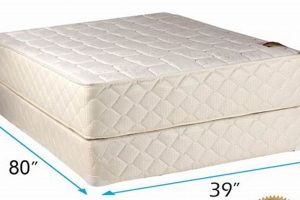
Whether a bed benefits from a foundation is a question of support, height preference, and warranty adherence. A traditional foundation, often constructed with coils and a wooden frame, elevates the sleep surface and absorbs impact. Historically, these were essential for innerspring designs to maintain their form and provide adequate support.
The presence of a foundation can extend the lifespan of a sleep surface by preventing sagging and distributing weight evenly. It can also increase the overall height of the bed, making it easier to get in and out. Furthermore, some manufacturers require the use of a specific type of foundation to validate warranty claims, ensuring the product is used under conditions that promote longevity and proper support.
Modern bed frames and certain mattress types offer alternatives. Platform beds provide direct support, and some mattresses, like those made of foam or latex, are designed to function effectively without supplemental support. Evaluating the individual needs and the specific requirements of the sleep product determines the necessity of a supplementary foundation.
Guidance on Bedding Support Systems
Selecting the appropriate base for a sleep surface is crucial for comfort and longevity. Several factors warrant careful consideration.
Tip 1: Evaluate Mattress Type: Innerspring units often benefit from the support a foundation provides. Foam or latex designs may perform optimally on a platform bed or adjustable base.
Tip 2: Review Warranty Specifications: Many manufacturers stipulate foundation requirements for warranty validation. Failure to comply may void coverage.
Tip 3: Consider Bed Height Preferences: A foundation elevates the mattress, impacting accessibility. Individuals with mobility concerns should carefully assess the combined height of the sleep surface and its support system.
Tip 4: Assess Frame Construction: Bed frames with adequate center support and closely spaced slats may negate the necessity of a traditional foundation.
Tip 5: Inspect for Sagging: Uneven wear or sagging indicates inadequate support. Consider replacing or supplementing the existing base.
Tip 6: Explore Alternative Support Options: Platform beds, adjustable bases, and bunkie boards present alternatives to traditional foundations, each offering unique benefits.
Tip 7: Understand the Purpose of a Bunkie Board: A bunkie board provides a flat, solid surface, often used to add support to a platform bed or to lower the overall height of the bed. It is generally not a replacement for a foundation but can be used in conjunction with one.
Proper base selection directly influences sleep quality and the lifespan of the bedding. Informed decisions ensure optimal support and comfort.
Attention to these details is paramount when optimizing sleep surface performance and upholding warranty obligations.
1. Support System
The necessity of a foundation is inextricably linked to the chosen support system. The primary function of a foundation is to provide a stable, even surface that prevents sagging and distributes weight appropriately. A lack of adequate support can lead to premature wear, discomfort, and potentially void warranties. For instance, an innerspring unit, with its coil construction, often requires a foundation to maintain structural integrity and prevent the coils from shifting or deforming over time. Conversely, a solid platform bed inherently provides a support system that may negate the need for an additional foundation, particularly for memory foam or latex mattresses designed for direct placement on such surfaces.
The design of the bed frame itself constitutes a critical component of the overall support system. Frames with widely spaced slats or insufficient center support may compromise the integrity of the mattress, regardless of its type. In such instances, a foundation serves as a corrective measure, supplementing the frame’s deficiencies and ensuring uniform weight distribution. Conversely, a well-constructed platform bed or a frame with closely spaced slats may render a foundation redundant. The choice of support system, therefore, depends on a holistic assessment of the mattress type, the frame’s structural capabilities, and the manufacturer’s stipulations.
In summary, the support system, whether provided by a foundation, platform bed, or combination of frame and supplemental components, is paramount in determining the necessity of a separate foundation. Understanding the interplay between mattress construction, frame design, and manufacturer requirements allows for informed decisions that optimize sleep surface performance and longevity. Ignoring these factors can lead to premature mattress degradation and discomfort, highlighting the practical significance of a properly configured support system.
2. Mattress Type
The design of the sleep surface dictates, to a considerable extent, whether supplemental support is required. Innerspring constructions, characterized by interconnected coils, distribute weight across the structure. Such mattresses often benefit from a foundation, which absorbs impact and prevents the coils from prematurely wearing down. This foundational support ensures even weight distribution, minimizing stress on individual coils and extending the sleep surface’s useful life. Without such support, innerspring units are prone to sagging, particularly in areas of high pressure, like the center of the bed or near the edges.
Conversely, all-foam or latex mattresses possess inherent density and structural integrity, enabling them to function effectively on a solid platform. These materials conform to the body, distributing weight evenly across their surface. In such cases, a foundation becomes less critical, as the mattress itself provides sufficient support. However, the manufacturer’s recommendations should always be consulted. Some foam mattresses, particularly those with thinner profiles or less dense foam, may still benefit from a foundation to prevent sagging or maintain optimal height. Furthermore, certain adjustable bed frames require specific mattress types to function correctly; heavy innerspring units may not be compatible, while lighter, more flexible foam or latex models are preferred.
Ultimately, the decision to use a foundation is governed by the interaction between the mattress type, the support system already in place (e.g., platform bed), and the manufacturer’s guidelines. Recognizing these interdependencies facilitates informed choices, ensuring optimal sleep quality and preventing premature degradation of the sleep surface. Ignoring these factors may result in voided warranties or a diminished lifespan for the selected mattress.
3. Warranty terms

Warranty terms frequently stipulate the required support structure for a mattress, directly influencing whether a foundation is necessary. Manufacturers establish these conditions to ensure proper product usage and prevent damage attributable to inadequate support. Failure to comply with these terms, such as using an incompatible or absent support system, can void the warranty, leaving the consumer responsible for repair or replacement costs. These stipulations are not arbitrary; they reflect the manufacturer’s understanding of how the mattress performs optimally and the conditions that promote its longevity.
For example, many innerspring mattress warranties mandate the use of a matching foundation or a platform bed with specific slat spacing to prevent sagging and maintain structural integrity. Similarly, some memory foam mattress warranties may specify the type of foundation that allows for proper ventilation, preventing moisture buildup and potential mold growth. Consumers should carefully review the warranty document to identify these requirements. Disregarding these terms can result in a denial of warranty coverage, even if the mattress defect is unrelated to the support system.
In conclusion, adherence to warranty terms regarding support structures is crucial for protecting the consumer’s investment. Understanding the relationship between the warranty, the recommended foundation, and the mattress itself mitigates the risk of voiding coverage due to improper usage. Proactive compliance ensures the mattress performs as intended and remains protected under the manufacturer’s warranty for the duration of its term.
4. Bed frame
The structure upon which a sleep surface rests, the bed frame, significantly influences the necessity of a supplemental foundation. Frame design impacts support, ventilation, and compliance with warranty stipulations.
- Slat Spacing and Support
Bed frames with closely spaced slats, typically no more than a few inches apart, provide substantial support, potentially negating the need for a foundation. Conversely, frames with widely spaced slats offer inadequate support, increasing the risk of mattress sagging and necessitating a foundation for reinforcement.
- Platform Bed Designs
Platform beds, characterized by a solid or closely-slatted surface, eliminate the requirement for a separate foundation. The integrated support system distributes weight evenly, making them suitable for foam and hybrid mattresses. However, weight capacity should be considered to prevent structural damage to the frame.
- Metal Frame Construction
Basic metal frames often lack sufficient center support, particularly for larger mattresses. In these cases, a foundation provides essential reinforcement, preventing sagging and ensuring proper weight distribution. The frame’s design should be evaluated to determine its load-bearing capacity.
- Headboard and Footboard Integration
While headboards and footboards contribute to the aesthetic of the bed, their presence does not inherently determine the necessity of a foundation. The critical factor remains the support system provided by the frame’s slats or platform. The frame’s ability to bear weight and prevent sagging dictates the need for supplemental support.
In summary, the bed frame’s construction is a determining factor. Well-designed frames with adequate support may eliminate the need for a foundation, while inadequate frames necessitate one to ensure mattress longevity and warranty compliance. The frame should be assessed for its load-bearing capacity, slat spacing, and overall structural integrity in determining whether supplemental support is required.
5. Desired Height
The preferred elevation of a sleep surface directly impacts the decision regarding supplemental support. A lower profile often necessitates foregoing a foundation, while a higher elevation frequently requires one. This determination is driven by practical considerations, including ease of ingress and egress, and aesthetic preferences within the bedroom. For instance, individuals with mobility limitations may find a higher bed more accessible, necessitating a foundation to achieve the desired vertical dimension. Conversely, modern design aesthetics often favor lower-profile beds, which can be achieved by placing the mattress directly on a platform frame, eliminating the need for a foundation.
Furthermore, the overall height of the bed influences the perceived proportions within the room. In smaller spaces, a lower bed can create a sense of spaciousness, while a taller bed may feel overwhelming. The choice of bedding also affects the perception of height. Thicker mattresses naturally elevate the sleep surface, potentially reducing the need for a high foundation. Conversely, thinner mattresses may require a foundation to reach a comfortable and visually appealing height. Adjustable bases, which elevate the mattress, can also influence this determination. Understanding these interconnected elements enables informed decisions about sleep surface support.
Ultimately, desired bed height is a critical factor influencing the need for supplemental support. Considering mobility requirements, aesthetic preferences, and room proportions ensures a harmonious balance between comfort, functionality, and visual appeal. Failing to account for these factors can result in an uncomfortable or aesthetically displeasing sleep environment, highlighting the practical significance of aligning support choices with height preferences.
6. Airflow
Air circulation beneath a sleep surface plays a crucial role in its longevity and hygiene. The presence or absence of a foundation directly impacts the rate of airflow, influencing moisture dissipation and temperature regulation within the bedding materials.
- Moisture Dissipation
Foundations elevate the mattress, creating a gap that promotes air movement. This airflow facilitates the evaporation of moisture absorbed from the sleeper, preventing the accumulation of humidity within the mattress. Without adequate ventilation, moisture can lead to the growth of mold and mildew, compromising the integrity of the materials and creating an unhealthy sleep environment.
- Temperature Regulation
Airflow contributes to temperature regulation by dissipating heat generated by the body during sleep. Mattresses lacking adequate ventilation can trap heat, leading to discomfort and disrupted sleep. A foundation allows for air circulation beneath the mattress, helping to maintain a more consistent and comfortable temperature throughout the night.
- Material Degradation
Excessive moisture can accelerate the degradation of mattress materials, particularly foam and natural fibers. Airflow helps to prevent this degradation by keeping the materials dry and reducing the risk of microbial growth. By providing a ventilated space beneath the mattress, a foundation can extend its lifespan and maintain its structural integrity.
- Foundation Design and Airflow
The design of the foundation itself can affect airflow. Traditional foundations with open coil systems allow for greater air circulation compared to solid platform foundations. When selecting a foundation, consider its design and materials to ensure adequate ventilation, particularly for individuals prone to night sweats or living in humid climates. Slatted foundations also promote greater airflow compared to solid surfaces.
These factors collectively underscore the relationship between airflow and the need for a foundation. While modern mattress designs and materials may mitigate some of the risks associated with poor ventilation, the benefits of enhanced airflow remain relevant. In scenarios where moisture accumulation or temperature regulation are concerns, a foundation that promotes air circulation is a beneficial addition to the sleep system.
Frequently Asked Questions
Common inquiries regarding the necessity of supplemental support for sleep surfaces are addressed below. These questions aim to clarify the factors influencing this determination.
Question 1: Are foundations exclusively for innerspring mattresses?
Foundations are not exclusively for innerspring units. While innerspring designs often benefit from the support and shock absorption a foundation provides, certain foam and hybrid mattresses may also require one to maintain warranty compliance or achieve the desired bed height. The mattress manufacturer’s recommendations should be consulted to determine the appropriate support system.
Question 2: Can a platform bed replace a traditional foundation?
A platform bed can serve as a replacement for a traditional foundation, provided it offers adequate support. The platform should have a solid or closely-slatted surface to prevent sagging and ensure even weight distribution. Check the mattress manufacturer’s specifications to confirm compatibility with a platform bed.
Question 3: Does the weight of the mattress influence the need for a foundation?
Yes, the weight of the mattress is a relevant consideration. Heavier mattresses, such as those containing dense foam or multiple layers, may require a foundation to prevent strain on the bed frame and ensure proper support. Lightweight mattresses may be suitable for use on platform beds without a foundation.
Question 4: Are there alternatives to traditional foundations?
Alternatives to traditional foundations include bunkie boards, adjustable bases, and reinforced bed frames with closely spaced slats. Bunkie boards provide a low-profile support surface, while adjustable bases offer customizable positioning. Reinforced bed frames with closely spaced slats provide a stable and supportive base for the mattress.
Question 5: What happens if the manufacturer-recommended support structure is not used?
Failure to use the manufacturer-recommended support structure may void the mattress warranty. Manufacturers specify support requirements to ensure optimal performance and prevent premature wear. Adhering to these requirements is essential for maintaining warranty coverage.
Question 6: How does humidity affect the decision to use a foundation?
In humid environments, a foundation that promotes airflow can help prevent moisture buildup within the mattress. Adequate ventilation reduces the risk of mold and mildew growth, extending the mattress lifespan and promoting a healthier sleep environment. Slatted foundations and those with open coil systems provide better airflow than solid platforms.
These inquiries address fundamental concerns surrounding sleep surface support. Evaluating the individual circumstances and consulting manufacturer guidelines ensures informed decision-making.
The subsequent section will explore potential issues arising from improper or inadequate bedding support.
Determining Bedding Support Requirements
The exploration of whether a sleep surface requires a separate foundation underscores the interplay between mattress type, bed frame construction, warranty stipulations, desired height, and airflow considerations. A comprehensive assessment of these elements dictates the appropriate support system, ensuring optimal performance and longevity. In certain instances, modern mattress designs and platform beds negate the need for supplemental support. However, adhering to manufacturer guidelines and considering individual needs remains paramount. The absence of adequate support can lead to premature wear, discomfort, and voided warranties.
Therefore, a careful evaluation of these factors is essential before deciding whether a separate foundation is necessary. Understanding the specific requirements of the chosen sleep surface, the structural capabilities of the bed frame, and the manufacturer’s recommendations promotes informed decision-making and safeguards the investment in quality sleep. Ignoring these considerations may result in diminished product lifespan and compromised sleep quality.
![Upgrade Your Sleep: Twin Mattress & Box Spring Set - [Year] | Organic & Natural Mattress Buyer’s Guide: Non-Toxic Sleep Solutions](https://mattressworldpa.com/wp-content/uploads/2025/07/th-3528-300x200.jpg "Upgrade Your Sleep: Twin Mattress & Box Spring Set - [Year] Organic & Natural Mattress Buyer’s Guide: Non-Toxic Sleep Solutions")