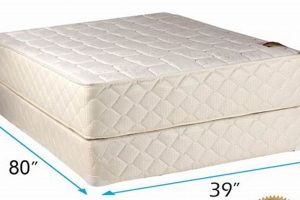
The foundation upon which a mattress rests, providing support and elevation, typically consists of a wooden or metal frame containing springs. This component, often cloth-covered, distributes weight, absorbs shock, and contributes to the overall comfort and longevity of the sleep surface it supports. For example, pairing a traditional innerspring mattress with this type of support structure is a common practice in many households.
Utilizing this type of bed foundation offers several advantages. It elevates the mattress, making it easier to get into and out of bed. The internal springs enhance support, potentially improving spinal alignment during sleep and extending the life of the mattress by absorbing movement and preventing sagging. Historically, these foundations were essential for providing necessary support to earlier generations of mattresses; while mattress technology has evolved, these support systems continue to offer benefits.
The subsequent sections will delve into the various types available, comparing their features and suitability for different mattress types. Furthermore, considerations for selecting the appropriate foundation based on individual needs, budget, and space constraints will be addressed. Lastly, maintenance and care recommendations will be presented to ensure long-term performance and value.
Box Spring Selection and Maintenance
The following are essential points to consider to ensure optimal performance and longevity of a bed’s foundation:
Tip 1: Determine Compatibility: Verify that the foundation is compatible with the specific type of mattress. Some modern mattresses, such as memory foam or latex, may not require, or even be negatively impacted by, the spring system inherent in a traditional foundation. Consult the mattress manufacturer’s recommendations.
Tip 2: Assess Support Needs: Evaluate individual support preferences and requirements. Individuals with back pain or other orthopedic concerns may benefit from a firmer, more rigid foundation compared to a spring-based foundation. Conversely, lighter individuals may find the give of a spring foundation more comfortable.
Tip 3: Measure Available Space: Accurately measure the bedroom space to ensure the selected foundation will fit comfortably. Take into account the dimensions of both the mattress and the surrounding furniture to prevent overcrowding or obstruction of movement.
Tip 4: Inspect Frame Quality: Thoroughly inspect the frame for structural integrity. Examine joints for secure connections and ensure the overall construction is robust and capable of supporting the weight of the mattress and occupants without deformation.
Tip 5: Consider Height Preferences: The height of the foundation contributes to the overall bed height. Consider individual preferences for bed height, especially for those with mobility limitations. Select a height that facilitates ease of entry and exit from the bed.
Tip 6: Rotate Regularly: To prevent uneven wear and sagging, rotate the foundation every six months. This distributes weight more evenly across the surface, extending the life of the product.
Tip 7: Protect from Moisture: Avoid placing the foundation in humid environments or exposing it to liquids. Moisture can damage the internal components and promote the growth of mold or mildew.
Proper consideration of these aspects will result in informed decision-making, contributing to enhanced sleep quality and the prolonged lifespan of the mattress.
The following section will discuss the financial aspects, encompassing cost considerations and long-term value assessments for different foundation options.
1. Support Distribution

The efficacy of weight dispersion is paramount when considering a foundation for a mattress. An appropriate foundation, frequently employing a sprung design, influences sleep comfort and mattress lifespan directly. The following factors are central to effective support distribution.
- Coil Density and Arrangement
The number and configuration of coils within a foundation significantly impact its ability to distribute weight. Higher coil counts and strategic arrangements provide more contact points and a more uniform surface. For instance, a foundation with densely packed, interconnected coils offers superior support compared to one with fewer, widely spaced coils. This even distribution minimizes stress points on the mattress, preventing premature sagging and ensuring consistent comfort.
- Frame Construction and Rigidity
The structural integrity of the frame is critical for maintaining consistent support. A sturdy frame constructed from durable materials like metal or reinforced wood prevents the foundation from warping or sagging over time. A rigid frame ensures that the coils maintain their intended shape and spacing, contributing to uniform weight distribution. Conversely, a weak or poorly constructed frame can compromise the entire support system, leading to uneven pressure and accelerated mattress wear.
- Edge Support Mechanisms
Edge support refers to the reinforcement along the perimeter of the foundation. Robust edge support prevents the edges of the mattress from collapsing, ensuring a consistent sleeping surface across the entire bed. This is particularly important for individuals who sleep near the edge of the bed or who use the edge for sitting. Effective edge support enhances the overall stability and usability of the mattress, providing a more comfortable and secure sleeping experience.
The aforementioned factors demonstrate the interrelation between foundation design and the even distribution of weight. The implementation of dense coil arrays, a rigid frame structure, and bolstered edge support mechanisms work synergistically to protect the mattress from premature wear and ensure consistent comfort. A lack of attention to any of these elements can negatively impact sleep quality and the lifespan of the sleep surface.
2. Mattress Longevity
The lifespan of a mattress is inextricably linked to the support structure upon which it rests. A properly chosen and maintained foundation, often of the sprung variety, can significantly extend the usable life of a mattress. Conversely, an inadequate or incompatible support system can lead to premature wear and a diminished sleep experience.
- Shock Absorption
A foundation that effectively absorbs movement and impact prevents these forces from being directly transferred to the mattress. The presence of springs, or a similar cushioning mechanism, attenuates pressure, reducing stress on the mattress’s internal components. For example, an individual tossing and turning during sleep exerts considerable force on the mattress. An effective support system dissipates this energy, minimizing wear and tear on the mattress core and surface layers. Without this shock absorption, the mattress materials degrade more rapidly, leading to sagging and reduced comfort.
- Weight Distribution
Even weight distribution across the entire mattress surface is crucial for preventing localized compression and deformation. A properly designed foundation ensures that weight is evenly dispersed, eliminating pressure points that can cause premature wear. For instance, a foundation with a network of closely spaced slats or coils provides uniform support, preventing sagging in areas that experience greater weight, such as the center of the mattress. In contrast, a foundation with insufficient support or uneven spacing can lead to concentrated pressure, resulting in dips and inconsistencies in the mattress surface, consequently affecting durability.
- Air Circulation and Moisture Control
Adequate airflow around the mattress helps regulate temperature and reduce moisture buildup, both of which can contribute to material degradation. An open foundation design, such as one with spaced slats, allows air to circulate freely, preventing the accumulation of moisture and reducing the risk of mold or mildew growth. This is especially important in humid environments. Conversely, a solid, non-breathable foundation can trap moisture, leading to the breakdown of mattress materials and a reduced lifespan.
- Prevention of Sagging
One of the primary functions of a compatible bed support is to hinder sagging of the mattress. Over time, mattresses naturally lose some of their resilience; a robust foundation provides necessary support to counteract this effect. Consider the scenario of a high-density memory foam mattress; despite its inherent durability, without adequate support, it is prone to sagging in areas of high pressure. A properly designed structure alleviates this issue, preserving the mattress’s shape and structural integrity, thereby extending its lifespan.
The interconnectedness of these facets illustrates how a suitable foundation plays a pivotal role in preserving the integrity and extending the lifespan of a mattress. By effectively absorbing shock, distributing weight, promoting air circulation, and preventing sagging, the support system helps maintain the mattress’s comfort, support, and overall value over the long term. Investing in a quality foundation is, therefore, an investment in the longevity and performance of the sleep surface.
3. Bed Height

Bed height, the vertical distance from the floor to the top of the mattress, is directly influenced by the presence and characteristics of the foundation. Foundations, which are frequently of the sprung design, contribute a significant portion to this overall height. The addition of a foundation elevates the mattress, thereby altering the ease of access and egress from the bed. Inadequate bed height can pose challenges for individuals with mobility limitations, while excessive height can create safety concerns, particularly for the elderly or those with balance issues. Therefore, the relationship between foundation choice and bed height requires careful consideration.
The dimensions of the foundation itself, specifically its thickness or height, dictate the degree to which it contributes to the total bed height. Traditional foundations tend to have a standard height, while low-profile versions are designed to minimize elevation. Real-world examples illustrate the practical implications of this choice: a thick foundation paired with a deep mattress can result in an excessively high bed, making it difficult for shorter individuals to climb into comfortably. Conversely, a low-profile foundation might be preferred to achieve a modern aesthetic or to maintain a comfortable height when using a particularly thick mattress. Furthermore, storage solutions beneath the bed often necessitate a certain minimum bed height, influencing the foundation selection process.
In summary, the foundation plays a critical role in determining bed height, impacting accessibility, aesthetics, and functionality. A conscious evaluation of height preferences, considering individual physical needs and room design, is essential to select the most suitable support structure and achieve an optimal sleep environment. Failing to account for the relationship between foundation and bed height can lead to discomfort, inconvenience, or even safety hazards.
4. Frame Durability
Frame durability within a “box spring for mattress” structure is a critical determinant of its overall performance and longevity. The frame, typically constructed from wood or metal, provides the structural foundation for the internal components, including springs or support slats. A weak or poorly constructed frame compromises the entire support system, leading to premature sagging, uneven weight distribution, and eventual failure. The choice of materials, the quality of joinery, and the presence of reinforcement elements directly impact the frame’s capacity to withstand the constant stress imposed by the weight of the mattress and its occupants. For instance, a frame fabricated from kiln-dried hardwood with reinforced corners offers superior resistance to warping and cracking compared to a frame made from lower-grade softwood.
The practical significance of frame durability extends beyond mere structural integrity. A robust frame ensures consistent support, maintaining the mattress’s intended shape and preventing localized compression that can contribute to discomfort and sleep disturbances. In scenarios where heavier individuals or couples share a bed, the demands on the frame are amplified. A durable frame, therefore, becomes essential for preventing premature wear and tear, thereby prolonging the lifespan of both the foundation and the mattress. Furthermore, a structurally sound frame minimizes noise and vibrations, contributing to a quieter and more restful sleep environment. Consider the common issue of squeaking or creaking sounds emanating from a bed frame; these noises often stem from loose or weakened joints within a poorly constructed frame.
In conclusion, frame durability is an indispensable attribute of a quality “box spring for mattress.” Its impact spans from supporting weight effectively to ensuring long-term value and a restful sleep experience. While factors such as spring count and fabric quality are undoubtedly important, the frame’s robustness serves as the underlying foundation upon which the entire support system relies. Recognizing the importance of frame durability allows consumers to make informed decisions, selecting a product that will provide reliable support and withstand the rigors of daily use for years to come. Challenges exist in discerning frame quality from visual inspection alone, underscoring the importance of researching manufacturer reputation and seeking detailed specifications regarding materials and construction techniques.
5. Air Circulation

Air circulation plays a crucial, yet often overlooked, role in the performance and longevity of the mattress and its supporting foundation. The interaction between the mattress, the foundation, and the surrounding environment dictates temperature regulation and moisture control, factors directly impacting sleep quality and the lifespan of bedding components. A well-ventilated system mitigates the accumulation of heat and moisture, preventing the growth of mold, mildew, and dust mites, all of which are detrimental to both hygiene and the integrity of the mattress.
- Foundation Design and Ventilation
The design of the foundation directly influences the degree of air circulation beneath the mattress. Traditional foundations, often enclosed with fabric, can restrict airflow compared to those with open slat systems or ventilated platforms. A foundation with closely spaced, solid slats creates a barrier that impedes air movement, potentially trapping moisture and promoting microbial growth. In contrast, foundations with wider gaps between slats or those constructed with breathable materials facilitate ventilation, allowing air to circulate freely and reduce the risk of moisture buildup. Open designs can also prevent overheating, leading to a cooler sleep surface.
- Material Permeability
The materials used in both the mattress and the foundation impact their respective breathability. Mattresses constructed with natural fibers, such as cotton or wool, exhibit greater permeability than those made with synthetic materials like memory foam. Similarly, foundations covered in breathable fabrics, such as organic cotton or linen, promote airflow compared to those encased in vinyl or non-woven synthetics. Combining a breathable mattress with a permeable foundation maximizes air circulation, creating a drier and more hygienic sleep environment. Conversely, pairing a non-breathable mattress with an impermeable foundation can create a microclimate conducive to moisture retention and microbial growth.
- Environmental Humidity
The ambient humidity levels in the surrounding environment can exacerbate the challenges associated with inadequate air circulation. In humid climates, the risk of moisture accumulation within the mattress and foundation increases significantly. Without proper ventilation, this moisture can lead to the proliferation of mold, mildew, and dust mites, all of which can trigger allergic reactions and compromise the integrity of the materials. In such environments, selecting a foundation with an open design and breathable materials becomes particularly important. Additionally, using a dehumidifier in the bedroom can help regulate humidity levels and reduce the risk of moisture-related problems.
- Impact on Dust Mite Proliferation
Poor air circulation creates a favorable breeding ground for dust mites. These microscopic organisms thrive in warm, humid environments, and their fecal matter is a common allergen. Adequate ventilation helps to reduce humidity levels within the mattress and foundation, making the environment less hospitable to dust mites. Regularly vacuuming the mattress and foundation, as well as using allergen-resistant encasements, can further mitigate dust mite populations. Choosing foundations with open slat designs, compared to closed-bottom constructions, aids in reducing dust mite accumulation due to improved air flow.
The interplay between foundation design, material permeability, environmental humidity, and dust mite proliferation underscores the importance of prioritizing air circulation when selecting a “box spring for mattress.” Optimizing ventilation not only enhances sleep comfort but also contributes to the long-term health and hygiene of the sleep environment. The design of the foundation has a significant impact on all of these factors. The selection of a proper “box spring for mattress” support structure is key to promote healthy habits that enhance the quality of sleep. For instance, consider a comparison of open versus closed frame and consider the results of each one for optimizing the quality of sleep, mattress lifetime and breathability.
6. Noise Reduction

The function of noise reduction in a “box spring for mattress” framework is often underestimated, yet it is integral to achieving optimal sleep quality. Noise generated from the bed’s support system can arise from multiple sources: friction between components, movement of springs, or interaction with the floor. The effectiveness of a foundation in mitigating these sounds directly impacts the user’s sleep environment. Consider, for example, the scenario of a light sleeper disturbed by the creaking of a bed frame with every slight movement. This illustrates how a lack of noise reduction features can disrupt sleep cycles, leading to fatigue and reduced well-being. The connection is cause and effect: inadequate construction or worn components result in unwanted sounds, which in turn negatively affect sleep.
Different construction methods and materials offer varying degrees of noise damping. Foundations employing tightly coiled springs or those encased in sound-absorbing materials tend to produce less noise. Similarly, frames with robust joinery and padding at points of contact with the floor minimize vibrations and squeaks. In contrast, frames with loose connections, worn springs, or direct contact with hard flooring are more prone to generating noise. Consider the practical application of using rubber or felt pads beneath the bed’s legs to dampen vibrations transmitted through the floor. This simple measure demonstrates an actionable approach to noise reduction, improving sleep quality without requiring a complete replacement of the foundation. Furthermore, the choice of mattress material can interact with the foundation to either amplify or dampen noise; a heavier mattress may stabilize the foundation, reducing movement and associated sounds.
In summary, noise reduction is a significant yet frequently overlooked component of a quality “box spring for mattress.” By minimizing unwanted sounds emanating from the support system, it contributes directly to a more restful and undisturbed sleep experience. The challenges lie in discerning the noise-dampening capabilities of different models prior to purchase, requiring careful attention to material composition, construction techniques, and user reviews. Ultimately, investing in a foundation designed with noise reduction in mind represents a tangible step toward enhancing sleep quality and overall well-being.
7. Dust Mitigation

The accumulation of dust within and around a bed system presents a persistent challenge, affecting hygiene, air quality, and potentially, sleep quality. The “box spring for mattress,” by virtue of its design and proximity to the floor, can contribute to or mitigate this issue. Enclosed foundations, particularly those with fabric skirts extending to the floor, act as passive dust collectors. The fabric traps airborne particles, creating a reservoir of allergens and irritants. Conversely, open designs or elevated platforms allow for easier cleaning beneath the bed, reducing the overall dust load. For example, a solid wood platform with legs creates space for vacuuming, while a traditional, fully skirted foundation necessitates more frequent and arduous cleaning efforts. This, in turn, reduces dust mite populations and improves indoor air quality.
Material selection further influences dust accumulation and mitigation. Woven fabrics with a tight weave minimize dust penetration, while loose weaves offer less resistance. Similarly, the composition of the interior components springs, foam, or batting affects their capacity to harbor dust. Open-coil springs, for instance, offer ample surface area for dust collection, while enclosed coil systems or solid foam cores present fewer opportunities for particle entrapment. Implementing proactive measures, such as encasing the “box spring for mattress” in an allergen-resistant cover, can significantly reduce dust mite proliferation and allergen exposure. Furthermore, regular vacuuming with a HEPA filter can remove accumulated dust from both the foundation and the surrounding floor, maintaining a cleaner and healthier sleep environment.
In conclusion, dust mitigation is an integral, yet often overlooked, aspect of selecting and maintaining a “box spring for mattress.” The design, materials, and maintenance practices directly impact the accumulation of dust and allergens, influencing air quality and potentially affecting sleep quality. While challenges exist in completely eliminating dust, informed choices regarding foundation design, material selection, and regular cleaning can significantly reduce the dust burden, contributing to a healthier and more restful sleep environment.
Frequently Asked Questions
The following section addresses common inquiries regarding the selection, usage, and maintenance of mattress foundations, commonly referred to as box springs. These questions aim to provide clarity and inform decision-making.
Question 1: What is the purpose of a mattress foundation?
A mattress foundation serves several functions. It provides support for the mattress, elevates it for ease of access, and contributes to its overall longevity by absorbing shock and distributing weight evenly.
Question 2: Are all mattresses compatible with foundations containing springs?
No. Certain modern mattress types, such as memory foam or latex, may not require or may even be negatively impacted by the spring system inherent in a traditional mattress foundation. Consulting the mattress manufacturer’s recommendations is advisable.
Question 3: How often should a mattress foundation be replaced?
The lifespan of a mattress foundation varies depending on its construction and usage. However, it is generally recommended to inspect the foundation for signs of wear or damage every 5-10 years. If sagging, broken springs, or a compromised frame are detected, replacement is warranted.
Question 4: Can a damaged mattress foundation negatively impact sleep quality?
Yes. A damaged foundation can lead to uneven support, causing discomfort, back pain, and disrupted sleep. It can also accelerate the wear and tear on the mattress, shortening its lifespan.
Question 5: What are the alternative types of support structures for mattresses?
Besides spring-based foundations, alternative options include solid platforms, slatted frames, and adjustable bases. Each type offers different levels of support, ventilation, and functionality, catering to varying needs and preferences.
Question 6: How does the height of the foundation affect the overall bed height, and why is this important?
The height of the foundation contributes directly to the overall bed height. This is important because it affects ease of access to the bed, especially for individuals with mobility limitations. Selecting a foundation height that facilitates comfortable entry and exit is recommended.
In summary, the appropriate selection and maintenance of a foundation is vital for optimizing mattress performance, extending its lifespan, and ensuring a restful sleep experience.
The subsequent section will delve into specific product recommendations and reviews, providing guidance for selecting the most suitable foundation based on individual needs and budgets.
Box Spring for Mattress
The preceding exploration has elucidated the multifaceted nature of the “box spring for mattress,” dissecting its role in support distribution, mattress longevity, bed height, frame durability, air circulation, noise reduction, and dust mitigation. Emphasis has been placed on understanding the impact of material selection, construction methods, and maintenance practices on overall performance. A comprehensive appreciation of these factors enables informed decision-making in the selection and utilization of this essential bedding component.
The enduring relevance of the “box spring for mattress” within the broader context of sleep health and home furnishing cannot be understated. The pursuit of improved sleep quality necessitates a thorough evaluation of all contributing elements, including the foundation. Further research and innovation in materials and design will likely yield even more advanced support solutions, underscoring the importance of continued awareness and informed selection. Ultimately, the judicious choice of a mattress foundation contributes significantly to a more restful and restorative sleep experience.

![Upgrade Your Sleep: Twin Mattress & Box Spring Set - [Year] | Organic & Natural Mattress Buyer’s Guide: Non-Toxic Sleep Solutions](https://mattressworldpa.com/wp-content/uploads/2025/07/th-3528-300x200.jpg "Upgrade Your Sleep: Twin Mattress & Box Spring Set - [Year] Organic & Natural Mattress Buyer’s Guide: Non-Toxic Sleep Solutions")