![Best Split Box Spring Queen Mattress [Guide]](data:image/svg+xml;base64,PHN2ZyB4bWxucz0iaHR0cDovL3d3dy53My5vcmcvMjAwMC9zdmciIHdpZHRoPSI0NzQiIGhlaWdodD0iMTAwIiB2aWV3Qm94PSIwIDAgNDc0IDEwMCI+PHJlY3Qgd2lkdGg9IjEwMCUiIGhlaWdodD0iMTAwJSIgc3R5bGU9ImZpbGw6I2NmZDRkYjtmaWxsLW9wYWNpdHk6IDAuMTsiLz48L3N2Zz4= "Best Split Box Spring Queen Mattress [Guide] Organic & Natural Mattress Buyer’s Guide: Non-Toxic Sleep Solutions")
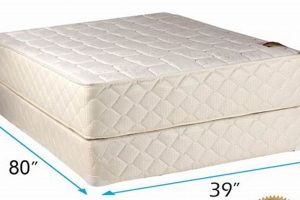
This bed support system, designed for queen-sized mattresses, is constructed in two separate pieces. This configuration is often chosen to ease transportation and maneuverability, particularly in homes with narrow doorways, staircases, or tight corners. The two halves, when assembled, provide the same level of support as a traditional one-piece foundation.
The divided design offers significant advantages in challenging living spaces. Its segmented nature simplifies the process of moving the foundation into or out of a room, preventing potential damage to both the foundation and the surrounding structure. Historically, these designs emerged as a practical solution to logistical issues associated with larger mattresses and increasingly complex home layouts. Furthermore, the independent nature of each component can subtly enhance motion isolation for sleepers.
Understanding the construction and benefits leads to a deeper appreciation of the applications of this design. Further sections will delve into the advantages related to transport and setup, the impact on mattress lifespan, and factors to consider when selecting this type of foundation.
Guidance for Utilizing a Queen-Sized Two-Piece Foundation
The following guidelines provide essential information for the proper selection, assembly, and maintenance of a queen mattress foundation designed with a split configuration. Adhering to these principles will maximize its lifespan and ensure optimal mattress support.
Tip 1: Measure Entry Points: Prior to purchase, precisely measure all doorways, hallways, and stairwells through which the components will pass. Confirm that each section can be maneuvered without obstruction.
Tip 2: Inspect Frame Compatibility: Verify the compatibility of the foundation with the existing bed frame. Ensure the frame provides adequate support for both sections and prevents them from shifting independently.
Tip 3: Ensure Level Support: Before placing the mattress, confirm that both foundation sections are resting on a level surface. Uneven support can compromise mattress integrity and sleep comfort.
Tip 4: Utilize Connector Brackets: If provided, install any connector brackets or straps designed to join the two sections. This prevents separation and ensures uniform support across the mattress surface.
Tip 5: Rotate Mattress Regularly: Implement a routine mattress rotation schedule. This distributes wear evenly and extends the lifespan of both the mattress and the foundation.
Tip 6: Inspect for Damage: Periodically examine the foundation for signs of damage, such as sagging or broken components. Address any issues promptly to prevent further degradation.
Tip 7: Consider Center Support: For heavier individuals or couples, a bed frame with center support is crucial. This prevents bowing and ensures even weight distribution across both foundation sections.
Proper implementation of these tips will optimize the performance and longevity of the two-piece foundation system. The benefits of ease of transport are realized while ensuring consistent support and preserving mattress quality.
The next section will explore the potential drawbacks or limitations of this foundation type, offering a balanced perspective for informed decision-making.
1. Maneuverability

The characteristic of maneuverability, referring to the ease of movement and handling, is a primary consideration when selecting a divided queen foundation. This aspect becomes particularly pertinent when dealing with restricted spaces or challenging architectural layouts.
- Navigating Narrow Passageways
The split design significantly eases transportation through narrow hallways, doorways, and staircases common in apartments, older homes, or residences with unconventional layouts. The reduced dimensions of each individual section allows for negotiation of tighter angles and restricted spaces that would otherwise impede the movement of a standard, one-piece foundation.
- Reducing Risk of Damage
Attempting to force a full-size foundation through a confined area increases the risk of damage to both the foundation itself and the surrounding structure, such as walls or doorframes. The smaller, more manageable size of each section reduces this risk, minimizing potential repair costs and preserving the integrity of the home’s interior.
- Simplifying Relocation
For individuals who frequently relocate, the ease of transport offered by a divided foundation presents a considerable advantage. The ability to disassemble the foundation into two components simplifies packing, loading, and unloading during the moving process, reducing the physical strain and time commitment associated with transporting larger, more cumbersome items.
- Facilitating Assembly in Confined Spaces
In rooms with limited available space, assembling a bed frame with a standard foundation can prove challenging. The divided design allows each section to be individually positioned within the room before being joined together, simplifying the assembly process and mitigating potential difficulties in maneuvering the entire structure.
The inherent maneuverability afforded by a divided queen foundation streamlines the logistics of bed setup, minimizing logistical hurdles and potential damage during transport or assembly. This attribute proves particularly valuable in dwellings with space constraints or frequent relocation scenarios.
2. Frame Compatibility

Frame compatibility is a critical factor influencing the overall success of a divided queen foundation. The segmented construction necessitates careful consideration of the existing or intended bed frame. A standard queen-sized frame may not automatically be suitable. Specifically, a frame designed solely for a one-piece foundation could lack the central support required to adequately bear the weight distributed across two separate sections. Insufficient central support can lead to sagging, uneven weight distribution, and premature wear of both the foundation and the mattress. For example, a metal bed frame with only perimeter support risks bending over time with a divided foundation, particularly under heavier loads. Conversely, frames designed with a central support beam and additional legs offer greater stability and load-bearing capacity, making them more suitable for this foundation type. Selecting the incorrect frame risks voiding mattress warranties or shortening the lifespan of the sleep set.
A practical consequence of neglecting frame compatibility is the potential for increased noise. If the individual sections of the divided foundation are not securely supported within the frame, they can shift independently, resulting in squeaking or creaking sounds during movement. This noise disturbance can negatively impact sleep quality and necessitate costly repairs or replacements. Similarly, inadequate side rail support can cause the mattress to overhang the foundation, creating an uncomfortable sleeping surface and increasing the likelihood of edge sagging. Bed frames with adjustable slats or platforms offer greater flexibility in accommodating a divided foundation, allowing for customized support and preventing the aforementioned issues. Careful measurement of the frame’s interior dimensions and consideration of its weight-bearing capacity are essential steps in ensuring a proper fit and optimal performance.
In summary, frame compatibility is not merely a superficial consideration but rather a crucial determinant of the divided queen foundation’s stability, durability, and overall performance. Proper attention to frame selection, including assessing its support structure and dimensions, is paramount in maximizing the lifespan of both the foundation and the mattress. This understanding is crucial for achieving a comfortable and supportive sleep environment while avoiding potential problems associated with mismatched components.
3. Support Uniformity

Support uniformity, in the context of a divided queen foundation, refers to the consistent distribution of weight and pressure across the entire surface of the mattress. Its importance directly stems from the segmented nature of the foundation, where two separate sections must function as a cohesive whole. A lack of uniformity can lead to uneven mattress wear, localized sagging, and compromised sleep comfort. The design of the foundation and the bed frame interact to determine the degree of uniformity achieved. For instance, if the central area where the two foundation sections meet lacks adequate support from the bed frame, the mattress may dip in the middle, creating an unlevel sleeping surface. This, in turn, can result in back pain or discomfort over time. A real-life example is a split foundation placed on a standard bed frame without a central support beam. The mattress will invariably sink in the middle over time. Alternatively, a foundation built with poor construction materials may provide different levels of firmness on each half, even if the frame is supportive. In such scenarios, pressure points develop leading to disrupted sleep and potentially accelerated wear on the mattress itself.
Achieving uniform support requires careful attention to several factors. First, the bed frame must provide consistent support across its entire surface, particularly along the center line where the two foundation sections meet. Center support beams, additional legs, and a robust slat system are crucial. Second, the internal construction of each foundation section must be identical, utilizing materials of equal density and resilience. Differences in the coil count, foam density, or wood thickness between the two halves can introduce inconsistencies in support. Third, regular inspection and maintenance are necessary to identify and address any signs of sagging or unevenness. Rotating the mattress periodically can help distribute wear more evenly. Furthermore, utilizing a mattress topper may help in uniforming the comfort and support.
In conclusion, support uniformity is not merely a desirable attribute but a critical performance parameter for split foundations. Its absence undermines the functionality of the entire sleep system, leading to compromised comfort, reduced mattress lifespan, and potential health concerns. By understanding the factors that contribute to uniform support and proactively addressing potential weaknesses, consumers can maximize the benefits of a divided queen foundation and ensure a restful and restorative sleep experience. While the segmented design offers significant advantages in terms of maneuverability, neglecting support uniformity negates these benefits and can result in a less-than-optimal sleep surface.
4. Motion Isolation
The segmented design of a queen mattress foundation can, under certain circumstances, contribute to enhanced motion isolation. This effect arises from the decoupling of one side of the bed from the other. When one sleeper moves, the impact is less likely to transmit fully across the foundation to the other side, reducing disturbance. The degree of this isolation, however, is contingent on several factors, including the mattress type, the materials used in the foundation’s construction, and the presence of a central support system within the bed frame. A foundation constructed with high-density materials and a mattress with individual pocketed coils will exhibit greater motion isolation capabilities than a foundation with standard coils and a traditional innerspring mattress. For instance, consider a scenario where one partner is significantly heavier than the other. A foundation offering inadequate motion isolation would result in noticeable movement on the lighter partner’s side whenever the heavier partner shifts positions. A well-designed and constructed split foundation, in conjunction with a suitable mattress, mitigates this effect.
The practical application of this enhanced motion isolation is particularly relevant for couples with disparate sleep schedules or sensitivities to movement. Individuals who are easily awakened or who experience restless sleep can benefit significantly from the reduced transmission of disturbances. Motion isolation, in this context, acts as a buffer, preserving sleep quality for both partners. Furthermore, the independent nature of each foundation section can assist in minimizing noise generation. A squeaky or creaky bed frame often transmits vibrations across the entire structure. A segmented foundation, when properly supported, reduces the potential for these vibrations to propagate, further contributing to a quieter and more restful sleep environment. However, if a central support beam is absent or inadequately designed, the motion isolation benefits can be diminished, as the two sections may become coupled, negating the independent suspension effect.
In conclusion, while the divided structure of a foundation does offer a theoretical advantage in motion isolation, its practical effectiveness is dependent on a confluence of design and material choices. The enhanced motion isolation of a system incorporating a split foundation is not a guarantee but rather a potential outcome contingent on careful selection of complementary components and appropriate structural support. The perceived benefits will vary based on individual sensitivities and sleep patterns. The understanding of these factors is crucial for realizing the full potential of this design in promoting uninterrupted sleep.
5. Durability

The durability of a queen-sized, divided foundation directly affects its long-term value and the overall lifespan of the sleep system it supports. The segmented construction introduces potential weak points not present in a one-piece design. Specifically, the joints where the two sections meet are susceptible to increased stress and potential failure over time. The quality of materials used in construction, the method of assembly, and the design of the supporting bed frame are all determinants of the foundation’s ability to withstand repeated weight loading and movement. A foundation constructed with low-grade wood or flimsy metal connectors is more likely to exhibit sagging, warping, or breakage, leading to compromised support for the mattress and a reduced lifespan for the entire bed. For example, consider a scenario where a heavy individual consistently sleeps on one side of the bed. A poorly constructed foundation may develop a visible sag on that side, leading to uneven weight distribution and discomfort. This, in turn, can accelerate wear on the mattress, requiring premature replacement. Conversely, a foundation built with reinforced joints, high-density wood, and a robust steel frame is more resistant to these stresses, ensuring consistent support and extending the lifespan of both the foundation and the mattress.
The choice of materials also significantly impacts resistance to environmental factors, such as humidity and temperature fluctuations. Foundations constructed with untreated wood are vulnerable to moisture damage, which can lead to mold growth and structural degradation. Metal components are susceptible to rust and corrosion if not properly coated or treated. Such damage can compromise the integrity of the foundation, potentially rendering it unusable. The manner in which the foundation is assembled further influences its long-term stability. Screws or staples used to join the sections may loosen over time, creating play and instability. Reinforced joints with bolts and adhesives offer greater resistance to these forces. Regular inspection and maintenance can help identify and address potential issues before they escalate into major problems. Tightening loose screws, cleaning dust and debris, and protecting the foundation from moisture are all simple yet effective measures to prolong its lifespan.
In conclusion, the durability of a divided queen foundation is a critical factor determining its long-term performance and cost-effectiveness. The segmented design necessitates careful attention to material selection, construction methods, and ongoing maintenance to ensure consistent support and resist degradation over time. Neglecting this aspect can lead to premature failure, compromised sleep comfort, and the need for costly repairs or replacements. By investing in a well-built foundation and implementing proper maintenance practices, consumers can maximize the lifespan of their sleep system and ensure a restful and supportive sleep environment for years to come. While initial price is important, emphasizing long-term value related to overall durablity is crucial for a good purchase.
6. Cost Effectiveness

Cost effectiveness, in relation to a queen-sized, divided foundation, encompasses the balance between initial expenditure and long-term value. This balance considers not only the purchase price but also factors such as durability, ease of transport, potential savings on related costs, and the impact on mattress lifespan.
- Initial Purchase Price vs. Longevity
A lower initial price point may be attractive, but it should be weighed against the potential for reduced durability and shorter lifespan. A cheaper foundation constructed with inferior materials may require premature replacement, resulting in higher costs over time compared to a more durable, albeit more expensive, model. The cost effectiveness depends on how long the foundation provides adequate support.
- Transportation and Setup Savings
The primary advantage of a split foundation is its ease of transport. This can translate into direct cost savings by eliminating the need for professional movers or specialized equipment to navigate tight spaces. The reduced risk of damage during transport also mitigates potential repair costs to the foundation or the surrounding environment.
- Impact on Mattress Lifespan
A properly functioning foundation contributes to the longevity of the mattress. Uneven support or sagging from a low-quality foundation can accelerate wear and tear on the mattress, requiring earlier replacement. Investing in a durable foundation can therefore indirectly save money by extending the life of the more expensive mattress.
- Warranty and Repair Costs
The terms of the warranty provided with the foundation should be carefully considered. A longer warranty period, or one that covers a wider range of potential defects, offers greater protection against unexpected repair costs. Understanding the fine print of a warranty adds to the cost evaluation. Also, the cost effectiveness of a split foundation depends on its repairability.
Evaluating cost effectiveness in the context of a split foundation necessitates a holistic approach that transcends the initial purchase price. By carefully considering factors such as durability, transport savings, impact on mattress lifespan, and warranty coverage, a more informed decision can be made that maximizes long-term value and minimizes overall expenditure. A higher initial investment may ultimately prove more cost-effective than a cheaper alternative with lower durability and increased risk of related expenses. In the long run, assessing all potential costs associated with the cost effectiveness of split box spring mattress is crucial.
Frequently Asked Questions
The following questions address common concerns regarding split queen mattress foundations. These answers provide objective information to aid in informed decision-making.
Question 1: Is a split queen mattress foundation as supportive as a one-piece foundation?
When properly supported by a compatible bed frame, a split queen mattress foundation provides equivalent support to a one-piece foundation. The key is ensuring adequate central support within the bed frame to prevent sagging at the joint between the two sections.
Question 2: What type of bed frame is best suited for a split queen mattress foundation?
Frames with a center support beam and additional legs extending to the floor are recommended. This design ensures even weight distribution across both foundation sections. Slat systems should have minimal gaps to prevent mattress sagging.
Question 3: Does a split queen mattress foundation improve motion isolation?
The segmented design can subtly enhance motion isolation. However, this benefit is contingent on the mattress type and the foundation’s construction. Mattresses with individually pocketed coils offer greater motion isolation than traditional innerspring mattresses.
Question 4: Are split queen mattress foundations more prone to damage than one-piece foundations?
The joint between the two sections represents a potential weak point. However, a well-constructed foundation using durable materials and reinforced joints is comparable in durability to a one-piece foundation.
Question 5: How difficult is it to assemble a split queen mattress foundation?
Assembly typically involves minimal effort. Each section is individually positioned within the bed frame, and connector brackets or straps may be used to join the two pieces. The process is generally simpler than maneuvering a one-piece foundation.
Question 6: Does a split queen mattress foundation void the mattress warranty?
A split queen mattress foundation does not inherently void the mattress warranty. However, improper support resulting in mattress damage may invalidate the warranty. Consult the mattress warranty details for specific stipulations regarding foundation compatibility.
These answers provide a foundation for understanding the key characteristics and considerations associated with split queen mattress foundations. Careful evaluation of individual needs and circumstances is essential for making an appropriate selection.
The final section provides summary and conclusion of all topics discussed related to split box spring mattress queen.
Split Box Spring Mattress Queen
This examination has thoroughly dissected the design, advantages, disadvantages, and critical considerations associated with the split box spring mattress queen. Key attributes, including maneuverability, frame compatibility, support uniformity, motion isolation, durability, and cost-effectiveness, have been rigorously analyzed. The segmented structure offers inherent benefits in transportation and setup, particularly in environments with restricted access. However, the need for proper frame compatibility and the potential for compromised durability necessitate careful evaluation. A cost-effective assessment must extend beyond the initial purchase price to encompass long-term performance and potential impacts on mattress lifespan.
Ultimately, the decision to adopt a split box spring mattress queen must be grounded in a comprehensive understanding of individual needs and circumstances. Prospective purchasers are encouraged to meticulously assess their living space, bed frame, and sleep preferences to determine the suitability of this design. Failure to adequately address these factors may result in compromised sleep quality and diminished long-term value. The aforementioned considerations should inform any decision-making process.
![Upgrade Your Sleep: Twin Mattress & Box Spring Set - [Year] | Organic & Natural Mattress Buyer’s Guide: Non-Toxic Sleep Solutions](https://mattressworldpa.com/wp-content/uploads/2025/07/th-3528-300x200.jpg "Upgrade Your Sleep: Twin Mattress & Box Spring Set - [Year] Organic & Natural Mattress Buyer’s Guide: Non-Toxic Sleep Solutions")