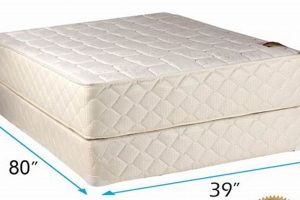
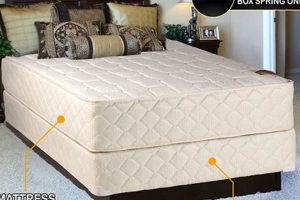
The necessity of a supportive foundation for a mattress is a common inquiry among consumers. Historically, a box spring, consisting of a wooden or metal frame containing actual springs, was considered essential. This structure elevated the mattress, absorbed shock, and provided crucial support to prevent sagging. However, the evolution of mattress technology has introduced alternative foundation options.
The advantages of using a proper foundation include improved mattress longevity, enhanced comfort, and better overall sleep quality. A stable base evenly distributes weight, preventing premature wear and tear. Moreover, some mattress warranties may be voided if the mattress is used without appropriate support. Understanding foundation options ensures the consumer maximizes their investment and enjoys optimal sleep.
The subsequent sections will examine different types of mattress foundations, delve into the compatibility of various mattresses with these foundations, and provide guidance on selecting the most suitable base for specific needs and circumstances. Factors such as mattress type (e.g., innerspring, memory foam, latex), bed frame design, and personal preferences will be considered to determine the optimal support system.
Guidance on Mattress Foundation Selection
Selecting an appropriate mattress foundation is crucial for preserving mattress integrity and ensuring optimal sleep support. Consider the following points when evaluating foundation options.
Tip 1: Evaluate Mattress Type. Different mattress types have varying foundation requirements. Memory foam and latex mattresses often perform optimally on solid or slatted platforms, whereas traditional innerspring mattresses may benefit from the added support and shock absorption of a box spring.
Tip 2: Review Manufacturer Warranty. Prior to selecting a foundation, carefully examine the mattress manufacturer’s warranty. Many warranties stipulate specific foundation types and may be voided if an incompatible foundation is used. Compliance with warranty requirements is essential for protecting the mattress investment.
Tip 3: Consider Bed Frame Compatibility. Ensure the chosen foundation is compatible with the existing or intended bed frame. Some bed frames are designed to accommodate only specific foundation types, such as platform beds designed for direct mattress placement without a separate foundation.
Tip 4: Assess Support Needs. Individuals with specific orthopedic needs or preferences for firmness should carefully consider the level of support offered by different foundation types. A solid foundation generally provides a firmer feel, while a box spring may offer more cushioning and pressure relief.
Tip 5: Evaluate Height Preferences. Foundation height affects the overall bed height. Consider personal preferences for bed height and accessibility when selecting a foundation. Individuals with mobility limitations may benefit from a lower bed height, while others may prefer a taller bed for aesthetic or ergonomic reasons.
Tip 6: Inspect Foundation Quality. Regardless of the chosen type, prioritize foundation quality. A well-constructed foundation will provide more consistent support and contribute to the mattress’s longevity. Look for sturdy materials and robust construction.
Tip 7: Consult with Sleep Professionals. If uncertainty persists, seek guidance from sleep professionals or mattress retailers. These experts can offer personalized recommendations based on individual needs and preferences.
Proper foundation selection is a critical aspect of mattress care and contributes significantly to sleep quality and mattress lifespan. Adhering to these guidelines will facilitate an informed decision.
This information serves as a foundation for understanding the broader considerations discussed in the remainder of this discourse.
1. Mattress Type

The correlation between mattress type and the necessity of a box spring is a crucial factor in determining appropriate bed setup. Different mattress constructions exhibit varying support requirements, influencing whether a box spring is advantageous or even required. For example, traditional innerspring mattresses, characterized by their coil-based support system, often benefit from the added shock absorption and weight distribution provided by a box spring. Without a box spring, the coils may be subjected to uneven pressure, potentially leading to premature wear or structural damage. This highlights a cause-and-effect relationship where the mattress type directly affects its longevity and performance, depending on the presence or absence of a box spring.
Conversely, modern mattress types like memory foam or latex frequently perform optimally on solid or slatted platforms. These mattresses are designed with inherent density and support capabilities, minimizing the need for the supplementary support traditionally offered by a box spring. In many instances, placing a memory foam or latex mattress on a box spring can actually diminish its intended feel and performance characteristics. Consider the case of a platform bed with closely spaced slats: this base provides ample support for a memory foam mattress, allowing it to conform to the body and distribute weight effectively. This illustrates how the support needs inherent in the specific construction negate the necessity of a box spring.
In conclusion, the selection of a box spring is intrinsically linked to the mattress type. Understanding the inherent support characteristics of the mattress is paramount. The appropriate choice directly impacts comfort, lifespan, and adherence to warranty terms. While innerspring mattresses historically benefit from box spring support, contemporary foam and latex constructions often thrive on solid or slatted platform foundations. The critical insight is not to blindly adhere to tradition, but rather to align the foundation with the specific demands of the mattress itself to achieve optimal sleep performance and preserve the integrity of the bedding system.
2. Warranty Requirements

Mattress warranties often contain specific stipulations regarding the type of foundation required to maintain validity. Adherence to these requirements is crucial for protecting the consumer’s investment and ensuring recourse in the event of manufacturing defects or premature wear.
- Approved Foundation Types
Mattress manufacturers typically delineate acceptable foundation types within the warranty documentation. These may include traditional box springs, platform beds with specific slat spacing, adjustable bases, or solid foundations. Failure to use an approved foundation can result in warranty voidance. For example, a memory foam mattress warranty might require a solid or closely-slatted platform, explicitly excluding traditional box springs due to their potential to diminish support and ventilation.
- Foundation Dimensions and Support
Warranties frequently specify minimum support requirements for the foundation, often expressed in terms of slat spacing or the number of support legs. Insufficient support can lead to mattress sagging, which is often excluded from warranty coverage. For instance, a hybrid mattress warranty might mandate slats spaced no more than 2-3 inches apart to prevent uneven weight distribution and subsequent indentation issues.
- Original Ownership and Matching Sets
Some warranties require the mattress to be used with its original, matching foundation or purchased as a set to remain valid. This stipulation aims to ensure compatibility and consistent support throughout the mattress’s lifespan. Replacing a foundation with a non-matching or incompatible type can invalidate the warranty, even if the mattress itself is otherwise defect-free.
- Documentation and Proof of Purchase
In the event of a warranty claim, consumers are typically required to provide proof of purchase for both the mattress and the foundation. This documentation serves as evidence of compliance with warranty stipulations and verifies the date of purchase. Failure to provide adequate documentation can impede the warranty claim process.
These facets demonstrate the critical interplay between warranty requirements and the foundation choice. Consumers should meticulously review warranty documents before selecting a foundation to ensure compliance and protect their investment. Ignoring these stipulations can lead to costly consequences, including the denial of warranty claims and the premature degradation of the mattress.
3. Foundation Alternative

The query “do you need box spring for mattress” is inextricably linked to the availability and suitability of foundation alternatives. The traditional box spring, once considered indispensable, now faces competition from a range of platforms designed to support mattresses effectively. These alternatives directly influence the decision-making process regarding whether a box spring is necessary, as their existence presents viable options for mattress support.
The impact of these alternatives manifests in several key areas. Solid platforms, for instance, offer a firm, even surface suitable for memory foam and latex mattresses, providing uniform support and preventing sagging. Slatted platforms, with appropriately spaced slats, achieve a similar effect while promoting airflow. Adjustable bases offer personalized comfort and support, often eliminating the need for a traditional box spring altogether. Consider a consumer purchasing a new memory foam mattress; the availability of a solid platform bed frame negates the need for a box spring, providing adequate support and potentially extending the mattress’s lifespan. In contrast, an individual with an older innerspring mattress might find that a platform bed lacks the shock absorption and spring support that a box spring traditionally provides. This example highlights how the compatibility of a foundation alternative with the mattress type is a crucial determinant.
In essence, the rise of foundation alternatives has redefined the landscape of mattress support. The question of needing a box spring is no longer a simple yes or no, but rather a nuanced assessment of mattress type, support requirements, and the suitability of available alternatives. Understanding the strengths and weaknesses of each foundation option is essential for making an informed decision that optimizes mattress performance and ensures long-term comfort. Failure to consider these alternatives can lead to suboptimal support, reduced mattress lifespan, and ultimately, a less satisfactory sleep experience.
4. Support Needs
The correlation between individual support requirements and the necessity of a box spring forms a critical juncture in the mattress selection process. Support needs, dictated by factors such as body weight, sleep position, and orthopedic considerations, exert a direct influence on the type of foundation that will optimize sleep quality and mattress longevity. The absence of adequate support can lead to mattress sagging, spinal misalignment, and discomfort, underscoring the importance of addressing individual needs when evaluating foundation options. Failure to adequately address support needs is an example of neglecting a key determinant within “do you need box spring for mattress”.
For instance, individuals with higher body weights often require a more robust foundation to prevent premature mattress degradation. A traditional box spring, with its spring-based construction, may provide insufficient support for heavier individuals, potentially leading to sagging and reduced mattress lifespan. In such cases, a solid platform or a reinforced foundation with closely spaced slats may be a more appropriate choice. Similarly, individuals with back pain or spinal issues may benefit from the firm, even support offered by a solid foundation, which promotes proper spinal alignment and reduces pressure points. The relationship between support requirements, the choice of foundation, and the resulting effect on sleep quality and mattress lifespan highlights the practical significance of understanding the individual aspects of “do you need box spring for mattress”.
In conclusion, a thorough assessment of individual support needs is paramount when determining whether a box spring is required. Factors such as body weight, sleep position, and orthopedic considerations should guide the selection process, ensuring that the chosen foundation provides adequate support and promotes optimal sleep quality. Ignoring these factors can lead to discomfort, mattress degradation, and ultimately, a less satisfactory sleep experience. The effective management of one’s “Support Needs” is vital to a proper understanding of the question of “do you need box spring for mattress”.
5. Bed Frame Compatibility

Bed frame compatibility directly influences the necessity of a box spring. The design of a bed frame dictates whether it is intended to accommodate a box spring, rendering its presence either essential, optional, or entirely incompatible. Failure to consider bed frame compatibility can result in inadequate mattress support, aesthetic incongruity, and potential structural damage to both the frame and the mattress. For example, a traditional metal bed frame with side rails and center support typically requires a box spring to provide a level surface for the mattress. Without a box spring, the mattress would sag between the rails, compromising its support and longevity. Conversely, a platform bed, designed with a solid or closely-slatted surface, inherently provides the necessary support, negating the need for a box spring. Ignoring this aspect of bed frame design is a critical oversight when assessing the overall support system. Bed Frame Compatibility is a key determinant of “do you need box spring for mattress”.
The relationship between bed frame design and mattress support is further complicated by the variety of bed frame styles available. Sleigh beds, panel beds, and storage beds often have specific requirements for foundation height and support. Using an inappropriately sized or incompatible foundation can alter the aesthetic appeal of the bed, create difficulties in getting in and out of bed, and even damage the frame. Consider the situation where a high-profile mattress is placed on a bed frame already designed for a box spring and mattress combination; the resulting bed height may be excessively high, making it difficult for some individuals to access the bed comfortably. Practical application of these ideas is a key component of understanding “do you need box spring for mattress”.
In summary, evaluating bed frame compatibility is an indispensable step in determining the necessity of a box spring. Bed frame design dictates whether a box spring is required for adequate mattress support, aesthetic harmony, and structural integrity. Ignoring bed frame compatibility can lead to a compromised sleep experience, damage to the mattress or frame, and aesthetic disharmony. Therefore, bed frame design is a crucial component to consider when answering “do you need box spring for mattress”.
6. Height Preference
Height preference significantly impacts the determination of whether a box spring is necessary. Individual requirements and physical limitations can influence the desired height of a bed, directly affecting the choice of foundation.
- Accessibility Considerations
For individuals with mobility limitations, such as the elderly or those with disabilities, bed height is a crucial factor in ensuring ease of access. A bed that is too high or too low can pose challenges in getting in and out of bed, increasing the risk of falls. A lower bed height may necessitate foregoing a box spring to maintain accessibility. The absence of a box spring then requires careful consideration of alternative support structures to ensure proper mattress support.
- Aesthetic Alignment
Height preference also plays a role in achieving a desired aesthetic. Some individuals prefer a lower bed profile for a modern or minimalist look, which may preclude the use of a traditional box spring. Conversely, others may prefer a taller bed for a more traditional or luxurious appearance. In these cases, the box spring becomes a component of the overall design, impacting both height and visual appeal.
- Mattress Type and Support Implications
Different mattress types have varying height profiles. A thicker mattress, such as a pillow-top or high-profile memory foam mattress, may not require the added height of a box spring to achieve a comfortable bed height. Conversely, a thinner mattress may benefit from the added height of a box spring to provide adequate support and prevent a feeling of being too close to the floor. Proper support must be considered in conjunction with height. The absence of a box spring necessitates a foundation solution, such as a platform or closely-slatted bed frame, that will provide comparable support.
- Storage Considerations
The desired bed height also influences storage options. A lower bed height, achieved without a box spring, may limit the ability to store items underneath the bed. Conversely, a taller bed, created with a box spring, provides more space for under-bed storage. The choice between a box spring and an alternative foundation, therefore, involves balancing height preference with storage needs.
These multifaceted considerations demonstrate that height preference is not merely an aesthetic choice but a functional aspect closely intertwined with accessibility, support, and storage requirements. When addressing the question of whether a box spring is needed, height preference becomes a critical variable, guiding the selection of a foundation that satisfies both practical and aesthetic considerations.
Frequently Asked Questions About Mattress Foundations
This section addresses common inquiries regarding the necessity of a box spring and alternative mattress foundations. The information presented aims to clarify misconceptions and provide guidance on selecting the appropriate foundation for optimal mattress support and longevity.
Question 1: Does a new mattress always require a box spring?
The necessity of a box spring is contingent on several factors, including the mattress type, bed frame design, and manufacturer’s warranty stipulations. Memory foam and latex mattresses often perform optimally on solid or slatted platforms, negating the need for a traditional box spring. However, innerspring mattresses may benefit from the added support and shock absorption provided by a box spring, particularly when used with older bed frames.
Question 2: Can a mattress be placed directly on the floor?
While placing a mattress directly on the floor is a viable option in certain circumstances, it is generally not recommended for long-term use. Doing so can impede airflow, potentially leading to moisture accumulation and mold growth. Additionally, it can invalidate the mattress warranty and may not provide adequate support, resulting in premature wear. Further, it may make access more difficult. This practice is generally discouraged.
Question 3: What are the alternatives to a traditional box spring?
Several alternatives to traditional box springs exist, including platform beds with solid or slatted surfaces, adjustable bases, and bunkie boards (low-profile foundations). The suitability of each alternative depends on the mattress type, bed frame design, and individual preferences for firmness and support. Consider manufacturer’s warranty requirements when selecting an alternative.
Question 4: How does the type of bed frame affect the choice of mattress foundation?
Bed frame design is a critical factor in determining the appropriate mattress foundation. Platform beds are designed to accommodate mattresses directly, without the need for a box spring. Traditional metal bed frames with side rails typically require a box spring to provide a level surface for the mattress. Storage beds may have specific foundation requirements to ensure proper support and functionality.
Question 5: What is a bunkie board, and when should it be used?
A bunkie board is a thin, low-profile foundation typically made of wood or plywood. It is often used in situations where a bed frame already provides adequate support but the mattress needs a slightly elevated surface. Bunkie boards are commonly used with platform beds, bunk beds, and daybeds to prevent the mattress from sinking or sagging between the frame supports.
Question 6: How does body weight affect the choice of mattress foundation?
Individuals with higher body weights often require a more robust foundation to prevent premature mattress sagging and ensure adequate support. Solid platforms or reinforced foundations with closely spaced slats are generally recommended for heavier individuals. Traditional box springs may not provide sufficient support for higher weight ranges, potentially leading to discomfort and reduced mattress lifespan.
Key takeaways include the importance of considering mattress type, bed frame design, and warranty stipulations when selecting a foundation. Alternative foundations exist, and the most appropriate choice depends on individual needs and preferences.
The subsequent section will delve into specific mattress types and their corresponding foundation recommendations, providing detailed guidance on optimizing sleep support and mattress longevity.
Concluding Remarks on Mattress Foundation Necessities
The preceding analysis has explored the factors influencing the question of “do you need box spring for mattress,” moving beyond a simplistic binary answer. Mattress type, warranty specifications, available foundation alternatives, individual support requirements, bed frame compatibility, and preferred bed height all contribute to the determination. A comprehensive understanding of these elements is essential for making an informed decision.
Therefore, rather than adhering to a historical assumption, individuals should prioritize a thorough assessment of their specific needs and circumstances. Investing time in this evaluation ensures optimal mattress support, prolonged mattress lifespan, and ultimately, a more restorative sleep experience. The long-term benefits of informed decision-making significantly outweigh the potential drawbacks of a hasty or uninformed choice.
![Upgrade Your Sleep: Twin Mattress & Box Spring Set - [Year] | Organic & Natural Mattress Buyer’s Guide: Non-Toxic Sleep Solutions](https://mattressworldpa.com/wp-content/uploads/2025/07/th-3528-300x200.jpg "Upgrade Your Sleep: Twin Mattress & Box Spring Set - [Year] Organic & Natural Mattress Buyer’s Guide: Non-Toxic Sleep Solutions")