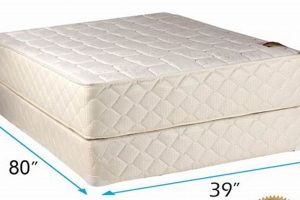
The necessity of a foundation designed to elevate and support a sleep surface is a common inquiry. These foundations, traditionally constructed with coils and wood framing, provide height and absorb shock, extending the life of the overlying sleep product. Historically, these foundations were virtually mandatory for innerspring mattresses.
Proper support offers significant advantages, including preventing mattress sagging, improving airflow which minimizes moisture buildup, and contributing to overall sleep comfort. The use of a supporting structure preserves warranty validity in many instances, as manufacturers often stipulate adequate support for coverage against defects. Understanding the function of such support clarifies its importance.
The subsequent discussion will delve into various foundation types, examining compatibility with different mattress technologies, addressing concerns about warranty requirements, and providing guidance on selecting the appropriate support system.
Guidance on Mattress Foundation Requirements
This section offers essential guidelines to determine the necessity of a supportive base for a mattress, ensuring optimal performance and longevity.
Tip 1: Assess Mattress Type: Memory foam and latex mattresses often require a solid, flat surface for support, rendering traditional spring-based foundations unnecessary or even detrimental. Innerspring mattresses may benefit from a compatible foundation that provides shock absorption.
Tip 2: Review Warranty Terms: Mattress warranties typically specify acceptable support structures. Failure to adhere to these guidelines can void the warranty if the mattress develops sag or other support-related issues.
Tip 3: Consider Bed Frame Compatibility: Some bed frames feature built-in support systems that negate the need for a separate foundation. Platform beds, for instance, provide a solid surface for direct mattress placement.
Tip 4: Evaluate Height Preferences: The combined height of the mattress and foundation should be considered in relation to personal preferences and accessibility. Individuals with mobility challenges may require a lower profile.
Tip 5: Examine Foundation Alternatives: Options such as adjustable bases, platform beds, and solid or slatted foundations provide varied support levels and functionalities. Selecting the appropriate alternative depends on specific needs and mattress requirements.
Tip 6: Evaluate Existing Support Structure: Thoroughly inspect any existing base for damage, such as sagging, broken slats, or compromised springs, which could negatively affect the new mattress.
Tip 7: Check Manufacturer Specifications: Always consult the mattress manufacturer’s specifications regarding the required support system to ensure optimal performance and warranty compliance.
Adhering to these guidelines facilitates informed decision-making regarding the necessity of a support structure, optimizing mattress lifespan and overall sleep quality.
The subsequent discussion will explore the benefits of different foundation types, considering factors such as durability, cost, and suitability for various sleeping preferences.
1. Mattress Type
The selection of a mattress directly influences the necessity of a foundation. Traditional innerspring mattresses, characterized by their coil-based construction, typically benefit from a foundation. The coils within a foundation provide complementary support, absorbing impact and distributing weight to prevent premature sagging of the mattress. Conversely, memory foam, latex, and hybrid mattresses often require a solid, flat surface. The use of a spring foundation with these mattress types can lead to uneven support and reduce the intended comfort and lifespan of the mattress. For example, placing a memory foam mattress on a traditional spring foundation might result in localized sinking and reduced pressure relief, negating the advantages of the foam’s conforming properties. The composition of the mattress, therefore, dictates the need for, or avoidance of, a traditional coil-based foundation.
The practical implication of understanding this connection is significant. Employing the incorrect support system can invalidate warranties, as many manufacturers specify acceptable foundation types. Furthermore, improper support can accelerate mattress degradation, leading to discomfort and the need for premature replacement. The compatibility between mattress type and support system directly impacts sleep quality and the overall value proposition of the sleep investment. Real-world scenarios underscore this point: a consumer who places a heavy latex mattress on a weakened spring foundation risks compressing the springs and creating an uneven sleeping surface, ultimately diminishing the intended benefits of the latex material.
In summary, the correlation between mattress type and the appropriateness of a foundation is paramount. Choosing the correct support system, based on the mattress’s construction and manufacturer recommendations, ensures optimal performance, extends lifespan, and maintains warranty validity. The absence of such consideration can result in compromised comfort, accelerated wear, and potential financial loss. The suitability of a foundation is contingent upon the core materials and design of the mattress itself.
2. Warranty Requirements

Mattress warranties frequently stipulate specific support structures as a condition of coverage. The failure to employ a compatible support system, such as a prescribed type of foundation or bed frame, can void the warranty. This is because inadequate support can cause premature mattress sagging, indentations, or structural damage, which manufacturers may attribute to improper use rather than product defects. For example, a warranty might require the use of a solid platform or a foundation with a specific number of slats spaced no more than a certain distance apart. If a mattress is placed on a foundation that does not meet these criteria and subsequently develops a sag, the manufacturer may deny a warranty claim. Understanding these requirements is therefore essential to protect the investment in the mattress.
The practical significance of adhering to warranty specifications extends beyond merely avoiding claim denial. Proper support contributes directly to the longevity and comfort of the mattress. A compatible foundation ensures that the mattress is evenly supported, distributing weight appropriately and preventing localized stress points. This, in turn, helps maintain the mattress’s structural integrity and prolongs its lifespan. Conversely, using an inappropriate foundation can compromise the mattress’s design, leading to uneven wear, discomfort, and ultimately, a reduced lifespan. Consider a scenario where a memory foam mattress, designed for a flat, solid surface, is placed on a traditional spring support. The springs might create pressure points, diminishing the foam’s ability to conform to the body and potentially causing premature wear.
In conclusion, the correlation between warranty stipulations and the selection of an appropriate foundation is undeniable. Adhering to the manufacturer’s specified support requirements is not merely a formality but a crucial step in protecting the mattress investment and ensuring its optimal performance. Neglecting these requirements can lead to warranty invalidation and, more importantly, compromise the mattress’s longevity, comfort, and overall value. Therefore, a thorough review of warranty documentation and a careful selection of a compatible foundation are paramount for maximizing the benefits of the mattress purchase.
3. Frame compatibility

The compatibility of a bed frame with a mattress is a crucial factor in determining the necessity of a traditional coil-spring support. The design and construction of the frame directly influence the type of support required for optimal mattress performance and longevity.
- Platform Beds
Platform beds, characterized by their solid or closely-slatted surfaces, often eliminate the need for a support. The integrated support system provides a flat, even surface suitable for direct mattress placement. Therefore, if the frame is a platform bed, a separate foundation may be superfluous.
- Slatted Frames
Frames with widely-spaced slats may necessitate a support to prevent mattress sagging and maintain warranty compliance. The spacing between the slats determines the level of support provided. If the slats are too far apart, a foundation is recommended to distribute weight evenly and prevent mattress deformation. Consult the mattress manufacturer’s specifications for minimum slat spacing requirements.
- Headboard and Footboard Only
Frames consisting only of a headboard and footboard require a separate support to provide a stable and even surface for the mattress. Without a support, the mattress would lack adequate support and be prone to sagging or damage. In these cases, a traditional foundation or a platform bed insert is essential.
- Adjustable Bases
Adjustable bases function as both a frame and a support, negating the need for a separate support. These bases are designed to articulate and provide customized support for the mattress. When using an adjustable base, ensure the mattress is compatible with the base’s articulation capabilities to avoid damage.
In summary, assessing the frames inherent support system is paramount when determining if a traditional foundation is necessary. The presence of a solid or closely-slatted surface, as in platform beds or adjustable bases, often renders a separate coil-spring support redundant. Conversely, frames lacking adequate integrated support necessitate the addition of a foundation to maintain mattress integrity and warranty compliance. Frame design, therefore, is intrinsically linked to the requirement for supplemental support.
4. Support functionality

Support functionality represents a critical determinant in evaluating the necessity of a traditional coil-spring support system. The primary purpose of a mattress support is to provide a stable, even surface that prevents sagging, distributes weight appropriately, and promotes mattress longevity. Assessing the inherent support capabilities of alternative systems is essential in determining whether a supplemental foundation is required.
- Weight Distribution and Sag Prevention
An effective support system distributes weight evenly across the mattress surface, mitigating localized pressure points and preventing premature sagging. Traditional foundations accomplish this through coil springs that absorb and disperse weight. Alternative systems, such as platform beds with solid surfaces, achieve similar results through continuous, uniform support. Inadequate weight distribution leads to mattress deformation and reduced comfort. The necessity of a foundation hinges on whether the existing support system adequately addresses weight distribution.
- Shock Absorption and Motion Isolation
Coil-spring foundations contribute to shock absorption, minimizing motion transfer and enhancing sleep quality. The springs act as a buffer, absorbing impact and reducing the propagation of movement across the mattress surface. This is particularly beneficial for couples sharing a bed. Systems lacking integrated shock absorption may necessitate a supplemental foundation to provide this feature. Consider scenarios where one sleeper tosses and turns; a foundation can mitigate the disturbance experienced by the other sleeper.
- Ventilation and Airflow
Proper support facilitates ventilation and airflow around the mattress, preventing moisture buildup and promoting a hygienic sleep environment. Traditional foundations with open coil structures allow air to circulate freely. Solid platform beds may restrict airflow, potentially leading to moisture accumulation and the growth of mold or mildew. If the existing support system impedes ventilation, a foundation that promotes airflow may be necessary.
- Structural Integrity and Mattress Longevity
A robust support system maintains the structural integrity of the mattress, extending its lifespan and preserving its comfort characteristics. Inadequate support can lead to premature wear and tear, compromising the mattress’s performance and reducing its useful life. The assessment of structural integrity involves evaluating the support system’s ability to withstand weight, resist deformation, and provide consistent support over time. A foundation may be required to bolster the structural integrity of the mattress, particularly if the existing support system is flimsy or compromised.
These facets of support functionality underscore the importance of evaluating the existing support system when determining the need for a coil-spring addition. Factors such as weight distribution, shock absorption, ventilation, and structural integrity directly influence mattress performance and longevity. If the current system fails to adequately address these functionalities, a supplemental foundation may be necessary to optimize sleep quality and protect the mattress investment. The decision hinges on a comprehensive assessment of the system’s inherent support capabilities and the specific requirements of the mattress.
5. Height preference

Height preference plays a significant role in determining the necessity of a foundation. The overall height of the sleep system, encompassing the frame, foundation (if used), and mattress, affects both accessibility and aesthetic considerations. Individual needs and physical capabilities should inform decisions regarding bed height.
- Accessibility and Mobility
Individuals with mobility limitations, such as the elderly or those with physical disabilities, often require a lower bed height for ease of entry and exit. The addition of a foundation to an already thick mattress might render the bed inaccessible or unsafe. Conversely, a higher bed may be preferable for individuals with back pain or those who find it difficult to bend low. Therefore, physical considerations influence the decision to include or omit a foundation based on desired overall height.
- Aesthetic Considerations
The overall height of the bed contributes to the aesthetic appeal of the bedroom. Some individuals prefer a lower-profile bed for a modern, minimalist look. In such cases, a platform bed frame combined with a mattress might suffice, negating the need for an additional support. Others may prefer a taller bed, creating a more traditional or luxurious feel. This aesthetic preference can be achieved by incorporating a foundation, which elevates the mattress and enhances the visual impact of the bed.
- Sheet Fit and Bedding Dimensions
The height of the mattress influences the required dimensions of bedding, particularly fitted sheets. A thicker mattress combined with a foundation increases the overall height, potentially necessitating deep-pocket sheets. Conversely, a thinner mattress without a foundation may require standard-sized sheets. Therefore, height preference, and the subsequent inclusion or exclusion of a foundation, directly impact bedding compatibility and cost.
- Storage Considerations
The height of the bed can affect the availability of under-bed storage space. A lower bed, achieved by omitting a foundation, may limit or eliminate the possibility of storing items underneath. Conversely, a taller bed, created by adding a foundation, provides increased clearance for storage containers. Practical considerations, such as storage needs, can influence the decision regarding foundation usage and, consequently, bed height.
The interplay between height preference and the need for a foundation is multifaceted. Accessibility concerns, aesthetic desires, bedding compatibility, and storage requirements all contribute to the decision-making process. Evaluating these factors ensures that the selected sleep system not only provides adequate support but also aligns with individual needs and preferences regarding bed height. The suitability of a foundation, therefore, extends beyond purely functional considerations to encompass a range of personal and practical factors.
6. Alternative options

The selection of appropriate mattress support extends beyond traditional coil-spring foundations. Diverse alternatives offer distinct advantages and may negate the need for a conventional system, contingent upon mattress type, frame design, and individual preferences. Exploring these alternatives is crucial in determining the optimal support solution.
- Platform Beds
Platform beds provide a solid or closely-slatted surface, eliminating the requirement for a separate foundation. These frames offer direct support for the mattress, ensuring even weight distribution and preventing sagging. Platform beds are particularly well-suited for memory foam, latex, and hybrid mattresses that necessitate a flat, rigid surface. In contrast, traditional spring foundations can compromise the comfort and performance of these mattress types when used with a platform bed.
- Adjustable Bases
Adjustable bases offer customizable support and positioning, rendering a traditional foundation redundant. These bases allow users to elevate the head and feet, enhancing comfort and potentially alleviating certain medical conditions. Adjustable bases function as both a frame and a support, eliminating the need for additional components. Compatibility with mattress type is paramount when selecting an adjustable base; certain mattresses may not be suitable due to their construction.
- Bunkie Boards
Bunkie boards are thin, flat platforms designed to provide additional support on top of a slatted bed frame or within a bunk bed. These boards add a layer of solid support, preventing mattress sagging and extending lifespan. Bunkie boards are a cost-effective alternative to traditional foundations, particularly in situations where a low-profile support is desired. They are often used with memory foam and latex mattresses to enhance support on frames with wider slat spacing.
- Slatted Foundations
Slatted foundations consist of a series of wooden or metal slats supported by a frame. The spacing between the slats determines the level of support provided. Closely-spaced slats offer more substantial support than widely-spaced slats. When selecting a slatted foundation, it is essential to ensure that the slat spacing complies with the mattress manufacturer’s warranty requirements. Slatted foundations offer a balance between support and airflow, making them a suitable option for various mattress types.
These diverse alternatives underscore the multifaceted nature of mattress support. The decision to forgo a traditional foundation hinges on a careful evaluation of mattress type, frame design, warranty stipulations, and individual preferences. By exploring these alternative options, consumers can optimize their sleep experience and ensure the longevity of their mattress investment.
7. Airflow Benefits
The contribution of mattress support systems to airflow is a significant factor in determining their necessity. Adequate ventilation mitigates moisture accumulation, regulates temperature, and promotes a hygienic sleep environment. The design of the support structure influences the extent to which air circulates around the mattress.
- Moisture Dissipation
Open support systems, such as traditional coil-spring foundations, facilitate airflow, allowing moisture to evaporate and preventing the growth of mold and mildew. Mattresses, particularly those constructed from memory foam, can trap body heat and perspiration. A well-ventilated support system helps dissipate this moisture, maintaining a drier and more comfortable sleep surface. Conversely, solid platform beds may restrict airflow, potentially leading to moisture buildup. The absence of adequate ventilation can compromise mattress hygiene and reduce its lifespan.
- Temperature Regulation
Airflow promotes temperature regulation, preventing the mattress from becoming excessively hot or cold. Proper ventilation allows warm air to escape and cool air to circulate, maintaining a more consistent and comfortable sleeping temperature. This is particularly important for individuals who tend to sleep hot. Support systems that restrict airflow can lead to increased body heat retention, resulting in discomfort and disrupted sleep. Traditional foundations, with their open coil construction, typically offer superior temperature regulation compared to solid platforms.
- Allergen Reduction
Airflow helps reduce the accumulation of allergens, such as dust mites and pet dander, within the mattress. Proper ventilation allows these allergens to be dispersed, minimizing their concentration and reducing the risk of allergic reactions. Support systems that restrict airflow can create a breeding ground for allergens, exacerbating allergy symptoms and compromising sleep quality. Regularly ventilating the mattress and support system is essential for maintaining a hypoallergenic sleep environment. A foundation that promotes airflow aids in this process.
- Odor Control
Airflow contributes to odor control by preventing the buildup of stale air and volatile organic compounds (VOCs) within the mattress. VOCs are emitted from mattress materials, such as foam and adhesives, and can contribute to unpleasant odors. Proper ventilation allows these VOCs to dissipate, reducing their concentration and minimizing odor. Support systems that restrict airflow can trap VOCs, leading to lingering odors and potential health concerns. Choosing a foundation that promotes airflow can help mitigate these issues and maintain a fresher, more hygienic sleep environment.
The preceding factors illustrate the critical role of airflow in maintaining a healthy and comfortable sleep environment. The decision to employ a support system that promotes ventilation, such as a traditional spring foundation or a slatted platform, hinges on the mattress type, individual sleeping habits, and environmental conditions. When considering the necessity of a foundation, the airflow benefits should be carefully weighed against alternative options to ensure optimal sleep quality and mattress longevity.
Frequently Asked Questions
The following addresses common inquiries concerning the necessity of a traditional support system for mattresses. These responses aim to provide clarity on factors influencing this decision.
Question 1: Is a foundation required for all mattress types?
A traditional foundation is not universally required. Mattress type significantly influences support needs. Innerspring mattresses often benefit from the shock absorption provided by a foundation. Conversely, memory foam and latex mattresses typically perform optimally on solid, flat surfaces.
Question 2: Can failure to use a foundation void a mattress warranty?
Yes, non-compliance with manufacturer-specified support requirements can invalidate the warranty. Warranty terms often stipulate acceptable foundation types and may deny claims resulting from inadequate support.
Question 3: What alternatives exist in lieu of a traditional foundation?
Alternatives include platform beds, adjustable bases, bunkie boards, and slatted foundations. The suitability of each alternative depends on mattress type, frame design, and individual preferences.
Question 4: How does support influence mattress lifespan?
Proper support distributes weight evenly, preventing localized stress and premature sagging. Inadequate support can accelerate mattress degradation and shorten its useful life.
Question 5: Does airflow through a foundation provide benefits?
Yes, airflow helps dissipate moisture, regulate temperature, and reduce allergen accumulation. Open support systems promote ventilation, while solid surfaces may restrict it.
Question 6: How does bed height influence the decision to use a foundation?
Bed height affects accessibility, aesthetic appeal, and bedding compatibility. Individuals with mobility limitations may require a lower bed, while others prefer a taller bed for aesthetic reasons. Bed height preference influences the decision to include or omit a foundation.
The selection of a compatible support system is a crucial element in ensuring mattress longevity, maintaining warranty validity, and optimizing sleep quality. A thorough evaluation of individual needs and mattress requirements is essential.
The subsequent section will provide actionable tips for selecting the appropriate mattress support, considering factors such as budget, mattress type, and personal preferences.
Determining Mattress Foundation Requirements
The preceding analysis has explored various factors influencing the necessity of a traditional coil-spring support, commonly termed. Mattress type, warranty stipulations, bed frame compatibility, support functionality, height preference, alternative support options, and the importance of airflow have all been examined as determinants. The interplay of these considerations dictates the optimal support solution for a given mattress and individual.
Therefore, the decision to employ a traditional coil-spring structure should be informed by a thorough assessment of specific needs and circumstances. Neglecting these factors risks compromising mattress longevity, warranty validity, and overall sleep quality. Prudent evaluation and adherence to manufacturer recommendations are essential for maximizing the value and performance of the sleep investment.
![Upgrade Your Sleep: Twin Mattress & Box Spring Set - [Year] | Organic & Natural Mattress Buyer’s Guide: Non-Toxic Sleep Solutions](https://mattressworldpa.com/wp-content/uploads/2025/07/th-3528-300x200.jpg "Upgrade Your Sleep: Twin Mattress & Box Spring Set - [Year] Organic & Natural Mattress Buyer’s Guide: Non-Toxic Sleep Solutions")