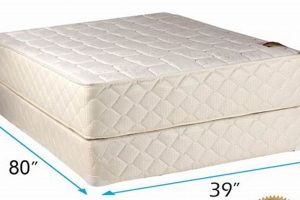
A compact sleep solution designed for single sleepers or smaller spaces, this product combines convenience and comfort. It refers to a bed designed to fit one person, compressed and packaged for easy shipping and setup. This configuration is particularly suitable for children’s rooms, guest rooms, or individuals with limited living space.
This type of bedding offers numerous advantages, including simplified delivery and maneuverability. Its origins can be traced to the desire for more efficient distribution channels and reduced logistical challenges associated with traditional mattresses. The design allows for easy transport through narrow hallways and stairwells, making it a practical option for apartments and homes with restricted access. Furthermore, these products often offer comparable comfort and support to conventionally delivered counterparts, utilizing memory foam, latex, or hybrid construction.
The subsequent sections will delve into specific aspects such as material composition, construction techniques, considerations for choosing the optimal product, and a comparative analysis with alternative sleep solutions.
Selecting an Appropriately Sized Compressed Bed
The following guidance assists in making an informed decision regarding the selection of a compressed bed designed for a single occupant. Consider these points to optimize the purchasing process and ensure satisfaction with the final product.
Tip 1: Measure Available Space: Prior to purchase, accurately measure the dimensions of the intended room. This ensures the bedframe, once expanded, will fit without obstruction, allowing for adequate mobility within the space.
Tip 2: Evaluate Sleeper Profile: Consider the typical sleep posture and body weight of the user. Individuals with higher body mass may require a firmer model to ensure adequate support and spinal alignment. Those who sleep on their side might benefit from a softer surface that conforms to pressure points.
Tip 3: Examine Material Composition: Investigate the materials used in the construction of the bedding. Memory foam, latex, and hybrid models offer varying degrees of firmness, breathability, and durability. Research the properties of each material to determine suitability.
Tip 4: Review Independent Certifications: Look for certifications such as CertiPUR-US, which indicates that the foam used has been tested for harmful substances and meets specific emissions standards. This ensures the product meets health and safety requirements.
Tip 5: Assess Warranty and Return Policies: Carefully review the manufacturer’s warranty and return policies. A longer warranty period often indicates a higher level of confidence in the product’s longevity. A generous return policy allows for a trial period to assess comfort and suitability.
Tip 6: Read Customer Reviews: Explore customer reviews and testimonials to gain insight into the experiences of other purchasers. Pay attention to comments regarding comfort, support, durability, and customer service.
Tip 7: Consider Edge Support: Edge support is crucial for individuals who tend to sleep near the edge of the bed. Adequate edge support prevents the sensation of rolling off and maximizes the usable sleep surface.
Following these guidelines facilitates a more informed purchasing decision, ultimately leading to a greater level of satisfaction and improved sleep quality. Prioritizing these factors ensures a suitable selection.
The subsequent sections will address common misconceptions and provide a comparative analysis of various brands and models currently available on the market.
1. Dimensions

The dimensions of a compressed twin mattress are paramount to its functionality, impacting its suitability for various individuals and room configurations. Understanding these dimensions is crucial in making an informed purchasing decision.
- Standard Length and Width
A standard twin mattress measures approximately 38 inches wide and 75 inches long. This footprint dictates the minimum room size required to comfortably accommodate the bed frame and associated furnishings. Deviations from these standard measurements, while rare, can impact the fit of bedding and the overall user experience.
- Thickness and Support
The thickness, or height, of the mattress varies depending on its construction and materials. Thicker models often provide greater support and cushioning, particularly for individuals with higher body mass. However, increased thickness may also necessitate deeper pocketed sheets and may impact the overall height of the bed in relation to bedside tables.
- Weight Considerations
While not a physical dimension, the weight of the compressed package influences ease of handling during shipping and setup. Lighter packages are generally easier for a single person to maneuver, while heavier packages may require assistance to avoid potential injury during transport and unpacking. This is especially relevant for individuals living alone or with mobility limitations.
- Impact on Room Layout
The compact dimensions are particularly beneficial in smaller rooms or shared living spaces where maximizing floor area is essential. They allow for greater flexibility in room layout and furniture placement, enabling more efficient use of available space. This characteristic makes a compressed twin mattress a practical choice for apartments, dormitories, and guest rooms.
These dimensional considerations directly influence the comfort, practicality, and spatial efficiency of a compressed twin mattress. Prioritizing these factors ensures that the chosen product aligns with individual needs and living space constraints, ultimately enhancing the overall sleep environment.
2. Firmness options

Firmness options represent a critical determinant of user satisfaction within the realm of compressed twin mattresses. The compression and subsequent expansion inherent in the “mattress in a box” format necessitates careful consideration of firmness levels to ensure adequate support and comfort. Cause and effect are directly linked: the selected firmness directly impacts spinal alignment, pressure point relief, and overall sleep quality.
The importance of firmness is underscored by the diverse range of sleeper profiles. For instance, a side sleeper often requires a softer surface to alleviate pressure on the hips and shoulders, while a back or stomach sleeper typically benefits from a firmer mattress to maintain proper spinal alignment. Ignoring these individual needs can lead to discomfort, pain, and disrupted sleep. Manufacturers cater to these varied preferences by offering “mattress in a box twin size” options ranging from plush to extra firm. For example, a lightweight child might find a medium-firmness model sufficient, while a heavier adult could require a firmer option to prevent excessive sinking and maintain adequate support. The availability of varied firmness choices is therefore a necessary component.
In conclusion, firmness options constitute a pivotal element in the overall effectiveness and suitability of a compressed twin mattress. Proper selection, aligned with individual sleeping habits and body type, is essential for optimizing sleep quality and minimizing discomfort. The challenge lies in accurately assessing personal firmness preferences prior to purchase, often relying on online reviews or in-store testing (if available). Recognizing the significant influence of firmness on sleep experience highlights its crucial role in the overall value proposition of “mattress in a box twin size” offerings.
3. Foam composition

Foam composition is a defining characteristic that significantly influences the performance and suitability of a compressed twin mattress. The type and density of foam used directly affect comfort, support, durability, and thermal regulation all critical attributes for a positive sleep experience. For example, memory foam, known for its conforming properties, can alleviate pressure points but may also retain heat. Conversely, latex foam offers a more resilient and breathable alternative, although often at a higher cost. Hybrid models combine different foam layers, seeking to optimize both comfort and support by leveraging the strengths of each material. Therefore, the selection of a compressed twin mattress necessitates a thorough understanding of the foam composition and its implications.
The specific blend of foams within a given compressed mattress also impacts its longevity and resistance to sagging. High-density foams, while initially firmer, generally exhibit greater durability over time compared to low-density counterparts. Furthermore, the presence of specialized foams, such as those infused with gel or copper, can enhance thermal regulation by dissipating heat and maintaining a more comfortable sleep surface. The choice of foam composition becomes particularly relevant for individuals with specific needs or preferences, such as those prone to overheating during sleep or those requiring enhanced orthopedic support. Each type of foam serves a unique purpose.
In summary, foam composition is a crucial factor determining the overall quality and performance of a compressed twin mattress. A careful evaluation of foam type, density, and specialized features is essential to ensure that the selected product meets individual comfort, support, and durability requirements. The intricate relationship between foam composition and the sleep experience underscores its importance as a key consideration in the purchasing process and the overall value of a compressed twin mattress. The choices made in the composition have a significant effect.
4. Shipping ease

The compressed packaging inherent to “mattress in a box twin size” offerings directly correlates with significantly enhanced shipping ease. This is a fundamental advantage over traditional, uncompressed mattresses. Cause and effect are clear: compression reduces volume, which in turn lowers shipping costs and simplifies logistics. The reduced size and weight allow for standard shipping methods, often eliminating the need for specialized freight carriers. This streamlined delivery process results in faster transit times and greater convenience for the consumer.
The importance of shipping ease is magnified in urban environments or locations with limited access. Traditional mattresses may present significant challenges for delivery to apartments, upper-floor residences, or areas with narrow stairwells. The “mattress in a box twin size” circumvents these obstacles due to its manageable size and weight. Real-life examples include individuals living in multi-story buildings without elevators who can easily transport a compressed mattress to their residence, a feat often impossible with a conventional mattress. This practical advantage translates into a more seamless and stress-free purchasing experience.
Ultimately, shipping ease represents a key component of the value proposition for “mattress in a box twin size” products. It addresses logistical challenges associated with traditional mattress delivery, contributing to reduced costs, faster transit times, and greater customer convenience. While other factors such as comfort and support remain paramount, the enhanced shipping ease offered by compressed mattresses has undeniably reshaped the mattress industry and enhanced consumer accessibility. The challenges associated with traditional mattress delivery are minimized or eliminated.
5. Budget friendly

The “mattress in a box twin size” often presents a more accessible price point compared to traditional mattresses. This is primarily due to streamlined manufacturing and distribution processes. Compressed packaging reduces shipping volume, leading to lower transportation costs. Additionally, many “mattress in a box” companies operate with a direct-to-consumer model, eliminating the markup associated with brick-and-mortar retail. This allows them to offer competitive pricing, making a quality sleep surface attainable for a wider range of consumers. The result is a balance between value and comfort.
The importance of affordability is particularly evident in scenarios where budget constraints are paramount. For students furnishing dorm rooms, individuals setting up guest bedrooms, or families outfitting children’s rooms, the cost-effectiveness of a “mattress in a box twin size” can be a decisive factor. For example, a college student moving into a dorm might find the ease of delivery and lower price more appealing than a heavier, more expensive traditional mattress that requires professional movers. Similarly, a family preparing a room for a visiting relative may prioritize affordability and convenience over premium features. These real-world examples illustrate the practical benefits of the “budget friendly” aspect.
In summary, the “budget friendly” nature of a “mattress in a box twin size” is a significant advantage. The lowered production and shipping costs, combined with the direct-to-consumer business model, contribute to its affordability. While the final choice depends on individual preferences and specific needs, understanding the budgetary advantages can make it a practical and appealing option for those seeking an economical sleep solution. The economic benefits are undeniable and serve a wide range of needs.
6. Space saving
The compressed nature of a “mattress in a box twin size” inherently lends itself to significant space-saving benefits, particularly pertinent in smaller living environments. This characteristic directly impacts the bed’s storage, transportation, and overall footprint within a room.
- Reduced Storage Footprint During Shipping and Unboxing
Prior to expansion, the compressed twin mattress occupies a significantly smaller volume than a traditional mattress. This is advantageous during shipping, minimizing the space required in delivery vehicles and warehouses. Upon arrival, the compact packaging allows for easier maneuverability through doorways and hallways, simplifying the unboxing process. For instance, individuals residing in apartments with limited elevator access benefit greatly from the reduced storage footprint during transport.
- Optimized Room Layout in Confined Spaces
The twin size itself is intrinsically space-saving, ideal for smaller bedrooms, guest rooms, or studio apartments. Combined with the low profile often associated with “mattress in a box” bed frames, it allows for more efficient utilization of available floor space. A concrete example would be a small child’s room where a twin-sized mattress leaves ample room for play and storage. This is an important attribute for space saving.
- Simplified Storage When Not in Use (Occasional Use Cases)
While not intended for repeated compression, the relatively lightweight and manageable size of a “mattress in a box twin size” facilitates easier storage compared to larger, heavier mattresses. This is particularly useful for guest rooms or vacation homes where the bed is only needed occasionally. In such scenarios, the mattress can be stored vertically or under other furniture to maximize space utilization. It can be put away when it is not in use to create greater opportunities for room usage.
- Decreased Clutter and Improved Aesthetics
The streamlined design and minimal footprint of a “mattress in a box twin size” contribute to a less cluttered and more aesthetically pleasing living space. This is especially beneficial in minimalist or modern design schemes where clean lines and open space are prioritized. This element offers clear advantages in the design process for those who want to be minimalist.
These facets collectively demonstrate the space-saving advantages offered by a “mattress in a box twin size.” From streamlined shipping and handling to optimized room layouts and simplified storage, this type of mattress provides a practical solution for maximizing space utilization in various living environments. This offers practical help.
7. Ease of setup
The attribute of “ease of setup” is a defining characteristic that significantly contributes to the appeal and practicality of a “mattress in a box twin size.” The design and packaging methodology directly facilitate a streamlined and simplified installation process, representing a marked contrast to the complexities often associated with traditional mattress delivery and placement.
- Simplified Unboxing and Unrolling Process
The compression and subsequent packaging of a “mattress in a box twin size” enable a user-friendly unboxing experience. The mattress is typically delivered in a manageable box, which can be easily transported into the intended room. Unpacking involves removing the outer packaging and carefully unrolling the compressed mattress. This eliminates the need for cumbersome maneuvering or specialized equipment, as the mattress expands to its full size within a relatively short timeframe. A concrete example involves a single individual setting up a twin mattress in an apartment without assistance, a task that would be considerably more challenging with a traditional, uncompressed mattress.
- Minimal Assembly Requirements
Unlike some furniture items that require extensive assembly, the setup of a “mattress in a box twin size” typically involves minimal or no assembly. Once unrolled, the mattress self-inflates to its designated dimensions, requiring no additional components or tools. This eliminates the need for specialized skills or technical knowledge, making the setup process accessible to individuals of varying abilities. An elderly person, for instance, can readily set up such a mattress without needing outside help.
- Reduced Physical Strain and Effort
The compressed packaging and simplified setup process minimize physical strain and effort. The lightweight and manageable dimensions of the box facilitate easier lifting and carrying compared to traditional mattresses, reducing the risk of injury or exertion. This is particularly beneficial for individuals with physical limitations or those setting up the mattress in confined spaces. This makes it very easy for those with limited mobility.
- Time Efficiency and Convenience
The speed and simplicity of the setup process contribute to enhanced time efficiency and convenience. The entire process, from unboxing to full expansion, can typically be completed within minutes, allowing individuals to quickly enjoy their new mattress. This is a significant advantage for busy individuals or those seeking immediate gratification. All of this can be accomplished in a short period of time.
The combination of simplified unboxing, minimal assembly, reduced physical strain, and enhanced time efficiency collectively underscores the “ease of setup” as a defining characteristic of the “mattress in a box twin size.” This attribute contributes significantly to the overall user experience, making this type of mattress a practical and appealing choice for a wide range of consumers. In essence, the simple process greatly enhances the convenience factor of this popular mattress type.
Frequently Asked Questions
The following section addresses common inquiries regarding compressed twin mattresses, providing clear and concise information to aid in informed decision-making.
Question 1: How long does a compressed twin mattress take to fully expand?
The expansion time varies depending on the manufacturer and the type of foam used. Typically, it can take anywhere from 24 to 72 hours for the mattress to fully expand to its intended size and firmness.
Question 2: Are compressed twin mattresses as durable as traditional mattresses?
Durability depends on the quality of materials and construction. Higher-density foams and robust construction techniques can result in comparable, or even superior, durability compared to some traditional mattresses. Reviewing warranty information and customer reviews provides additional insight.
Question 3: Do compressed mattresses have an odor upon initial unboxing?
A slight odor, known as off-gassing, is common with new foam products. This odor typically dissipates within a few days in a well-ventilated room. Certifications such as CertiPUR-US indicate that the foam has been tested for harmful substances and meets specific emissions standards.
Question 4: Can a compressed twin mattress be re-compressed for moving or storage?
Re-compressing a compressed mattress is generally not recommended. Attempting to re-compress can damage the foam structure and compromise its performance. It is advisable to handle the mattress with care during moving or storage, avoiding excessive bending or folding.
Question 5: What type of bed frame is suitable for a compressed twin mattress?
Compressed twin mattresses are compatible with most standard bed frames, including platform beds, slatted frames, and adjustable bases. Ensuring the frame provides adequate support is crucial for maintaining the mattress’s integrity and preventing sagging.
Question 6: How does the firmness of a compressed mattress compare to a traditional mattress?
Firmness levels are subjective, but manufacturers typically provide firmness ratings to guide consumers. It is essential to consider individual preferences and sleeping positions when selecting a firmness level. Online reviews and trial periods can assist in determining the suitability of a particular firmness.
In summary, compressed twin mattresses offer a convenient and often more affordable alternative to traditional mattresses. Understanding these frequently asked questions can aid in selecting a product that meets individual needs and preferences.
The subsequent section will provide a guide to choosing the right kind of twin mattress.
Conclusion
This exploration of the “mattress in a box twin size” has underscored its key attributes: convenience, affordability, and space-saving design. From ease of shipping and setup to diverse firmness options and varying foam compositions, the compressed twin mattress addresses a specific set of needs within the broader sleep solutions market. Its compact size, streamlined delivery, and often lower price point make it a practical choice for smaller living spaces, budget-conscious consumers, and situations where ease of handling is paramount.
The ongoing evolution of materials and manufacturing techniques suggests further refinements in comfort, durability, and support for compressed mattresses. Understanding these advancements and carefully considering individual needs remains crucial for selecting the optimal sleep solution. The future holds the promise of enhanced features, potentially solidifying the “mattress in a box twin size” as a primary choice for a growing segment of consumers seeking both quality and convenience.
![Upgrade Your Sleep: Twin Mattress & Box Spring Set - [Year] | Organic & Natural Mattress Buyer’s Guide: Non-Toxic Sleep Solutions](https://mattressworldpa.com/wp-content/uploads/2025/07/th-3528-300x200.jpg "Upgrade Your Sleep: Twin Mattress & Box Spring Set - [Year] Organic & Natural Mattress Buyer’s Guide: Non-Toxic Sleep Solutions")