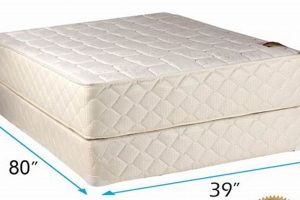
The foundation designed to support a king-size mattress is a crucial component of a complete sleep system. It typically consists of a rigid frame, often constructed of wood or metal, and may include internal springs or a solid platform. This support structure elevates the mattress, providing a stable and level surface for rest. For example, a large bed frame requires this kind of foundational support to ensure even weight distribution and prevent sagging.
Proper support enhances the longevity and comfort of the mattress, contributing to improved sleep quality. Historically, these foundations were designed primarily with springs to absorb shock and enhance mattress feel. Modern iterations, however, may prioritize firm, even support to meet the demands of contemporary mattress designs, such as memory foam or hybrid models. The appropriate foundation prevents premature wear and maximizes the lifespan of the sleeping surface.
The following discussion will delve into the various types of support structures available, their relative advantages and disadvantages, and key considerations for selecting the optimal foundation for a king-size bed. This exploration will cover factors such as frame materials, construction methods, and compatibility with different mattress types.
Tips for Selecting the Correct Support Foundation
Choosing the appropriate base for a king-size bed is crucial for both mattress longevity and sleep quality. The following tips offer guidance for making an informed decision.
Tip 1: Assess Mattress Compatibility: Determine the manufacturer’s recommendations for the mattress type. Some mattresses, such as memory foam or latex, require a solid, flat surface for optimal support and performance, while others may benefit from a spring-based foundation.
Tip 2: Consider Frame Material and Construction: Opt for a robust frame constructed of durable materials like solid wood or reinforced steel. Evaluate the joinery and overall construction quality to ensure the base can withstand the weight of the mattress and occupants without creaking or sagging.
Tip 3: Evaluate Height Considerations: The height of the foundation will influence the overall bed height. Take into account the desired bed height for ease of entry and exit, as well as personal aesthetic preferences. Measure the existing bed frame to determine the appropriate height.
Tip 4: Check for Adequate Support: Ensure the center of the mattress is adequately supported to prevent sagging. A solid platform or additional support beams may be necessary, particularly for heavier mattresses or when supporting two individuals.
Tip 5: Review Warranty Requirements: Verify that the chosen foundation meets the mattress manufacturer’s warranty requirements. Using an incompatible foundation could void the warranty in the event of mattress damage.
Tip 6: Evaluate Noise Reduction Features: Look for designs incorporating features to minimize noise and vibration during movement. Tight construction and padded components can contribute to a quieter sleep environment.
Selecting the correct support base contributes to improved sleep posture, extended mattress lifespan, and optimized overall comfort. Adhering to these guidelines will ensure the chosen foundation provides reliable and long-lasting support.
The subsequent sections will provide more in-depth analysis of various frame types and how to assess their durability and suitability for specific sleep preferences.
1. Dimensions

The dimensions of a king-size foundation are directly linked to the physical footprint and stability of the entire bed system. Standard king mattresses measure approximately 76 inches in width and 80 inches in length. Therefore, the supporting structure must conform to these dimensions to provide adequate and even support. If the foundation is undersized, the mattress will overhang, leading to uneven wear and potential damage. Conversely, an oversized base leaves the mattress unsupported, resulting in instability. A precise match between mattress and foundation dimensions is, therefore, paramount.
Deviation from standard dimensions can result in several practical problems. For instance, a foundation that is even an inch too short or narrow may cause edge sagging, making it difficult to sit comfortably on the side of the bed. Additionally, an improperly sized base can affect the overall aesthetic of the bedroom. The visual balance is disrupted if the mattress extends beyond or falls short of the support structure’s edges. Compatibility between the king mattress and box spring should be checked meticulously prior to purchase.
Ultimately, adherence to specified dimensions ensures optimal performance and longevity of both the mattress and its support system. Disregarding dimensional accuracy can lead to discomfort, structural issues, and a diminished lifespan for the entire sleeping system. Therefore, verifying compatibility with the dimensions of a standard king mattress is a critical step in selecting an appropriate support foundation.
2. Support Structure

The support structure is the foundational element of a king-size box spring, directly impacting the mattress’s performance, longevity, and the sleeper’s comfort. The structure, typically composed of a grid of wooden or metal slats, or a spring system, bears the entire weight of the mattress and its occupants. Insufficient support leads to mattress sagging, uneven weight distribution, and compromised sleep quality. A real-world example includes mattresses placed directly on the floor, which, lacking adequate airflow and support, tend to degrade more rapidly and can contribute to mold or mildew growth.
Different support structures cater to various mattress types and sleep preferences. For instance, a solid platform provides firm support, ideal for memory foam mattresses requiring a stable surface. Alternatively, spring-based foundations offer enhanced responsiveness and shock absorption, often preferred for innerspring mattresses. The choice of support structure influences the overall feel of the bed; a firmer foundation will translate to a firmer sleeping surface, while a more yielding structure will result in a softer feel. Moreover, a well-designed support structure enhances air circulation, reducing moisture build-up and promoting a healthier sleep environment.
In summation, the integrity of the support structure is paramount to the functionality and lifespan of a king-size mattress and box spring. Selecting a support structure that aligns with the mattress type and individual comfort preferences is crucial for optimizing sleep quality and preventing premature wear. Ignoring this critical aspect can lead to discomfort, compromised sleep, and ultimately, the need for premature replacement of the mattress.
3. Material Durability

The long-term performance and structural integrity of a king mattress and its supporting foundation hinge significantly on the durability of the materials used in their construction. The selection of robust and resilient materials ensures that the foundation can withstand the weight and stresses of daily use, contributing to the lifespan of both the mattress and the supporting base.
- Frame Composition
The frame, typically constructed from wood or metal, forms the primary structural component. Wood frames, often made from hardwoods like oak or maple, offer substantial strength and resistance to warping. Metal frames, especially those utilizing steel, provide exceptional durability and are less susceptible to pest infestations. The quality of the joints and fasteners used in assembling the frame is equally critical; weak joints can compromise the entire structure, leading to instability and premature failure. Frame integrity directly correlates with the box spring’s ability to provide consistent support across the mattress surface.
- Slat Material and Spacing
Slats, which span the frame and support the mattress directly, are commonly crafted from wood or metal. The type of material, dimensions, and spacing of the slats are crucial. Wider, thicker slats constructed from hardwoods offer greater load-bearing capacity. Closer spacing between slats provides more uniform support, reducing the risk of mattress sagging. Conversely, thinly constructed slats or excessive spacing can lead to uneven support and premature mattress wear, especially under heavier loads or with certain mattress types like memory foam.
- Fabric Covering and Stitching
The fabric covering the foundation serves both an aesthetic and protective function. Durable fabrics, such as tightly woven cotton blends or synthetic materials, resist tearing, staining, and abrasion. Robust stitching reinforces seams and prevents unraveling, maintaining the structural integrity of the covering. A high-quality fabric covering protects the internal components of the foundation from dust, dirt, and moisture, contributing to its longevity and preventing the development of mold or mildew.
- Spring System (If Applicable)
In traditional spring-based foundations, the quality of the springs is a key determinant of durability. High-gauge steel springs retain their resilience and support capacity over time, resisting compression and deformation. The density and arrangement of the springs influence the overall support and responsiveness of the foundation. Weak or poorly constructed springs can lead to uneven support, sagging, and a compromised sleep experience. Regular inspection and maintenance of the spring system are essential to ensure its continued performance and prevent premature failure.
The selection of durable materials across all components of a king mattress box spring is paramount to its long-term performance and contribution to a comfortable and supportive sleep environment. Prioritizing quality materials ensures that the foundation can effectively support the mattress, maintaining its shape, preventing sagging, and extending its lifespan. The initial investment in a foundation constructed from durable materials translates to long-term savings by minimizing the need for replacements and preventing premature mattress wear.
4. Height Profile

The height profile of a king mattress and its associated foundation significantly impacts accessibility, aesthetics, and overall comfort. This dimension dictates ease of entry and exit, influences the perceived size and proportion of the bed within the room, and can affect the sleeper’s spinal alignment.
- Ease of Access
The combined height of the mattress and box spring directly affects how easily one can get into and out of bed. A low profile might present challenges for individuals with mobility issues or joint pain, while an excessively high profile may require a step stool for comfortable access. The ideal height is a subjective measure, depending on individual physical characteristics and preferences. However, an ergonomic height generally allows the feet to rest comfortably on the floor when seated on the edge of the bed.
- Aesthetic Considerations
The height profile contributes significantly to the overall visual impact of the bed within the bedroom. A taller profile can create a sense of grandeur and luxury, while a lower profile may convey a more modern and minimalist aesthetic. The height of the foundation should complement the style of the bed frame and the surrounding decor. A disproportionately high or low profile can disrupt the visual harmony of the room, creating an unbalanced or awkward appearance.
- Mattress Performance and Support
While the height profile primarily addresses accessibility and aesthetics, it can indirectly influence mattress performance. A taller foundation may offer more space for internal support structures, such as springs or coils, potentially enhancing the overall support and responsiveness of the mattress. However, this relationship is not absolute, as a well-designed low-profile foundation can provide adequate support using alternative construction methods and materials. It is important to consider the support structure in conjunction with the height profile to ensure optimal performance.
- Storage Considerations
The height of the foundation can impact the available space underneath the bed. A higher profile provides more clearance for under-bed storage, allowing for the convenient storage of linens, clothing, or other items. Conversely, a low-profile foundation may offer limited or no storage space. The choice between a higher or lower profile should consider individual storage needs and the overall organization of the bedroom.
In summary, the height profile of a king mattress and box spring is a critical design element that influences accessibility, aesthetics, and functionality. Selecting an appropriate height requires careful consideration of individual physical characteristics, aesthetic preferences, mattress performance requirements, and storage needs. A well-chosen height profile enhances both the comfort and visual appeal of the bed, contributing to a more restful and enjoyable sleep experience.
5. Noise Reduction
The correlation between noise reduction and a king mattress box spring centers on the mitigation of sounds generated by movement and weight distribution. A poorly constructed or aged box spring can become a significant source of noise within the sleep environment. The materials used, construction methods, and overall design directly influence the extent to which the foundation contributes to squeaking, creaking, or rattling noises. For example, a metal frame with loosely connected components is prone to generating noise with even minimal shifts in weight. The significance of noise reduction lies in its direct impact on sleep quality; disruptive sounds can lead to fragmented sleep patterns and diminished rest. A foundation designed with noise reduction in mind, therefore, becomes a crucial element in establishing a conducive sleep environment.
Practical application of noise reduction principles in box spring design involves several key features. These include the use of tightly fitted joints, sound-dampening materials within the frame, and fabric coverings that minimize friction between components. Pocketed coil systems, often encased in fabric, reduce the likelihood of metal-on-metal contact, further limiting noise generation. In contrast, box springs relying solely on wooden slats may require additional measures, such as felt padding between the slats and frame, to prevent creaking. Regular inspection and maintenance, including tightening bolts and lubricating joints, are essential for sustaining noise reduction performance over time.
In summary, noise reduction constitutes a critical, yet often overlooked, attribute of a high-quality king mattress box spring. The interplay between material selection, construction techniques, and ongoing maintenance determines the extent to which the foundation contributes to or detracts from a quiet and restful sleep environment. Addressing noise concerns through thoughtful design and proactive maintenance ensures a more consistent and undisturbed sleep experience, aligning with the broader goal of promoting optimal health and well-being. Challenges remain in balancing noise reduction with other factors such as cost and durability, requiring ongoing innovation in box spring design and manufacturing.
6. Warranty Compliance

Warranty compliance, as it pertains to a king mattress box spring, signifies adherence to the stipulations set forth by the mattress manufacturer to maintain the validity of the mattress warranty. A direct correlation exists between the support structure used and the warrantys terms. The employment of an incompatible or substandard box spring can void the mattress warranty, rendering the consumer responsible for repair or replacement costs in the event of defects. Real-world instances include cases where a mattress manufacturer specifies the use of a solid platform box spring, and the consumer utilizes a traditional sprung foundation, subsequently leading to premature mattress sagging and a voided warranty claim. Understanding this connection is crucial for protecting the consumer’s investment.
Further analysis reveals that warranty compliance encompasses several key areas. These include ensuring the box spring meets the minimum support requirements outlined by the mattress manufacturer, such as the number and spacing of support slats. The use of a box spring that is damaged, improperly sized, or otherwise unsuitable for the mattress can also invalidate the warranty. For example, if a warranty explicitly requires center support for a king-size mattress, the absence of such support in the box spring can lead to a denial of warranty coverage should issues arise related to sagging or uneven wear. Practical applications of this understanding involve careful review of the mattress warranty terms prior to selecting a corresponding box spring and retaining documentation to demonstrate compliance.
In conclusion, warranty compliance is an integral aspect of owning a king mattress and box spring. It ensures that the mattress is properly supported, maximizing its lifespan and protecting the consumer’s investment. Challenges may arise from ambiguous warranty language or conflicting information from retailers, underscoring the importance of thorough research and due diligence. By adhering to the manufacturer’s specifications regarding the box spring, consumers can mitigate the risk of warranty voidance and ensure access to recourse in the event of mattress defects or premature failure. A comprehensive understanding of warranty requirements enhances the overall value and longevity of the sleep system.
7. Mattress Compatibility

Mattress compatibility, with respect to a king mattress box spring, dictates the synergistic relationship between the sleeping surface and its foundational support. A harmonious pairing optimizes comfort, extends mattress lifespan, and ensures warranty validity. A mismatch, conversely, can lead to premature wear, compromised support, and potential financial repercussions.
- Support Type Alignment
Different mattress types necessitate specific support characteristics. Innerspring mattresses, for instance, may benefit from the responsive give of a traditional spring box spring, while memory foam or latex mattresses often perform best on a solid, unyielding platform. Aligning the support type with the mattress composition ensures proper weight distribution and prevents localized sagging. Failure to adhere to these requirements can compromise sleep posture and accelerate mattress degradation. Cases exist where placing a memory foam mattress on a spring box spring resulted in reduced support and increased motion transfer, diminishing the intended benefits of the foam.
- Weight Capacity Considerations
King mattresses, by their nature, accommodate two individuals and possess substantial weight. The box spring must possess sufficient structural integrity to bear this load without deformation or collapse. Overloading the box spring can lead to frame failure, slat breakage, or spring fatigue, jeopardizing mattress support and potentially causing injury. Weight capacity should be a primary consideration, particularly for individuals exceeding average body weight. Real-world examples include compromised box springs displaying sagging or bowing under the weight of a king mattress and two adults, leading to discomfort and premature wear.
- Height Compatibility and Aesthetics
The combined height of the mattress and box spring influences ease of access and the overall aesthetic appeal of the bed. A box spring that is too high or too low can create an awkward or disproportionate appearance, affecting the visual harmony of the bedroom. Moreover, an inappropriate height can make it difficult to enter or exit the bed comfortably, particularly for individuals with mobility limitations. Striking a balance between functionality and aesthetics is crucial. If the mattress is too low it could be uncomfrotable to get on and off and also be less aesthetically pleasing
- Warranty Requirements Adherence
Mattress manufacturers often stipulate specific box spring requirements as a condition of warranty coverage. Deviation from these requirements can void the warranty, leaving the consumer financially responsible for repairs or replacements resulting from support-related issues. These stipulations may dictate the type of support (solid platform versus spring), the slat spacing, or the use of a matching box spring from the same manufacturer. Careful review of the warranty terms is essential. An example is not using the correct size box spring for your new king mattress.
In conclusion, mattress compatibility represents a multifaceted consideration that extends beyond mere dimensional fit. It encompasses support type alignment, weight capacity evaluation, height compatibility, aesthetic considerations, and warranty requirements adherence. A thorough assessment of these factors ensures that the king mattress box spring provides optimal support, extends mattress lifespan, enhances comfort, and safeguards the consumer’s investment. Failing to attend to mattress compatibility can result in a cascade of negative consequences, undermining the intended benefits of a quality sleep system.
Frequently Asked Questions
This section addresses common inquiries regarding the selection, function, and maintenance of king mattress box springs. The information presented aims to provide clarity and inform decision-making.
Question 1: What is the primary purpose of a king mattress box spring?
The primary purpose is to provide a stable, supportive foundation for a king-size mattress. This elevation enhances mattress longevity by distributing weight evenly, preventing sagging, and improving airflow. A box spring also contributes to the overall bed height, improving accessibility.
Question 2: Are all king mattress box springs the same size?
While standard dimensions exist (approximately 76 inches wide and 80 inches long), slight variations may occur between manufacturers. It is imperative to verify dimensions prior to purchase to ensure compatibility with the mattress and bed frame. Mismatched dimensions can lead to uneven support and potential mattress damage.
Question 3: How often should a king mattress box spring be replaced?
The lifespan of a box spring varies depending on construction quality, material durability, and usage. However, a general guideline suggests replacement every 8-10 years, or sooner if signs of damage (sagging, squeaking, broken components) are evident. A compromised box spring can negatively impact mattress performance.
Question 4: Can any type of box spring be used with a memory foam mattress?
Memory foam mattresses typically require a solid, flat support surface. While traditional spring box springs may be used, platform box springs are generally recommended to provide consistent support and prevent uneven compression. The mattress manufacturer’s recommendations should always be consulted.
Question 5: How does the height of the box spring affect the bed’s overall comfort?
The height of the box spring influences the bed’s accessibility and aesthetic appeal. A taller box spring may ease entry and exit for some individuals, while a lower profile may create a more modern appearance. Comfort is indirectly affected by ensuring the bed height aligns with individual preferences and physical needs.
Question 6: What factors should be considered when selecting a king mattress box spring for heavier individuals?
Weight capacity is a critical factor. Opt for a box spring constructed from durable materials (reinforced steel, hardwood) with robust support structures (closely spaced slats, center support). Verify the manufacturer’s weight limit and choose a model that exceeds the expected load to ensure long-term stability and prevent premature wear.
In conclusion, selecting the appropriate box spring involves careful consideration of mattress type, dimensions, material durability, and individual needs. Adherence to manufacturer recommendations and a proactive approach to maintenance can maximize the lifespan and performance of both the box spring and the mattress.
The following section provides guidance on troubleshooting common box spring issues and identifying potential problems.
Conclusion
This exploration has addressed the multifaceted aspects of a king mattress box spring, emphasizing its integral role in providing support, extending mattress lifespan, and contributing to overall sleep quality. Key considerations include dimensional accuracy, material durability, support structure integrity, height profile, noise reduction, warranty compliance, and mattress compatibility. Ignoring these factors may result in compromised comfort, premature mattress wear, and potential financial repercussions.
The selection of an appropriate king mattress box spring represents a significant investment in sleep health and long-term comfort. Careful evaluation of individual needs and adherence to manufacturer recommendations are essential for maximizing the benefits of the sleep system. Continued research and innovation in box spring design are anticipated to further enhance the performance and longevity of these foundational components, ultimately contributing to improved sleep experiences.
![Upgrade Your Sleep: Twin Mattress & Box Spring Set - [Year] | Organic & Natural Mattress Buyer’s Guide: Non-Toxic Sleep Solutions](https://mattressworldpa.com/wp-content/uploads/2025/07/th-3528-300x200.jpg "Upgrade Your Sleep: Twin Mattress & Box Spring Set - [Year] Organic & Natural Mattress Buyer’s Guide: Non-Toxic Sleep Solutions")