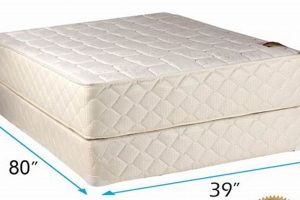
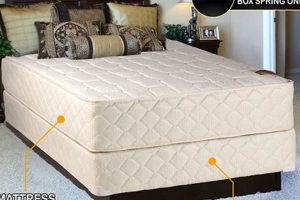
A large sleeping surface, typically 76 inches wide and 80 inches long, is supported by a foundation designed to absorb shock and provide a level base. This pairing offers substantial space for individuals or couples seeking ample room for rest and relaxation. The upper component provides the primary comfort layer, while the lower component contributes to overall support and longevity.
Optimal sleep is crucial for physical and mental well-being. A spacious and supportive sleep arrangement facilitates uninterrupted rest, reducing pressure points and minimizing motion transfer. The expansive surface area allows for greater freedom of movement during sleep, and the foundation ensures proper weight distribution, extending the lifespan of the upper component. Historically, larger sleeping arrangements have signified comfort and luxury, reflecting an emphasis on quality rest.
The following sections will delve into the specific features to consider when selecting an appropriate sleeping system of this type. Further discussion will examine the various mattress types and foundation options available, as well as factors influencing cost and maintenance. Detailed analysis will also provide information on how to choose a solution tailored to individual sleep preferences and needs.
Selection and Maintenance Guidance
Selecting and maintaining a suitable sleeping system requires careful consideration of several factors to ensure optimal comfort, support, and longevity.
Tip 1: Assess Individual Sleep Needs: Prioritize factors such as sleeping position, body weight, and any pre-existing medical conditions when evaluating the firmness and support required. Individuals experiencing back pain, for instance, may benefit from a firmer surface.
Tip 2: Evaluate Mattress Type: Consider innerspring, memory foam, latex, and hybrid options. Each type offers distinct advantages regarding pressure relief, temperature regulation, and motion isolation. Research specific material properties before purchase.
Tip 3: Match Foundation to Mattress: Ensure compatibility between the chosen mattress and the foundation. Some mattresses require specific foundation types to maintain warranty validity and provide adequate support. A solid or closely-spaced slatted foundation is generally recommended.
Tip 4: Measure Available Space: Accurately measure the dimensions of the bedroom to ensure the selected sleeping system fits comfortably without obstructing movement or access to other furniture.
Tip 5: Check Warranty and Return Policies: Review the manufacturer’s warranty and retailer’s return policy before making a purchase. Understanding the terms and conditions can mitigate potential financial risks associated with unsatisfactory products.
Tip 6: Invest in a Mattress Protector: Utilize a waterproof mattress protector to safeguard against spills, stains, and allergens. Regular cleaning of the protector can significantly extend the lifespan of the mattress.
Tip 7: Rotate the Mattress Regularly: Rotate the mattress every three to six months to promote even wear and prevent premature sagging. Some mattresses can also be flipped, if designed for double-sided use.
Adhering to these guidelines contributes to a more informed purchasing decision and ensures the long-term performance and comfort of the chosen sleeping system.
The following section will provide further insights into common issues encountered with such a system, as well as troubleshooting and repair strategies.
1. Dimensions

The dimensions of the sleeping surface and its foundation are primary considerations. A standard design measures approximately 76 inches in width and 80 inches in length. These measurements dictate the physical space the unit occupies within a bedroom. Insufficient room dimensions can render maneuvering within the room difficult and aesthetically unappealing. Conversely, an overly spacious room might benefit from the visual anchoring provided by a substantial bed frame and sleeping arrangement. Therefore, room size directly influences the appropriateness of a “king bed mattress and box spring.”
Practical implications of dimensional awareness include pre-purchase measurement of both the bedroom and the intended path of delivery. This mitigates the risk of failing to navigate hallways or doorways during installation. Furthermore, the dimensions determine the compatibility with existing bedroom furniture. For example, nightstands must be positioned within comfortable reach of the sleeper, requiring careful consideration of overall width. Another case is that low ceiling may feel uncomfortable.
Incorrectly assessing the dimensional requirements can lead to logistical challenges, increased costs associated with returns or modifications, and ultimately, a compromised sleep environment. Thus, accurately determining the available space and understanding the implications of dimensions on both functionality and aesthetics is crucial before acquiring a sleeping surface of this scale.
2. Support Structure

The support structure is integral to the functionality and longevity of a king-sized sleeping arrangement. It directly influences the comfort and posture of the user. An insufficient support structure, for example, leads to sagging and uneven weight distribution, resulting in discomfort and potentially exacerbating existing back problems. The foundation, typically a box spring or platform, provides this essential support. Its role is to absorb shock, distribute weight evenly, and prevent premature wear of the mattress. Without adequate support, the lifespan of even the highest quality mattress is significantly reduced. For instance, a memory foam mattress placed directly on the floor lacks proper ventilation and support, leading to moisture accumulation, mold growth, and rapid deterioration.
The type of support structure chosen impacts the overall feel of the bed. A traditional box spring offers a degree of “give,” creating a softer feel, while a platform bed provides a firmer, more stable surface. Individuals with higher body weight often benefit from the enhanced support of a platform bed or a reinforced box spring. Furthermore, the design of the foundation influences the height of the bed, impacting accessibility for individuals with mobility limitations. For example, elderly individuals or those recovering from surgery might require a lower bed profile for ease of getting in and out. Different brands and models will provide various support structures as part of their production and will require different budgets to purchase.
In summary, the support structure is a crucial component of a large sleeping system, directly affecting comfort, longevity, and postural health. Proper selection and maintenance of the foundation are essential for maximizing the benefits of the mattress and ensuring a restful sleep experience. Ignoring the importance of the support structure can lead to premature mattress failure, discomfort, and potential health issues, ultimately diminishing the value of the investment.
3. Material Composition

Material composition is a critical determinant of the overall performance, comfort, and longevity of any “king bed mattress and box spring” system. The selection of materials directly affects factors such as support, temperature regulation, durability, and potential allergen exposure, thereby influencing the sleep experience and long-term value.
- Mattress Core Materials
The core of the mattress often consists of innerspring coils, memory foam, latex, or a hybrid combination of these. Innerspring systems provide traditional support and airflow, while memory foam excels in conforming to the body and reducing pressure points. Latex offers a balance of support and responsiveness, and hybrid models aim to combine the benefits of multiple materials. The choice of core material impacts the firmness, support level, and motion isolation characteristics of the mattress. For example, a high-density memory foam core will generally provide more significant motion isolation than a traditional innerspring system, which is crucial for couples.
- Comfort Layer Materials
The comfort layer, located above the core, is typically composed of materials such as memory foam, latex, polyfoam, or natural fibers like cotton or wool. These materials directly impact the initial feel and comfort of the mattress. Memory foam provides a contouring sensation, while latex offers a more resilient and responsive feel. Natural fibers can enhance breathability and moisture-wicking properties, contributing to temperature regulation. The density and thickness of the comfort layer influence its ability to alleviate pressure points and provide cushioning. Consider, for example, a thick layer of gel-infused memory foam designed to dissipate heat and enhance cooling.
- Foundation Materials
The foundation, traditionally a box spring, may consist of wood and metal, or may be replaced by a solid platform or adjustable base. The materials used in the foundation are essential for providing stable support and preventing premature mattress sagging. Traditional box springs provide some degree of flexibility, while solid platforms offer a firmer, more rigid support. Adjustable bases allow for customizable positioning, enhancing comfort and potentially alleviating certain medical conditions. The quality and durability of the foundation materials directly impact its ability to withstand weight and maintain structural integrity over time. For example, a cheaply constructed box spring may develop squeaks and creaks, compromising the sleep experience.
- Cover Materials
The mattress cover, often made of cotton, polyester, or a blend of both, serves as the outermost layer and protects the inner materials. The cover can also impact breathability and temperature regulation. Some covers incorporate specialized treatments, such as antimicrobial or hypoallergenic finishes, to enhance hygiene and reduce allergen exposure. The quality of the cover material influences its durability and resistance to wear and tear. For instance, a tightly woven, high-thread-count cotton cover will generally be more durable and resistant to pilling than a loosely woven polyester cover.
Ultimately, the material composition of a “king bed mattress and box spring” system directly determines its suitability for individual sleep preferences and needs. A thorough understanding of the properties and characteristics of various materials is essential for making an informed purchase decision that maximizes comfort, support, and long-term value. Failure to consider material composition can result in discomfort, premature wear, and potential health concerns, underscoring the importance of careful evaluation.
4. Motion Isolation
Motion isolation, a crucial characteristic of a sleep system, directly impacts the quality of rest, particularly for co-sleepers. In a king-sized configuration, the larger surface area inherently amplifies the potential for motion transfer. Therefore, the ability of the mattress to minimize the propagation of movement from one side to the other becomes paramount. Effective motion isolation ensures that disturbances caused by one individual’s movements, such as getting in or out of bed, or simply tossing and turning, do not significantly affect the other sleeper. This is achieved through specific mattress construction techniques and material choices that absorb and dampen vibrations, preventing them from spreading across the surface.
The effectiveness of motion isolation in a “king bed mattress and box spring” arrangement hinges on factors such as mattress type and internal structure. Memory foam and latex mattresses, known for their high density and conforming properties, generally excel at minimizing motion transfer. Individually pocketed coils, as opposed to interconnected spring systems, further contribute to isolation by allowing each spring to react independently to pressure. Conversely, traditional innerspring mattresses often exhibit greater motion transfer due to the interconnected nature of their coils. The selection of a foundation also plays a role; a solid platform base typically enhances motion isolation compared to a traditional box spring, which can amplify vibrations.
In conclusion, motion isolation is a key consideration when choosing a “king bed mattress and box spring,” especially for couples seeking undisturbed sleep. The appropriate mattress type and foundation can significantly mitigate motion transfer, leading to improved sleep quality and reduced partner disturbance. Understanding the principles of motion isolation and the factors that influence it allows for a more informed purchasing decision, ultimately contributing to a more restful and harmonious sleep environment.
5. Durability

The correlation between durability and a “king bed mattress and box spring” set directly affects its long-term value and return on investment. Durability, in this context, refers to the capacity of the system to withstand prolonged use and maintain its structural integrity and performance characteristics over an extended period. The materials used in construction, the quality of workmanship, and the design of both the mattress and the foundation critically impact its ability to resist sagging, deformation, and degradation. A less durable system will exhibit premature wear, necessitating replacement sooner than a higher-quality, more durable alternative, leading to increased costs over time. For example, a mattress with low-density foam layers may initially feel comfortable but will compress and lose support relatively quickly, resulting in discomfort and compromised sleep quality.
The foundation’s role in durability is equally significant. A poorly constructed foundation fails to provide adequate support, placing undue stress on the mattress and accelerating its deterioration. A real-world example is a traditional box spring with insufficient or poorly spaced support slats. Over time, these slats can weaken or break, causing the mattress to sag in specific areas, leading to uneven weight distribution and ultimately reducing the mattress’s lifespan. The significance of understanding this connection lies in making informed purchasing decisions. Selecting a system constructed with high-quality materials, reinforced stitching, and a robust foundation ensures greater longevity and sustained performance.
In summary, durability is not merely a desirable attribute but a fundamental requirement for a worthwhile “king bed mattress and box spring” investment. A durable system provides consistent support, maintains its comfort level, and resists premature wear, offering long-term value and minimizing the need for frequent replacements. Challenges in assessing durability include the reliance on manufacturer claims and the difficulty in predicting long-term performance. However, careful research, consideration of material specifications, and evaluation of warranty terms can mitigate these challenges and contribute to selecting a system that delivers lasting comfort and support.
6. Cost Analysis

The economic considerations surrounding the purchase of a “king bed mattress and box spring” extend beyond the initial price tag. A comprehensive cost analysis requires evaluating both immediate expenses and long-term implications to determine the true value proposition. Factors such as material quality, durability, warranty terms, and potential health benefits all contribute to the overall cost equation.
- Initial Purchase Price
The upfront cost represents the most obvious component of the total expenditure. However, it is crucial to recognize that price variations often reflect differences in material quality, construction techniques, and brand reputation. A lower initial price may indicate compromised durability or reduced comfort, leading to earlier replacement and negating any initial savings. For instance, a budget-friendly mattress using low-density foam might cost significantly less initially but could sag and lose support within a few years, necessitating a replacement.
- Lifespan and Replacement Costs
The expected lifespan of the “king bed mattress and box spring” is a critical factor in determining its cost-effectiveness. A higher-quality system, although initially more expensive, can provide superior support and comfort for a longer period, thereby delaying the need for replacement. Estimating replacement costs involves considering the projected lifespan of the system and the anticipated future market prices. Failure to account for replacement costs can significantly underestimate the long-term financial burden. For example, a mattress expected to last ten years versus one needing replacement every five years will have drastically different long-term costs.
- Maintenance and Upkeep
Ongoing maintenance expenses, although often overlooked, contribute to the total cost. These include the price of mattress protectors, cleaning supplies, and potential repair services. Investing in a high-quality mattress protector can prevent staining and damage, extending the lifespan of the mattress and reducing the need for professional cleaning. Similarly, adhering to recommended rotation and flipping schedules can help distribute wear evenly and prolong the system’s performance. Neglecting maintenance can lead to premature degradation and increased repair or replacement costs.
- Health and Wellness Implications
The potential health benefits associated with a supportive and comfortable sleep surface represent an indirect but significant cost consideration. A properly designed “king bed mattress and box spring” can alleviate back pain, improve sleep quality, and reduce stress levels. Conversely, a poorly designed system can exacerbate existing health problems or contribute to new ones, leading to increased medical expenses and reduced productivity. While quantifying these health-related costs can be challenging, they should not be disregarded when evaluating the overall value of a sleep system. Investing in a high-quality mattress may ultimately result in reduced healthcare costs and improved overall well-being.
In conclusion, a thorough cost analysis of a “king bed mattress and box spring” necessitates considering not only the initial purchase price but also the long-term costs associated with lifespan, maintenance, and potential health implications. By evaluating these factors holistically, consumers can make informed decisions that maximize value and ensure a restful and supportive sleep environment for years to come. Comparison of warranty lengths, consumer reviews on wear and tear, and the expected benefits of materials are essential to this process.
Frequently Asked Questions
The following section addresses common inquiries and misconceptions regarding the selection, maintenance, and performance of a sleeping surface of this size and configuration. The information presented aims to provide clarity and promote informed decision-making.
Question 1: What are the standard dimensions of a system of this size?
A typical “king bed mattress and box spring” measures approximately 76 inches in width and 80 inches in length. These dimensions are consistent across most manufacturers; however, slight variations may occur. It is advisable to confirm exact measurements prior to purchase, particularly when considering space constraints or compatibility with existing bed frames.
Question 2: What are the key differences between a box spring and a platform foundation?
A box spring, traditionally constructed with coils and a fabric covering, provides a degree of flex and shock absorption. A platform foundation, typically made of solid wood or metal, offers a firmer, more rigid support base. The choice between the two depends on individual preferences and mattress type. Some mattresses, particularly memory foam models, perform optimally on a solid platform for maximum support and durability.
Question 3: How often should a mattress be rotated or flipped?
The recommended frequency for rotation or flipping depends on the mattress type and manufacturer guidelines. Generally, rotating the mattress 180 degrees every three to six months promotes even wear and prevents premature sagging. Flipping the mattress, if designed for double-sided use, offers similar benefits. Consult the manufacturer’s recommendations for specific instructions.
Question 4: How can motion transfer be minimized in a sleep system of this kind?
Motion transfer can be minimized by selecting a mattress with motion-isolating properties, such as memory foam or individually pocketed coils. These materials absorb and dampen vibrations, preventing them from spreading across the surface. A solid platform foundation can also enhance motion isolation compared to a traditional box spring. Considering these factors is particularly important for co-sleepers.
Question 5: What factors should be considered when determining the appropriate firmness level?
The ideal firmness level depends on individual sleep preferences, body weight, and sleeping position. Side sleepers generally benefit from a softer mattress that conforms to their body’s contours, while back and stomach sleepers often prefer a firmer surface for optimal spinal alignment. Individuals with higher body weights may also require a firmer mattress for adequate support. Consider these factors when selecting the appropriate firmness level.
Question 6: How does the material composition affect the overall performance and longevity?
The materials used in the mattress and foundation significantly impact its performance, durability, and potential health effects. High-density foams and quality coil systems offer superior support and resistance to sagging. Natural materials, such as latex and cotton, enhance breathability and reduce allergen exposure. The selection of high-quality materials contributes to a longer lifespan and a more comfortable sleep experience.
In summary, understanding these frequently asked questions helps to clarify the selection and maintenance process of a “king bed mattress and box spring” ensuring the highest levels of comfort and rest.
The next section will explore specific product recommendations and comparisons based on different sleep needs and budget considerations.
Conclusion
The preceding discussion has explored the critical attributes of a “king bed mattress and box spring” system. Key considerations include dimensional compatibility, support structure integrity, material composition, motion isolation capabilities, durability factors, and comprehensive cost analysis. Optimal selection necessitates a thorough understanding of these elements to align with individual sleep preferences and long-term budgetary constraints.
Ultimately, the acquisition of a suitable “king bed mattress and box spring” represents a significant investment in personal well-being. Rigorous evaluation of available options, coupled with adherence to recommended maintenance practices, will maximize the system’s lifespan and ensure a consistently restful sleep experience. Continued advancements in sleep technology promise further enhancements in comfort and support; therefore, ongoing research and adaptation to emerging innovations are advisable.
![Upgrade Your Sleep: Twin Mattress & Box Spring Set - [Year] | Organic & Natural Mattress Buyer’s Guide: Non-Toxic Sleep Solutions](https://mattressworldpa.com/wp-content/uploads/2025/07/th-3528-300x200.jpg "Upgrade Your Sleep: Twin Mattress & Box Spring Set - [Year] Organic & Natural Mattress Buyer’s Guide: Non-Toxic Sleep Solutions")