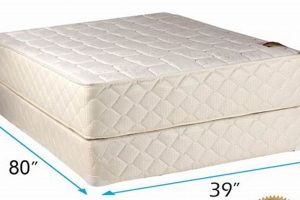
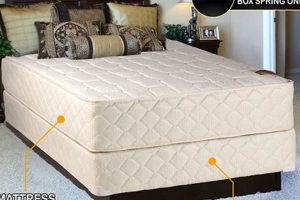
The foundation that supports a large-format sleep surface typically consists of a rigid frame containing springs or a network of supportive materials. This component elevates the mattress, providing a stable and level platform. An example of this is the foundational support system designed to accommodate a bed measuring approximately 76 inches wide and 80 inches long.
Such a foundation contributes significantly to the longevity and comfort of the corresponding mattress. It absorbs shock and reduces wear, preventing sagging and maintaining the mattress’s structural integrity over time. Historically, these supports were primarily spring-based, offering a degree of flexibility and bounce. Modern variations incorporate solid platforms or slatted designs, providing firmer support and catering to evolving preferences.
The following sections will explore the different types of these foundational supports, factors to consider when selecting one, and how they interface with various bed frames. A discussion of alternatives and maintenance tips will also be included.
Selecting a King Size Mattress Foundation
Choosing the appropriate support system for a king size mattress is an investment in sleep quality and mattress longevity. Careful consideration of various factors will ensure optimal performance and satisfaction.
Tip 1: Assess Mattress Compatibility: Verify that the foundation is designed for the specific type of mattress. Innerspring, memory foam, and hybrid mattresses may require different levels of support.
Tip 2: Consider Frame Compatibility: Ensure the chosen foundation integrates seamlessly with the existing bed frame. Dimensions and attachment mechanisms should be verified.
Tip 3: Evaluate Support Type: Foundations are available in various styles, including traditional spring, solid platform, and slatted designs. The optimal choice depends on desired firmness and support characteristics.
Tip 4: Examine Material Quality: Durable materials and construction are essential for long-term performance. Look for sturdy frames, reinforced corners, and high-quality fabrics.
Tip 5: Measure Available Space: King size mattresses require ample space. Verify that the bedroom can comfortably accommodate both the mattress and foundation dimensions.
Tip 6: Research Warranty Information: Review the warranty terms for the foundation. A comprehensive warranty provides assurance of quality and protection against manufacturing defects.
Tip 7: Take into account the weight capacity: King-size mattresses plus occupants is heavy. Make sure the foundation is ready for it.
By carefully evaluating these factors, an informed decision can be made regarding the selection of a king size mattress foundation, promoting optimal sleep and extending the lifespan of the mattress.
The next section will address common alternatives to traditional foundations and offer advice on proper maintenance to preserve the integrity of the chosen support system.
1. Dimensions

The dimensions of a foundation for a king size mattress are critical to its proper function and the overall sleeping experience. The standard measurements for a king size mattress are approximately 76 inches in width and 80 inches in length. A foundation deviating significantly from these dimensions can lead to inadequate support, premature mattress wear, and potential safety hazards. For instance, an undersized foundation may cause the mattress to overhang, creating uneven pressure points and compromising edge support. Conversely, an oversized foundation may leave gaps, leading to instability and potential shifting of the mattress. The correlation between appropriate dimensions and the longevity of the mattress is a directly causal one: precise conformity to the specified measurements ensures uniform weight distribution, preventing localized stress and maximizing the lifespan of the sleep surface.
Real-world examples illustrate the importance of accurate dimensions. A foundation that is even a fraction of an inch too narrow can cause the mattress to bow slightly in the center, diminishing its ability to provide proper spinal alignment. This misalignment can result in discomfort and potential back pain over time. Similarly, a foundation that is too long can create a gap at the head or foot of the bed, which is not only aesthetically unappealing but can also become a collection point for dust and debris. Manufacturers typically provide precise specifications for their foundations, and consumers are advised to verify these dimensions against the mattress specifications before purchase. Failure to do so may void warranties or result in a compromised sleep surface.
In summary, the dimensions of a foundation for a king size mattress are not merely a matter of convenience but are fundamentally linked to the support, comfort, and longevity of the sleep system. Precise adherence to standardized measurements ensures optimal weight distribution, prevents premature wear, and enhances overall sleep quality. Challenges may arise when matching older mattresses with modern foundations or when dealing with non-standard “California King” dimensions, necessitating careful measurement and verification. Correct dimensions will make the bed more comfortable and stable.
2. Support Structure

The support structure is the defining element of any box spring for a king size mattress. It determines the foundation’s ability to evenly distribute weight, absorb shock, and maintain the mattress’s shape over time. A poorly designed or constructed support structure can lead to premature mattress sagging, compromised comfort, and reduced lifespan. Conversely, a robust and well-engineered structure ensures optimal performance and longevity of the entire sleep system. Variations in support structure include traditional coil springs, interconnected metal grids, and solid or slatted platforms, each offering distinct levels of firmness, flexibility, and durability. The choice of support structure directly affects the feel of the mattress and its ability to conform to the sleeper’s body.
For example, a box spring with a traditional coil spring structure may provide a bouncier feel and better airflow compared to a solid platform. However, coil springs can be prone to sagging over time, particularly under concentrated weight. A platform support structure, while offering firmer support, may restrict airflow and retain more heat. Slatted platforms offer a compromise, providing firm support while allowing for some ventilation. Real-world application dictates that individuals with back pain often benefit from the firmer support offered by platform or slatted foundations, while those preferring a softer feel may opt for a coil spring box spring. The compatibility of the support structure with the specific mattress type is also critical. Memory foam mattresses, for example, often perform best with a solid or slatted platform to prevent sagging and ensure proper support.
In summary, the support structure is an integral component of a box spring for a king size mattress, directly influencing its performance, durability, and compatibility with the mattress. Selection should be based on individual preferences, mattress type, and any specific health considerations. A thorough understanding of the different types of support structures and their respective benefits and drawbacks is essential for making an informed purchase decision. Challenges may arise when assessing the quality and durability of internal components, necessitating careful inspection and consideration of warranty information.
3. Frame Compatibility

Frame compatibility is a non-negotiable aspect of integrating a box spring with a king size mattress into a bed frame. Incompatibility can lead to structural instability, premature wear, and potential safety hazards. The box spring must fit securely within the bed frame to provide adequate support to the mattress, ensuring uniform weight distribution. A lack of proper alignment can result in uneven support, causing the mattress to sag in certain areas and potentially leading to discomfort or back pain for the user. Real-life examples demonstrate instances where an ill-fitting box spring shifts within the frame, generating noise and disrupting sleep. Moreover, an unsupported or poorly supported mattress can deteriorate faster, negating the benefits of even the highest-quality sleep surface. Therefore, meticulous attention to frame compatibility is paramount when selecting and installing a box spring.
Practical implications of frame incompatibility extend beyond mere discomfort or mattress degradation. An unstable box spring can pose a safety risk, particularly if the frame collapses or the mattress shifts unexpectedly. This is especially relevant for individuals with mobility issues or those who share the bed with children. Furthermore, many mattress warranties are contingent on the use of a compatible support system, meaning that using an incompatible frame and box spring can void the warranty. Frame compatibility is not merely about physical dimensions; it also involves considering the type of frame and the support system it offers. Some frames are designed to accommodate a box spring, while others are intended for use with platform beds or adjustable bases. Attempting to use a box spring with an incompatible frame can compromise the intended functionality of both components.
In summary, frame compatibility is an essential prerequisite for the safe, effective, and long-lasting use of a box spring with a king size mattress. Ensuring a proper fit and appropriate support not only enhances comfort and sleep quality but also protects the investment in the mattress and promotes overall safety. Potential challenges in achieving compatibility may arise when dealing with non-standard frame sizes or when replacing an existing box spring. The information presented underscores the importance of thorough measurement, careful consideration of frame type, and adherence to manufacturer recommendations to guarantee a secure and functional sleep environment.
4. Material Quality

The material quality of a box spring for a king size mattress directly correlates with its durability, support capability, and overall lifespan. Inferior materials are prone to premature wear, sagging, and structural failure, compromising the mattress’s performance and potentially voiding its warranty. High-quality materials, conversely, ensure consistent support, resist deformation, and contribute to a stable and comfortable sleep surface. The frame, springs (if applicable), and fabric covering all influence the box spring’s ability to withstand prolonged use and maintain its structural integrity. For example, a frame constructed from solid hardwood or reinforced steel provides a more robust and stable foundation compared to one made from lower-grade wood or thin-gauge metal. Similarly, coil springs fabricated from high-carbon steel offer greater resistance to deformation and sagging than those made from less resilient materials. The choice of fabric covering also impacts durability, with tightly woven, stain-resistant materials providing better protection against wear and tear.
Practical implications of material quality extend beyond immediate comfort and support. A box spring constructed with substandard materials may require premature replacement, resulting in additional expenses and inconvenience. Moreover, a failing box spring can damage the mattress, necessitating further costs for repair or replacement. Conversely, investing in a box spring made with high-quality materials can provide years of reliable service, protecting the mattress and ensuring a consistent sleep experience. Real-world examples demonstrate that box springs with robust frames, durable springs, and high-quality fabric coverings are less likely to develop sags, squeaks, or other performance issues over time. These issues not only compromise comfort but can also indicate underlying structural problems that could lead to eventual failure.
In summary, material quality is a critical determinant of the performance and longevity of a box spring for a king size mattress. The selection of appropriate materials directly impacts its ability to provide consistent support, resist wear and tear, and protect the mattress. Challenges may arise when assessing the quality of internal components, necessitating careful inspection, review of product specifications, and consideration of manufacturer warranties. The understanding of material quality is essential for making an informed purchase decision and ensuring a durable, comfortable, and supportive sleep environment.
5. Noise Reduction
Noise reduction is a significant consideration in the selection and performance of a box spring for a king size mattress. Unwanted sounds emanating from the foundation can disrupt sleep and diminish the overall comfort of the sleep system.
- Coil Spring Design
Traditional box springs with coil spring systems are prone to producing noise due to the friction between the coils and the surrounding frame. Over time, the springs can lose their tension, exacerbating this issue. Examples include creaking or squeaking sounds when weight is applied or shifted on the mattress. The audible distractions negatively impact sleep quality.
- Frame Construction and Materials
The materials and construction methods used in the box spring frame can significantly affect noise levels. Frames constructed from low-quality wood or thin metal are more likely to creak and groan under the weight of the mattress and occupants. Reinforcements and sturdy construction minimize movement within the frame, thus decreasing noise. This is particularly important for king-size mattresses, which distribute weight over a larger area.
- Fabric Covering and Padding
The fabric covering and padding layers play a role in dampening noise generated by internal components. Thicker, higher-density materials can absorb vibrations and reduce the transmission of sound. Thin or worn fabric offers minimal noise reduction and can even amplify sounds from the springs or frame.
- Joint Stability and Fasteners
Loose joints and inadequate fasteners contribute to noise generation in box springs. Over time, screws can loosen, and joints can shift, resulting in creaking and rattling sounds. Securely fastened and reinforced joints minimize movement and reduce the likelihood of noise. Regular inspection and tightening of fasteners can help maintain stability and quiet operation.
These facets of noise reduction are crucial in assessing the overall quality and suitability of a box spring for a king size mattress. A well-designed and constructed box spring minimizes unwanted sounds, promoting a more restful and undisturbed sleep environment.
6. Height Profile

The height profile of a box spring for a king size mattress directly influences bed accessibility, aesthetics, and overall comfort. A disproportionate height can lead to challenges for individuals with mobility issues, affecting ease of entry and exit from the bed. Furthermore, the height profile impacts the visual balance of the bedroom, potentially disrupting the desired aesthetic. The selection of an appropriate height profile is therefore critical in ensuring both functionality and visual harmony. For instance, a low-profile box spring may be preferred in contemporary settings to maintain a sleek, minimalist look, while a higher profile can create a more traditional and substantial presence.
Considerations regarding height profile extend to practical applications beyond aesthetics. Individuals with pre-existing orthopedic conditions may find it difficult to manage a bed that is excessively high or low. A bed that is too low may necessitate excessive bending, while one that is too high may require undue effort to climb into. The height profile must also be considered in relation to other bedroom furniture, such as nightstands and dressers. An improperly proportioned bed can create visual disharmony and reduce the functionality of the surrounding space. Real-world scenarios illustrate these points: a taller individual may find a higher profile box spring more comfortable, while someone with shorter stature may prefer a lower profile for ease of access. Similarly, the height of the headboard must be considered to ensure visual balance and prevent it from being obscured by the mattress.
In summary, the height profile of a box spring is not merely a cosmetic consideration but a functional element that affects accessibility, comfort, and visual integration within the bedroom. Challenges may arise when attempting to balance aesthetic preferences with practical needs, particularly for individuals with specific physical requirements. A thorough understanding of the relationship between height profile and overall bed functionality is crucial for making an informed decision and creating a comfortable and visually harmonious sleep environment. Ultimately, the optimal height profile aligns with individual needs and aesthetic preferences.
Frequently Asked Questions
The following addresses common inquiries regarding the selection, function, and maintenance of a support system for king-size mattresses. It provides essential insights to inform purchasing decisions and ensure optimal performance.
Question 1: How does a foundation contribute to the longevity of a king-size mattress?
A foundation provides crucial support and absorbs impact, distributing weight evenly across the mattress surface. This prevents localized sagging and premature wear, extending the mattress lifespan.
Question 2: What are the primary differences between coil spring, platform, and slatted foundations?
Coil spring foundations offer flexibility and bounce, platform foundations provide firm support, and slatted foundations balance support with ventilation. The optimal choice depends on mattress type and preferred firmness.
Question 3: How do I ensure that the foundation is compatible with the bed frame?
Verify that the dimensions of the foundation precisely match the interior dimensions of the bed frame. Ensure that attachment mechanisms align and the frame provides adequate support.
Question 4: What material characteristics indicate a high-quality king-size mattress foundation?
Look for a frame constructed from solid hardwood or reinforced steel, durable springs (if applicable), and a tightly woven, stain-resistant fabric covering.
Question 5: How can noise from a coil spring foundation be minimized?
Select a foundation with tightly coiled springs, reinforced joints, and ample padding to dampen vibrations. Regularly inspect and tighten fasteners to prevent loosening.
Question 6: How does the height profile affect overall bed functionality?
The height profile influences ease of access, visual aesthetics, and compatibility with other bedroom furniture. Select a height that promotes comfort and visual balance.
Proper understanding of these aspects, one may achieve better sleep.
The discussion now transitions to explore the specific features and specifications that define the modern design of king-size foundation.
Conclusion
This exploration of the box spring for king size mattress has underscored its importance as a foundational element of the sleep system. Key considerations, including dimensions, support structure, material quality, frame compatibility, noise reduction, and height profile, directly impact mattress longevity, user comfort, and overall sleep quality. Careful evaluation of these factors is paramount in selecting an appropriate foundation.
The informed selection of a box spring represents a significant investment in long-term sleep health and mattress preservation. Continued advancements in materials and construction techniques promise further refinements in support, durability, and noise reduction, underscoring the ongoing relevance of this seemingly basic component. Prioritizing quality and compatibility remains essential for maximizing the benefits of a king-size mattress and achieving optimal rest.
![Upgrade Your Sleep: Twin Mattress & Box Spring Set - [Year] | Organic & Natural Mattress Buyer’s Guide: Non-Toxic Sleep Solutions](https://mattressworldpa.com/wp-content/uploads/2025/07/th-3528-300x200.jpg "Upgrade Your Sleep: Twin Mattress & Box Spring Set - [Year] Organic & Natural Mattress Buyer’s Guide: Non-Toxic Sleep Solutions")