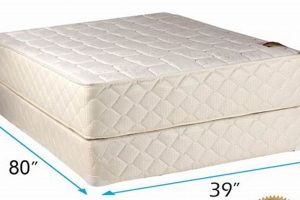
A specialized container designed for the secure transport of a bed is a key component in the logistics of furniture retail. These receptacles, typically constructed from reinforced corrugated cardboard, are engineered to protect their contents from damage during handling and transit. As an example, a compressed foam mattress might be encased within a heavy-duty container before being shipped to a customer’s residence.
The utilization of protective encasements offers significant advantages, including reduced risks of tears, punctures, and other superficial harm to the product. This packaging also streamlines the delivery process, enabling easier loading and unloading by logistics personnel. Historically, the safe movement of large, unwieldy items posed a challenge, which this innovation directly addresses, leading to reduced product returns and enhanced customer satisfaction.
The subsequent sections of this article will delve into the specific materials used in manufacturing these containers, explore various size and construction considerations, and examine optimal packing and sealing techniques for ensuring product integrity throughout the shipping journey. This also includes analysis of sustainable material options and recycling considerations.
Essential Considerations for Mattress Packaging
The following recommendations are designed to ensure the safe and efficient transit of mattresses, minimizing the potential for damage and optimizing logistics.
Tip 1: Select Appropriate Dimensions: Prior to encasing the mattress, accurately measure its dimensions. The selected container must accommodate the item without excessive empty space, minimizing internal shifting during conveyance.
Tip 2: Employ High-Quality Materials: Opt for heavy-duty corrugated cardboard engineered for substantial weight-bearing capacity. Reinforcement with multiple layers or specialized coatings enhances protection against external pressures and potential environmental hazards.
Tip 3: Secure Internal Padding: Incorporate internal padding materials, such as foam inserts or bubble wrap, to protect vulnerable corners and edges. This measure significantly reduces the risk of abrasion or impact damage during handling.
Tip 4: Utilize Proper Sealing Techniques: Employ industrial-grade packing tape to create a secure and tamper-evident seal. Overlap tape seams by at least two inches and reinforce all edges to prevent separation during conveyance.
Tip 5: Clearly Label the Package: Apply clear and conspicuous labeling, including handling instructions (e.g., “Fragile,” “Handle with Care”) and the destination address. Adherence to standardized labeling protocols facilitates efficient sorting and delivery.
Tip 6: Consider Compression Techniques: For compatible mattresses, explore compression and rolling methods to minimize size and volume. This reduces the container dimensions required and potentially lowers shipping costs. Ensure compression does not compromise the mattress’s integrity.
Tip 7: Protect Against Moisture: Consider using a moisture barrier, such as a plastic liner, inside the container, particularly when shipping to humid climates or during seasons with high precipitation. This prevents water damage that could compromise the mattress.
Adherence to these guidelines minimizes the likelihood of damage, contributing to reduced return rates and heightened customer satisfaction. The careful selection and preparation of the protective encasement are paramount to successful mattress delivery.
The subsequent sections will examine the environmental considerations surrounding packaging materials and the potential for sustainable options.
1. Dimensions

The accurate determination of internal measurements constitutes a foundational aspect of efficient packaging and shipment. The bed’s overall length, width, and thickness must be precisely accounted for when selecting or designing the surrounding protective structure. An excessively large container invites internal movement during transit, increasing the risk of abrasion, compression, and other forms of damage. Conversely, an undersized box may necessitate forceful compression of the mattress, potentially compromising its structural integrity and negating intended comfort characteristics. For example, a queen-size mattress, which typically measures 60 inches wide by 80 inches long, requires a container with corresponding internal dimensions plus allowances for protective padding. This careful calculation mitigates potential transit-related issues.
Furthermore, the external measurements directly impact shipping costs and handling efficiency. Carriers often impose surcharges for oversized or unusually shaped packages. By optimizing the containers dimensions to closely match the mattress while adhering to carrier guidelines, unnecessary expenses can be avoided. Moreover, appropriately sized units are easier for logistics personnel to maneuver, leading to faster loading, unloading, and delivery times. A real-world instance might involve a company redesigning a delivery container to eliminate several inches of excess material, resulting in a significant reduction in its annual shipping budget.
In summary, the correlation between accurate internal size calculation and the exterior dimensions of the protective encasement is critical. Careful consideration of these parameters offers both protective benefits and contributes to a reduction in overall costs. Adhering to precise guidelines relating to the outer limits of the product not only guarantees its protection during transportation but also enhances the operational efficiency and economic viability of the process.
2. Material Strength

The structural integrity of a container intended for mattress transport directly correlates with the protection afforded to its contents. The mattress is susceptible to damage from external forces during shipping, including compression, impact, and puncture. The composition of the material, typically corrugated cardboard, must exhibit sufficient resistance to these forces to prevent product degradation. Insufficient resistance results in compromised mattress integrity and potential customer dissatisfaction. An illustrative example involves a box constructed from single-wall cardboard collapsing under the weight of stacked packages, leading to irreversible damage to the mattress inside.
The selection of high-strength corrugated cardboard, often multi-layered with enhanced density, mitigates these risks. Burst strength, edge crush resistance, and puncture resistance are key performance indicators that dictate the suitability of the material. These metrics directly impact the box’s ability to withstand the rigors of the shipping environment. For instance, containers designed for international shipping often incorporate wax coatings or other moisture-resistant treatments to maintain structural integrity when exposed to humid conditions, preventing weakening of the cardboard fibers.
Ultimately, the practical significance of understanding material strength lies in minimizing product damage and associated costs. By carefully selecting packaging materials with appropriate performance characteristics, manufacturers and retailers reduce return rates, protect brand reputation, and ensure customer satisfaction. Investing in robust materials represents a proactive measure that contributes to the overall efficiency and effectiveness of the distribution process.
3. Internal Protection

Internal protection within a specialized mattress shipping container is critical to mitigating damage during transit. The inherent susceptibility of mattresses to deformation, tearing, and contamination necessitates the strategic incorporation of protective materials and design features. The absence of adequate safeguards results in an elevated probability of product impairment, increased return rates, and compromised customer satisfaction. For instance, the movement of a bed within its packaging without proper support leads to abrasion against the cardboard, potentially tearing the mattress fabric. Similarly, a lack of corner reinforcement may result in irreversible compression damage to the edges during stacking or handling.
Effective internal protection strategies include the utilization of foam padding, custom-molded corner protectors, and polyethylene sheeting. Foam padding absorbs impacts and prevents shifting, while corner protectors safeguard vulnerable edges from compression forces. The implementation of polyethylene sheeting establishes a barrier against moisture and contaminants, preserving the mattress’s hygiene and preventing staining. Consider a scenario where a retailer consistently employs these measures, resulting in a substantial reduction in damage claims compared to a competitor who neglects internal protection. This translates directly into lower operational costs and a stronger brand reputation.
In summation, internal protection serves as a crucial component within the mattress shipping solution. The integration of appropriate padding, reinforcement, and barrier materials directly minimizes damage susceptibility. Recognizing and implementing robust internal protection protocols represents a sound investment, contributing to enhanced product integrity, reduced logistical expenses, and improved customer experience. Neglecting this integral facet of packaging design leads to preventable losses and erosion of brand equity, highlighting the importance of prioritizing internal safeguards within the overall mattress shipping process.
4. Sealing Integrity

Sealing integrity, in the context of mattress transport, is paramount to maintaining the protective environment within the shipping box. The closure system, typically involving adhesive tape, must withstand the stresses of handling and transit to prevent breaches that compromise the mattress’s integrity. A failure in this system allows contaminants, moisture, and physical hazards to enter the enclosure, potentially resulting in damage, staining, or infestation. For instance, improperly sealed seams are vulnerable to water ingress during rain exposure, leading to irreversible water damage. Similarly, insufficient adhesion can result in the tape detaching during transit, exposing the contents to dust, debris, and potential pilferage. The connection between a compromised seal and potential damage is direct and significant, impacting both product quality and customer satisfaction.
The selection of appropriate sealing materials and techniques is therefore critical. Industrial-grade packing tape, characterized by high tensile strength and adhesive properties, is essential for creating a secure and durable closure. Overlapping tape seams, reinforcing edges and corners, and applying consistent pressure during sealing procedures contribute to optimal adhesion. Furthermore, the tape should be compatible with the container material and resistant to temperature fluctuations, ensuring it maintains its integrity under various environmental conditions. In real-world applications, companies employing automated sealing equipment achieve consistently high sealing integrity, leading to reduced damage claims compared to those relying on manual methods.
In conclusion, sealing integrity is not merely a superficial aspect of mattress packaging but a fundamental requirement for safe and effective transport. A robust closure system safeguards against environmental hazards and physical damage, directly influencing product condition upon delivery. Addressing this element thoughtfully, selecting appropriate materials, and implementing best-practice sealing techniques contributes to reduced losses, enhanced customer perception, and a streamlined logistics process. Neglecting the integrity of the seal introduces unnecessary risks and compromises the overall effectiveness of the specialized box designed for mattress transport.
5. Labeling Clarity

Labeling clarity constitutes an indispensable element in the logistical process surrounding mattress transportation. Precise and legible markings on the external surface of the container are essential for accurate identification, proper handling, and efficient delivery to the intended recipient. The absence of clear labeling introduces the potential for misrouting, damage due to improper handling, and delays, all of which negatively impact customer satisfaction and increase operational costs.
- Recipient Information
Accurate and complete recipient information, including name, address, and contact number, is fundamental for ensuring the package reaches its intended destination. Illegible or incomplete address details can lead to misdelivery or return-to-sender scenarios, resulting in logistical complications and increased shipping expenses. For example, a poorly written street address may cause a carrier to deliver the mattress to an incorrect location, leading to customer frustration and the need for a redelivery attempt.
- Handling Instructions
Clear handling instructions are crucial for conveying specific requirements for the safe handling of the mattress during transit. Markings such as “Fragile,” “This Side Up,” and “Do Not Stack” alert handlers to the sensitive nature of the contents and guide them in employing appropriate handling techniques. Failure to adhere to these instructions may result in damage to the mattress due to improper stacking or rough handling. Consider a scenario where a “Do Not Stack” label is ignored, leading to excessive weight being placed on the container, potentially causing internal damage to the mattress.
- Tracking Information
The inclusion of a readily scannable tracking number and associated barcode is essential for real-time monitoring of the package’s location throughout the shipping journey. This feature enables both the shipper and the recipient to track the progress of the delivery, providing transparency and accountability. The absence of a scannable tracking code hinders the ability to monitor the package’s whereabouts, making it difficult to identify and resolve potential delays or misrouting issues.
- Weight and Dimensions
Clearly stating the weight and dimensions of the packaged mattress facilitates proper loading and handling by carriers. This information assists in determining appropriate equipment and procedures for moving the item, ensuring compliance with weight restrictions, and preventing injuries to personnel. If the weight is understated, it could lead to incorrect assumptions about the item’s handling requirements, potentially resulting in damage or workplace accidents.
In conclusion, labeling clarity plays a multifaceted role in ensuring the successful transport of mattresses. From facilitating accurate delivery to conveying handling instructions and enabling tracking, clear and concise markings contribute significantly to minimizing risks, optimizing efficiency, and enhancing the overall customer experience. These elements, when consistently and accurately applied to the specialized delivery boxes designed for mattresses, play a pivotal role in avoiding the detrimental effects associated with improper handling, misrouting, and delivery delays.
6. Cost Optimization
Cost optimization within the context of a specialized mattress delivery encasement encompasses a multifaceted approach aimed at reducing expenses across the supply chain without compromising product integrity or customer satisfaction. The selection of materials, design parameters, shipping strategies, and waste management protocols directly impact the total cost associated with delivering mattresses to consumers.
- Material Selection and Sourcing
The choice of materials for container construction, primarily corrugated cardboard, significantly influences cost. Sourcing options range from virgin pulp-based cardboard to recycled content. Recycled materials typically offer lower material costs, but their structural performance must be carefully evaluated to ensure adequate protection during transit. An example involves a company switching from a high-grade virgin cardboard to a recycled alternative, achieving a 15% reduction in material expenses while maintaining acceptable damage rates through optimized box design and internal padding.
- Dimensional Efficiency and Optimization
The physical size and shape of the shipping container directly impact shipping costs, especially considering dimensional weight pricing models employed by major carriers. Minimizing the overall volume of the packaged mattress through compression techniques, strategic folding, and precisely engineered box dimensions reduces transportation expenses. A real-world example is the adoption of roll-packed mattresses, which significantly reduces the container volume compared to traditional flat-packed mattresses, resulting in substantial savings on freight charges.
- Shipping Strategy and Carrier Negotiation
Negotiating favorable shipping rates with carriers and optimizing shipping strategies, such as consolidation and route optimization, are crucial for cost control. Volume discounts, zone skipping, and strategic warehouse placement can significantly reduce transportation costs. A company with a high shipping volume might negotiate a discounted rate per container, leading to significant savings over time. Another approach involves strategically locating distribution centers to minimize transit distances to key customer markets.
- Damage Reduction and Return Mitigation
Investing in robust packaging solutions that minimize damage during transit reduces costs associated with returns, replacements, and reputational damage. This includes the use of appropriate internal padding, reinforced corners, and clear handling instructions. For instance, a company that implements enhanced corner protection sees a significant decrease in transit damage, translating to fewer returns and lower overall costs.
These facets of cost optimization are intertwined and require a holistic approach. Implementing strategies focused solely on one area, such as material cost reduction, may inadvertently increase expenses in other areas, such as shipping costs due to increased container size or damage rates. A comprehensive strategy that considers all aspects of the value chain is essential for achieving optimal cost efficiency in mattress delivery. Continuously evaluating and refining packaging design, sourcing options, and shipping strategies is crucial for maintaining a competitive edge and maximizing profitability.
Frequently Asked Questions About Mattress Shipping Encasements
The following questions address common inquiries concerning specialized packaging designed for mattress transportation.
Question 1: What materials are typically used in the construction of a mattress shipping box?
Mattress shipping containers are primarily constructed from corrugated cardboard. The grade and thickness of the cardboard vary based on the weight and size of the mattress, with heavier mattresses requiring thicker, multi-layered cardboard for adequate protection. Some boxes incorporate internal padding such as foam or polyethylene sheeting.
Question 2: Can any standard cardboard box be used to ship a mattress?
The use of standard, non-reinforced cardboard is generally not recommended. Mattresses are bulky and heavy, requiring a container specifically engineered to withstand the rigors of shipping. Standard boxes lack the necessary structural integrity and are prone to collapse or damage, potentially compromising the mattress.
Question 3: How does compression impact the dimensions of the required container?
Mattresses that are compressed and rolled prior to shipping require smaller shipping encasements compared to traditional flat-packed mattresses. The compressed dimensions dictate the size of the box needed, resulting in reduced shipping volume and associated costs. However, not all mattresses are suitable for compression, and manufacturers’ guidelines must be consulted.
Question 4: What are the recommended sealing methods for a mattress shipping encasement?
Industrial-grade packing tape is the recommended sealing method. The tape should be applied generously, overlapping seams and reinforcing edges to prevent breaches during transit. Automated sealing equipment may be employed for consistent and secure closure.
Question 5: How should a mattress shipping box be labeled to ensure proper handling?
Clear and legible labeling is essential. This includes the recipient’s address, handling instructions (e.g., “Fragile,” “Do Not Stack”), and tracking information. The weight of the package should also be clearly indicated to facilitate appropriate handling by carriers.
Question 6: What factors influence the overall cost of a specialized mattress shipping container?
Several factors contribute to the overall cost. These include the grade and quantity of cardboard used, the incorporation of internal padding, the dimensions of the box, and any specialized printing or labeling requirements. Volume discounts and sourcing strategies can also significantly impact the final price.
The information provided highlights key considerations related to mattress shipping containers. Adherence to best practices is crucial for minimizing damage and ensuring customer satisfaction.
The subsequent section will address the environmental considerations surrounding packaging materials.
Conclusion
The preceding discussion has detailed the critical elements surrounding the specialized enclosure used in the transportation of mattresses. From material selection and dimensional considerations to sealing integrity and labeling clarity, each aspect contributes directly to the safe and efficient delivery of these bulky items. Neglecting any of these factors increases the risk of product damage, escalates costs, and diminishes customer satisfaction.
The continued evolution of material science and logistical practices suggests ongoing advancements in container design and shipping methodologies. A commitment to sustainable packaging options and optimized transport strategies remains paramount. The success of future mattress distribution will depend on a holistic approach that balances cost-effectiveness with environmental responsibility and unwavering product protection.

![Upgrade Your Sleep: Twin Mattress & Box Spring Set - [Year] | Organic & Natural Mattress Buyer’s Guide: Non-Toxic Sleep Solutions](https://mattressworldpa.com/wp-content/uploads/2025/07/th-3528-300x200.jpg "Upgrade Your Sleep: Twin Mattress & Box Spring Set - [Year] Organic & Natural Mattress Buyer’s Guide: Non-Toxic Sleep Solutions")